African wild custard apple
Also called Wild custard-appleAnnona senegalensis · Annonaceae family
A small African Annona with a pineapple-like aroma when ripe.
Find it near DetroitGet to know it
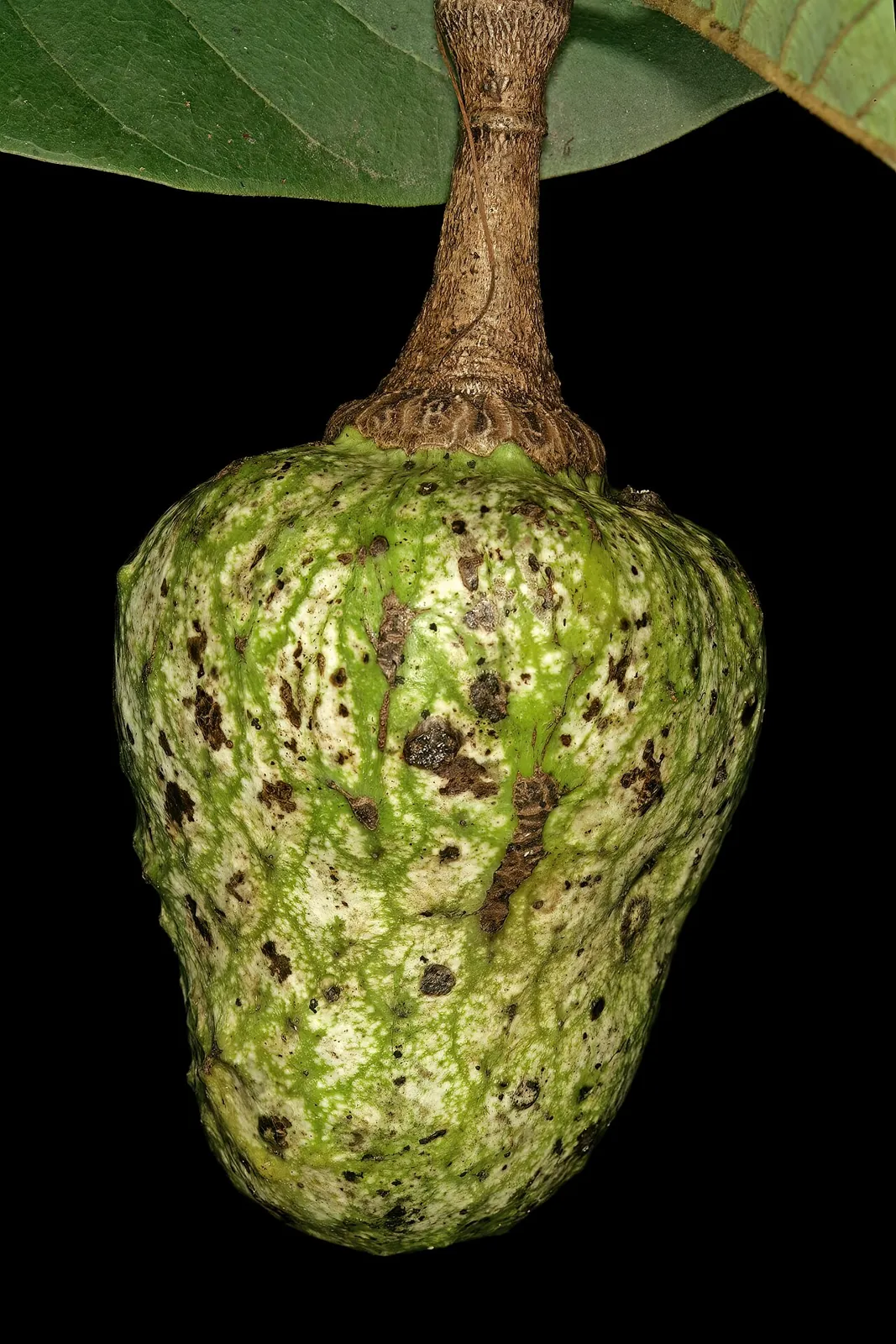
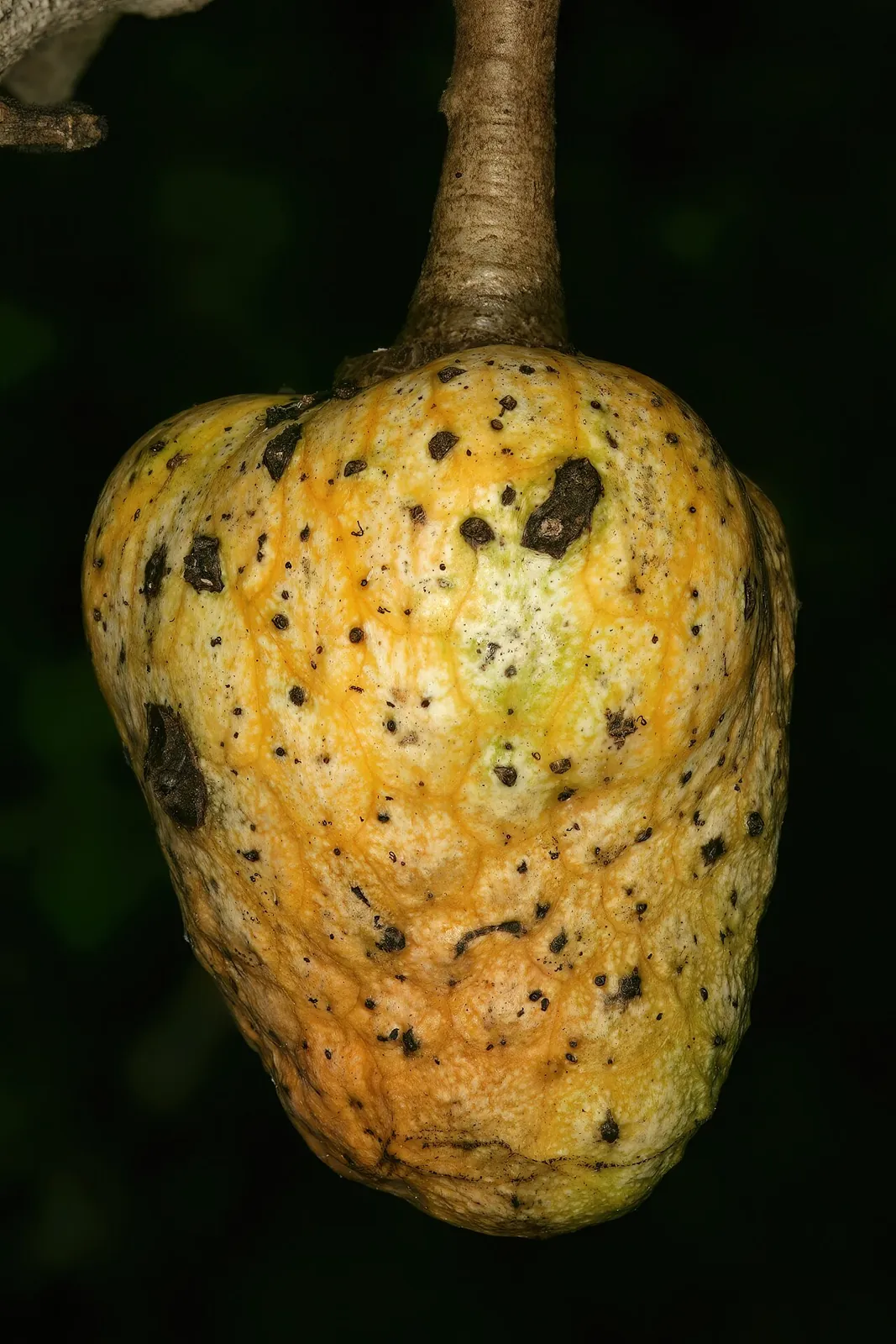
African wild custard apple has sweet white pulp with a pineapple-like taste and smell. Its small, lumpy fruit turns yellow-orange when ripe, with many seeds tucked into the flesh. It grows on a shrub or small tree across much of Africa.
What it is
The fruit of Annona senegalensis is roughly egg-shaped, about 2.5–5 cm (1–2 in) long and 2.5–4 cm (1–1.6 in) across. Its surface is divided into bumps: the fruit develops from many seed-bearing parts of a flower joined together.
Inside, white flesh surrounds numerous orange-brown seeds. The sweet pulp is the edible part, and the orange-yellow ripe fruit has a pineapple-like scent.
Where it comes from
This is an African fruit, native to countries from Senegal and Côte d’Ivoire to Tanzania and South Africa. It has also been introduced to India. In Tanzania, it grows in coastal lowland savannah, the Usambara mountains and the Lake Victoria basin.
Its scientific name keeps a connection to West Africa: senegalensis means ‘of Senegal’, where the specimen used to name the species was collected.
How it's eaten where it grows
In central and northern Côte d’Ivoire, the ripe wild fruit is eaten fresh, picked from wild trees during its short season. In the part of Côte d’Ivoire where it grows, it's the second most eaten fruit.
The pulp also makes a juice: with the peel and seeds removed, the flesh is pureed with twice its volume of water and strained through muslin.
How it's grown
The shrub or small tree usually reaches 2–6 m (7–20 ft). It grows beside rivers, on land left fallow and beneath the taller trees of savannah woodland. In Tanzania, new plants come from seed or from wild seedlings moved to a growing site.
Young plants need light shade and protection from fire, grazing animals and competing weeds. Beetles carry pollen between the flowers; incomplete pollination helps explain why some fruits grow unevenly.
When and where you'll find it
Fresh fruit is gathered from wild trees and eaten during the harvest season. Around Yamoussoukro and Bouaké in Côte d’Ivoire, ripe fruit was harvested from March to June in 2023. The ripe fruit spoils quickly, so it keeps only when chilled or turned into juice.
Get it near Detroit
Sell fruit online? Add your business
What it tastes like
As mild as a peach, softer than a pear≈
More about the taste
Ripe fruit smells like pineapple, with sweet pulp around many seeds.
Ripe fruit smells and tastes pleasantly like pineapple, with sweet pulp.
Choose, eat
1ChooseOrange-yellow
Look for
- Orange-yellow
- Pineapple-like smell
Ripe fruit is orange-yellow, with a pineapple-like smell.
2EatRipe pulp · not peel, seeds
Eat
Ripe pulpNot eaten
PeelSeedsIn Côte d'Ivoire, the peel and seeds are removed before the ripe pulp is strained into a drink.
Detroit, Michigan
When it’s good here
The season calendar couldn’t load.
7 names in 4 languages
- MuroroOther name
Cook it
Strange but trueScienceCustoms and cultureFood and drink
If you like African wild custard apple
Tastes alike
Close relatives
Sources
Photos · 2
Sources
African wild custard apple · Fruitopia · checked Sep 22, 2026
- apps.worldagroforestry.org /treedb/AFTPDFS/Annona_senegalensis.pdf
- apps.worldagroforestry.org /usefultrees/pdflib/Annona_senegalensis_TZA.pdf
- bgci.org /our-work/projects-and-case-studies/understanding-ugandan-native-plant-species-role-in-innovative-sustainable-landscapes/
- tbguganda.org /garden-tours/
- wjarr.com /sites/default/files/fulltext_pdf/WJARR-2024-1260.pdf