Quince
Cydonia oblonga · Rosaceae family
Firm and fragrant in the fruit bowl; tender slices and fruit paste reveal its kitchen possibilities.
Find it near DetroitGet to know it
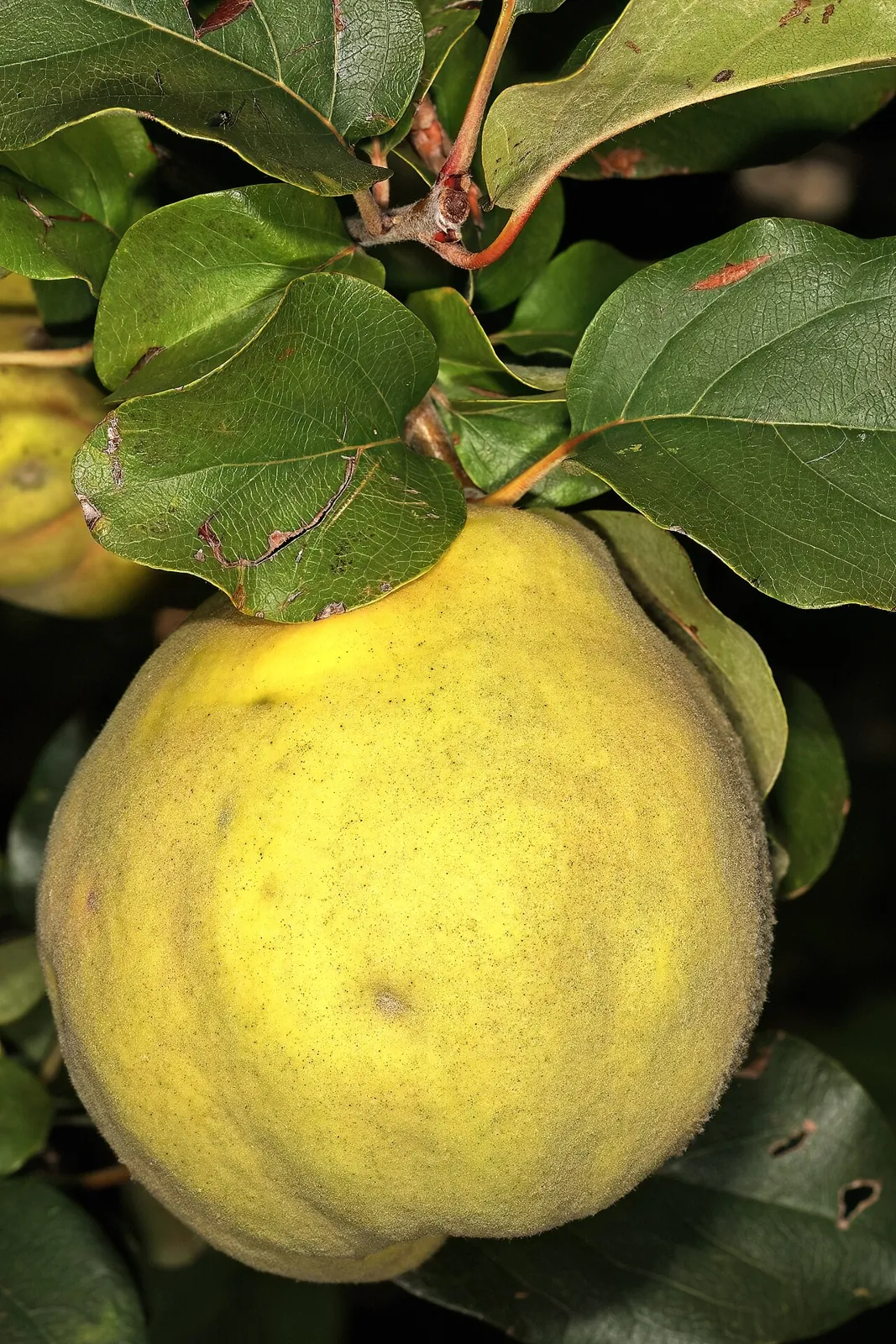
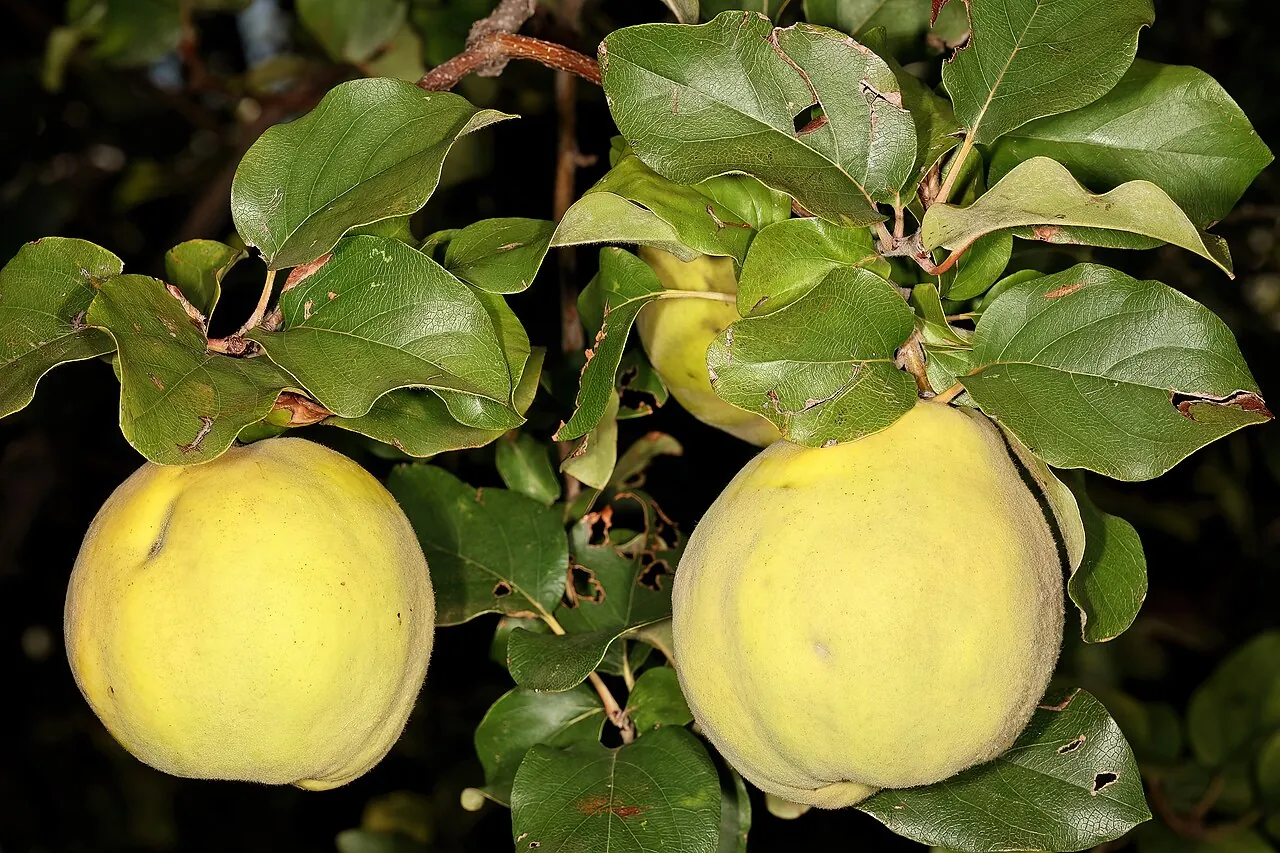
Quince looks like a lumpy golden apple or pear and smells sweet even while its flesh is hard and somewhat bitter. Cooking makes it tender and pink, turning a fruit you would struggle to bite into fragrant jelly, poached desserts or a paste firm enough to slice.
What it is
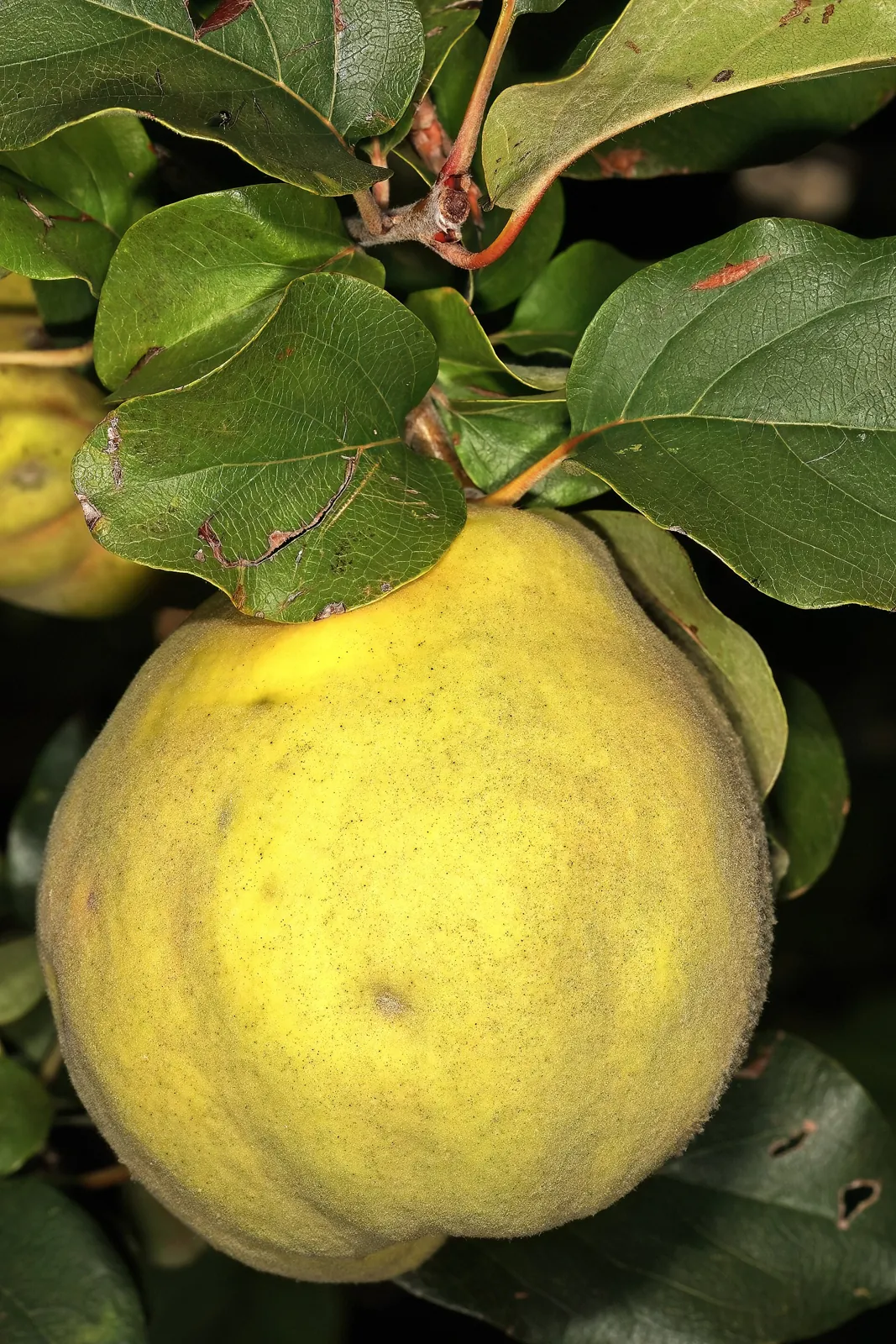
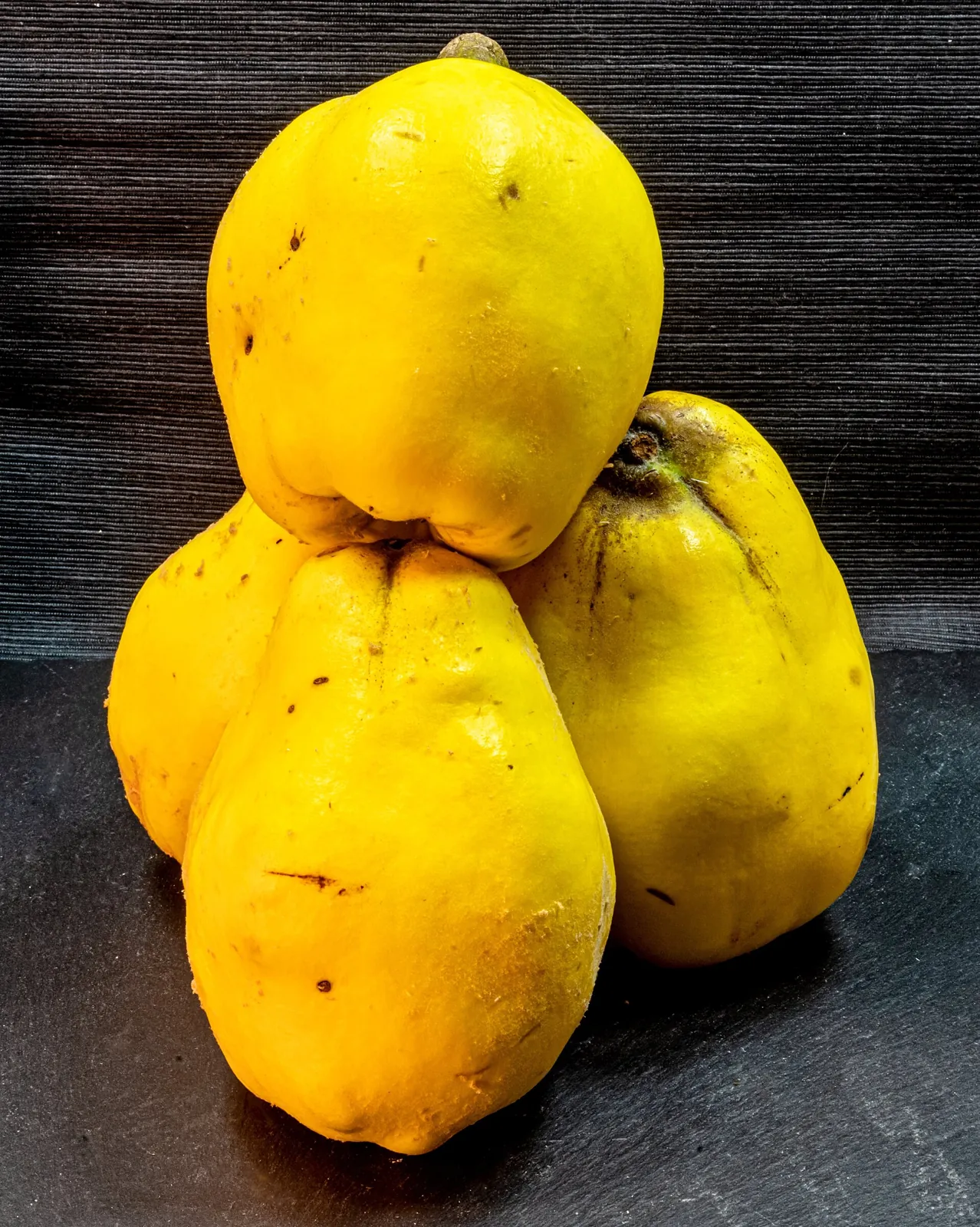
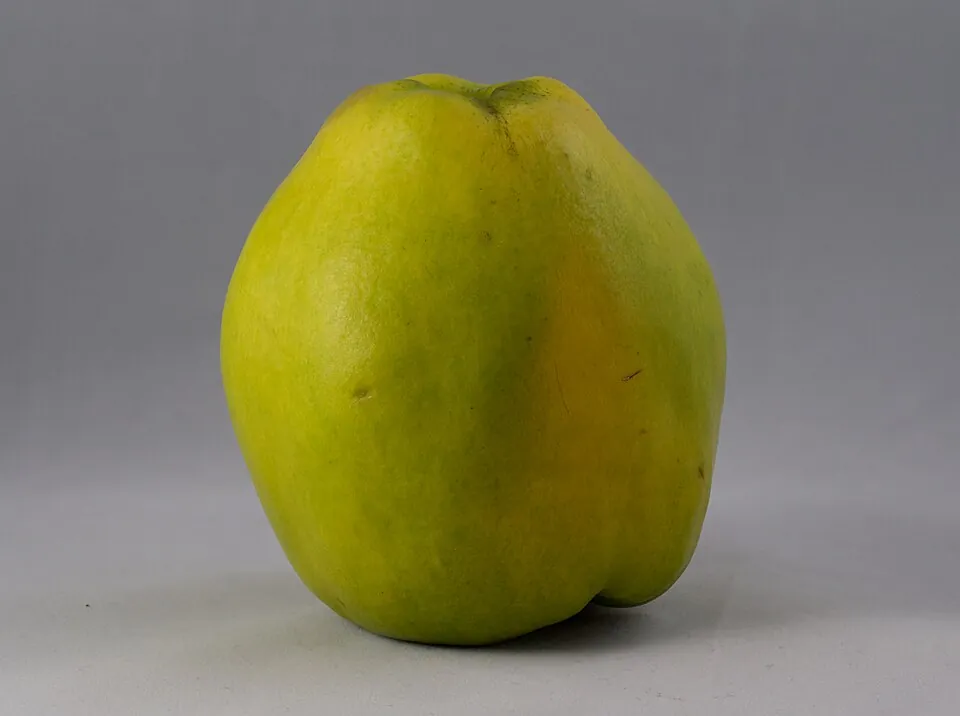
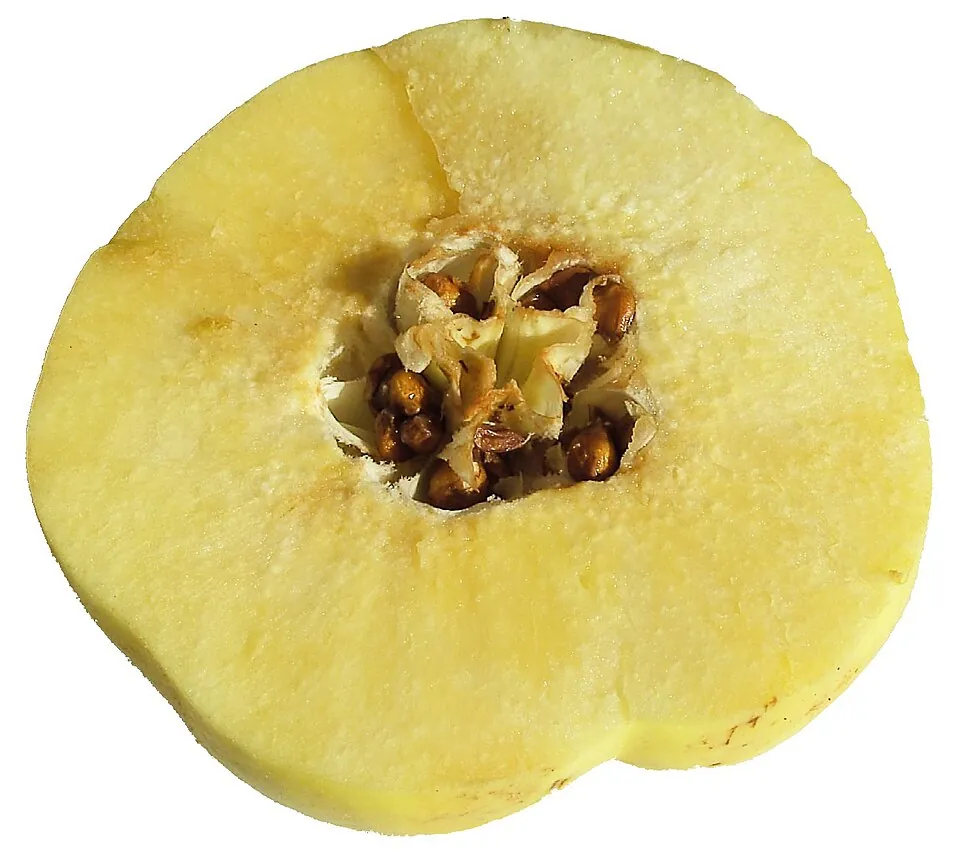
Quince, Cydonia oblonga, belongs to the rose family alongside apples and pears. A mature fruit measures about 7.5–12.5 cm (3–5 in), with skin that changes from green to gold. Inside, the flesh has an apple-like cut surface but a hard, grainy texture.
Some varieties carry a scent of their own: Aromatnaya fruit grown at Carandale Farm in Wisconsin has a lasting lemon-like fragrance. Quince also contains plenty of pectin, the natural setting ingredient that makes it useful for jelly.
Where it comes from
Quince comes from the Trans-Caucasus, including rocky slopes and woodland edges in Armenia, Azerbaijan and Iran. People have grown it in Asia and around the Mediterranean for more than 4,000 years.
It remains a familiar crop in the Middle East, the Mediterranean and South America. In the United States, commercial growing is small, concentrated mainly in California and New York.
How it's eaten where it grows
In Spain, quince cooked down with sugar until it sets becomes membrillo, a firm fruit paste. It is traditionally paired with Spanish cheeses: thin slices sit on triangles of Manchego of the same size.
Türkiye’s ayva tatlısı is a winter dessert of quinces poached in sugar and water and spiced with cloves and cinnamon. It usually comes with kaymak, a thick clotted cream, and sometimes a sprinkle of walnuts or pistachios.
How it's grown
Quince grows on a small tree that loses its leaves in winter and carries pink spring flowers. Garden trees can reach 3–4.5 m (10–15 ft) tall and wide. They usually start fruiting at five or six years old, and a single tree can set a crop. The flowers need shelter from spring frost; the fruit needs sun to ripen.
When and where you'll find it
Outside the places that farm it, fresh quince turns up at farmers’ markets and groceries specialising in international produce. In the UK it is usually picked in October or November, before the first frost. Across the equator, Rayner’s Orchard in Victoria’s Yarra Valley usually has its quince season in autumn.
Undamaged fruit can keep for two or three months on trays in a cool, dark place. It stays firm, but bruises easily.
Sources · 8
- GoTürkiyegoturkiye.com
- ICEX, Foods and Wines from Spainfoodswinesfromspain.com
- Missouri Botanical Gardenmissouribotanicalgarden.org
- Penn State Extensionextension.psu.edu
- Rayner’s Orchardraynersorchard.com.au
- Royal Horticultural Societyrhs.org.uk
- Specialty Producespecialtyproduce.com
- University of Wisconsin–Madison, Carandale Farmuncommonfruit.cias.wisc.edu
Get it near Detroit
What it tastes like
As crisp as an apple, sweeter than a lemon≈
More about the taste
Ripe quince stays hard, with a strong sweet fragrance, and the raw flesh is bitter - cooking is the way to enjoy it. Spanish membrillo, a traditional sliceable quince paste, concentrates the cooked fruit into a sweet. Variety and ripeness affect whether a particular fruit is suitable for raw eating.
Quince is firm and aromatic; some tree-ripened varieties, in thin slices, can be palatable raw. Variety, climate and time on the tree all affect raw flavor.
Choose, ripen, store, eat
1ChooseFirm, mostly yellow
Look for
- Firm, mostly yellow
Ignore
- Pear-like softness
Choose firm, mostly yellow fruit - a ripe quince won't yield like a pear. It changes from green toward gold as it matures.
2RipenOn the cool
Ripens after pickingCoolFor UK-grown quince, let harvested fruit mellow in storage. It stays a cooking fruit - don't use pear-like softness as the readiness test.
3StoreCool, undamaged
- CoolUndamagedDark, unwrapped on trays, fruits apart
Store only undamaged quinces in a cool, dark place, unwrapped on wooden or cardboard trays with the fruits kept apart.
4EatFlesh · not tough core
Eat
FleshNot eaten
Tough coreUse the flesh after removing the tough core. In the selected poached recipe, the washed peel stays on and softens during cooking; other preparations peel it.
More tips
Worth knowing
- Later-picked quince isn't always better; ask about variety and storage history.
- Stored quince grows sweeter relative to its acid, but condition and aroma decide whether it's at its best.
Detroit, Michigan
When it’s good hereUsual monthsJust arrivedAt their bestLast chanceAll yearWhere it is in its usual monthsToday, Oct 22Grown hereIn season in your stateShips fromIn season where it grows
27 growing areas, 11 countriesUsual monthsOur estimated monthsToday, Oct 22

- Araucanía
- Bahia
- Bay of Plenty
- Bursa
- Cáceres
- Castellón
- Ica
- La Libertad
- Lot-et-Garonne +2
- Maule
- Santa Cruz de Tenerife
- South Australia
- Washington +1
- You
5 of 7 areas · October
Growing areas by country
- Spain8
- Chile4
- France3
- Argentina2
- Australia2
- Brazil2
- Peru2
- Canada1
and 6 more countriesand 3 more countries
At Carandale Farm in Wisconsin, the varieties Aromatnaya, Kuganskaya and Mellow differ in aroma, firmness, yield and disease response.
28 varieties
- No variety photo yetEkmek
- Flavour
- mayhoş Türkiye
- Bite
- crisp Türkiye
- Juice
- juicy Türkiye
- Use
- Quince
- No variety photo yetShams
- Scent
- Fragrant.
- Use
- Quince
 Portugal
- Use
- Quince
 Vranja
- Use
- Quince
- No variety photo yetBereczki
- Use
- Quince
- No variety photo yetBorgeant
- Use
- Quince
59 names in 16 languages
- Mộc qua KavkazVietnamese
Cook it
1 Quince festivalUsual monthToday, Oct 22
Strange but trueHistoryA myth, and the truthScienceWhere the name came fromCustoms and cultureFood and drinkPeople
If you like Quince
Tastes alike
Nutrition, sources
Nutrition
Quinces, raw · per 100 g
- Carbohydrate
- 15 g
- Fiber
- 1.9 g
- Protein
- 0.4 g
- Fat
- 0.1 g
- Vitamin C
- 15 mg
- Potassium
- 197 mg
Sources
Quince · Fruitopia · checked Sep 23, 2026
What we don't know yet
Fruit color and cooking behavior vary by variety.