Naranjilla
Also called Lulo melijilloSolanum quitoense · Solanaceae family
Naranjilla hides a green, tart interior behind an orange skin. Its familiar role as a juice fruit makes more sense after tasting that contrast than after judging it by its little-orange name.
Find it near DetroitGet to know it
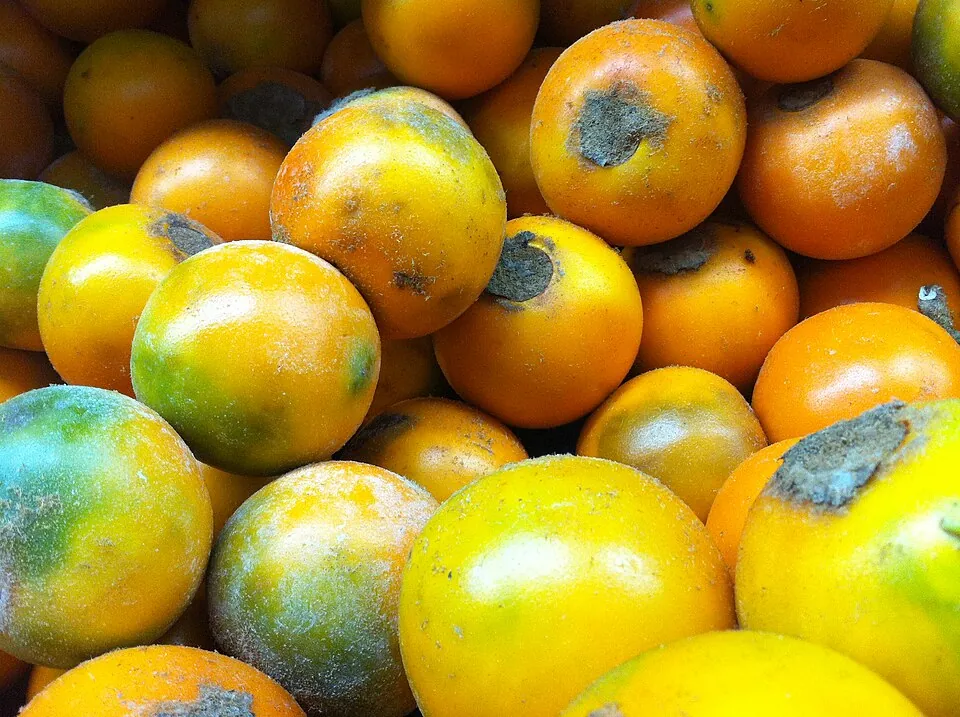
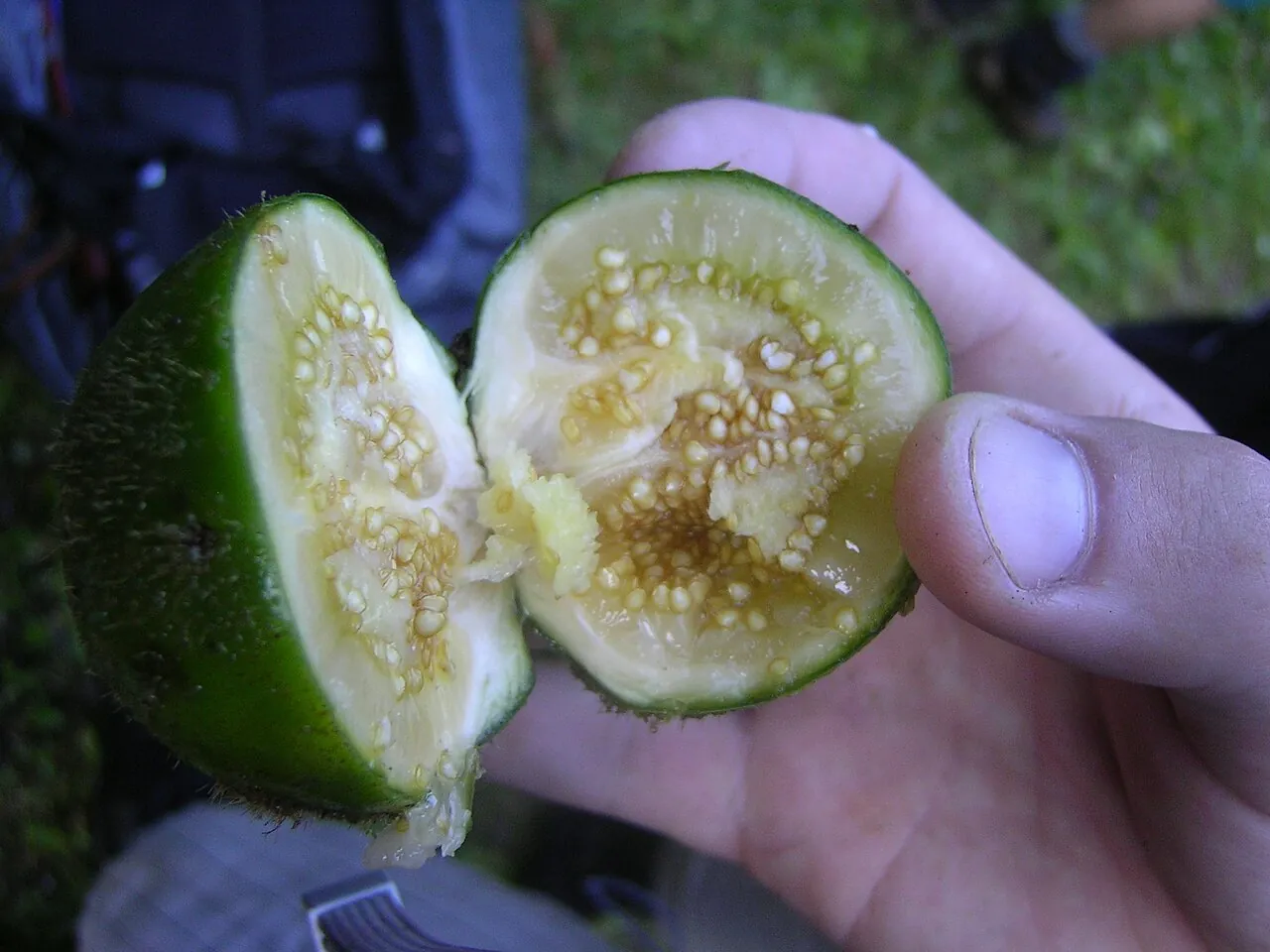
Naranjilla means “little orange”, but cut through its orange skin and the pulp is green or yellowish. Juicy and tart, with a flavour like pineapple and lemon, it is the fruit Colombians call lulo. Its home is the nightshade family, not the citrus family.
What it is
The round fruit grows to about 6.25 cm (2½ in) across. Inside, four compartments hold translucent pulp and many small, hard seeds. A coat of brown hairs covers the skin; the hairs rub off easily when the fruit is fully ripe.
Those hairs can irritate sensitive skin, so they come off before preparation. Fully ripe naranjillas soften and ferment quickly. Their most popular use is as juice.
Where it comes from
Naranjilla comes from northwestern South America, with its home centred on Peru, Ecuador and southern Colombia. Lulo is its familiar Colombian name. Seeds reached the United States from Colombia in 1913. In Florida, grafted plants meant to stand up to wind were set out in 1949 and fruited well.
How it's eaten where it grows
Colombia’s lulada keeps pieces of lulo in the glass. Water, sugar and lime juice join the fruit, sometimes over ice; those little chunks distinguish it from smooth lulo juice.
In Ecuador, colada de avena con naranjilla brings the tart fruit together with oats, cinnamon and panela, or brown sugar. It is a breakfast and after-school drink, served warm or cold.
How it's grown
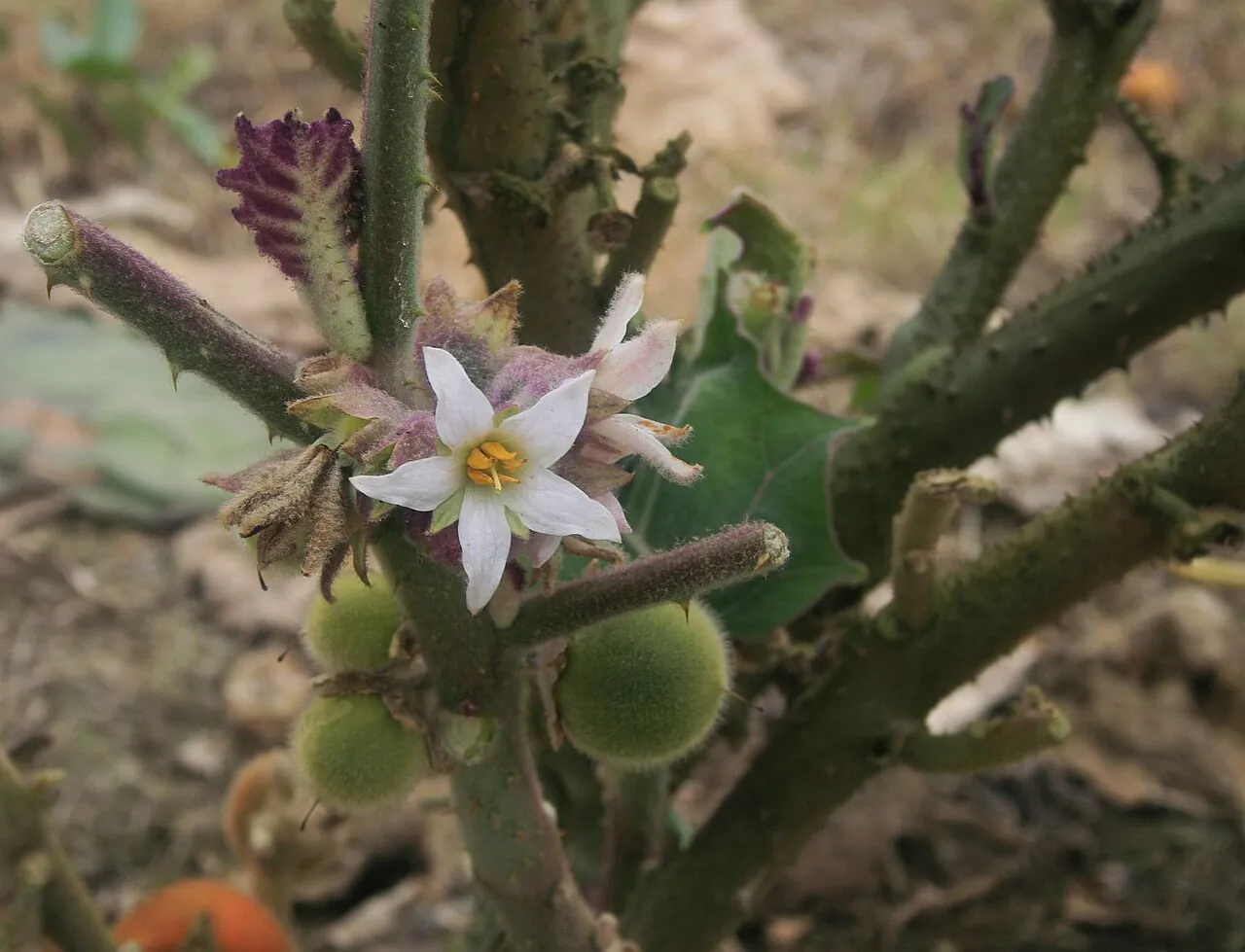
Naranjilla grows as a spreading shrub up to 2.5 m (8 ft) tall, with soft stems that turn woody as they age and large woolly leaves. It favours partial shade and well-drained ground. In Panama, plants grown from seed begin bearing in about ten to twelve months.
When and where you'll find it
In its native habitat, naranjilla usually bears through the year. Florida plants fruit mainly in winter. For US cooks, Latin grocery freezers are a route to whole frozen naranjillas or frozen pulp. The label may say lulo; GOYA Europe also uses both names for its frozen pulp.
Get it near Detroit
What it tastes like
As tart as a grapefruit, softer than a pear≈
More about the taste
Naranjilla has very juicy, translucent flesh with acidity ranging from slight to pronounced, and a flavor often compared to pineapple and lemon; it's used for lulo drinks.
The pulp is translucent green or yellowish, very juicy, and slightly acidic to acidic, with a flavor often compared to pineapple and lemon.
The fruit has several internal compartments and many small seeds, surrounded by an orange peel beneath a coat of hairs.
Choose, ripen, store, eat
1ChooseHairs easy to remove
Look for
- Hairs easy to remove
- Orange peel underneath
Hairs on the fruit become easier to remove as it fully ripens, revealing an orange peel underneath. Fully ripe fruit softens and ferments quickly, so check its condition at purchase.
2RipenFruit shipped while only partly colored may not reach the same eating quality as fruit picked fully ripe
Fruit shipped while only partly colored may not reach the same eating quality as fruit picked fully ripe.
3StoreTreat fully ripe naranjilla as perishable
Treat fully ripe naranjilla as perishable. Long commercial storage times depend on controlled temperature and humidity that a home refrigerator won't match.
4EatPulp · not hairs, leaves
Eat
PulpNot eaten
HairsLeavesThe pulp is used in juice, sauces, ice cream and cooked desserts. Remove the fruit's hairs before preparing it — they can irritate sensitive skin. The leaves aren't used as food.
Detroit, Michigan
When it’s good hereUsual monthsJust arrivedAt their bestLast chanceAll yearWhere it is in its usual monthsToday, Oct 22Grown hereIn season in your stateShips fromIn season where it grows
14 names in 8 languages
- luloroot
Cook it
Strange but trueHistoryScienceWhere the name came fromFood and drinkPeople
If you like Naranjilla
Tastes alike
Close relatives
Same plant family
Sources
Sources
Naranjilla · Fruitopia · checked Sep 22, 2026