Tamarillo
Also called Tree TomatoSolanum betaceum · Solanaceae family
A tart tree tomato with distinct sweet and savory uses and quality that depends on maturity at harvest.
Find it near DetroitGet to know it
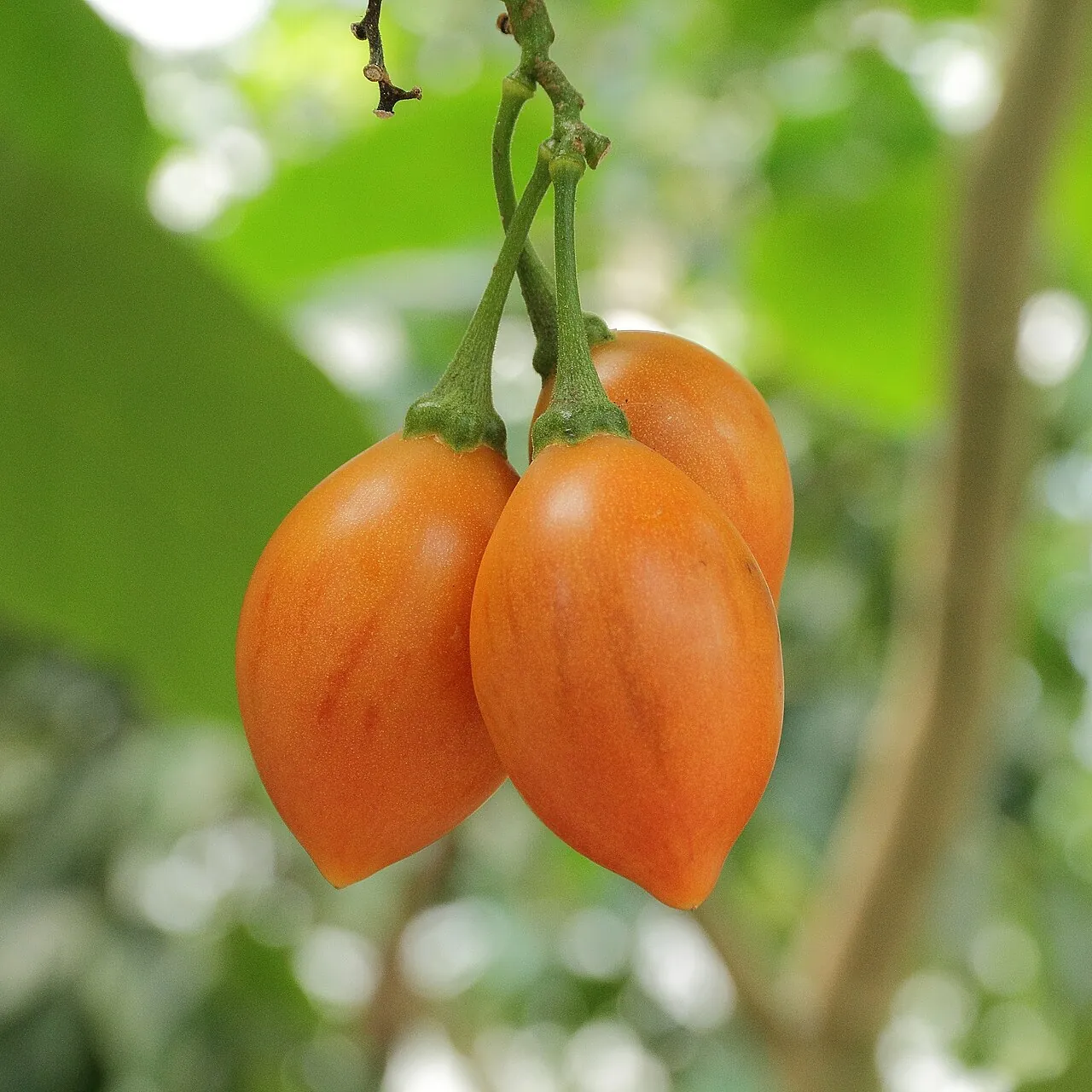
Tamarillo is a tree-grown relative of the tomato, with firm flesh around a soft, juicy centre that tastes sweet and tart. In New Zealand, its egg-shaped fruit comes in red, gold and amber varieties. In Ecuador, that sharpness goes into ají de tomate de árbol, a hot sauce spooned alongside empanadas.
What it is
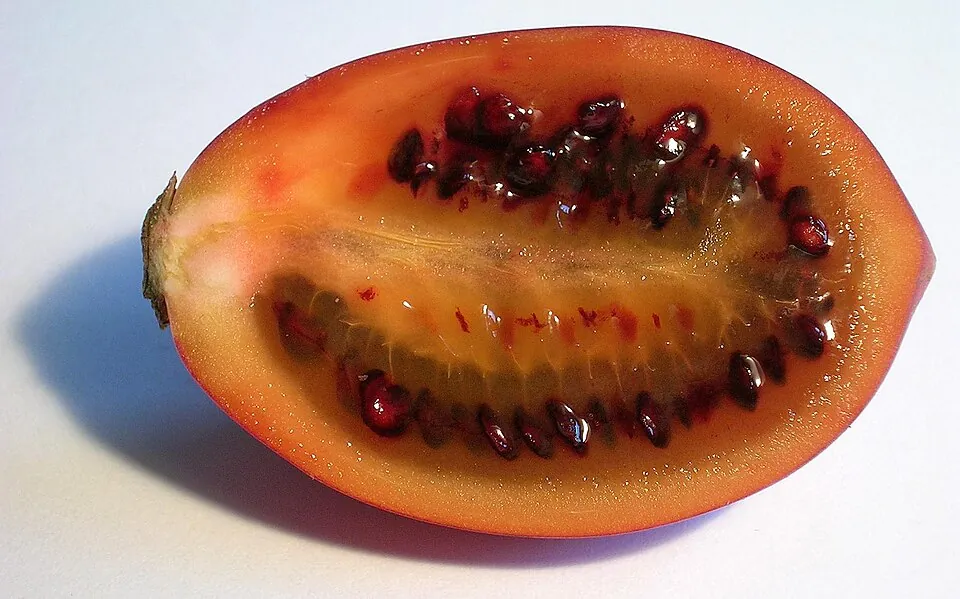
A tamarillo measures about 5–10 cm (2–4 in) long. The outer flesh holds its shape, while the middle is soft and full of seeds. Its tough, unpleasant-tasting skin stays behind when the fruit is cut in half and scooped out.
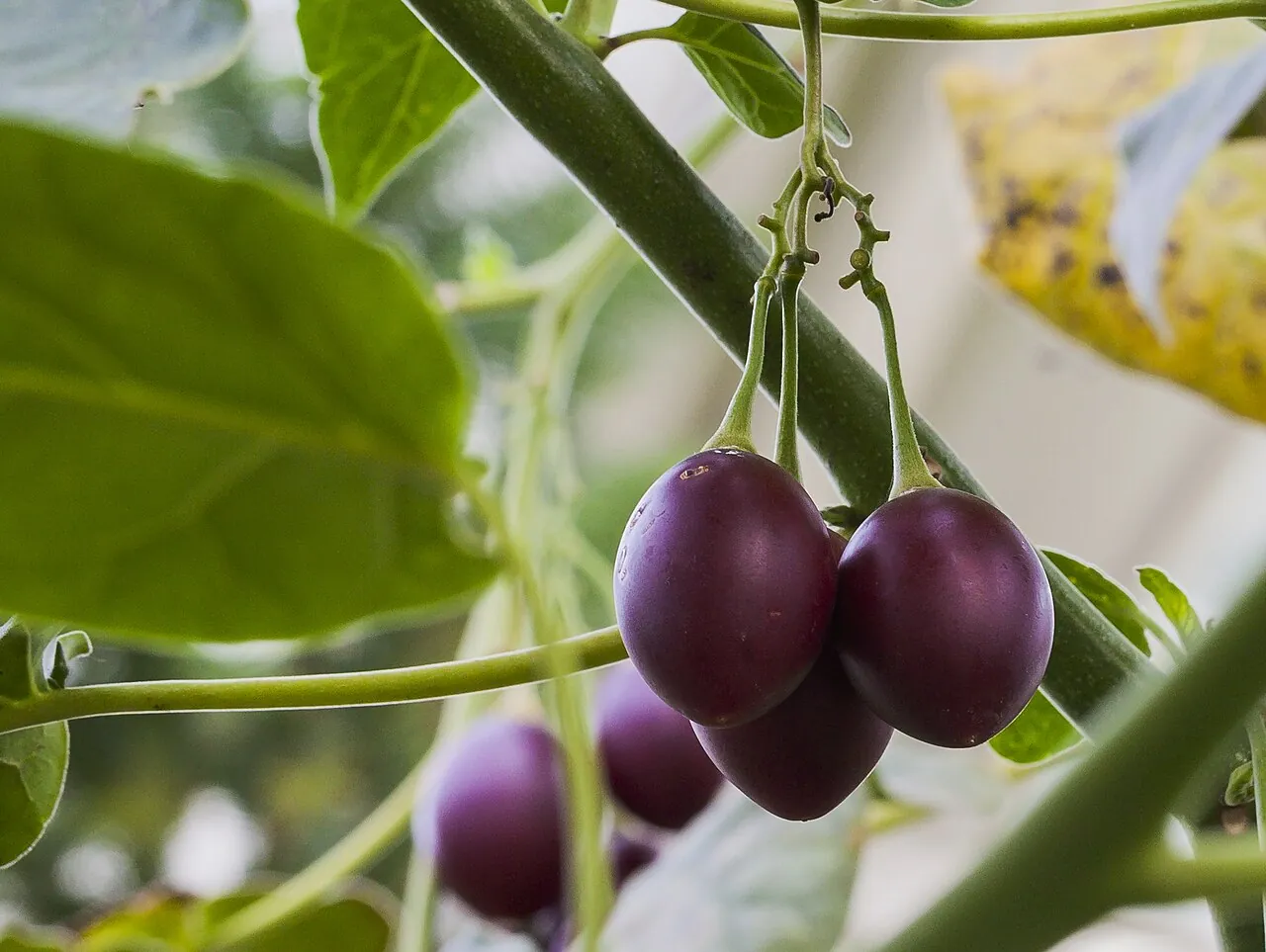
Red tamarillos have deep red skin and dark red pulp around the seeds. Amber fruits are smaller, milder and sweeter. Gold sits between the two for sweetness.
Where it comes from
Tamarillo comes from the Andes, including Peru, and Colombia and Ecuador grow it commercially. It also grows in India’s Nilgiri hills and Assam. In New Zealand, the main growing districts lie along the North Island coast, where frost is less of a threat.
How it's eaten where it grows
In Ecuador, ají de tomate de árbol blends the fruit with hot peppers, then adds onion, coriander leaves and lime juice. It accompanies empanadas as well as other dishes. In Quito, chochos, the pale beans of a lupin plant, often join the sauce.
Tamarillo also goes into juices, and into desserts cooked in panela (cane sugar) syrup with cinnamon and cloves.
How it's grown
The tamarillo is a small tree with shallow roots and brittle branches. Strong winds can break fruit-laden branches or topple the plant. It grows in light, fertile soil that drains freely; standing water and long dry spells both cause trouble for its shallow root system.
When and where you'll find it
New Zealand’s usual fresh-fruit season runs from March to October, with the largest supply in July and August. A ripe fruit has full red or golden colour and gives slightly as it softens.
In the US, Latin groceries sometimes carry whole tamarillos frozen. Frozen pulp, such as Goya’s 14 oz (397 g) packs, works well for juice.
Get it near Detroit
What it tastes like
Softer than a pear, as tart as a kiwifruit≈
More about the taste
Tamarillo has juicy, subacid pulp, with many red varieties tasting sharply tart. Fully tree-ripened fruit has the best-developed flavor and aroma.
Tamarillo has juicy, subacid pulp, with many red varieties tasting sharply tart. Fully tree-ripened fruit has the best-developed flavor and aroma.
Choose, ripen, eat
1ChooseFully ripe
Look for
- Fully ripe
Choose fully ripe fruit. Because fruit on a tamarillo tree doesn't mature all at once, it's picked repeatedly over a long season rather than in one batch.
2RipenDoesn’t ripen after picking
Doesn’t ripen after pickingTamarillo doesn't ripen after harvest, so an immature fruit won't develop full flavor on the counter.
3EatPulp · not skin
Eat
PulpNot eaten
SkinScoop out the pulp and discard the skin. It's used savory, in chutney, curry and sambal, and sweet, in desserts and ice-cream toppings.
Detroit, Michigan
When it’s good hereUsual monthsJust arrivedAt their bestLast chanceAll yearWhere it is in its usual monthsToday, Oct 22Grown hereIn season in your stateShips fromIn season where it grows
2 growing areas, 2 countriesUsual monthsOur estimated monthsToday, Oct 22

- New South Wales
- You
0 of 1 areas · October
Growing areas by country
- Australia1
- New Zealand1
Tamarillo is grown in highland areas, with a long picking season and wide availability in local markets.
19 varieties
- No variety photo yetSweeten
- Flavour
- sweet to sub-acid in flavor, more tangy than sugary NZ-NTL
- Feel
- firm NZ-NTL
- Juice
- juicy NZ-NTL
- Skin
- red NZ-NTL
- No variety photo yetAmber
- Skin
- yellow NZ-NTL
- No variety photo yetLaird’s Large
- Skin
- red NZ-NTL
- No variety photo yetMulligan
- Skin
- purple · red NZ-NTL
- No variety photo yetRed Beau
- Shape
- oval NZ-NTL
- No variety photo yetAndys Sweet Red
39 names in 14 languages
Cook it
Strange but trueHistoryScienceNatureWhere the name came fromFood and drink
If you like Tamarillo
Tastes alike
Close relatives
Same plant family
Used the same way
Sources
Sources
Tamarillo · Fruitopia · checked Oct 2, 2026