Horned melon
Also called Spiked melon · Kiwano · African horned cucumberCucumis metuliferus · Cucurbitaceae family
Horned melon has two culinary identities: an immature cucumber-like vegetable, and, in selected non-bitter varieties, a ripe, dessert-like fruit.
Find it near DetroitGet to know it
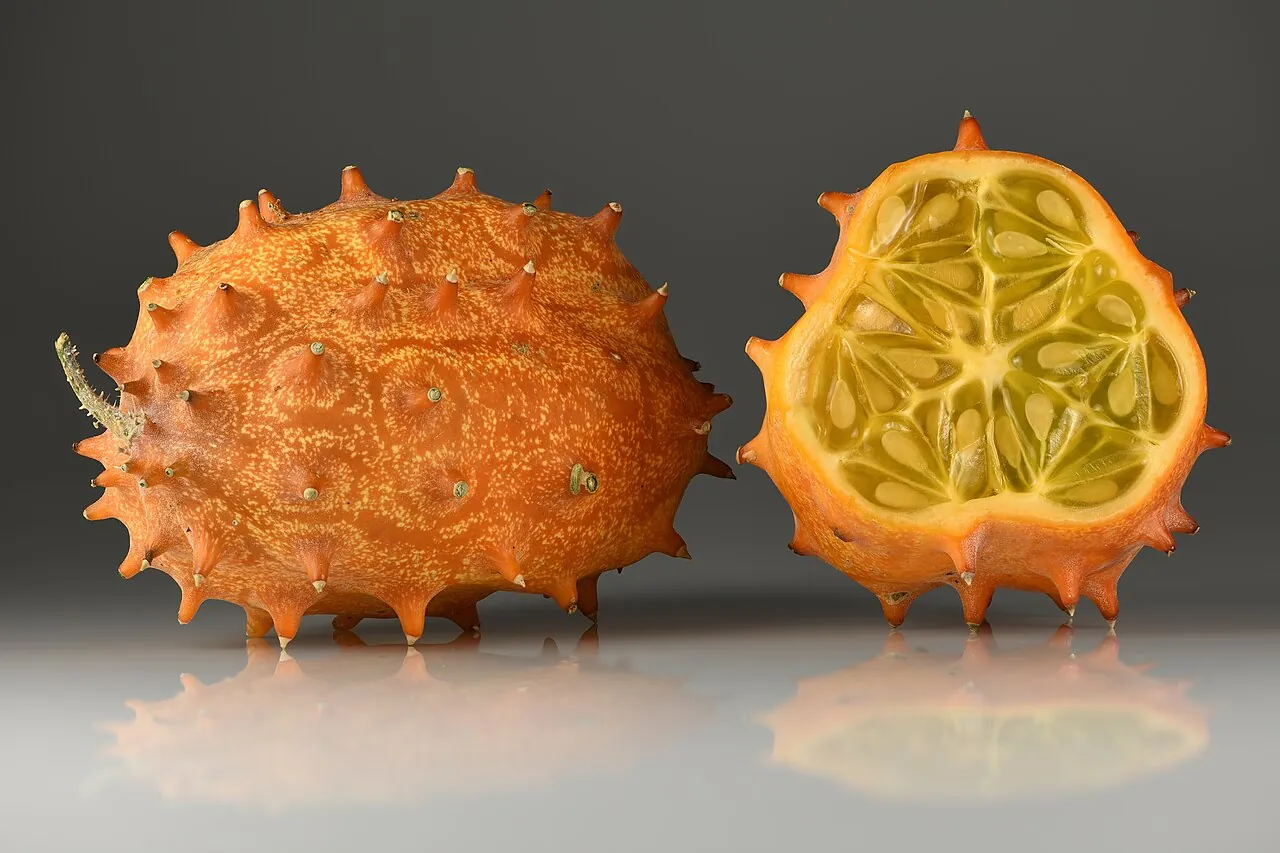
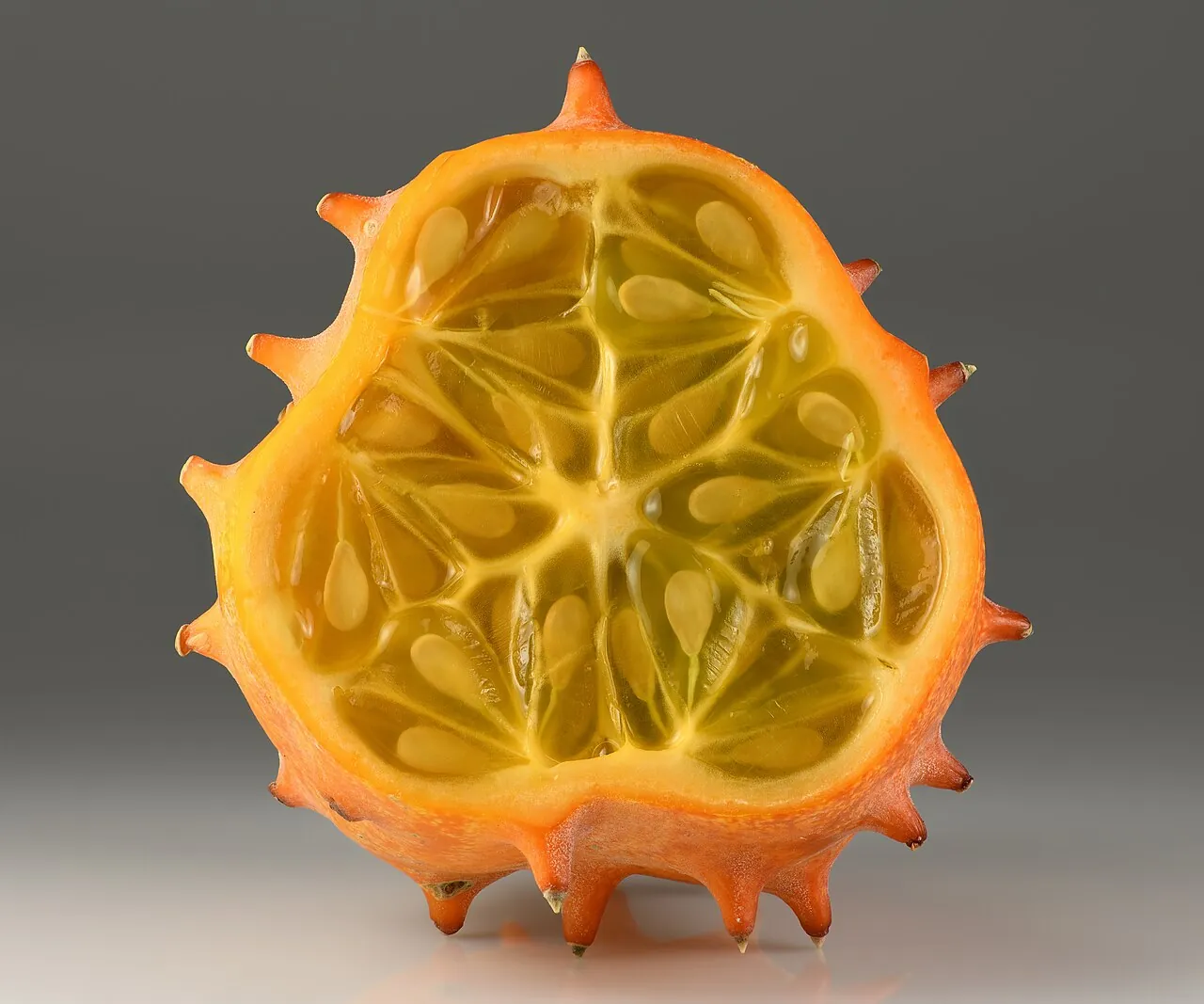
Horned melon, also sold as kiwano, has an orange, spiky shell and a green jelly centre filled with edible seeds. Its mild flavour is often likened to cucumber and melon. Slice it in half and spoon out the jelly and seeds.
What it is
A horned melon is an oval fruit about 6–15 cm (2.4–6 in) long and 3–6 cm (1.2–2.4 in) across. Its stout, fleshy spines ripen yellow to orange-red with the rest of the shell. Inside, light green, jelly-like flesh holds many flat seeds, 6–9 mm long, that you eat along with it.
Fruit sold in shops comes from non-bitter commercial varieties. Some wild plants bear extremely bitter fruit containing compounds that are toxic to mammals.
Where it comes from
The plant comes from Africa south of the Sahara, reaching Namibia, Botswana and South Africa. New Zealand growers began exporting it in the 1980s and gave it the name kiwano to sell it in Japan and the United States. Today Enzed Exotics grows it near Te Puke in the Bay of Plenty.
It has also been grown commercially in California for the US market, and in Israel and Kenya for Europe.
How it's eaten where it grows
In southern Africa, horned melon is a traditional fruit vegetable. It's peeled and eaten unripe, when it looks and tastes like cucumber, or ripe, when it can taste sweet. Kalahari San people in Botswana roast the fruit, and ripe fruits can be split open and dried in the sun for later.
Elsewhere the pulp is usually spooned out, blended or added to salads. A New Zealand grower's kiwano salsa, its spin on pico de gallo, mixes the pulp with tomatoes, lime juice, chilli, red onion, celery and cilantro.
How it's grown
Horned melon grows on a climbing vine that completes its life in one growing season, with separate male and female flowers. It's grown in the field much like a muskmelon, or under nets or in a greenhouse. In Israeli fields, fruit has been ready to harvest about three and a half months after sowing.
When and where you'll find it
In the US, Frieda’s kiwano range runs year-round, using fruit grown in the United States and New Zealand. It's sold as a whole fresh fruit. Choose yellow-to-orange fruit with no splits in the skin and keep it out of the refrigerator; once it turns golden to deep orange, use it within a few days.
Get it near Detroit
What it tastes like
As soft as a banana, no sweeter than a grapefruit≈
More about the taste
Kiwano pulp is jelly-like, with cucumber, melon and lime notes.
Immature fruit tastes like cucumber; some mature varieties have a sweet, dessert-fruit flavor, though some commercial lines taste rather mild.
The spiny fruit changes from mottled green through yellow to orange as it matures. Bitter and non-bitter wild forms can look alike.
Choose, ripen, store, eat
1ChooseYellow-to-orange fruit
Look for
- Yellow-to-orange fruit
- No splits in shell
Ignore
- Color change after picking
Choose yellow-to-orange fruit without splits in the shell.
2RipenVine-ripened fruit has more soluble solids (sugars) than fruit that colors after harvest
Vine-ripened fruit has more soluble solids (sugars) than fruit that colors after harvest.
3StoreDon't refrigerate
Don't refrigerate; use fully orange fruit within a few days.
4EatGreen pulp, Tender seeds
Eat
Green pulpTender seedsScoop the green pulp and tender seeds from the shell.
Detroit, Michigan
When it’s good hereUsual monthsJust arrivedAt their bestLast chanceAll yearWhere it is in its usual monthsToday, Oct 22Grown hereIn season in your stateShips fromIn season where it grows
1 growing area, 1 countryUsual monthsToday, Oct 22

- United States
- You
1 of 1 areas · October
Roasted horned melon is part of Kalahari San food traditions in Botswana; immature fruit is sold in southern African markets.
25 names in 14 languages
- kiwanoroot
- maxijePortuguese
Cook it
Strange but trueScienceNatureWhere the name came fromCustoms and cultureFood and drink
If you like Horned melon
Tastes alike
Close relatives
Sources
Sources
Horned melon · Fruitopia · checked Sep 21, 2026