African medlar
Also called Wild medlarVangueria infausta · Rubiaceae family
A brown, soft-pulped African fruit whose story includes eating it fresh and turning its flavor into everyday maize dishes.
Find it near DetroitGet to know it
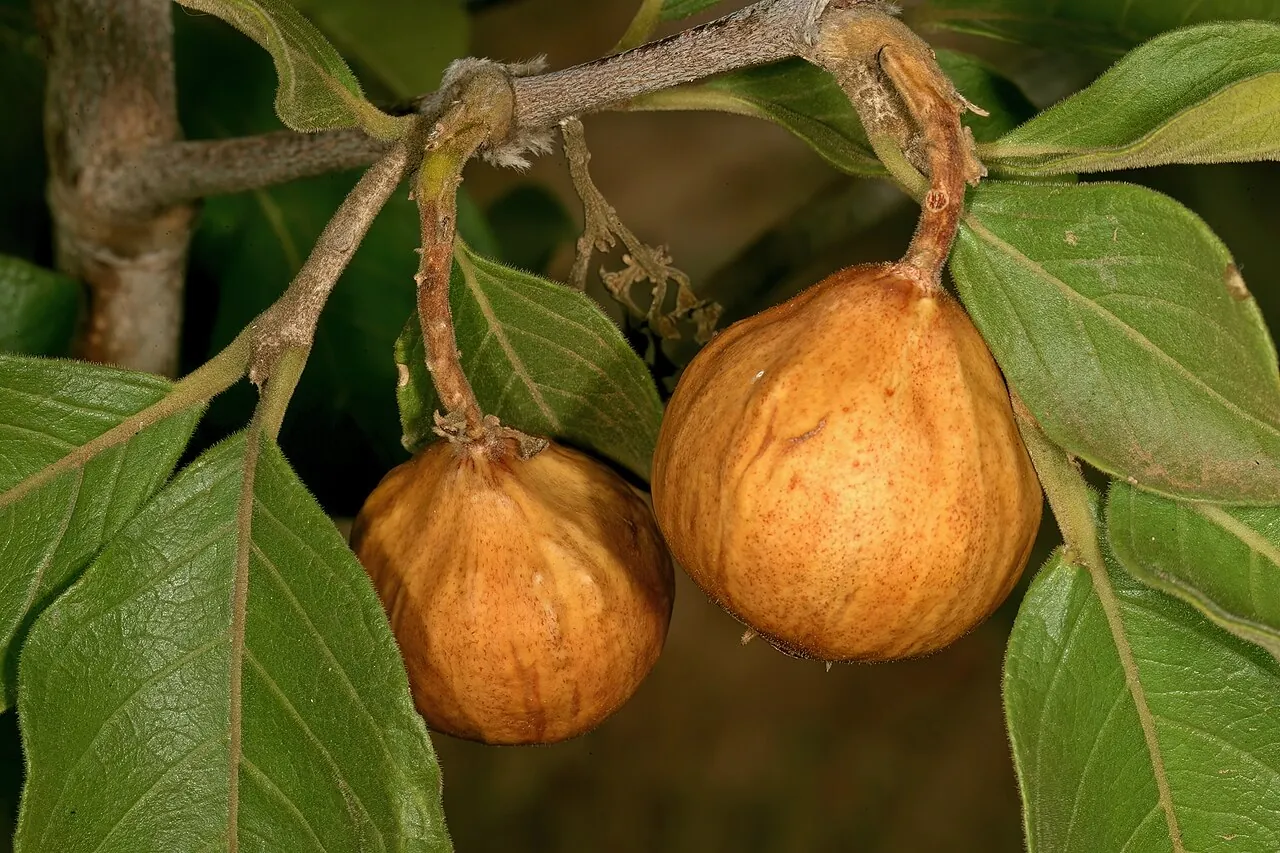
African medlar has a brown skin and soft, sweet-sour flesh with an apple-like taste. Most of it is eaten raw, but in Oyemeni, in northern KwaZulu-Natal, its pulp also turns plain maize into umBhantshi, a fruit-flavoured dish.
What it is
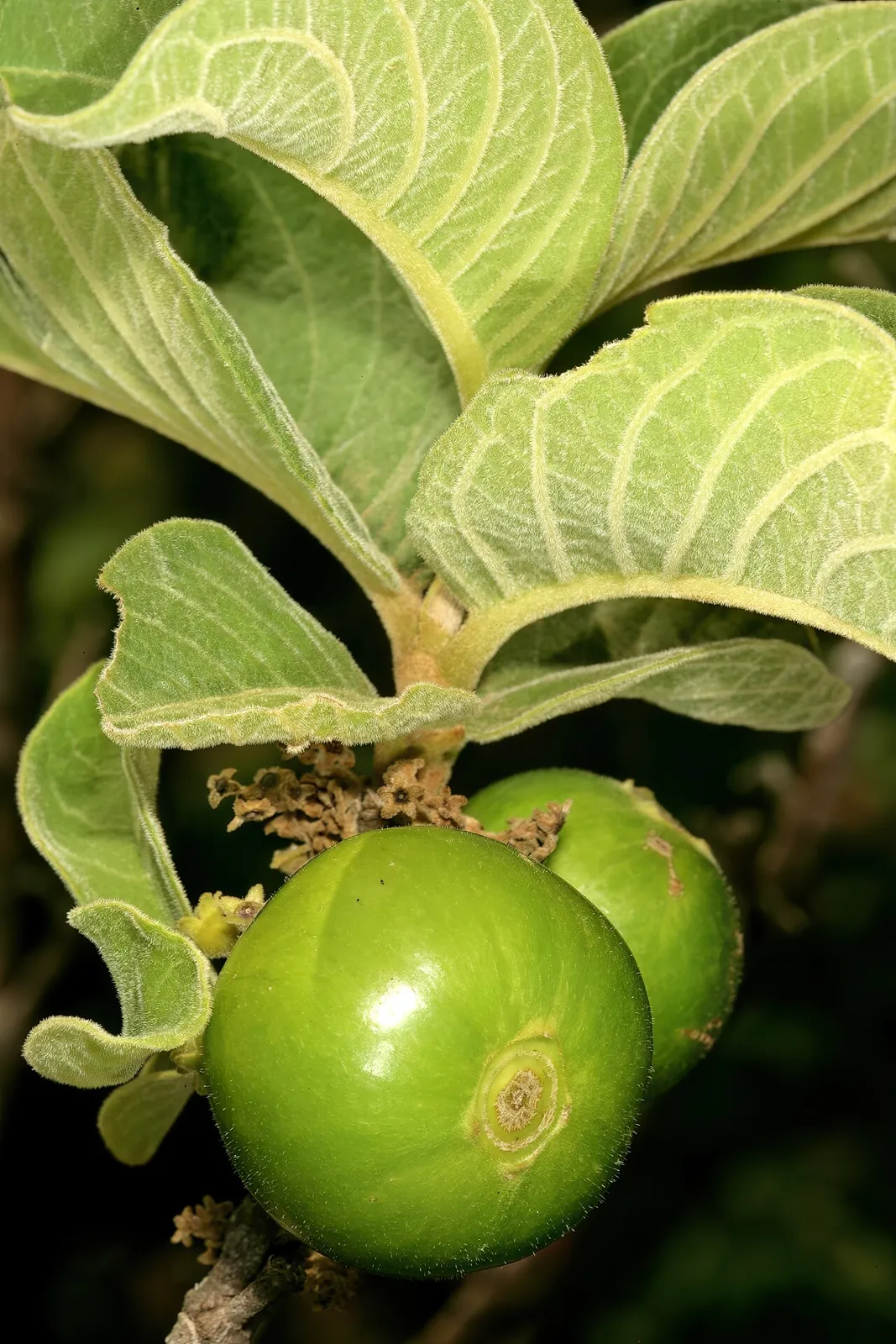
The fruit is almost round, about 3–6.5 cm (1.2–2.6 in) long. Its green skin turns light brown as it ripens, and the flesh inside softens. Ripe flesh is mealy, with a sweet-sour taste like an apple.
Under the leathery skin, three to five seeds sit in the pulp. At the tip is a small scar left by the flower's base. The botanical name is Vangueria infausta; wild medlar is another English name.
Where it comes from
African medlar grows across eastern and southern Africa, from Kenya and Uganda through Tanzania and Mozambique to Botswana and South Africa. It also grows in Madagascar. Its homes include woodland, rocky ridges and hillsides, wooded grassland and sand dunes near the sea. In Oyemeni, in South Africa’s northern KwaZulu-Natal, its isiZulu name is umViyo.
How it's eaten where it grows
In Oyemeni, umBhantshi starts with ripe fruit crushed by hand into water. The skins and seeds come out, leaving a puree. That puree is stirred into uPhuthu, crumbly maize porridge, or umCaba, crushed maize that has already been boiled. Some cooks add sugar.
The fruit also flavours soft maize porridge. Its pulp can go into the cooking water before the maize meal, or into the finished porridge. Some Oyemeni cooks add the pulp to fermenting traditional beer, and to amaHewu, fermented maize porridge, to make it more sour.
How it's grown
African medlar is a tree 3–8 m (10–26 ft) tall that loses its leaves seasonally, with grey-brown bark that peels in flakes. It needs plenty of light and grows slowly, about 40–50 cm (16–20 in) a year, but it withstands long dry spells and frost. It is rarely grown as a crop. Fresh seed and cuttings both produce new plants; seed is cleaned of its surrounding skin and pulp before sowing.
When and where you'll find it
In southern Africa, the tree usually fruits from November to April. Most of the fruit is eaten raw. In some places it is also dried and stored, to be eaten when food is scarce.
Get it near Detroit
Sell fruit online? Add your business
What it tastes like
Softer than a pear, as tart as a kiwifruit≈
More about the taste
Ripe pulp is soft with a sweet and slightly sour taste. The skin turns brown as it ripens.
Ripe pulp is soft with a sweet and slightly sour taste. The skin turns brown as it ripens.
Choose, store, eat
1ChooseBrownish skin
Look for
- Brownish skin
- Soft flesh
Unripe fruit is greenish; ripe fruit turns brownish with soft flesh.
2StoreThe pulp can be dried for later use
The pulp can be dried for later use.
3EatPulp · not skin, seeds
Eat
PulpNot eaten
SkinSeedsThe pulp is the edible part, used in drinks and maize dishes; skin and seeds are removed. Fruit paste can be added to porridge during cooking, or pulp added after.
Detroit, Michigan
When it’s good here
Season not documented for Michigan.
8 names in 5 languages
- umViyoOther name
- 非楂Chinese
- Canthium infaustumSpanish
Cook it
Strange but trueScienceWhere the name came fromFood and drink
If you like African medlar
Tastes alike
Close relatives
Sources
Photos · 2
Sources
African medlar · Fruitopia · checked Sep 22, 2026
- apps.worldagroforestry.org /treedb/AFTPDFS/Vangueria_infausta.pdf
- data.rbg.vic.gov.au /rbgcensus/census/taxon/40fc0a08-ec11-4088-afd4-11de8e714748
- link.springer.com /article/10.1186/s43014-023-00142-3
- link.springer.com /article/10.1186/s43014-023-00142-3/tables/2
- pmc.ncbi.nlm.nih.gov /articles/PMC12196924
- pmc.ncbi.nlm.nih.gov /articles/PMC12196924/
- rbg.vic.gov.au /melbourne-gardens/