Medlar
Mespilus germanica · Rosaceae family
A fruit that asks you to wait: hard autumn medlars become soft and aromatic through bletting.
Find it near DetroitGet to know it
A medlar is a brown relative of the apple that becomes ready to eat when its flesh turns soft and dark. This softening is called bletting. Inside is a sweet, spoonable pulp with the taste of apple purée and hints of dates, apricots and citrus.
What it is
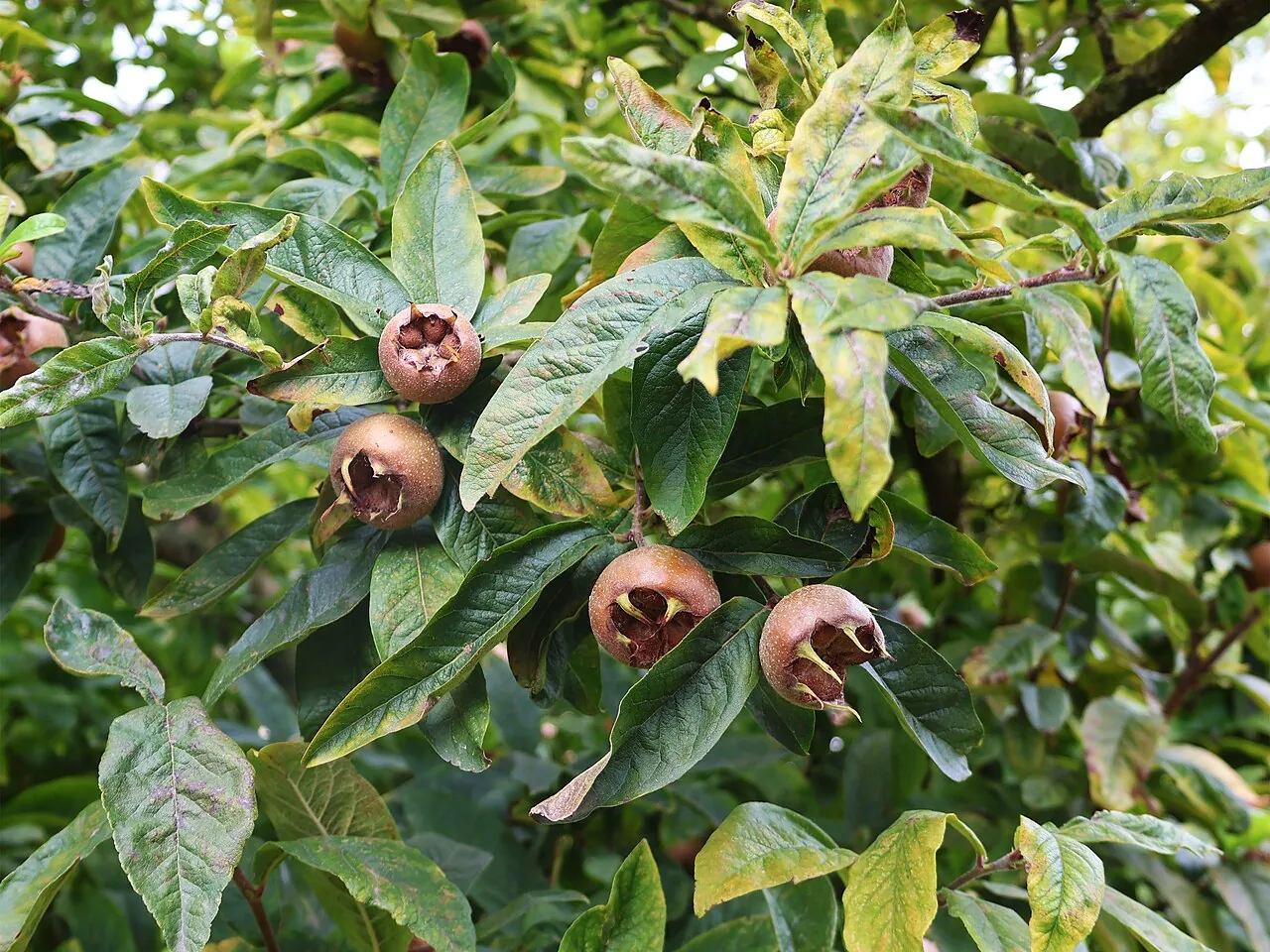
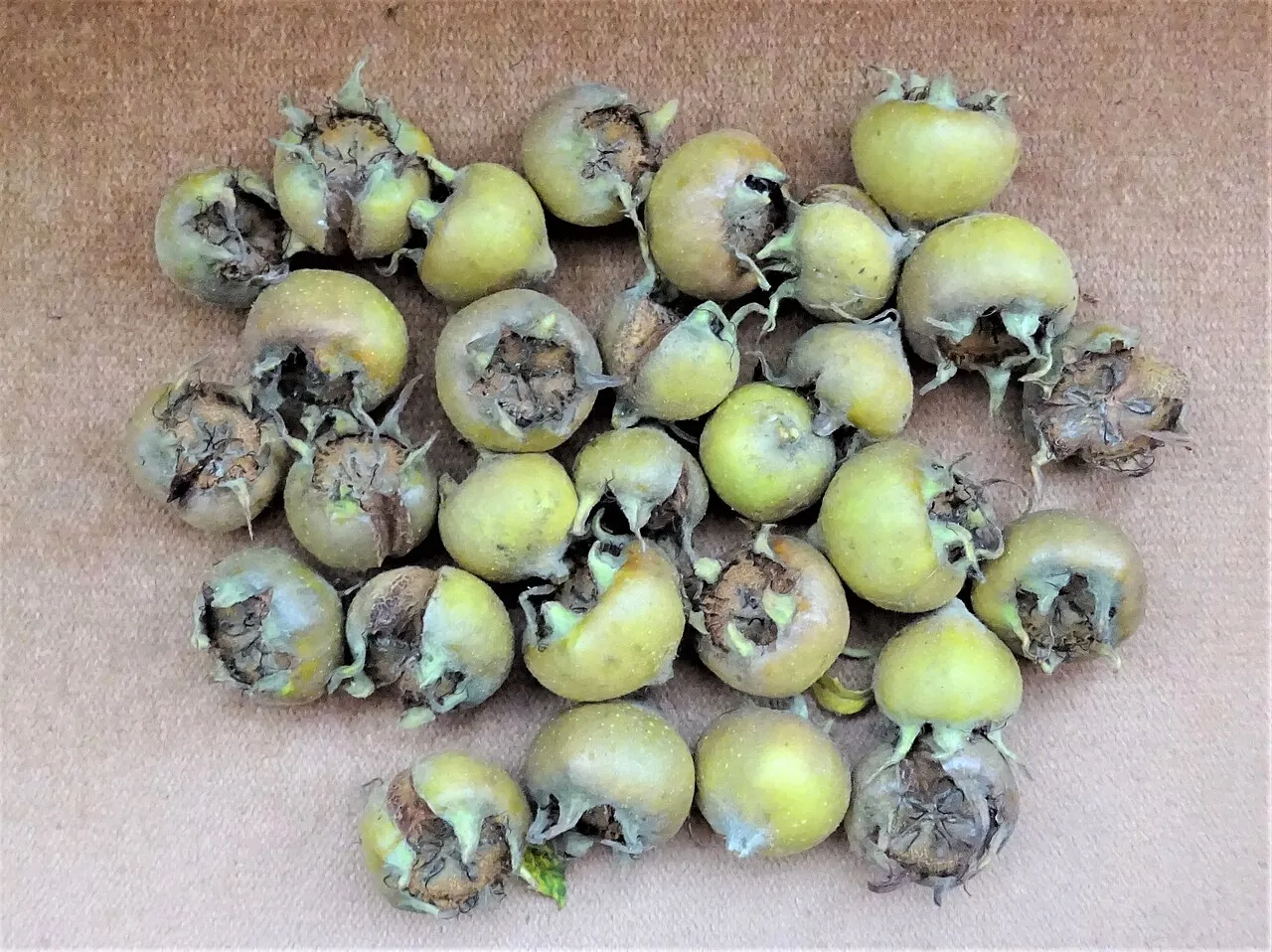
Medlars are brown fruits about 5 cm (2 in) across, shaped like small apples, with five dried flower parts that stay on at one end. The skin is leathery; the soft flesh surrounds large seeds. The flesh is the part to eat, scooped away from skin and seeds.
The Nottingham variety has small, well-flavoured fruit, while Dutch has larger fruit. Medlars belong to the rose family, like apples and quinces. A hard, freshly picked medlar is bitter; bletting brings the sweetness.
Where it comes from
Medlars are native to south-eastern Europe, Turkey and the Caucasus. The Greek writer Theophrastus described them around 300 BC, and the Romans grew them and brought them to Britain.
Today most of Turkey’s crop comes from scattered trees in and around hazelnut orchards in the Black Sea region.
How it's eaten where it grows
In Turkey, medlars are still widely sold and eaten. Most of the fruit is picked hard in October, though some is left to blet on the tree. In Britain, bletted medlars are eaten uncooked, typically with cheese and port, or made into jelly and sweet desserts.
At Tiptree, Essex, Wilkin & Sons makes medlar jelly from its own orchard. The cooked juice turns a rich burgundy and tastes of spiced apples; the jelly goes with cold meats and cheese, adds gloss to gravy and makes a base for an apple pie.
How it's grown
Medlar grows as a spreading small tree, usually 4–6 m (13–20 ft) tall, with white flowers in late spring and leaves that turn yellow-brown in autumn. It suits moderately fertile soil in full sun.
Growers usually graft a named variety onto hawthorn or quince roots, joining the fruiting tree to a different plant’s root system. Most varieties set fruit well on a lone tree.
When and where you'll find it
In Britain, the harvest usually falls in late October and November. The fruit is often picked firm, then laid out to soften for a few weeks. Its skin darkens and wrinkles as the flesh becomes sweet.
Fresh medlars are rare in shops. Jelly is another way to taste them, including jars made by growers such as Tiptree, whose medlars are the last crop of its harvest year.
Get it near Detroit
What it tastes like
As soft as a banana, as tart as a kiwifruit≈
More about the taste
Once bletted, the flesh is soft and sweet, often compared to apple purée with hints of date, apricot and citrus.
Bletting is a ripening process in which starch decreases, sugars increase and acids and tannins fall, giving soft, aromatic flesh — distinct from decay, even though the fruit turns brown.
Choose, ripen, store, eat
1ChooseBletted
Look for
- Bletted
- Soft, darker brown
- Aromatic
For immediate eating, look for bletted fruit that is soft, darker brown and aromatic. Freshly harvested hard, bitter medlars are a different stage, not ready-to-eat fruit.
2RipenOn the cool
Ripens after pickingCoolBlet hard medlars on a tray in a cool, dark, frost-free, ventilated place. Keep the fruits apart, stalks upward, and check regularly until soft and aromatic.
3StoreUse bletted fruit as soon as it's soft and aromatic — this is ripening, not spoilage, but the target is pleasant ripe flesh, eaten promptly
Use bletted fruit as soon as it's soft and aromatic — this is ripening, not spoilage, but the target is pleasant ripe flesh, eaten promptly.
4EatSoft flesh · not leathery skin, large seeds
Eat
Soft fleshNot eaten
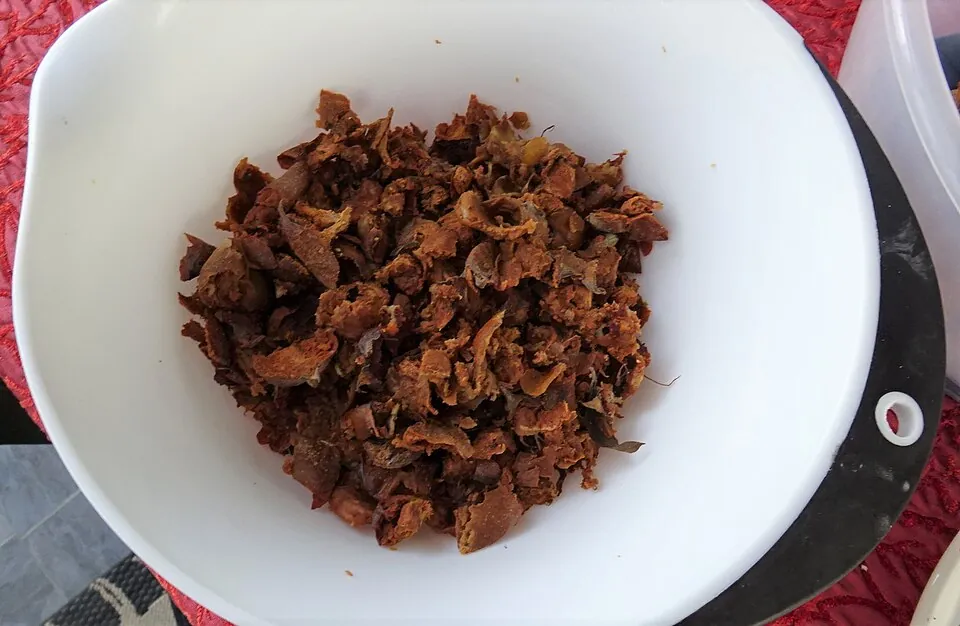
Leathery skinLarge seedsScoop out the soft flesh, leaving the leathery skin and removing the large seeds.
More tips
Worth knowing
- For medlar, the eating stage looks very different from a crisp orchard fruit. Go by texture and aroma rather than treating every brown or soft fruit as edible.
Detroit, Michigan
When it’s good hereUsual monthsJust arrivedAt their bestLast chanceAll yearWhere it is in its usual monthsToday, Oct 22Grown hereIn season in your stateShips fromIn season where it grows
1 growing area, 1 countryUsual monthsToday, Oct 22

- United Kingdom
- You
1 of 1 areas · October
Medlar jelly and sweet desserts are traditional uses, and bletted fruit is also eaten uncooked. Nottingham and Dutch are named historical varieties.
3 varieties
35 names in 13 languages
- 歐楂Chinese
- மகிலா மரம்Tamil
Cook it
1 Medlar festivalUsual monthToday, Oct 22
Strange but trueHistoryScienceNatureWhere the name came fromCustoms and cultureFood and drink
If you like Medlar
Tastes alike
Sources
Sources
Medlar · Fruitopia · checked Oct 2, 2026
What we don't know yet
Fresh medlars are uncommon in ordinary shops.