Garambullo
Also called Blue myrtle-cactus · Bilberry cactus · Whortleberry cactusMyrtillocactus geometrizans · Cactaceae family
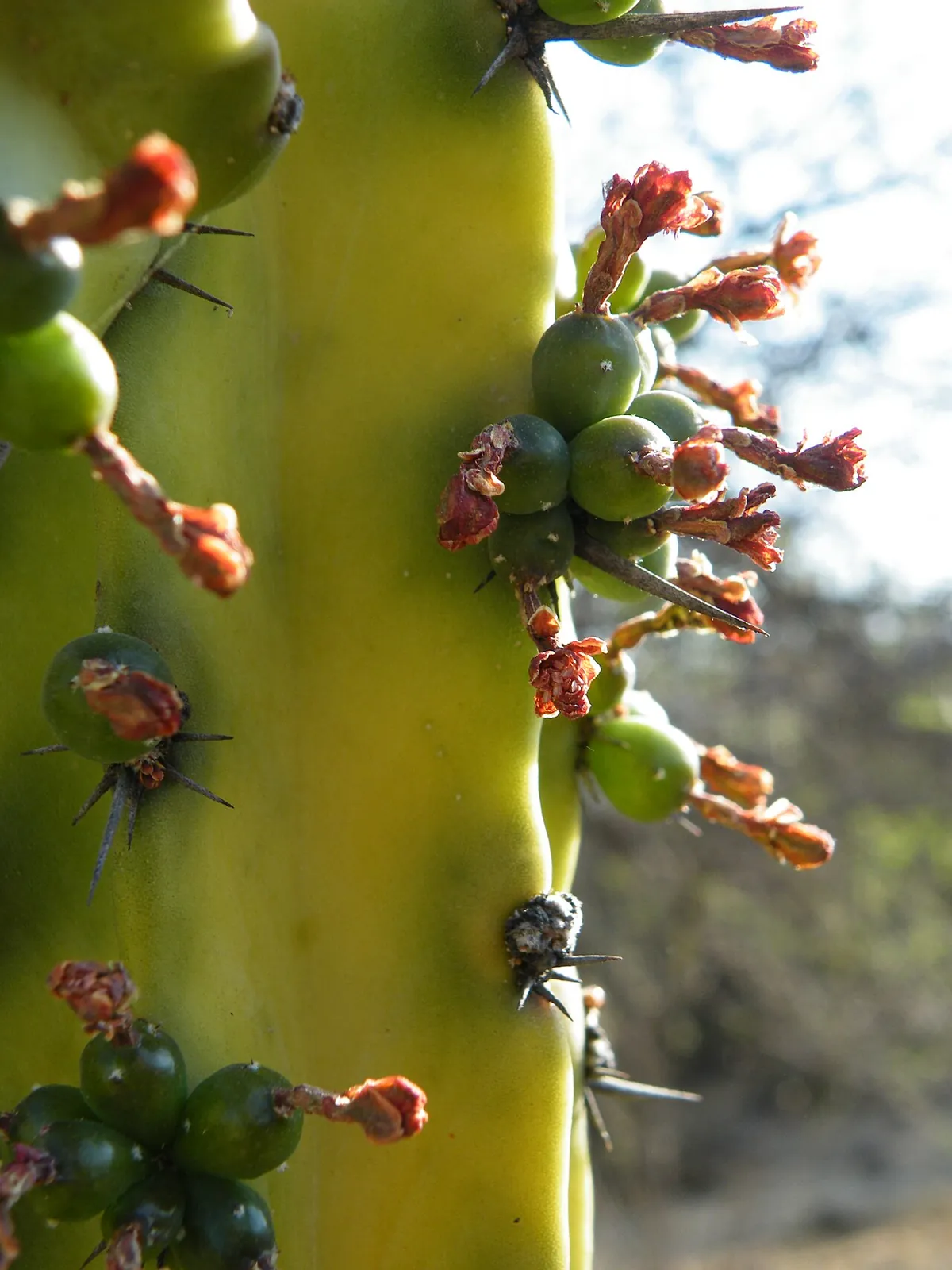
Garambullo comes from a tall, branching cactus whose small dark fruits can be easy to miss against its blue-green stems. It adds another distinct fruit to Mexico's cactus-food diversity.
Find it near DetroitGet to know it
Garambullo looks like a little purple berry, but it grows on a branching Mexican cactus. Its sweet flesh has a slight tart edge and tiny black seeds. A recipe from Hidalgo turns it into nieve de garambullo, a frozen dessert made with evaporated milk and sugar.
What it is
The fruit is about 1.3 cm (½ in) across, with skin that ranges from reddish brown to dark purple. Inside its thin skin, the flesh is soft and jelly-like, dotted with tiny black seeds. Its plant, Myrtillocactus geometrizans, has thick blue-green or grey-green stems that branch like a candelabra.
Where it comes from
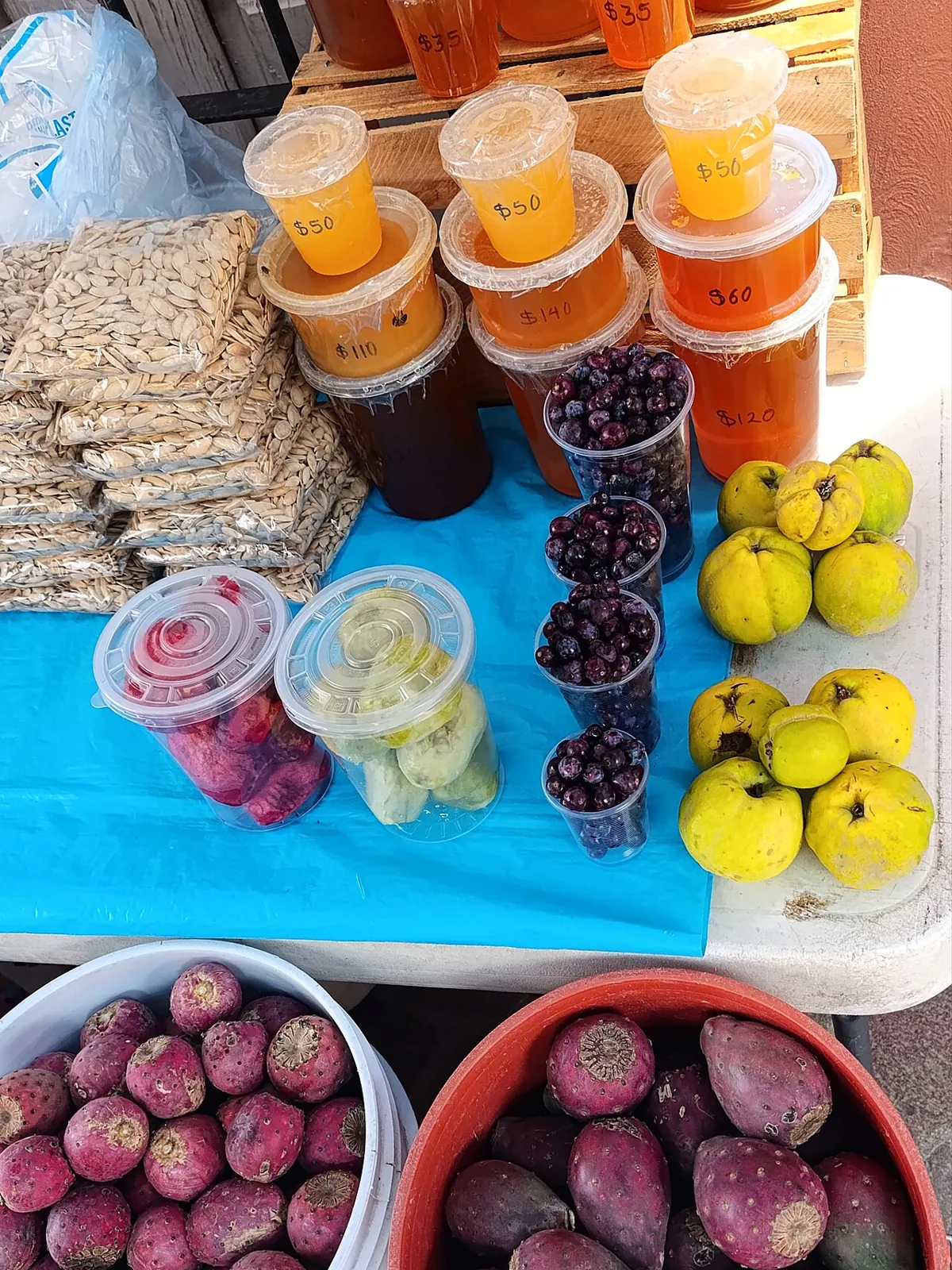
Garambullo comes from central Mexico. It grows in dry scrub, in tropical forests that lose their leaves, and in some grasslands of the southern Chihuahuan Desert. In Querétaro, people gather the fruit by hand for local markets.
How it's eaten where it grows
In Hidalgo, nieve de garambullo starts with the fruit blended into a thick pulp with evaporated milk. More milk and sugar join it, then the mixture is stirred in a metal container sitting in ice and coarse salt. Scraping the frozen mixture from the sides gradually turns it creamy.
Garambullo also goes into atole, a traditional hot drink thickened with maize dough and sweetened with honey. In Querétaro, concentrated pulp becomes ate, a firm fruit sweet. The flowers have their own dishes, including tamales, beans and a Querétaro mole sauce.
How it's grown
The cactus can reach about 4.6 m (15 ft), although it takes years to become large. It grows best in gravelly soil that drains freely. Growers can start new plants from pieces of stem, leaving the cut surface to seal before planting them in soil.
When and where you'll find it
In Querétaro, the usual gathering season runs from July through September. Fresh garambullo is a local-market fruit, picked one berry at a time. Drying gives it another life as a raisin-like fruit; in suitable weather, it can even dry while still attached to the cactus.
Get it near Detroit
What it tastes like
As sweet as a banana, as mild as a peach≈
More about the taste
The small fruit is sweet and can be dark red or blue.
The small fruit is sweet and can be dark red or blue.
It's sometimes compared to kiwifruit.
Choose, store, eat
1ChooseIdentified seller or grower
Look for
- Identified seller or grower
Buy from an identified seller or grower rather than foraging by cactus shape or berry color alone, since several cactus fruits look similar.
2StoreThe fruit is sometimes dried for a raisin-like use
The fruit is sometimes dried for a raisin-like use.
3EatFruit
Eat
FruitGarambullo atole uses the fruit; other recipes on the same page use the flowers instead — the two aren't interchangeable.
Detroit, Michigan
When it’s good hereUsual monthsJust arrivedAt their bestLast chanceAll yearWhere it is in its usual monthsToday, Oct 22Grown hereIn season in your stateShips fromIn season where it grows
19 names in 6 languages
Cook it
Strange but trueScience
If you like Garambullo
Tastes alike
Sources
Sources
Garambullo · Fruitopia · checked Sep 23, 2026