Cherimoya
Also called Custard apple · CherimoyerAnnona cherimola · Annonaceae family
A fragrant, spoonable fruit with a seed-by-seed architecture and a growing history tied to careful pollination.
Find it near DetroitGet to know it
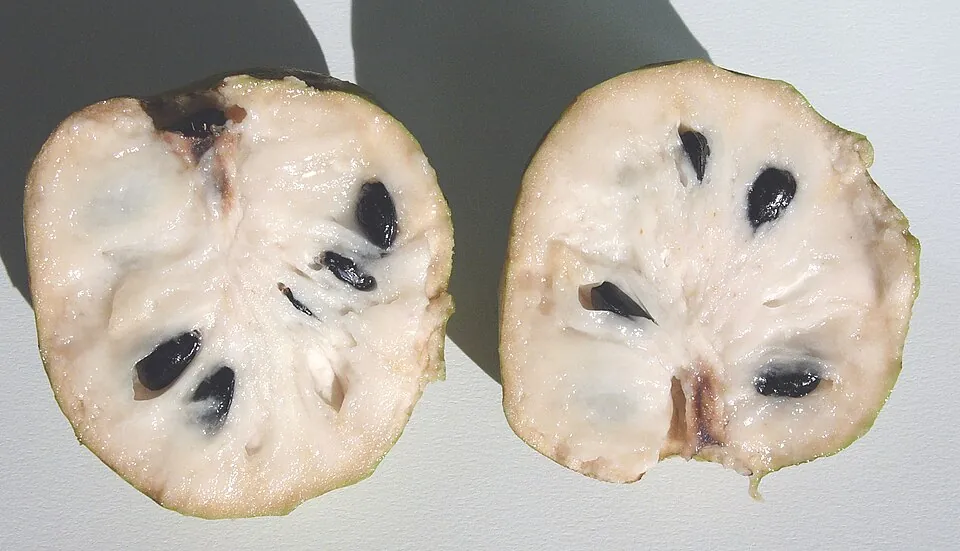
Cherimoya tastes like custard you can scoop straight from a fruit. Under its fingerprint-marked or bumpy skin is fragrant white flesh, sweet and juicy, with hard black seeds tucked into separate pockets. A ripe one needs only a knife and a spoon.
What it is
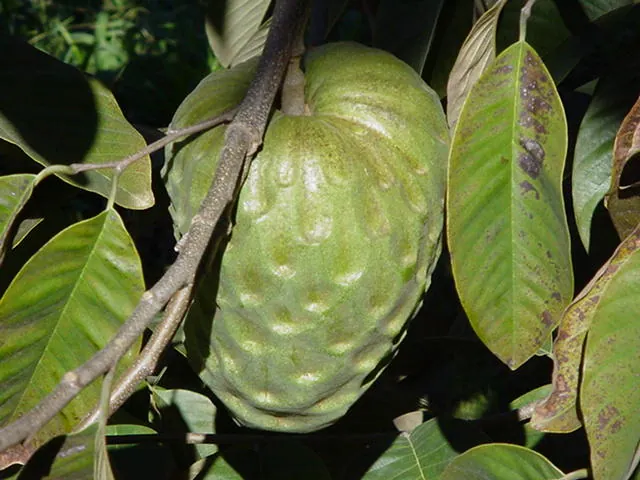
Cherimoya is Annona cherimola, a relative of sugar apple and soursop; atemoya is a cross between cherimoya and sugar apple. The fruit is shaped like a cone or a heart, 10–20 cm (4–8 in) long, and usually weighs 150–500 g (5½–18 oz). Its thin or thick skin may be smooth with fingerprint-like markings or covered in rounded or conical bumps.
Varieties have their own flavours: Bays has a lemony note, while Booth suggests papaya. The black seeds are poisonous; remove them before eating the flesh or blending it.
Where it comes from
Cherimoya is believed to come from the inter-Andean valleys of Ecuador, Colombia and Bolivia, and long ago spread to the highlands of Chile and Brazil. It is grown and naturalized in cooler parts of Costa Rica and elsewhere in Central America.
It reached Spain in 1757, but only became an important orchard crop in Granada, in the Sierra Nevada, in the 1940s and 1950s, replacing diseased orange trees. Seeds from Mexico were planted in Carpinteria, California, in 1871. It reached India and Sri Lanka in 1880, and Madeira in 1897.
How it's eaten where it grows
In Chile, chirimoya alegre pairs pieces of peeled, deseeded cherimoya with freshly squeezed orange juice. The name means “merry cherimoya”. It is served straight away or chilled, with the fruit left in pieces.
In Mexico, some people add a few drops of lime to the flesh. In Colombia, strained cherimoya juice, a lemon slice and ice-water make a cold drink. Seeded flesh also goes into fruit salads, sherbet and ice cream, but most often the fruit is its own dessert, spooned from the cut skin.
How it's grown
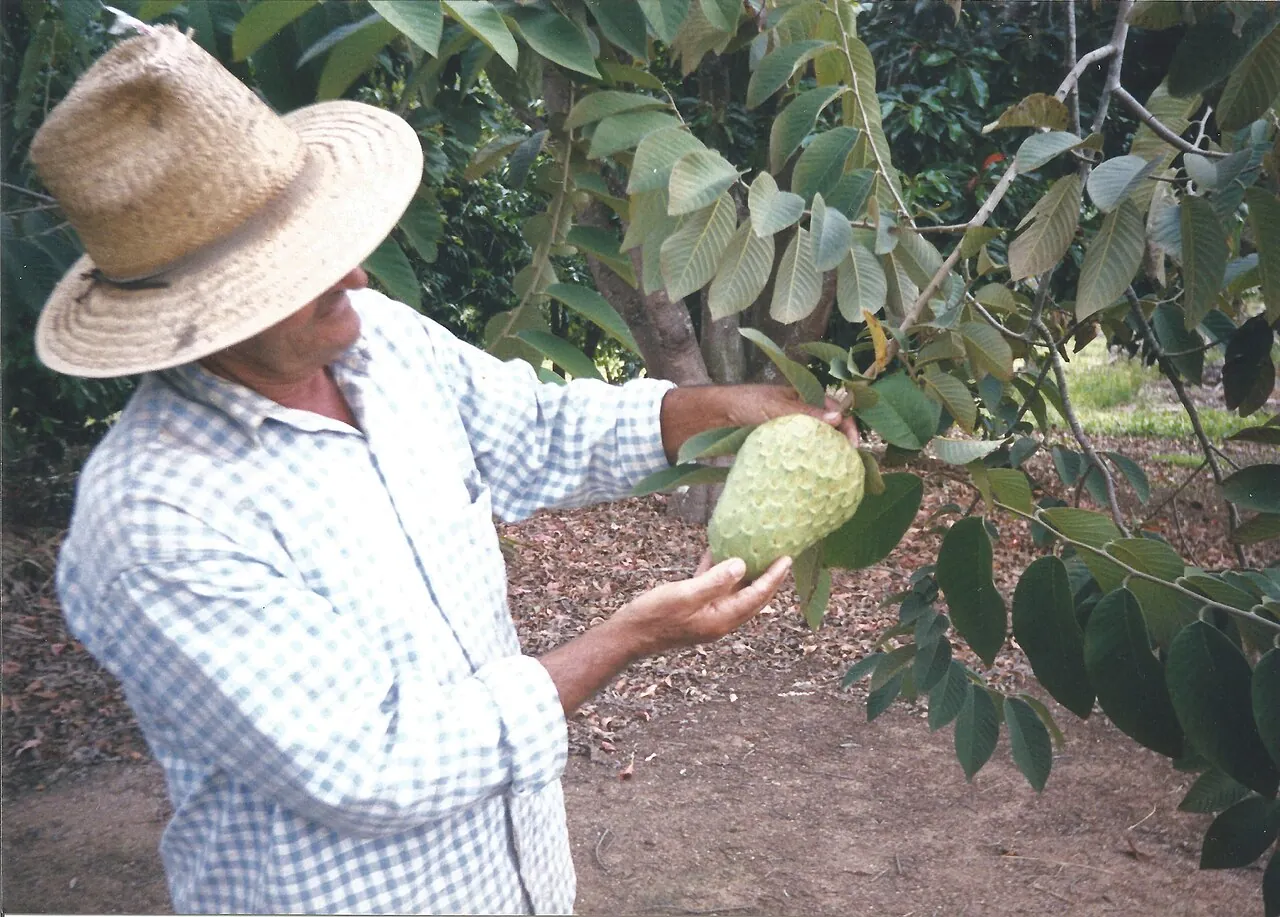
The tree reaches 5–9 m (16–30 ft), briefly shedding its leaves before spring flowering. It likes sunshine, sea air and cool nights. A grafted tree can begin bearing in two to three years.
In California, flowers are pollinated by hand: growers collect fresh pollen and apply it with a small brush. In Carpinteria, cherimoya grows on the coastal hills.
When and where you'll find it
California cherimoyas usually ripen from October to May. For many years, fruit was shipped from Madeira to London.
The fruit is picked firm and softens at room temperature. A ripe cherimoya gives under gentle pressure, so a hard fruit can spend a few days on the counter before it becomes spoonable. In Bolivia, fruit for home use is wrapped in woollen cloth as soon as it is picked and kept at room temperature to eat three days later.
Get it near Detroit
What it tastes like
As soft as a banana, as mild as a peach≈
More about the taste
Cherimoya flesh is soft, fragrant, white and low in acidity. Some varieties have distinct notes: lemony in Bays, papaya-like in Booth.
Cherimoya flesh is soft, fragrant, white and low in acidity. Some varieties have distinct notes: lemony in Bays, papaya-like in Booth.
A tasting invitation
Try describing density, smoothness and acidity separately. Pear or custard are useful comparisons, but neither fully captures cherimoya. If a fruit seems grainy or unusually firm, it may not be fully ripe.
Choose, ripen, store, eat
1ChooseSound, unbruised fruit
Look for
- Sound, unbruised fruit
- Yields gently to pressure
- Paler green or creamy yellow
Ripening fruit turns paler green or creamy yellow, though cool weather can make that change subtle. Ready-to-eat fruit yields gently to pressure; a very dark, split fruit can be past its best.
2RipenOn the counter
Ripens after pickingCounterMature cherimoyas are picked firm and left to soften at room temperature; fruit picked too early won't ripen well.
3StoreFridge, ripe
- FridgeRipeBriefly
Unripe fruit can suffer chilling injury below about 13°C (55°F); ripe fruit tolerates colder temperatures briefly.
4EatSoft flesh · not hard dark seeds
Eat
Soft fleshNot eaten
Hard dark seedsEat the soft flesh and remove the hard dark seeds. The seeds and other plant tissues contain poisonous alkaloids — don't blend the whole fruit.
More tips
A useful detail Cherimoya's hard dark seeds contain poisonous compounds. Eat only the flesh, and remove every seed before blending or serving.
Worth knowing
- When comparing price per fruit, edible pulp matters as well as size; yield varies from fruit to fruit.
- Cherimoya varieties differ in texture and juiciness as well as sweetness.
Detroit, Michigan
When it’s good hereUsual monthsJust arrivedAt their bestLast chanceAll yearWhere it is in its usual monthsToday, Oct 22Grown hereIn season in your stateShips fromIn season where it growsOrderableListed by a seller we checkedThe day a seller was checked
14 growing areas, 5 countriesUsual monthsOur estimated monthsToday, Oct 22

- California
- Coquimbo
- Florida
- Granada
- Hawaii
- Ica
- La Libertad
- Lambayeque
- Madeira
- Málaga
- Valparaíso
- You
2 of 2 areas · October
Growing areas by country
- Spain4
- Peru4
- United States3
- Chile2
- Portugal1
Cherimoya grows in the tropical highlands of Peru and Ecuador, eaten fresh or made into ice cream.
23 varieties
- No variety photo yetRincon
- Texture
- creamy
- Flesh
- yellow
- Shape
- oval
- No variety photo yetBays
- Flavour
- good lemony flavor US-CA
- Juice
- juicy
- Flesh type
- melting
- Flesh
- white
- No variety photo yetFino de Jete
- Flavour
- Sabor dulce elevado pero equilibrado con el sabor subácido ES-AN
- Skin
- green ES-AN
- Flesh
- white · cream ES-AN
- Use
- fresh ES-AN
- No variety photo yetBooth
- Flavour
- papaya like flavor US-CA
- No variety photo yetPER-000852
- Taste
- high PE-AYA
- Texture
- creamy PE-AYA
- Shape
- conical PE-AYA
- No variety photo yetChaffey
- Flavour
- lemony flavor US-CA
- Flesh
- cream
43 names in 17 languages
- chirimoyaroot
Cook it
How to serve it first
Halve a washed, ripe fruit and spoon the flesh into a bowl, removing seeds as you work. Taste it plain before using prepared pulp in a frozen dessert or milkshake. A chilled spoonful can be enough to introduce its distinctive texture.
1 Cherimoya festivalUsual monthToday, Oct 22
Strange but trueHistoryA myth, and the truthScienceNatureWhere the name came fromCustoms and cultureFood and drinkPeople
If you like Cherimoya
Close relatives
Same plant family
Nutrition, sources
Nutrition
Cherimoya, raw · per 100 g
- Carbohydrate
- 18 g
- Fiber
- 3 g
- Sugars
- 13 g
- Protein
- 1.6 g
- Fat
- 0.7 g
- Vitamin C
- 13 mg
- Potassium
- 287 mg
Sources
Cherimoya · Fruitopia · checked Sep 22, 2026