Pawpaw
Also called Hoosier banana · Paw-paw · Dog-bananaAsimina triloba · Annonaceae family
A woodland fruit with a spoonable center and an unusually short fresh-fruit life.
Find it near DetroitGet to know it
Pawpaw tastes like banana, mango and pineapple stirred into a thick custard, yet it grows in North American woods as far north as southern Ontario. The ripe fruit gives under a gentle touch. Split it open and eat the soft pulp, leaving the skin and seeds behind.
What it is
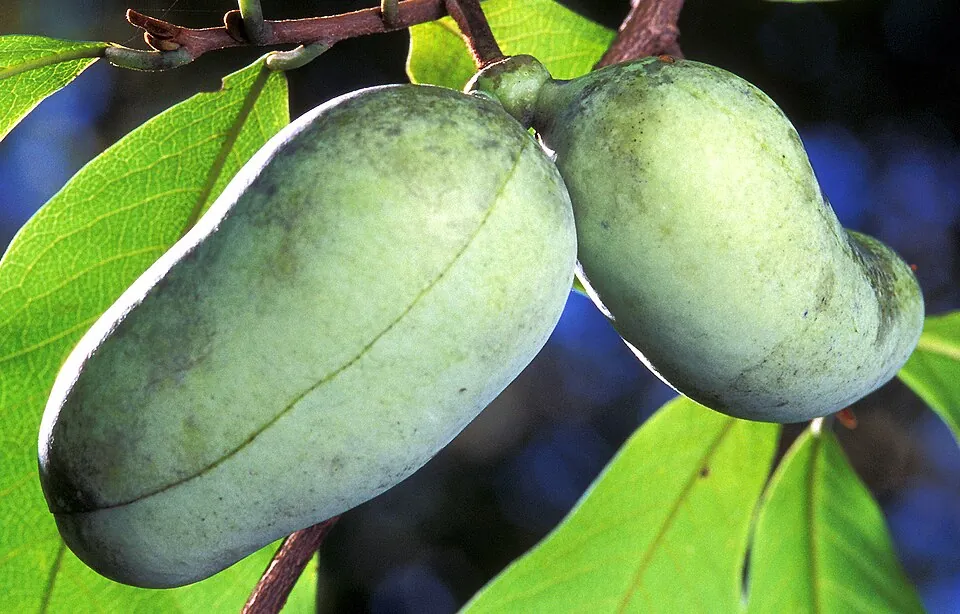
This is Asimina triloba, the North American pawpaw; the tropical papaya shares its common name. A fruit is about 8–15 cm (3–6 in) long. Its ripe skin can stay green or turn yellow, often with dark flecks.
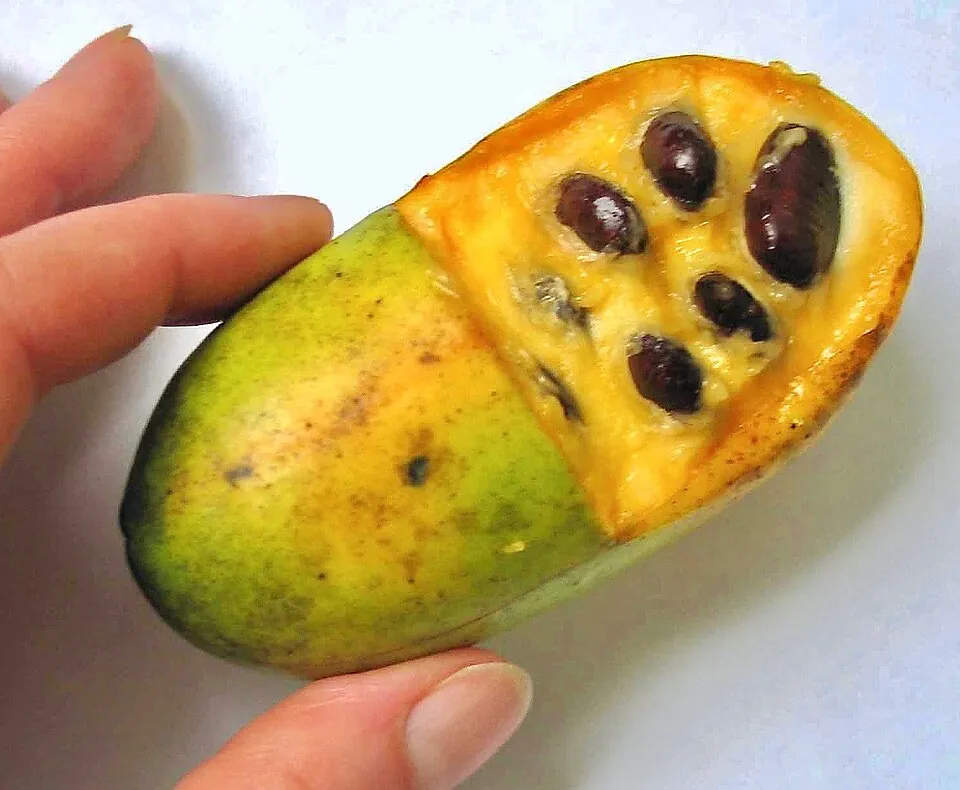
Inside is spoonable flesh with the texture of custard. Softness helps tell you when it is ready: a ripe pawpaw yields gently under a finger. The pulp is the part to eat; the skin and seeds are discarded.
Where it comes from
Pawpaw grows wild from northern Florida to southern Ontario and west to eastern Nebraska. It is a woodland tree that grows beneath taller trees.
In Frankfort, Kentucky, a living collection brings together more than 2,000 pawpaw trees from 17 states. Named varieties come from there too: KSU-Chappell is the third released at Kentucky State University.
How it's eaten where it grows
Ohio celebrates the fruit at the Ohio Pawpaw Festival, with a cook-off, a competition for the best and biggest fruit, and a pawpaw-eating contest.
An Indiana no-bake cheesecake folds pawpaw pulp into cream cheese with lemon juice and vanilla. Gelatin sets the filling in a prepared crust, and the cheesecake chills until firm. The fruit filling needs no oven time.
How it's grown
Pawpaw trees lose their leaves for winter and need warm to hot summers and mild to cold winters. They grow beneath a woodland canopy, but mature trees give their biggest crops in full sun. Grafted trees can begin bearing in three years.
Flies and beetles carry pollen between the flowers. Fruit growing generally needs two different trees: planting two grafted trees of the same variety does not provide the cross-pollination they need.
When and where you'll find it
In Kentucky, pawpaws are usually picked from late August to mid-October; in Pennsylvania, September is the usual month. Farmers’ markets are a place to encounter the fresh fruit. A fully ripe pawpaw lasts only a few days at room temperature.
Frozen pulp carries it beyond the fresh season. Ohio producer Integration Acres offers pulp with a little ascorbic acid added; it can go into a smoothie or ice cream.
Sources · 7
- Desmond R. Layne, Purdue NewCROPhort.purdue.edu
- Integration Acresintegrationacres.com
- Kentucky State Universitykysu.eduOther pages234
- NC State Extension Gardener Plant Toolboxplants.ces.ncsu.edu
- Ohio Pawpaw Festivalohiopawpawfest.com
- Penn State Extensionextension.psu.edu
- Purdue Extension FoodLinkextension.purdue.edu
Get it near Detroit
What it tastes like
As soft as a banana, as mild as a watermelon≈
More about the taste
Ripe pawpaw is creamy and custard-like, often compared to banana with touches of mango and pineapple.
Pawpaw's flavor is often compared to banana, mango and pineapple — these are taste comparisons, not ingredients or a claim that it's a hybrid of those fruits.
Pawpaw flesh is creamy and custard-like, with aroma intensifying as it ripens. Seedlings and varieties vary, so one comparison won't describe every fruit.
A tasting invitation
Describe the texture before reaching for familiar tropical comparisons. Is this fruit silky, thick, fibrous or especially aromatic? If a grower has several named selections, a small side-by-side tasting can reveal more than one large blended dessert.
Choose, ripen, store, eat
1ChooseYields to gentle pressure
Look for
- Yields to gentle pressure
- Ripe-fruit aroma
Ignore
- Dark blotches
Look for fruit that yields slightly to gentle pressure and has a noticeable ripe-fruit aroma. Dark blotches can occur on ripe fruit; softness and aroma matter more than an immaculate green skin.
2RipenOn the counter
Ripens after pickingCounterLay picked fruit in a single layer to finish ripening indoors, and check it closely as it softens — pawpaw is very perishable.
3StoreFridge, ripe
- FridgeRipe
- FreezerPulp, skin and seeds removedLabelled freezer bag
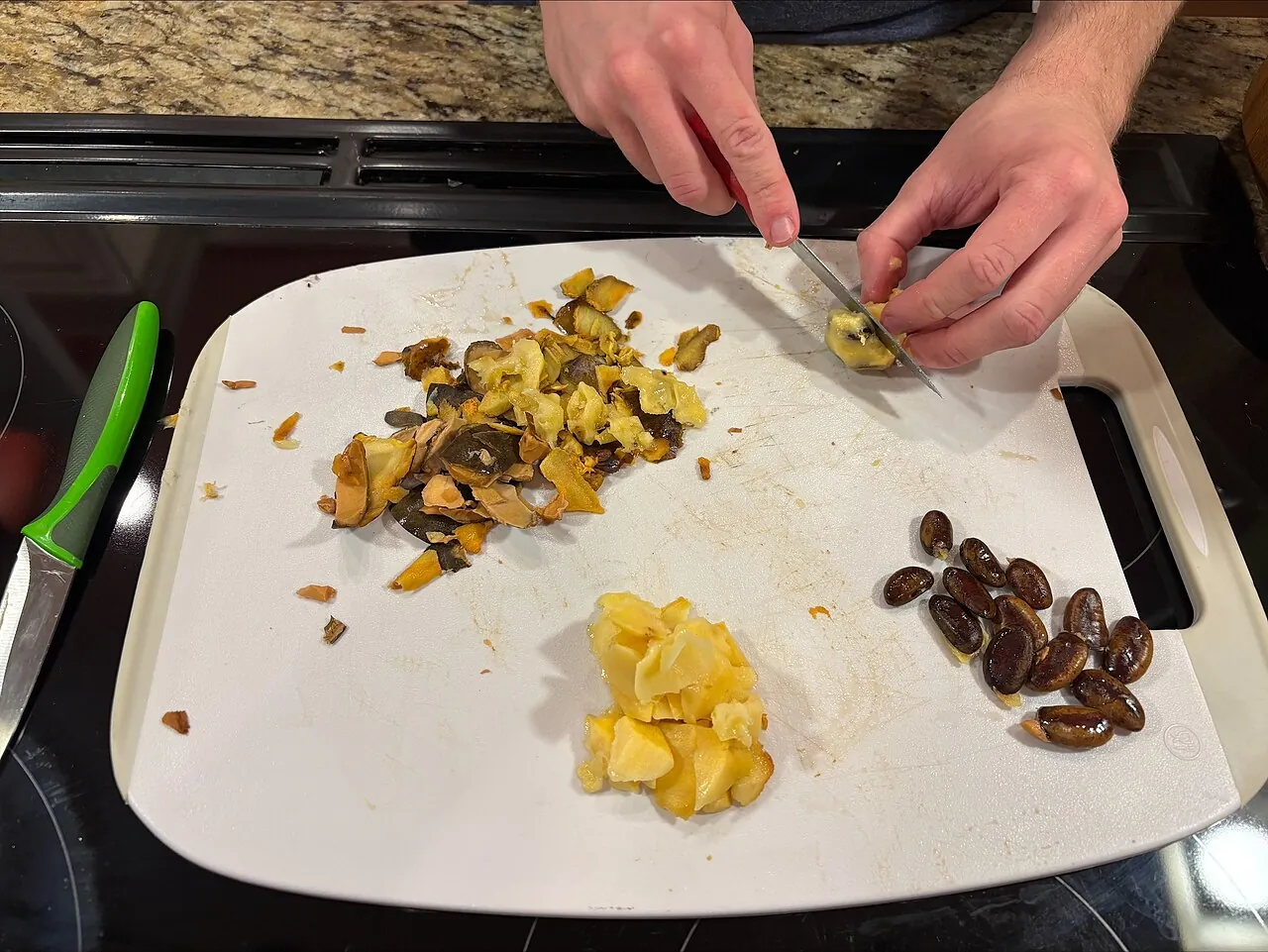
Refrigerate ripe fruit promptly. For a longer pause, remove the skin and seeds, freeze the pulp in a labelled freezer bag and thaw the portion you need in the refrigerator.
4EatFlesh · not skin, seeds
Eat
FleshNot eaten
SkinSeedsRinse the fruit, split it and scoop out the flesh. Discard the skin and all seeds.
More tips
A useful detail Eat the pulp only — cut the washed fruit and scoop out the flesh, leaving the skin and seeds behind.
Worth knowing
- Use gentle pressure and aroma together; greenish skin does not automatically mean a pawpaw is unripe.
- A cool dessert or lightly heated preparation is a good way to enjoy pawpaw aroma. Use the edible pulp with seeds removed.
Detroit, Michigan
When it’s good hereUsual monthsJust arrivedAt their bestLast chanceAll yearWhere it is in its usual monthsToday, Oct 22Grown hereIn season in your stateShips fromIn season where it grows
20 growing areas, 1 countryUsual monthsOur estimated monthsToday, Oct 22

- California
- Florida
- Hawaii
- Washington
- You
7 of 9 areas · October
In Kentucky, regional pawpaw trials, orchard work and a living collection of pawpaw varieties support growers; a 2026 workshop there covered propagation and fruit processing.
7 varieties
- No variety photo yetKSU-Benson
- Taste
- sweet
- No variety photo yetKSU-Chappell
- Taste
- sweet
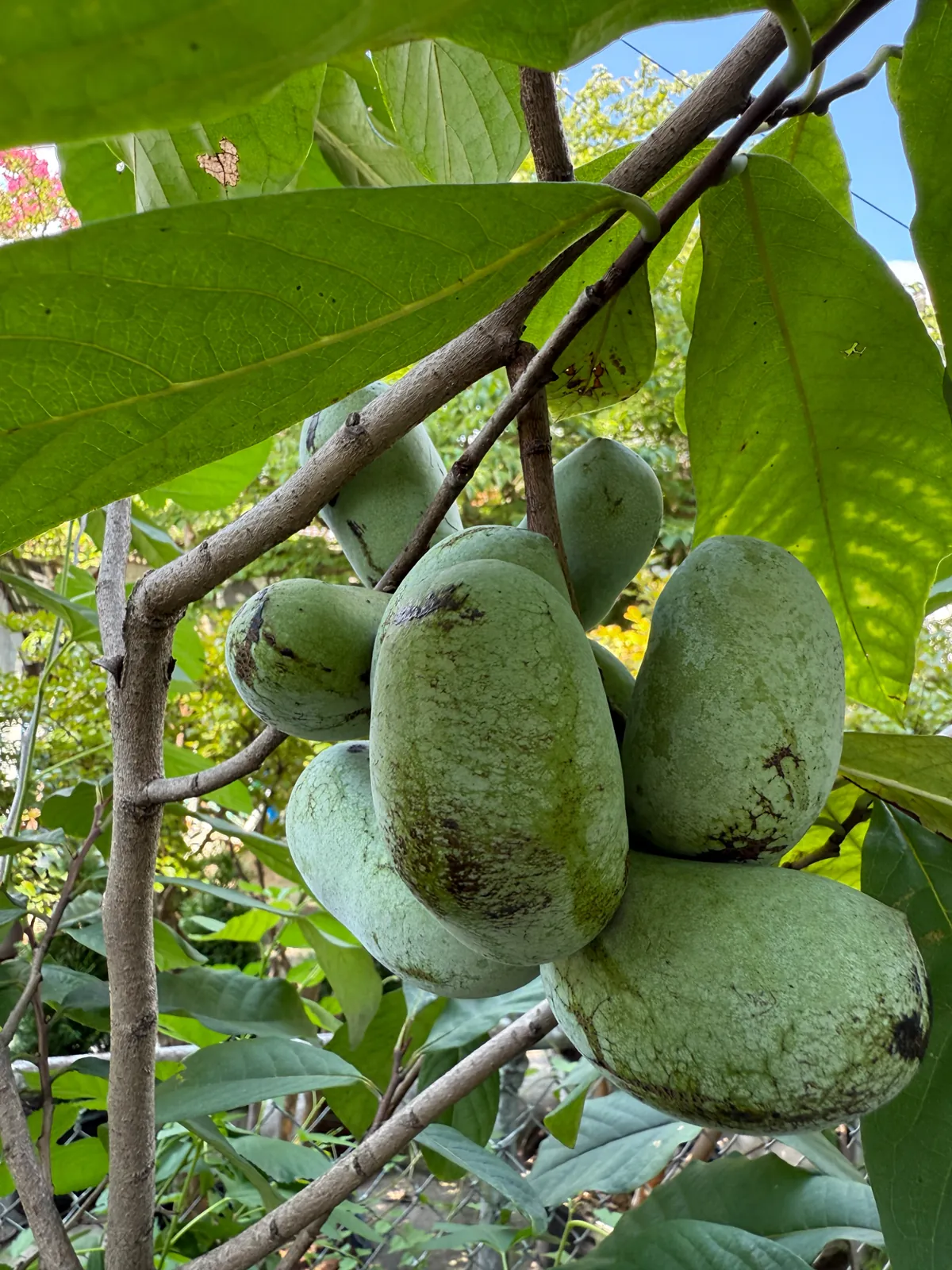 ShenandoahPhoto: Carrie Seltzer · CC BY 4.0
- No variety photo yetAllegheny
- No variety photo yetKSU-Atwood
- No variety photo yetSusquehanna
25 names in 10 languages
- أزيمينة مفصصةArabic
- Paw pawItalian
Cook it
How to serve it first
Begin with a spoonful of plain ripe pulp. Then try a little stirred into yogurt, or freeze prepared pulp in small portions for a recipe written for pawpaw. Keep the batch labeled so it does not disappear into an anonymous container.
2 pawpaw festivalsUsual monthToday, Oct 22
Strange but trueHistoryA myth, and the truthNatureWhere the name came fromCustoms and cultureFood and drinkPeople
If you like Pawpaw
Tastes alike
Same plant family
Nutrition, sources
Nutrition
Pawpaw, peeled, seeded, raw · per 100 g
- Fiber
- 3.3 g
- Sugars
- 14 g
- Protein
- 1.2 g
- Vitamin C
- 28 mg
- Potassium
- 221 mg
Photos · 4
Sources
Pawpaw · Fruitopia · checked Sep 21, 2026
What we don't know yet
Fresh pawpaw is highly local. Some people report gastrointestinal reactions to baked or dehydrated pawpaw specifically.