Bilimbi
Also called Tree sorrelAverrhoa bilimbi · Oxalidaceae family
This sour fruit works as a culinary acid, with a skin that needs a gentle hand.
Find it near DetroitGet to know it
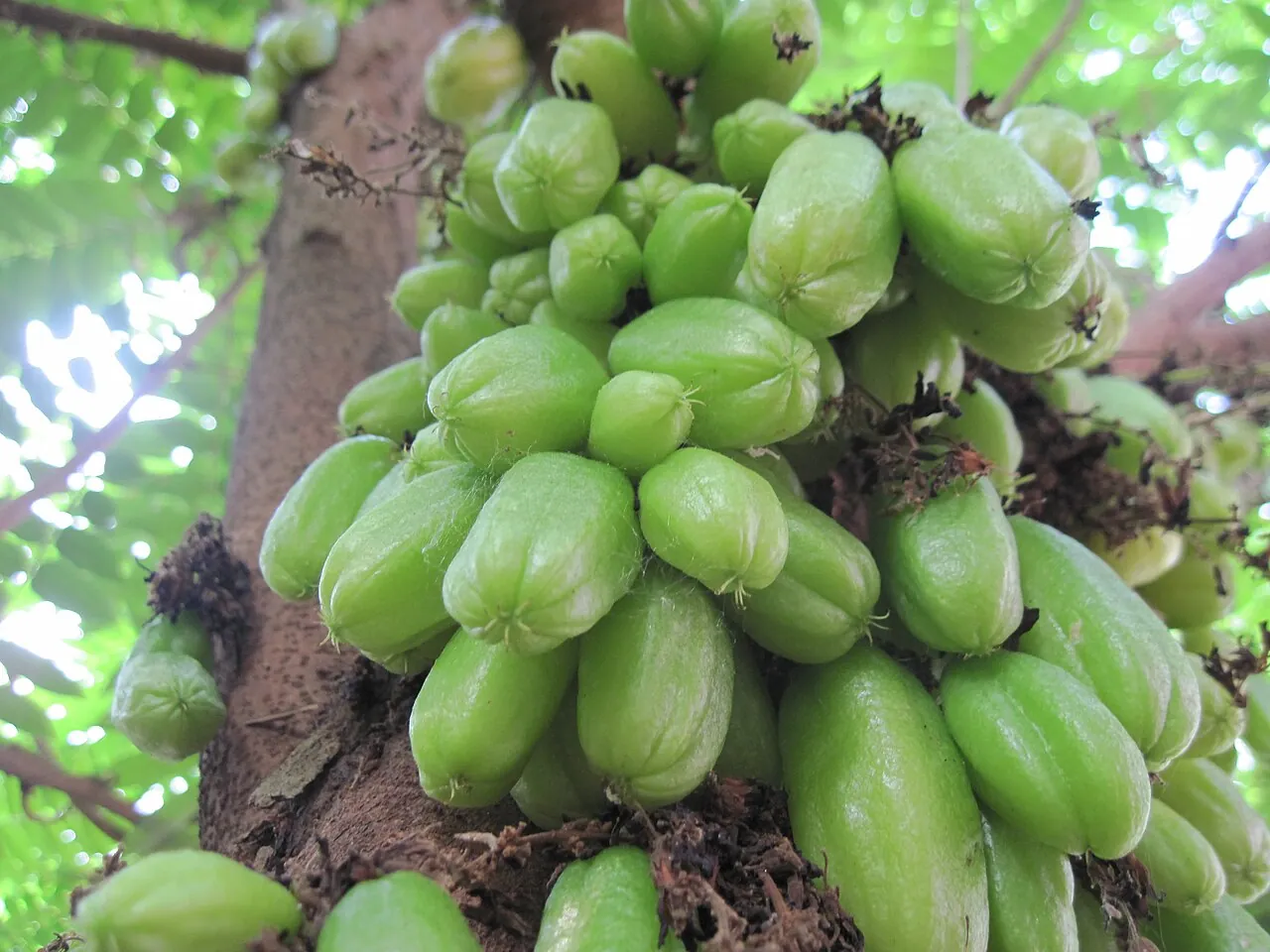
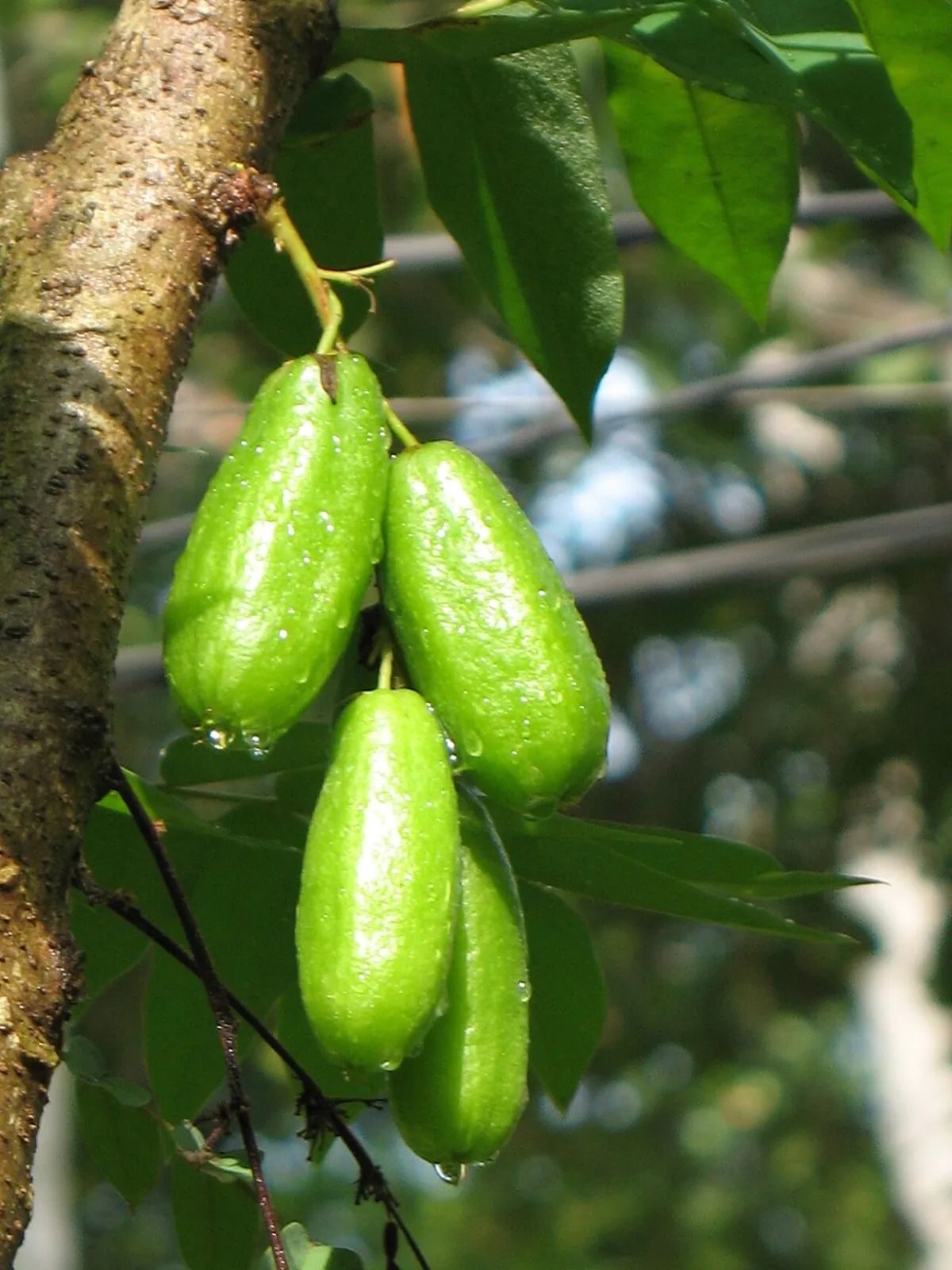
Bilimbi looks like a little cucumber growing straight from a tree trunk. Bite into its juicy flesh and the flavour is sharply sour. This relative of starfruit earns its place in the kitchen through pickles, relishes and other dishes that need acidity.
What it is
The narrow fruits are 4–10 cm (1½–4 in) long, with five faint ridges. Their glossy skin is thin and tender, and the green flesh is juicy and jelly-like. Green fruit turns pale yellow as it ripens.
Most bilimbi is intensely sour. Some almost-sweet forms are still found in the Philippines, but the sour ones have long been preferred. Kamias is its usual Filipino name.
Where it comes from
Bilimbi comes from Southeast Asia and is grown in backyards across Indonesia, Malaysia, the Philippines, India and Sri Lanka. Its scientific name is Averrhoa bilimbi.
The fruit travelled from Timor to Jamaica in 1793. From there it spread through the Caribbean and tropical America, including Cuba, Puerto Rico, Trinidad and Central America.
How it's eaten where it grows
In India, irumban puli achar turns bilimbi into a cooked pickle. Mustard seeds and asafoetida go into hot oil first; the fruit follows and cooks until soft. Turmeric, salt and chilli complete the condiment. The pieces of fruit provide the sourness themselves.
In Costa Rica, green bilimbi becomes an uncooked relish served with rice and beans, and sometimes with fish or meat.
How it's grown
Bilimbi grows on a tropical tree that commonly reaches 5–10 m (16–33 ft). It likes full sun and needs shelter from cold and wind. A tree grown from seed begins fruiting in four to six years.
The fruit is picked by hand as it turns lighter green. Its skin is so soft that the fruit is piled no more than a few inches deep in harvest containers.
When and where you'll find it
In Hawaiʻi, rain and irrigation can bring several crops a year; without that pattern, trees may fruit once or twice for about two months. Fresh bilimbi reaches farmers’ markets there, including one in Kona.
Frozen fruit travels farther, sometimes under its Filipino name: Adobo Market lists Frozen Bilimbi Fruit – Kamias in 227 g (8 oz) packs.
Get it near Detroit
What it tastes like
Sweeter than a lemon, as tart as a grapefruit≈
More about the taste
Bilimbi is usually pronounced sour, though the Philippines has both sour and nearly sweet forms.
Bilimbi is usually pronounced sour, though the Philippines has both sour and nearly sweet forms.
Choose, store, eat
1ChooseLight yellow from green
Look for
- Light yellow from green
- Shallow layers, not deep piles
Ripe bilimbi turns light yellow from green; the very soft skin bruises easily, so look for fruit stored in shallow layers rather than deep piles.
2StoreBilimbi is highly perishable
Bilimbi is highly perishable; use it promptly after harvest.
3EatThe fruit is used in pickles, curries, chutneys and preserves, in Philippine soups and stews, and as an acidic juice in dressings and soups
The fruit is used in pickles, curries, chutneys and preserves, in Philippine soups and stews, and as an acidic juice in dressings and soups.
More tips
Worth knowing
- Bilimbi's skin is delicate: use it soon after buying, and look for damaged fruit in a deep, compressed pile.
Detroit, Michigan
When it’s good hereUsual monthsJust arrivedAt their bestLast chanceAll yearWhere it is in its usual monthsToday, Oct 22Grown hereIn season in your stateShips fromIn season where it grows
1 growing area, 1 countryUsual monthsToday, Oct 22

- Pahang
- You
Bilimbi is often grown in backyards; at a Kona farmers' market, sharing chefs' recipes has helped introduce customers to the unfamiliar fruit.
56 names in 18 languages
- kamiasroot
- 三敛Chinese
Cook it
Strange but trueHistoryScienceWhere the name came fromCustoms and culture
If you like Bilimbi
Tastes alike
Close relatives
Sources
Photos · 2
Sources
Bilimbi · Fruitopia · checked Oct 2, 2026