Saguaro fruit
Also called Arizona giant cactus · Saguaro cactus · Cereus giganteusCarnegiea gigantea · Cactaceae family
A red-fleshed Sonoran Desert fruit woven into Tohono O'odham food traditions and the annual harvest cycle.
Find it near DetroitGet to know it
Saguaro fruit splits open high on the arms of the Sonoran Desert’s giant cactus, revealing sweet red pulp crowded with tiny black seeds. For the Tohono O’odham, its harvest brings syrup, jam and a ceremony calling for the summer rains.
What it is
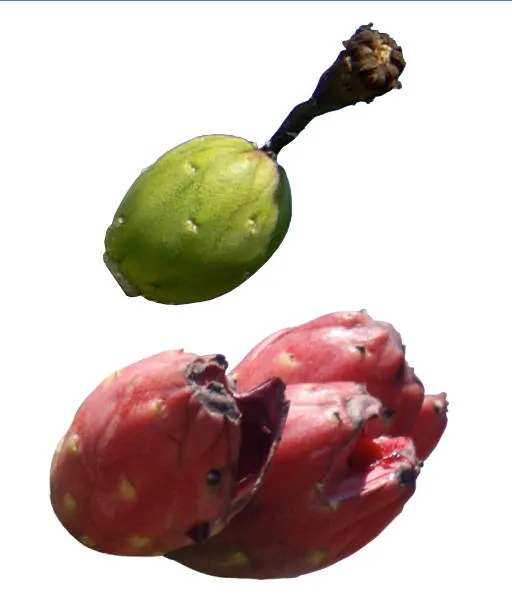
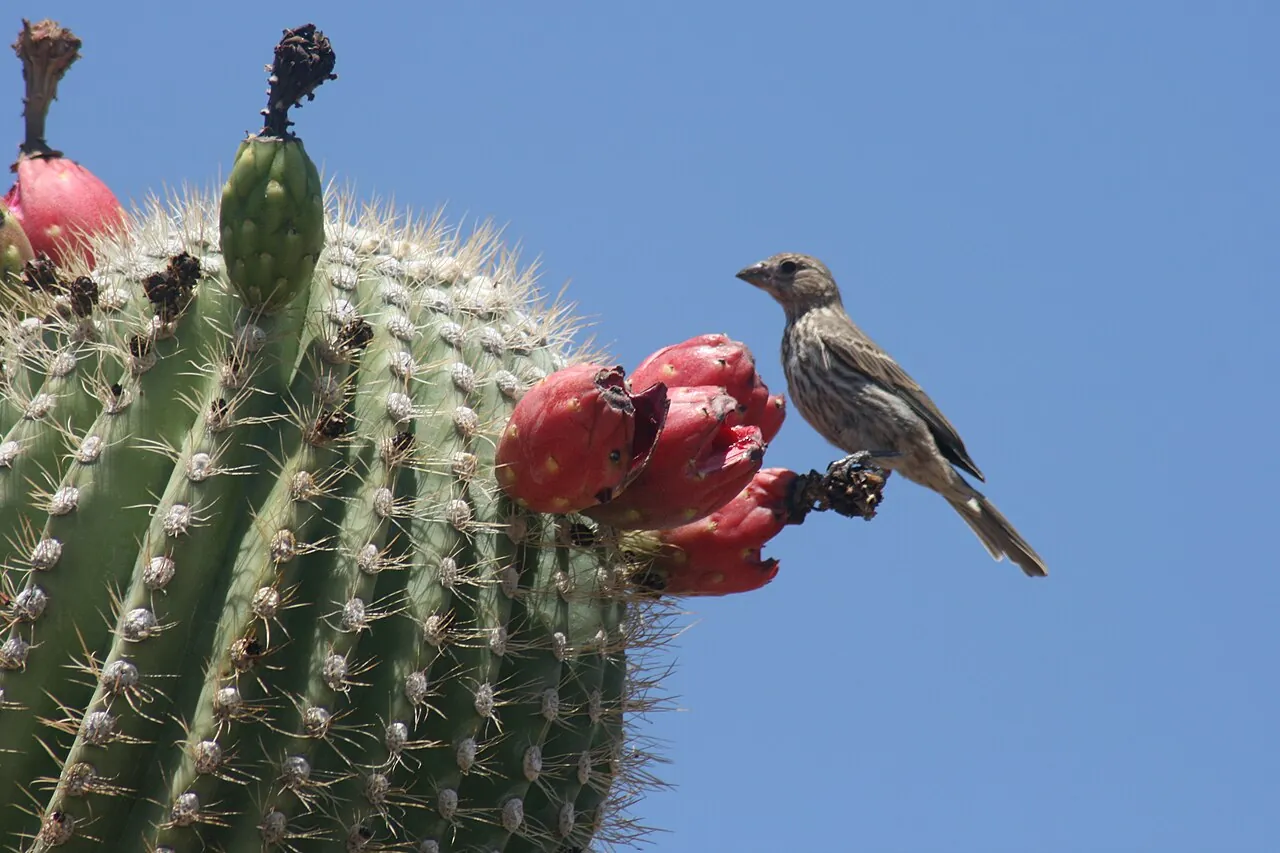
The fruit of Carnegiea gigantea is oblong, about 6 cm (2.4 in) long and 3 cm (1.2 in) across. Its scaly skin is red or red-green. It splits open to expose the red flesh. Each fruit holds roughly 2,000–3,500 tiny black seeds. In Tohono O’odham, the cactus is ha:san and the fruit is bahidaj.
Where it comes from
Saguaros grow naturally in the Sonoran Desert of Arizona, southeastern California and Mexico. Freezing weather limits their range. The fruit belongs to a continuing Tohono O’odham harvest tradition: people still gather it with long poles and turn the crop into foods and drinks. The O’odham calendar begins with the saguaro harvest month.
How it's eaten where it grows
In the Sonoran Desert, bahidaj becomes sitol, a syrup; hihij kusul, a jam; and nawait, a ceremonial wine associated with calling the monsoon rains. Fruit boils with water over a wood fire, then the mixture is strained to separate the juice from the pulp and seeds.
The pulp dries before going back into boiling syrup to make jam. Seeds become meal or candy. A smoothie pairs the fruit with yogurt, Arizona mission figs and coconut or hemp milk.
How it's grown
A young saguaro starts life beneath a sheltering tree, protected from summer sun and winter frost. Flowering begins at about 35 years old. Each blossom opens at night and closes the next afternoon, leaving bats, birds and insects a short window to pollinate it.
Harvesters reach the high fruit with a pole assembled from dead saguaro ribs. These poles run 4.5 to 9 m (15 to 30 ft) long, with a crosspiece to hook or nudge the fruit free.
When and where you'll find it
The Sonoran Desert harvest usually yields syrup for saguaro wine by the second half of June, ahead of the summer monsoon. Fresh pulp is scraped from the skins into buckets and carried back to camp.
Cooked down into a thickened syrup, the harvest keeps for a while before it is fermented, so the O’odham New Year ceremony can fall anywhere in the first half of July, depending on when the harvest ends and the monsoon begins.
Get it near Detroit
What it tastes like
Sweeter than a banana, as mild as a peach≈
More about the taste
Saguaro fruit is very sweet, with dark-red pulp and a nutlike flavor in the seeds.
How to buy it
1EatFruit, Seeds
Eat
FruitSeedsBoth the fruit and its seeds have long been eaten, including roasted and ground seeds.
Detroit, Michigan
When it’s good hereUsual monthsJust arrivedAt their bestLast chanceAll yearWhere it is in its usual monthsToday, Oct 22Grown hereIn season in your stateShips fromIn season where it grows
36 names in 14 languages
- ซากัวโรThai
- ベンケイチュウJapanese
Cook it
Strange but trueHistoryNatureWhere the name came fromCustoms and culture
If you like Saguaro fruit
Tastes alike
Same plant family
Used the same way
Sources
Photos · 2
Sources
Saguaro fruit · Fruitopia · checked Sep 22, 2026