Serviceberry
Also called Saskatoon serviceberry · Pacific serviceberry · Western juneberryAmelanchier alnifolia · Rosaceae family
A small pome whose harvest maturity changes the balance between acidity, sweetness and softness.
Find it near DetroitGet to know it
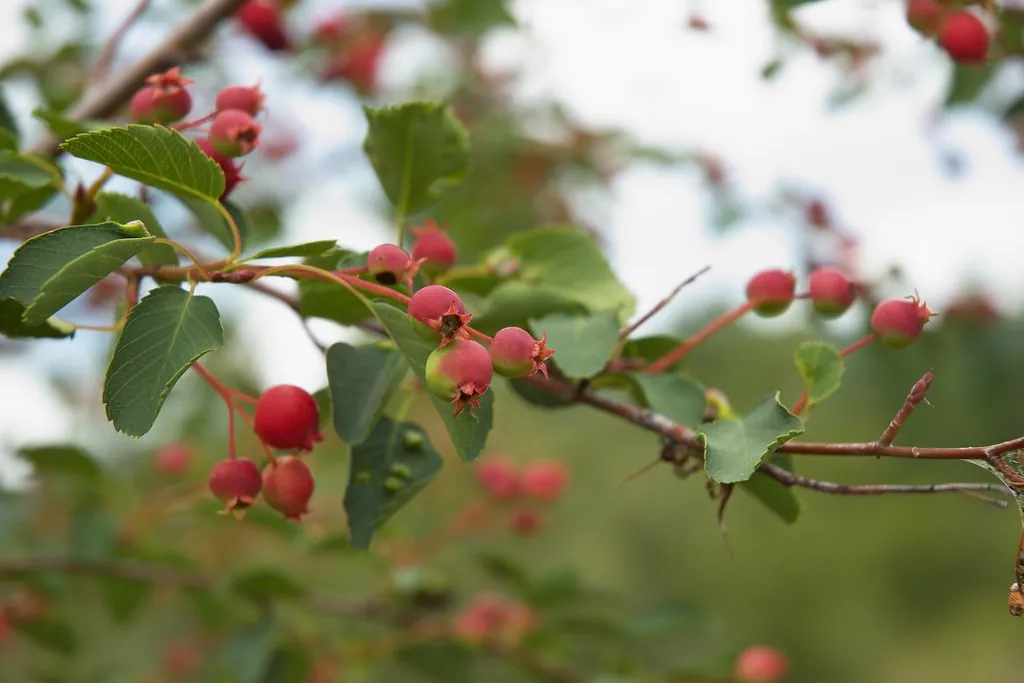
Serviceberries look like small blueberries, but belong to the rose family. This one is the Saskatoon serviceberry, Amelanchier alnifolia, with sweet, fleshy fruit and a few seeds. As the fruit ripens to purple or nearly black, it becomes softer and sweeter: a good stage for pies and jam.
What it is
A serviceberry is a pome, the kind of fruit an apple is, in a much smaller package. The fruit measures about 0.6–1.1 cm (¼–½ in) long, with a faint blue-grey waxy bloom and 4–10 seeds in the flesh.
Garden varieties offer different bites. Northline has medium-sized fruit with few seeds; Thiessen produces large, juicy fruit. Less ripe berries taste sharper, while fully ripe ones carry more sugar and bruise more easily.
Where it comes from
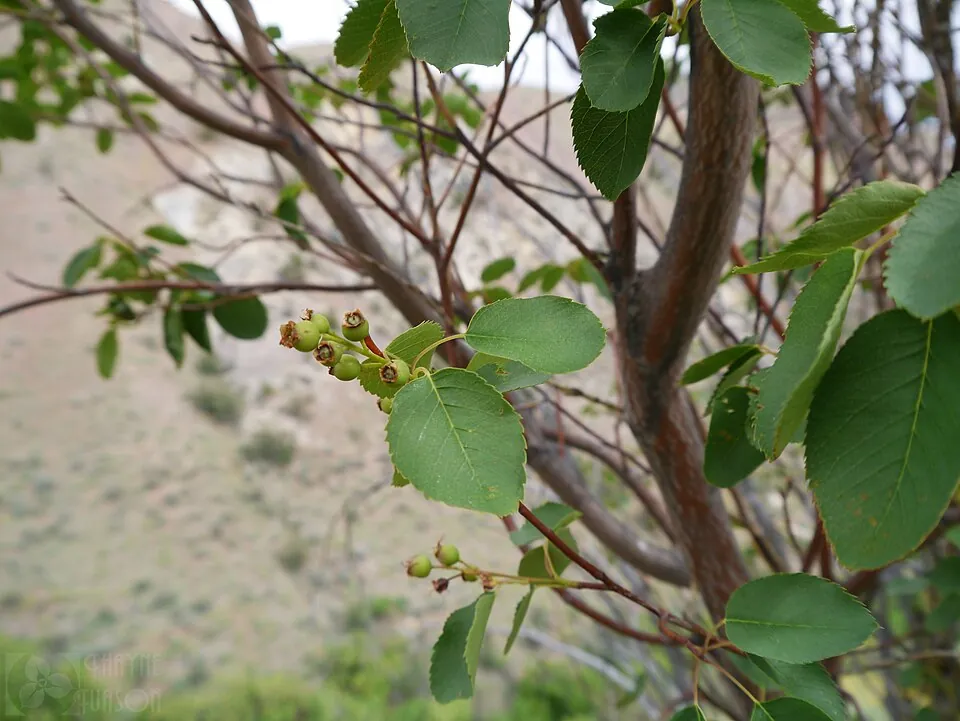
Saskatoon serviceberry is native to western and central North America. Its range runs from Alaska down to California and east into the central United States, Ontario and Quebec. Wild plants grow in wooded prairie hollows, along fences and at woodland edges. Selected varieties are also grown as a commercial fruit crop.
How it's eaten where it grows
In Blackfoot tradition, dried saskatoons were crushed and mixed with dried meat and fat to make mookimaani, or pemmican; the berries also went into soup. In the 1800s the Métis were the main suppliers of pemmican to the fur trade, and it was often made with saskatoons or blueberries.
A crêpe recipe from Lorraine’s Saskatoon Berries puts whole berries, banana and cream cheese inside. A sauce of puréed saskatoons and orange juice goes over the top.
How it's grown
The shrub loses its leaves in winter and gives its best fruit in full sun and well-drained loamy soil. Plants usually start bearing at 3–5 years old and reach full production around eight. Birds relish the berries too, so growers use netting to protect the ripening crop.
When and where you'll find it
In Utah, serviceberries usually ripen from late June through July. Fully ripe fruit suits jams and pie fillings, but needs prompt refrigeration; dry berries also freeze for later use. Preserves carry the flavour beyond the fresh season: Bayfield Berry Farm in Ontario pairs saskatoons with pears in jam.
Sources · 7
- Bayfield Berry Farmbayfieldberryfarm.on.ca
- Glenbow Museumglenbow.org
- Lorraine’s Saskatoon Berriessaskatoonberry.net
- Manitoba Métis Federationmmf.mb.ca
- NC State Extension Gardener Plant Toolboxplants.ces.ncsu.edu
- USDA Natural Resources Conservation Serviceplants.usda.gov
- Utah State University Extensionextension.usu.edu
Get it near Detroit
What it tastes like
As sweet as a banana, as mild as a peach≈
More about the taste
Earlier-picked serviceberries are more acidic; more mature fruit is higher in sugar. Named varieties also differ in fruit size, flavor and ripening pattern.
Earlier-picked fruit is higher in acid; more mature fruit has more sugar and is softer. Fully ripe fruit gives the best flavor and sweetness for jams, jellies and pie fillings.
Choose, ripen, store, eat
1ChooseDark-red, purple or almost black
Look for
- Dark-red, purple or almost black
Ripe fruit is dark-red, purple or almost black; pick gently by hand when fruit is cool and dry to balance flavor against bruising.
2RipenRipens after picking
Ripens after pickingServiceberries continue ripening somewhat after picking, but fruit picked riper will always give better flavor for jams, jellies and pies.
3StoreFridge, dry fruit
- FridgeDry fruit
- FreezerDry fruit
Refrigerate promptly, remove damaged fruit, and make sure fruit is dry before refrigerating or freezing.
4EatFruit
Eat
FruitEaten fresh, or used in juice, jelly, jam and pies. It's a berry-like pome, not a Vaccinium, despite the resemblance to blueberries.
Detroit, Michigan
When it’s good hereUsual monthsJust arrivedAt their bestLast chanceAll yearWhere it is in its usual monthsToday, Oct 22Grown hereIn season in your stateShips fromIn season where it grows
1 growing area, 1 countryUsual monthsToday, Oct 22

- Utah
- You
0 of 1 areas · October
Amelanchier alnifolia grows across western and central North America, in a range of moisture conditions, and is eaten by both people and wildlife.
16 names in 5 languages
- 愷葉唐棣Chinese
Cook it
1 Serviceberry festivalUsual monthToday, Oct 22
Strange but trueHistoryA myth, and the truthScienceWhere the name came fromCustoms and cultureFood and drinkA record
If you like Serviceberry
Tastes alike
Used the same way
Sources
Photos · 4

Sources
Serviceberry · Fruitopia · checked Sep 22, 2026