African black plum
Vitex doniana · Lamiaceae family
A dark African tree fruit with starchy pulp and a flavor compared to prunes.
Find it near DetroitGet to know it
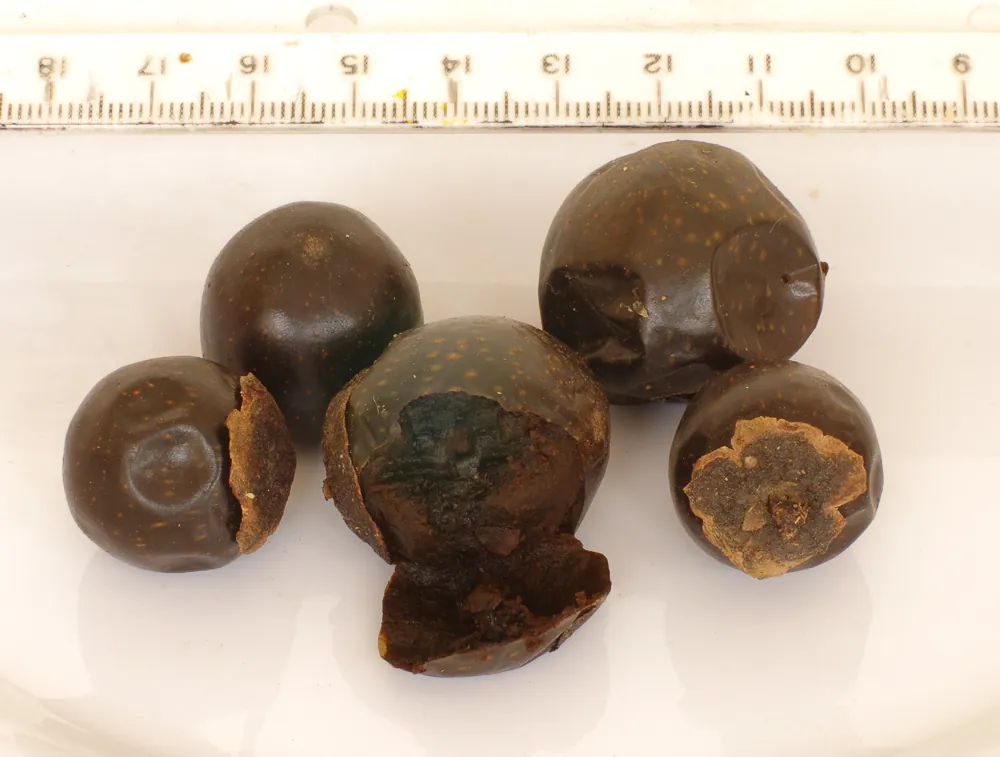
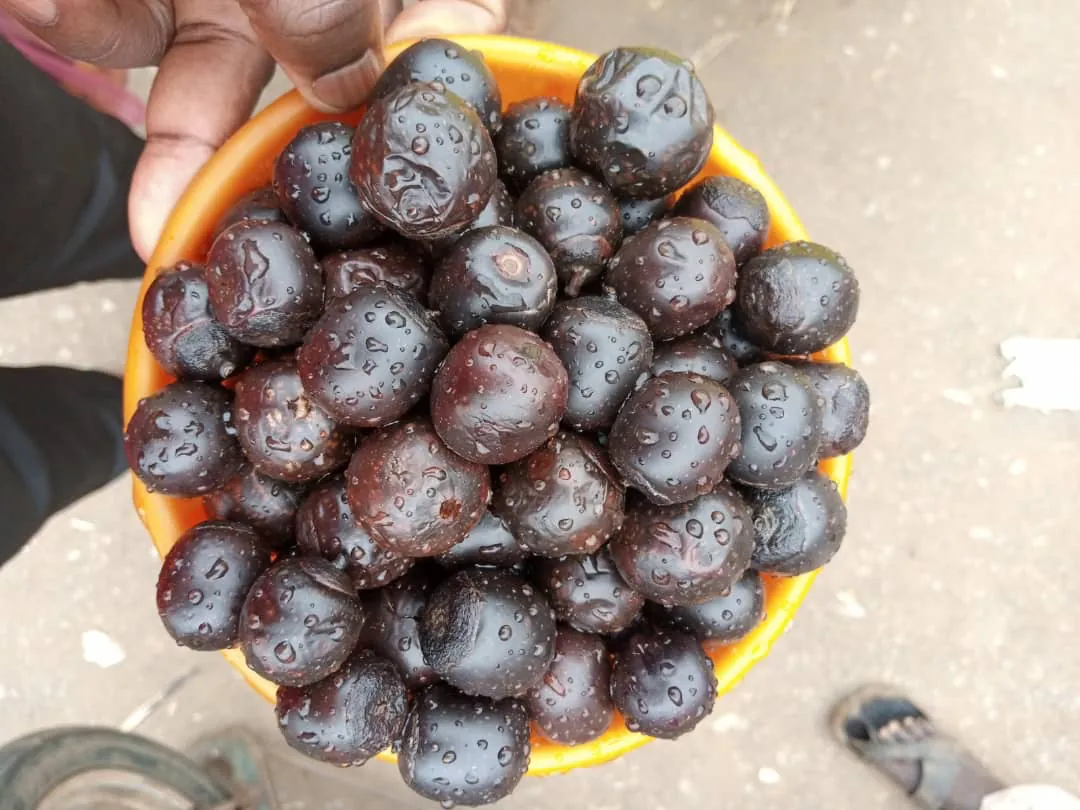
African black plum has dark, starchy flesh and a sweet flavour like prunes. The small, oblong fruit turns purplish-black as it ripens. In Nigeria, its pulp becomes amoriri, a dark, sweet syrup that can top a bowl of creamy tapioca.
What it is
African black plum is Vitex doniana, rather than an orchard plum. Each fruit measures about 3 cm (1¼ in) long. Green skin darkens as it ripens, enclosing black pulp and a hard, woody stone. The starchy flesh can be eaten raw or turned into jam, drinks and wine.
Where it comes from
The tree grows across tropical Africa, from Senegal east to Somalia and south to South Africa, and on Comoros and Seychelles. It is also occasionally planted in Mauritius. Forests, savannas and damp ground along rivers all support it.
Farmers often keep these trees when clearing land. In Nigeria, names include dinya in Hausa and ucha koro in Igbo.
How it's eaten where it grows
In Nigeria, amoriri is black-plum syrup. One serving pairs it with toasted sesame seeds over mingau, a creamy dessert of tapioca and coconut milk. Mingau is one of the Afro-Brazilian desserts of Lagos Island, and its tapioca is sold there ready for Easter feasts.
The same tree supplies a leafy vegetable: its young leaves are cooked on their own or added to sauces.
How it's grown
The tree sheds its leaves and grows about 8–18 m (26–59 ft) tall, with a rounded crown that gives shade. It is planted in fields and along boundaries. New trees grow from seeds or shoots arising from the roots; cuttings also work in Malawi. Bees and sunbirds visit the flowers.
When and where you'll find it
In Uromi, Edo State, Nigeria, the fruit usually ripens from June through October. Tanzania usually has ripe fruit from April to July, and Zambia from April to September. Fresh fruit is traded in local markets during its season, alongside leaves sold as vegetables. Beyond fresh eating, the pulp becomes syrup, jam and wine.
Get it near Detroit
What it tastes like
As sweet as a banana, as mild as a peach≈
More about the taste
The pulp is starchy, with a sweet, prune-like taste.
The fruit is sweet, with a prune-like flavor and a starchy texture, not the watery crunch of an orchard plum.
Choose, eat
1ChoosePurplish-black
Look for
- Purplish-black
Ripe fruit is purplish-black.
2EatPulp
Eat
PulpThe pulp is eaten and made into jam and wine.
More tips
Worth knowing
- Try black plum with citrus: the darker mix can win on flavor even if it looks less impressive.
Detroit, Michigan
When it’s good hereUsual monthsJust arrivedAt their bestLast chanceAll yearWhere it is in its usual monthsToday, Oct 22Grown hereIn season in your stateShips fromIn season where it grows
5 names in 5 languages
- oori-nlaYoruba
- munyamaziroot
Cook it
Strange but trueScienceCustoms and cultureFood and drink
If you like African black plum
Tastes alike
Close relatives
Used the same way
Sources
Sources
African black plum · Fruitopia · checked Sep 22, 2026