Peach
Also called PeachtreePrunus persica · Rosaceae family
Choose for softness and aroma, then decide whether to keep the flesh in slices or blend it into something cold.
Find it near DetroitGet to know it
The peach is a fuzzy, juicy stone fruit from China, with white or yellow flesh around a deeply furrowed stone. People in eastern China were eating peaches about 8,000 years ago, and in 2024 the world grew 28 million tonnes of peaches and nectarines, 63% of them in China.
What it is
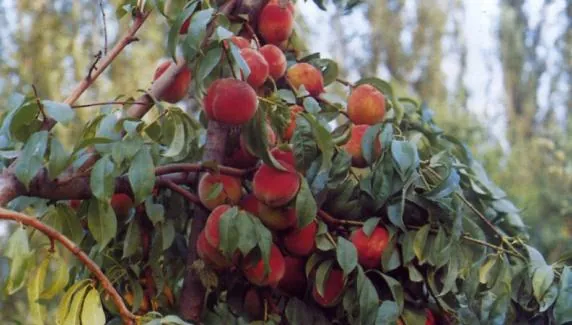
A peach is usually 5 to 7 cm (2 to 3 in) across, greenish white to orange yellow with a red blush where the sun hit it. The flesh can be white, yellow or dark red, and it wraps a big, pitted and furrowed stone. In a freestone peach the flesh comes away from the stone easily; in a clingstone it holds on tight.
The peach belongs to the rose family, with the cherry, apricot, almond and plum. Flat peaches, called pan-tao, are pressed flat instead of round. Peaches keep ripening after they are picked.
Where it comes from
Peaches come from China. Peach stones about 8,000 years old, found in Zhejiang Province, show people already ate them there, and the Yangzi River valley is where they first picked out better peaches. The Spanish brought peaches to the Americas in the 16th century, and Native peoples spread them across North America.
In 2024 the world grew 28 million tonnes of peaches and nectarines, 63% of them in China, followed by Spain, Turkey and Italy. In the United States, California grew 532,000 of the country's 708,250 tons in 2025. Georgia, the Peach State, earned its name in the decades after the Civil War and now grows more than forty commercial varieties. In Japan, Yamanashi grows the most peaches.
How it's eaten where it grows
Across the American South, peach cobbler is the classic. One of the oldest known cobbler recipes, a "Peach Pot Pie or Cobler", is in The Kentucky Housewife of 1839, and in 2013 Texas made peach cobbler its official cobbler. At the Georgia Peach Festival, a cobbler more than 11 feet long takes 75 gallons of peaches.
Cherokee, Hopi and Iroquois cooks split and pitted peaches and dried them in the sun or over a fire; some made fruit cakes that were later soaked and cooked into a sauce served with cornbread. In China, longevity peach buns are lotus seed buns shaped like a peach, with a red tip, sometimes filled with lotus or red bean paste. In Italy, pesche dolci are little pastries made to look like peaches.
How it's grown
Peaches grow on deciduous trees that reach 15 to 25 feet (4.5 to 7.5 m) tall and wide, and they bear fruit from about their third year. Most varieties need 600 to 1,000 hours of winter chill between 4 and 10 °C (40 and 50 °F). The blossoms open early and are hurt if the air drops below about −1 °C (30 °F).
Growers thin the flowers and young fruit, because a branch carrying every peach gives small, flavourless fruit. Peaches taste best ripened on the tree and eaten the day they are picked.
When and where you'll find it
Peaches are a summer fruit. In the US, Florida's crop usually comes in April and May; Georgia and South Carolina pick from May to August; California's freestone peaches run from late April into early October; Pennsylvania's harvest usually runs from July to September. Peaches grow in both hemispheres, so imports keep some markets supplied all year.
Nearly all Georgia peaches go to the fresh market, with a few sold at roadside stands. California sends more than half its crop for processing, most of it clingstones, the canning kind. Yellow peaches also keep through the year canned, frozen or dried.
Sources · 9
- Florida Department of Agriculture and Consumer Servicesfdacs.gov
- McClung Museum of Natural History & Culture, University of Tennesseemcclungmuseum.utk.edu
- NC State Extension Gardener Plant Toolboxplants.ces.ncsu.edu
- New Georgia Encyclopediageorgiaencyclopedia.org
- Penn State Extensionextension.psu.edu
- PLOS ONEjournals.plos.org
- Specialty Producespecialtyproduce.com
- USDA National Agricultural Statistics Serviceesmis.nal.usda.gov
- Wikipediaen.wikipedia.orgOther pages234
Get it near Detroit
What it tastes like
As soft as a grapefruit, as sweet as a banana≈
More about the taste
Peaches have sweet flesh beneath fuzzy skin. Freestone flesh separates easily from the pit; clingstone flesh holds tightly — this affects preparation, not flavor. Skin fuzz, flesh color and pit adherence are separately inherited traits, so fuzzy versus smooth skin doesn't determine flesh color or clinginess. Ask about the named variety, or cut a sample, when those details matter.
Peach is a fuzzy-skinned drupe; nectarine is its smooth-skinned form.
A tasting invitation
Notice whether the flesh clings to the pit or separates cleanly, then compare aroma, juice and acidity. Try two named varieties when possible. 'White' and 'yellow' are useful starting labels, but each still contains considerable variety.
Choose, ripen, store, eat
1ChooseFirm to slightly soft
Look for
- Firm to slightly soft
- Creamy white or deep yellow background
- Yields gently
- Inviting fragrance
Ignore
- Red blush
Look for firm to slightly soft peaches. Skip very hard, shrivelled, bruised fruit or any with a fermented smell.
2RipenOn the counter
Ripens after pickingCounterPaper bagLet an unripe peach finish softening in a closed paper bag, checking it as it changes. Move it to the refrigerator once ripe.
3StoreFridge, ripe
- FridgeRipe
- FreezerRipe, washed, peeled, packed
Refrigerate ripe peaches. To preserve a glut, freeze ripe fruit after washing, peeling and packing it for the freezer.
4EatFlesh · not pit
Eat
FleshNot eaten
PitUse the flesh and remove the pit. The popsicle recipe also removes the skin for a smooth purée; peeling is a preparation choice, not the fruit's defining flavor.
More tips
A useful detail Red coloration isn't a reliable sign of peak ripeness. Ground color, maturity and fragrance matter more — an attractive red peach can still disappoint inside.
Worth knowing
- For eating soon, ask for a lot picked for local sale and taste a sample when offered — waiting at home won't recreate all the flavor that comes with later picking.
- Look beyond redness — combine aroma, gentle firmness and what the seller can tell you about when it was picked.
- Aroma and acid balance count as much as sweetness when comparing peach and nectarine varieties.
Detroit, Michigan
When it’s good hereUsual monthsJust arrivedAt their bestLast chanceAll yearWhere it is in its usual monthsToday, Oct 22Grown hereIn season in your stateShips fromIn season where it grows
73 growing areas, 21 countriesUsual monthsOur estimated monthsToday, Oct 22

- Aomori
- Araucanía
- Aydın
- Balochistan
- Bay of Plenty
- British Columbia
- Bursa
- Cáceres
- California
- Castellón
- Coquimbo
- Eastern Cape
- Espírito Santo
- Florida
- Fujian
- Hawaii
- Ica
- La Libertad
- Limpopo
- Lower Saxony
- Ontario
- Río Negro
- Santa Cruz de Tenerife
- Shandong
- South Africa
- South Australia
- You
6 of 28 areas · October
Growing areas by country
- United States13
- Spain9
- Chile5
- France5
- South Africa5
- Argentina4
- Brazil4
- Japan4
and 16 more countriesand 13 more countries
Peaches have a long history in Indigenous foodways in North America, eaten fresh and dried by various Native American communities.
1,371 varieties
- No variety photo yetEveRes Ruby
- Taste
- sweet
- Bite
- crunchy
- Feel
- firm
- No variety photo yetNJ357
- Taste
- sweet
- Feel
- firm
- Juice
- juicy
- No variety photo yetFA 1566
- Scent
- aromatic
- Feel
- firm
- Flesh type
- Softens rapidly as it ripens
- No variety photo yetSnow Belle
- Bite
- crisp
- Feel
- firm
- No variety photo yetCardinal Joy
- Feel
- firm
- No variety photo yetZee Pch-1
- Feel
- firm
41 names in 22 languages
- pêcherFrench
Cook it
How to serve it first
Serve a ripe peach in wedges with nothing added for the first taste. For a warm alternative, roast halves and add a small spoonful of yogurt. Let the fruit's own sweetness determine whether the dish needs any added sugar.
11 peach festivalsUsual monthToday, Oct 22
Strange but trueHistoryA myth, and the truthScienceWhere the name came fromCustoms and cultureFood and drinkPeopleA record
If you like Peach
Tastes alike
Close relatives
Nutrition, sources
Nutrition
Peaches, yellow, raw · per 100 g
- Carbohydrate
- 10 g
- Fiber
- 1.5 g
- Sugars
- 8.4 g
- Protein
- 0.9 g
- Fat
- 0.3 g
- Vitamin C
- 4.1 mg
- Potassium
- 122 mg
Photos · 2
Sabri76Public domain 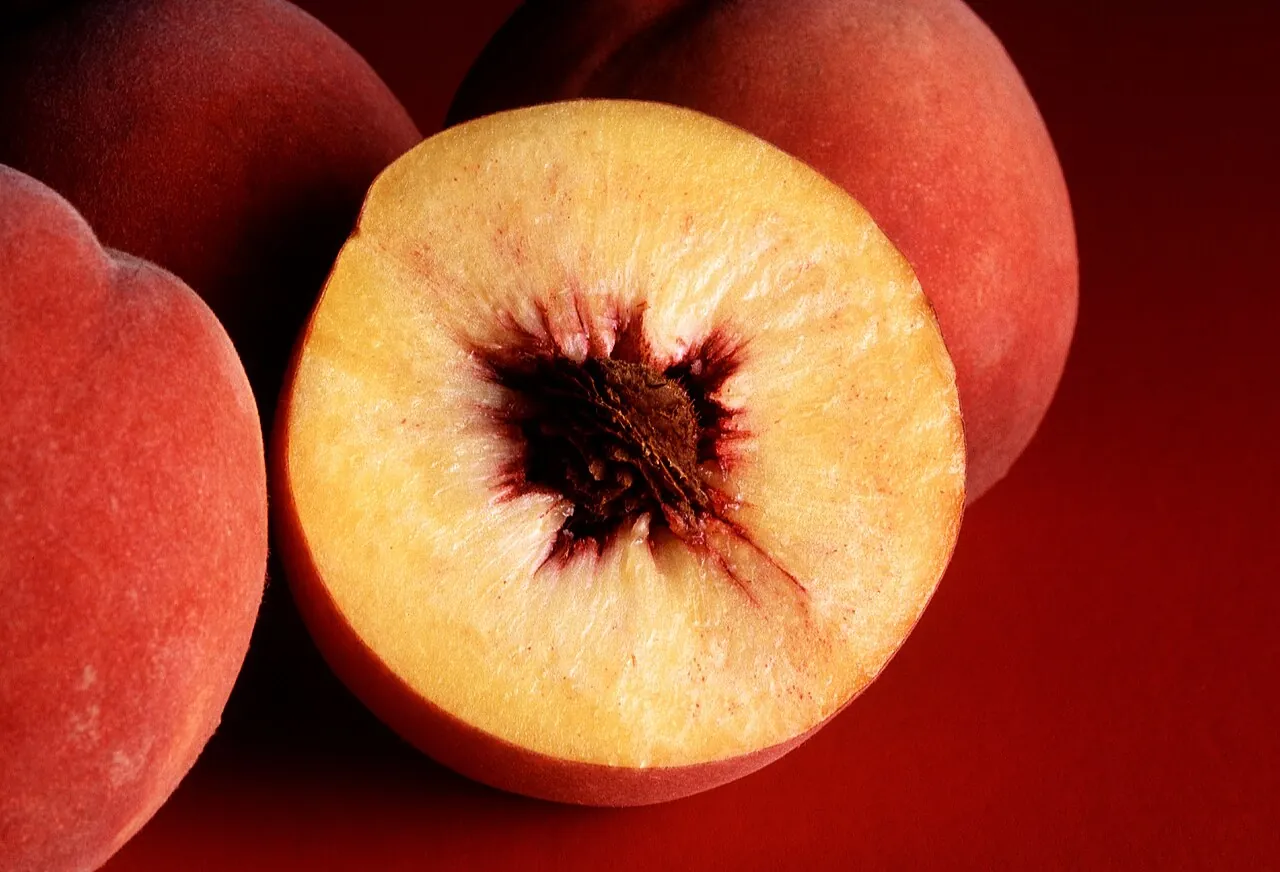
Jack Dykinga, USDAPublic domain
Sources
Peach · Fruitopia · checked Sep 23, 2026
What we don't know yet
A soft peach isn't necessarily free of mealiness — variety and storage history usually aren't known at a typical fruit display.