Mango
Also called Common mango · Indian mangoMangifera indica · Anacardiaceae family
Try mango in two very different settings: a peppery salad and coconut sticky rice.
Find it near DetroitGet to know it
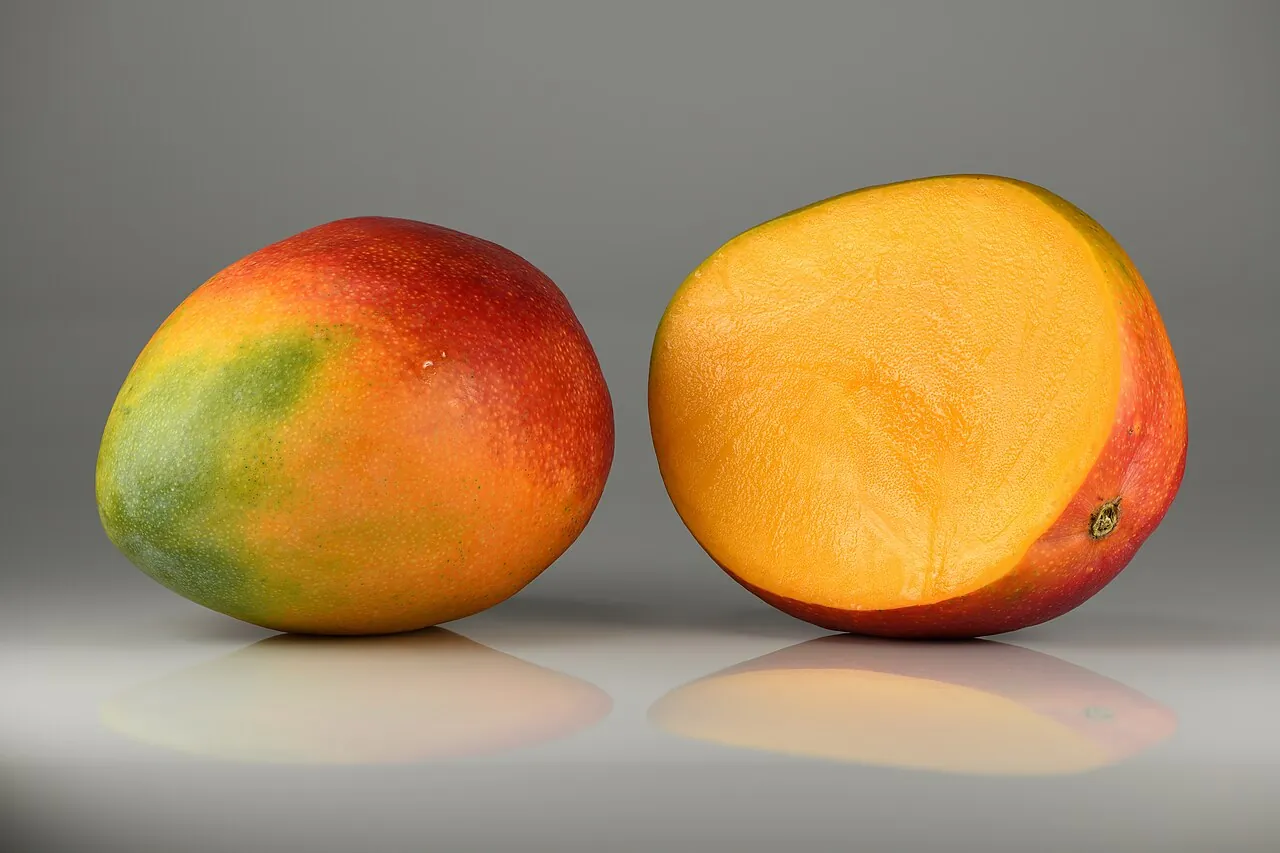
A ripe mango has juicy golden flesh around a single stone. Golden Ataulfo mangoes have smooth, peach-scented flesh with a sweet, tangy taste. A large Keitt gives a firmer, juicy bite and can keep its green skin even when ripe.
What it is
A mango is a stone fruit, with one seed enclosed inside the central stone. Its flesh ranges from pale yellow to deep orange, and varieties span roughly 6–25 cm (2½–10 in) in length. It is related to cashews and pistachios.
Variety changes the bite. Ataulfo has a small seed and smooth flesh, with a peach-like aroma. Tommy Atkins has more noticeable threads of fibre. Keitt is firm, juicy and sweet, and its skin stays green even when the flesh is ready to eat.
Where it comes from
Mango comes from the region around India and Myanmar and has grown in Indian orchards for thousands of years. India produced about 22.4 million tonnes in 2023/24. Major growing states include Uttar Pradesh, Andhra Pradesh, Bihar, Karnataka and Gujarat.
The Indian season moves across regions: southern and western varieties tend to bear before northern and eastern ones. Mango also travels widely. Mexico, Haiti, Ecuador, Peru, Guatemala and Brazil supply much of the fruit imported into the United States.
How it's eaten where it grows
In Gujarat and Maharashtra, aamras turns ripe mango pulp into a meal with puri. The mango is served chilled alongside the hot bread. Gujarati versions often have dry ginger; Maharashtrian versions often have cardamom.
In Thailand, kao niew mamuang pairs fresh mango slices with sticky rice soaked in sweet coconut milk. A salted coconut sauce goes over the rice. The fruit stays fresh and uncooked beside the soft, sticky grains.
How it's grown
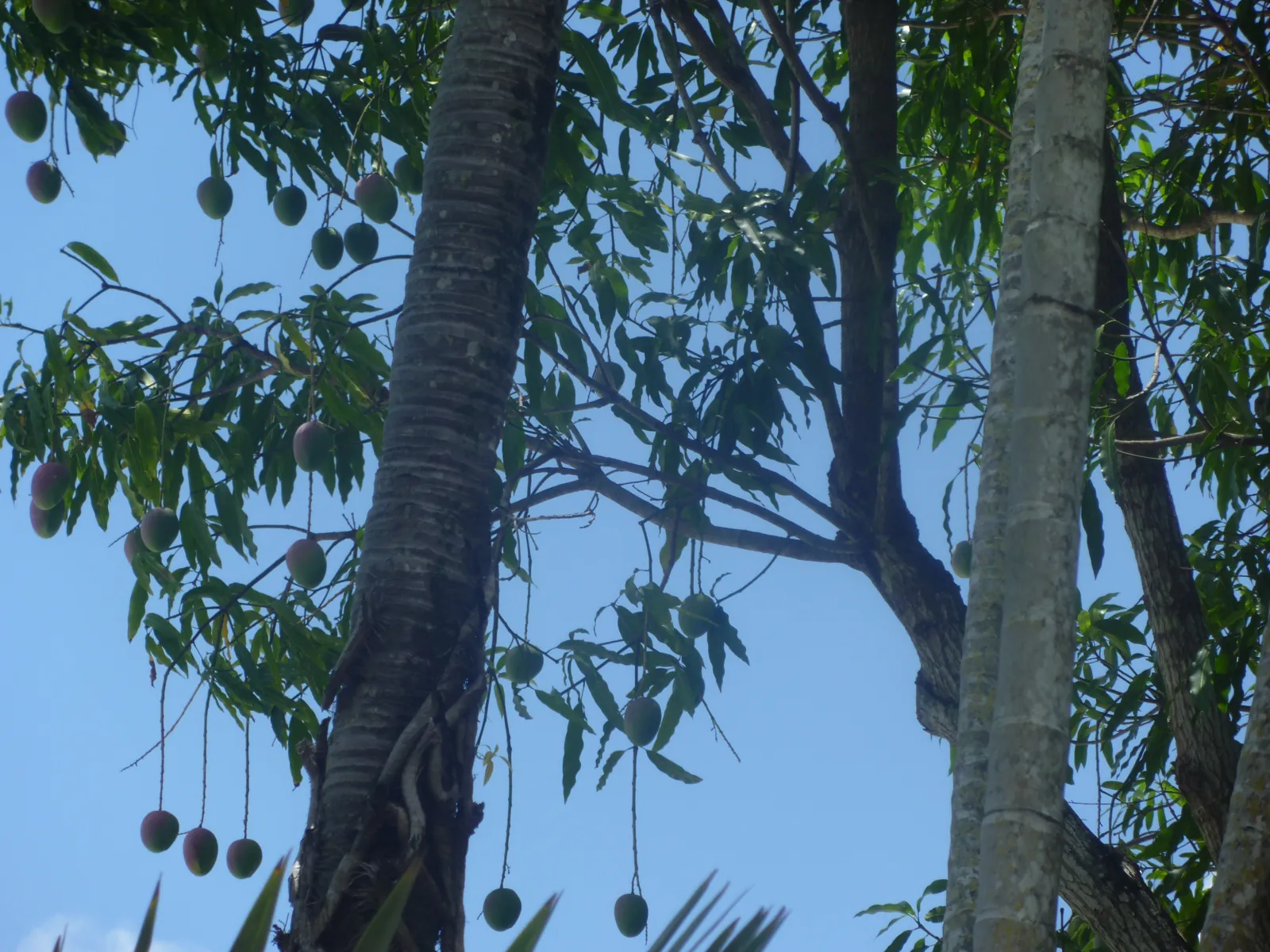
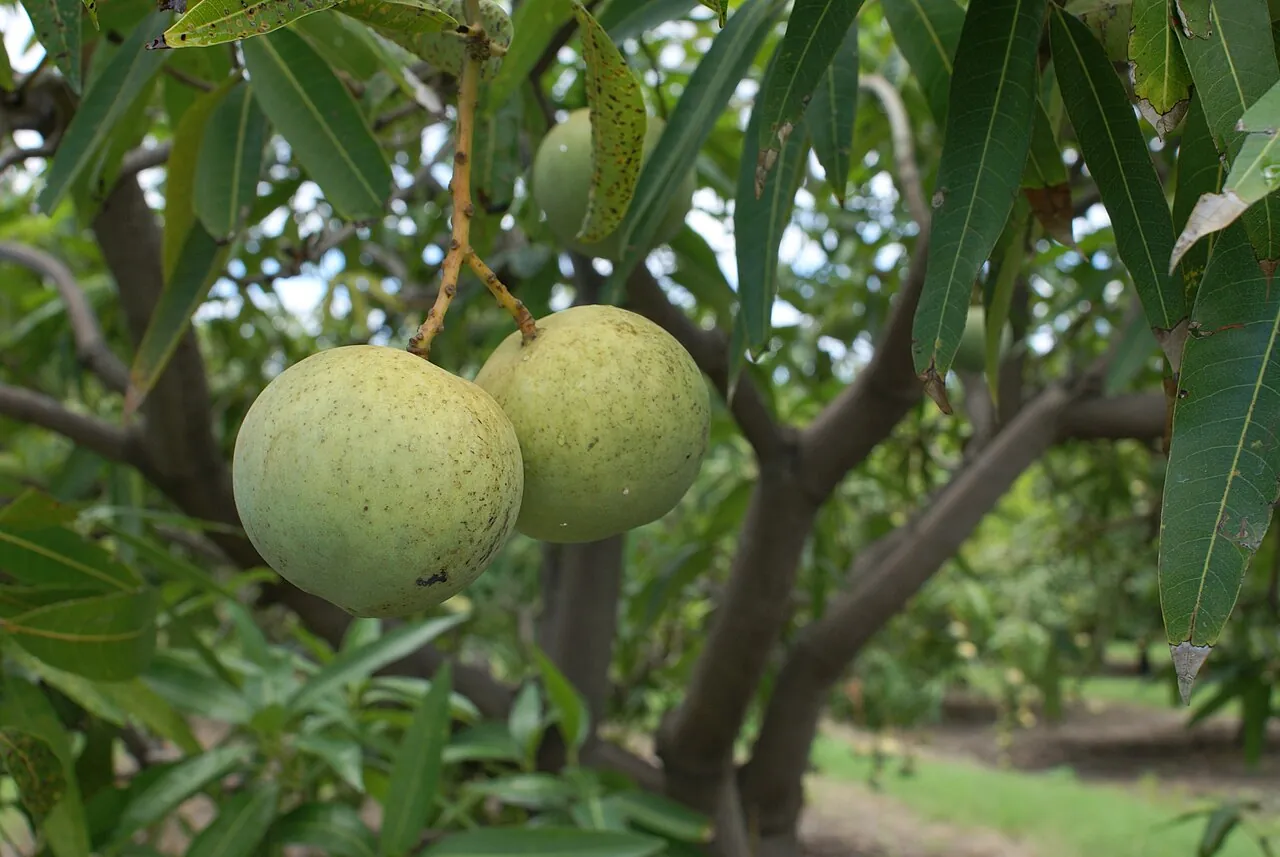
A mango tree can reach 30 m (100 ft) or more. Orchard trees are kept much shorter, putting the fruit within easier reach at harvest. Most varieties are grafted onto the roots of vigorous seedling mangoes. These grafted trees begin bearing about three to five years after planting. The fruit is picked by hand.
When and where you'll find it
In Florida, most varieties usually ripen from May through September. US supermarkets receive fresh mangoes throughout the year as harvests shift between supplying countries. Canned slices and frozen pieces carry the fruit beyond any one fresh harvest.
A firm mango softens and grows sweeter at room temperature. Once ripe, it goes into the refrigerator; cut pieces can be frozen. For Keitt, green skin belongs to the variety: ripeness shows in a gentle squeeze, not in colour.
Sources · 7
- APEDA, Government of Indiaapeda.gov.in
- India Ministry of Food Processing Industries; Department of Agriculturemofpi.gov.in
- Julia Morton, Fruits of Warm Climates (1987)hort.purdue.edu
- Kanan Patel, Spice Up The Curryspiceupthecurry.com
- National Mango Boardmango.orgOther pages2345678
- Pailin Chongchitnant, Hot Thai Kitchenhot-thai-kitchen.com
- University of Florida IFASedis.ifas.ufl.edu
Get it near Detroit
What it tastes like
As soft as a banana, sweeter than a peach≈
More about the taste
Mango moves from firm and tart toward soft, juicy sweetness as it ripens. Variety differences matter: the same red blush can hide very different ripeness.
Immature mango is sour-tart; ripe mango turns naturally sweet, sometimes with a fruity aroma near the stem.
A tasting invitation
Compare the flesh near the skin with the flesh closer to the stone. Look for differences in fiber, aroma and juiciness. Then compare two named varieties; 'mango flavor' can conceal a surprisingly broad range of textures and fragrances.
Choose, ripen, store, eat
1ChooseGives a little when pressed
Look for
- Gives a little when pressed
Ignore
- Red skin
Use a gentle whole-fruit squeeze rather than red skin as your main cue. A ripe mango gives a little; skin color alone is unreliable.
2RipenOn the counter
Ripens after pickingCounterPaper bagLeave a firm mango at room temperature. A paper bag can speed ripening; move it to the refrigerator after it becomes ripe.
3StoreFridge, ripe, whole5 days
- FridgeRipe, wholeUp to 5 days
- FridgeCutClosed container
A ripe whole mango keeps up to five days in the refrigerator. Cut flesh should go in a closed container in the fridge and is best used within a few days.
4EatFlesh · not peel, seed
Eat
FleshNot eaten
PeelSeedUse the flesh separated from the peel and the large central seed; slices and purée give different textures.
More tips
A useful detail Mango can be a tart ingredient or a sweet dessert fruit, depending on ripeness. A mango that's not ripe enough for dessert still has plenty of uses in the kitchen.
Worth knowing
- These named mango varieties are worth comparing at similar ripeness; a mango that ships well doesn't necessarily taste best.
- Mango varieties ripen at different speeds on the counter.
- A properly mature mango changes after harvest in more ways than softness.
Detroit, Michigan
When it’s good hereUsual monthsJust arrivedAt their bestLast chanceAll yearWhere it is in its usual monthsToday, Oct 22Grown hereIn season in your stateShips fromIn season where it growsOrderableListed by a seller we checkedThe day a seller was checked
75 growing areas, 26 countriesUsual monthsOur estimated monthsToday, Oct 22

- Al Isma'iliyah
- Áncash
- Andhra Pradesh
- Bahia
- Balochistan
- Benue
- Bihar
- California
- Castellón
- Chiapas
- East Java
- Espírito Santo
- Florida
- Greater Accra
- Guimaras
- Hawaii
- Ica
- Jeju
- Jizan
- Johor
- Kilifi
- Limpopo
- Madeira
- Mexico
- Mpumalanga
- New South Wales
- Rio Grande do Sul
- South Africa
- South Jeolla
- Tucumán
- Yunnan
- You
10 of 27 areas · October
Growing areas by country
- Spain7
- India7
- Australia6
- Brazil6
- Peru5
- Mexico4
- Pakistan4
- United States4
and 21 more countriesand 18 more countries
In warm southern Florida, mango grows both in commercial orchards and as a dooryard tree, with different varieties spreading out the local harvest. Its Indian and Indochinese seed types are broad horticultural groups, not individual named varieties.
158 varieties
- Keitt
- Scent
- Citrus notes.
- Flavour
- Sweet, with fruit notes.
- Feel
- firm
- Texture
- Firm and juicy, with little fibre.
 Kent
- Taste
- medium
- Scent
- Peach and tropical fruit notes.
- Flavour
- Sweet, with a little tartness.
- Juice
- juicy
- No variety photo yetB-74
- Taste
- sweet
- Feel
- soft
- Juice
- juicy
- Fibres
- scarce China
- No variety photo yetDIAMANTEAlso Ataulfo Diamante
- No variety photo yetLeopold
- Taste
- sweet
- Scent
- aromatic
- Feel
- firm
- Juice
- juicy
- No variety photo yetR10/8
- Feel
- firm
- Juice
- juicy
65 names in 21 languages
- أنبج شائعArabic
Cook it
How to serve it first
For a first ripe-mango serving, cut flesh away from the flat central stone and serve plain before adding lime. For a savory idea, combine diced ripe mango with cucumber and herbs, keeping the seasoning light enough to notice the fruit.
11 mango festivalsUsual monthToday, Oct 22
Strange but trueHistoryScienceNatureWhere the name came fromCustoms and cultureFood and drinkPeopleA record
If you like Mango
Tastes alike
Close relatives
Same plant family
Used the same way
Nutrition, sources
Nutrition
Mangos, raw · per 100 g
- Carbohydrate
- 15 g
- Fiber
- 1.6 g
- Sugars
- 14 g
- Protein
- 0.8 g
- Fat
- 0.4 g
- Vitamin C
- 36 mg
- Potassium
- 168 mg
Sources
Mango · Fruitopia · checked Sep 23, 2026