Mangaba
Also called MangabeiraHancornia speciosa · Apocynaceae family
A Brazilian fruit used fresh and in drinks, sweets and processed pulp, with quality that depends on maturity and handling.
Find it near DetroitGet to know it
Mangaba is a Brazilian fruit with soft, creamy pulp and a sweet-tart flavour. On the northeastern coast, it becomes fruit drinks, ice cream and frozen pops; a fresh fruit may be labelled by whether it was picked or fell ripe from the tree.
What it is
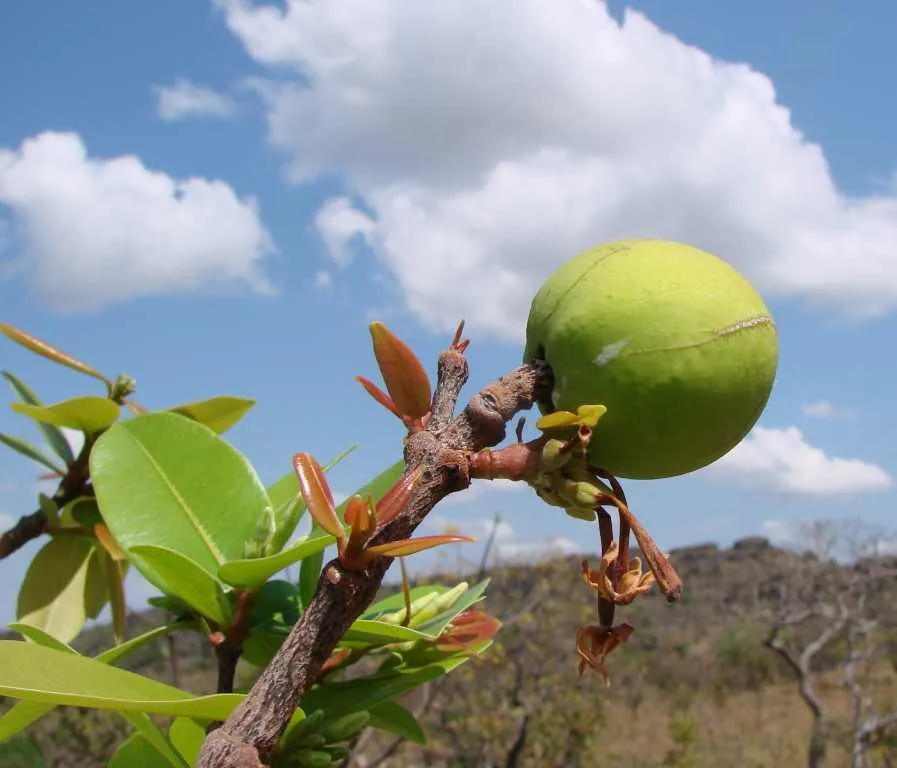
The fruit is round or oval, with greenish-yellow skin that can carry red patches. Inside is soft white pulp around 2–15 seeds. It is sweet, juicy and gently tart.
Two market terms describe how it was picked. De caída means ripe fruit that has dropped from the tree. De vez means fruit picked after the green stage but before it has fully ripened. These describe stages of the same fruit, rather than different varieties.
Where it comes from
Mangaba is native to Brazil and grows across the country’s central, northern, northeastern and southeastern regions. It belongs to landscapes as different as the Cerrado savannas, the dry Caatinga and the Atlantic Forest, and it is most plentiful on the coastal tablelands and lowlands of the Northeast, where almost all of Brazil’s crop comes from.
In Indiaroba, Sergipe, women gatherers known as catadoras belong to local associations. They sell the fruit to a federal food programme, and the town hospital serves it to patients as juice.
How it's eaten where it grows
Along Brazil’s northeastern coast, mangaba becomes suco de mangaba, a fruit drink, and sorvete de mangaba, ice cream. The pulp also goes into picolés, frozen fruit pops. More recently it has gone into sweets such as mousse and pudding, and into liqueurs.
Mousse de mangaba begins with ripe fruit blended with water and strained. The juice is mixed with condensed milk and cream, then plain gelatin helps it set in the refrigerator.
How it's grown
A tree grown from seed can reach 5–10 m (16–33 ft). Mangabeiras favour sandy ground and full sun, and do poorly in waterlogged soil. Their fragrant flowers are pollinated by insects. A planted tree starts bearing three to five years after planting. Fruit is gathered from the ground once it falls, or picked de vez straight from the tree.
When and where you'll find it
On Brazil’s northeastern coast, the main harvest usually runs until April. In Sergipe, the biggest producer, gatherers sell fresh mangaba from stalls in markets and open-air fairs. Traders carry it on to central markets, pulp factories, ice-cream shops and snack bars, mostly in Aracaju, Salvador, Recife and Maceió. The pulp can also be stored frozen, then made into juice, ice pops, ice cream, sweets and jelly.
Sources · 6
- Embrapa Cerradosembrapa.br
- Embrapa Tabuleiros Costeiros (2002)cpatc.embrapa.br
- Maria Clara, Comida e Receitascomidaereceitas.com.br
- Plácido and colleagues, African Journal of Agricultural Research (2016)academicjournals.org
- Programa Arboretumprogramaarboretum.eco.br
- Raquel Fernandes de Araújo Rodrigues, Embrapaembrapa.br
Get it near Detroit
What it tastes like
As sweet as a banana, softer than a pear≈
More about the taste
Mangaba pulp is creamy, juicy, sweet and slightly acidic. The skin is greenish or yellowish, sometimes with red pigmentation.
Mangaba pulp is creamy, juicy, sweet and slightly acidic. The skin is greenish or yellowish, sometimes with red pigmentation.
Choose, store, eat
1ChooseFallen naturally, very soft
Look for
- Fallen naturally, very soft
- Picked as it starts softening
Ask whether the mangaba is de caída (fallen naturally, very soft) or de vez (picked from the tree as it begins to soften) — fruit picked green does not ripen evenly.
2StoreMangaba bruises easily and deteriorates quickly after harvest
Mangaba bruises easily and deteriorates quickly after harvest.
3EatFruit
Eat
FruitMangaba is eaten fresh and processed into sweets, liquor, wine, soft drinks and jellies.
More tips
Worth knowing
- Ask how mature the mangaba was when picked and how it was handled: the ripest-tasting fruit travels and keeps least well.
Detroit, Michigan
When it’s good hereUsual monthsJust arrivedAt their bestLast chanceAll yearWhere it is in its usual monthsToday, Oct 22Grown hereIn season in your stateShips fromIn season where it grows
1 growing area, 1 countryUsual monthsToday, Oct 22

- Pernambuco
- You
1 of 1 areas · October
Cook it
Strange but trueHistoryNatureWhere the name came fromFood and drink
If you like Mangaba
Tastes alike
Same plant family
Used the same way
Sources
Photos · 2
João MedeirosCC BY 2.0 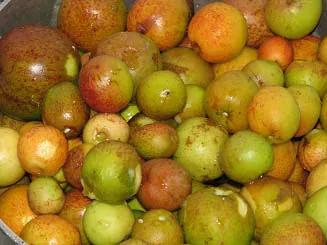
Isabela Lustz Portela LimaPublic domain
Sources
Mangaba · Fruitopia · checked Sep 22, 2026