Lasora
Also called Assyrian plum · Sebesten plumCordia myxa · Boraginaceae family
A sticky-pulped fruit that plays different culinary roles depending on how ripe it is.
Find it near DetroitGet to know it
Lasora has sweet, nearly transparent flesh that clings like glue. Picked green, it becomes a vegetable or pickle; left to ripen, it is eaten as fruit. The same sticky pulp can even hold sheets of paper together.
What it is
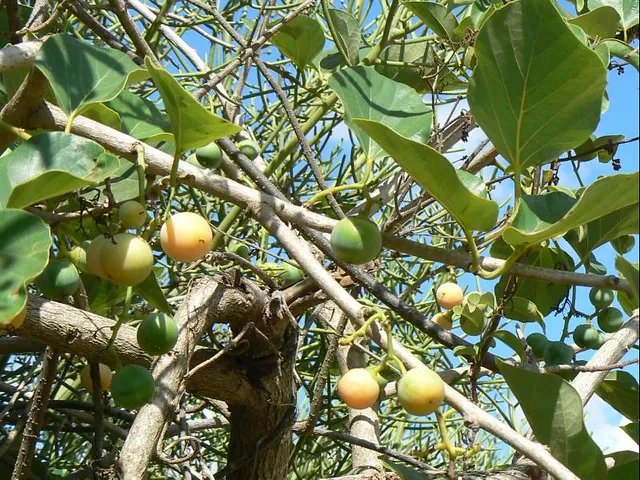
Also called Assyrian plum or Indian cherry, lasora is Cordia myxa, a member of the borage family. The round or egg-shaped fruit has flesh around a deeply wrinkled stone containing one or two seeds. Maru Samridhi averages 10.5 g (0.4 oz) per fruit and turns yellowish cream when fully ripe.
The closely related Cordia dichotoma is often confused with it in Asia and Australia. Both belong to the same group of trees, but they are separate species.
Where it comes from
Lasora comes from the belt between the eastern Mediterranean and eastern India. People carried it to tropical Africa, other parts of tropical Asia and Australia long ago, and later to the Americas.
It grows widely in the dry regions of northern India. Maru Samridhi is a selection from seed-grown trees evaluated between 2006 and 2015.
How it's eaten where it grows
In western Rajasthan, green lasora goes into vegetable dishes, achar and chutney. Achar is pickle: lasora can fill the jar alone or join other fruit and vegetables. Dried lasora is another local preparation.
For a home-cooked version with raw mango, the fruit is briefly boiled and its seeds removed, then cooked with chopped mango, coriander, red pepper and turmeric. It is served with dal and rice or roti.
How it's grown
Lasora is a drought-tolerant tree with a dense, spreading crown and white to cream flowers. It grows from seed or stem cuttings; cuttings keep the qualities of a chosen tree.
Maru Samridhi trees grown from seed begin fruiting in their fifth year, while trees made by joining a bud to a seedling begin in their third. Fruit for cooking is picked green in several rounds as it matures.
When and where you'll find it
In Jodhpur, Rajasthan, Maru Samridhi usually flowers in February and March, with fruit maturing in April and May. Western Rajasthan’s local markets also carry preserved forms, including pickle, chutney and dried fruit.
Outside India, lasora can turn up as bottled pickle: National makes one labelled “Lasoora Pickle”, listed by an Indian and Pakistani grocery in Tracy, California.
Sources · 6
- ICAR Central Institute for Arid Horticulture, ITKs in Arid Horticultureicar-ciah.org
- ICAR, Indian Horticulture: Maru Samridhi (2019)epubs.icar.org.in
- New Indian Supermarket, Tracynewindiansupermarket.com
- Plant Resources of Tropical Africa (PROTA)plantuse.plantnet.org
- Pooja Rajvanshi, Cookpadcookpad.com
- University of Arizona Campus Arboretumapps.cals.arizona.edu
Get it near Detroit
What it tastes like
As soft as a banana, as sweet as a peach≈
More about the taste
Ripe lasora has almost transparent, sticky pulp with a sweet taste.
Ripe lasora has almost transparent, sticky pulp with a sweet taste.
Choose, eat
1ChooseRipe for eating fresh
Look for
- Ripe for eating fresh
- Green for pickles
On the label
- Cordia myxa
Choose ripe fruit for eating fresh, or green fruit for pickles.
2EatFruit
Eat
FruitFully ripe lasora is sweet; half-ripe fruit has notably stickier pulp. It's eaten fresh or cooked as a vegetable.
Detroit, Michigan
When it’s good hereUsual monthsJust arrivedAt their bestLast chanceAll yearWhere it is in its usual monthsToday, Oct 22Grown hereIn season in your stateShips fromIn season where it grows
4 varieties
20 names in 8 languages
- Tâm mộc nhớtVietnamese
Cook it
Strange but trueHistoryWhere the name came from
If you like Lasora
Tastes alike
Close relatives
Sources
Photos · 3
voyage-madagascar.orgCC BY 2.0 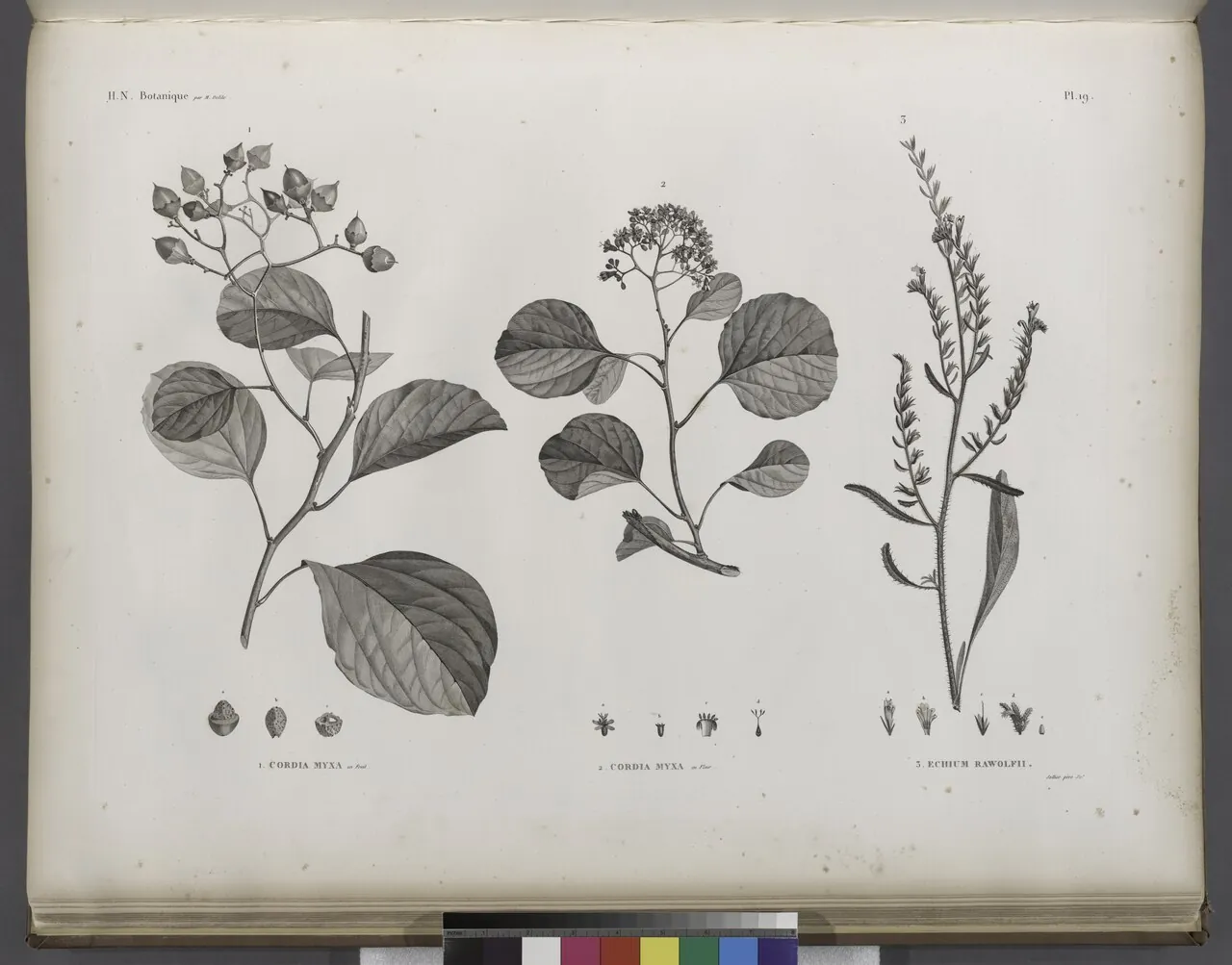
Scan by NYPLPublic domain 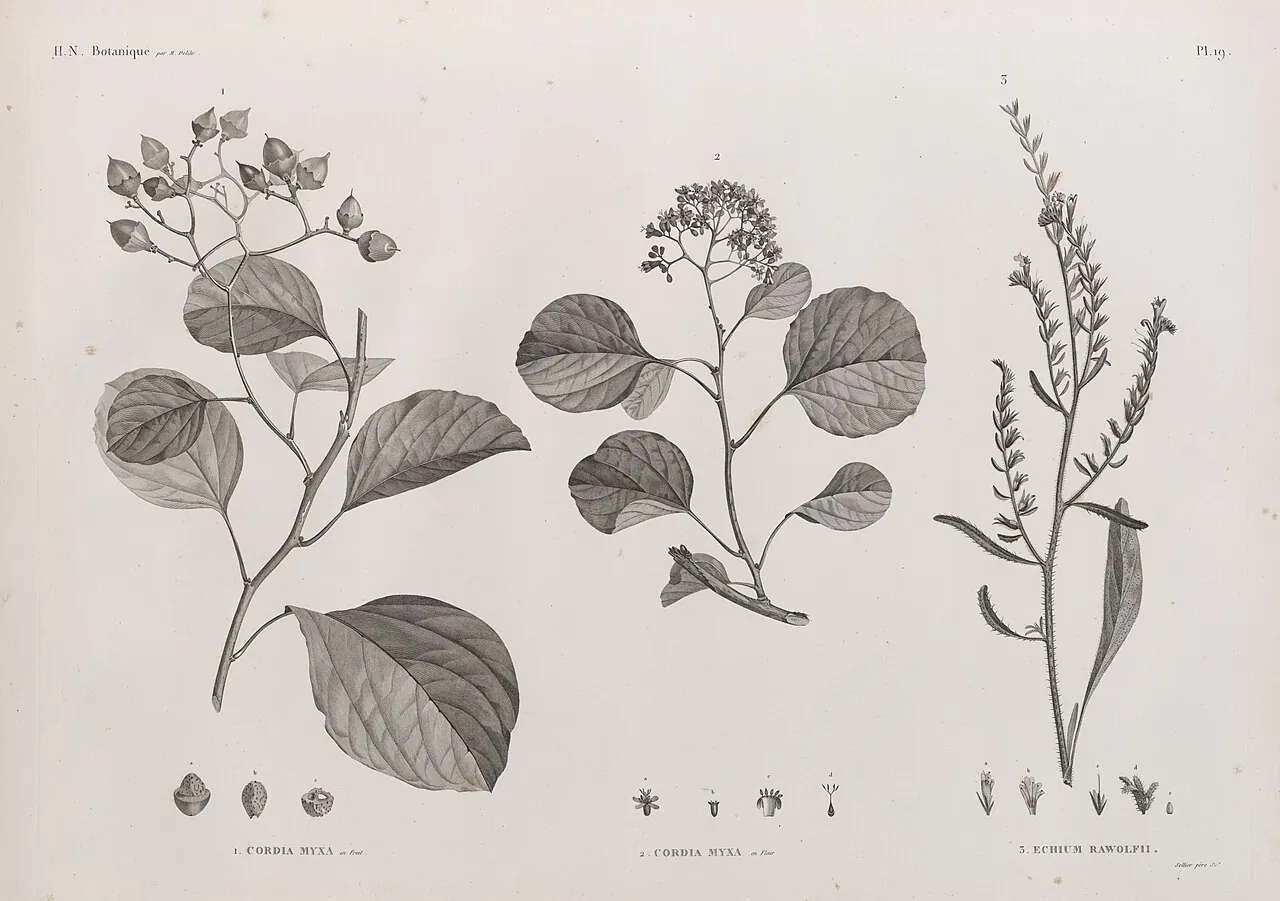
Scan by NYPLPublic domain
Sources
Lasora · Fruitopia · checked Sep 22, 2026