Fig
Also called Common fig · Edible figFicus carica · Moraceae family
Soft, sweet fruit that is most rewarding when you can meet it close to picking.
Find it near DetroitGet to know it
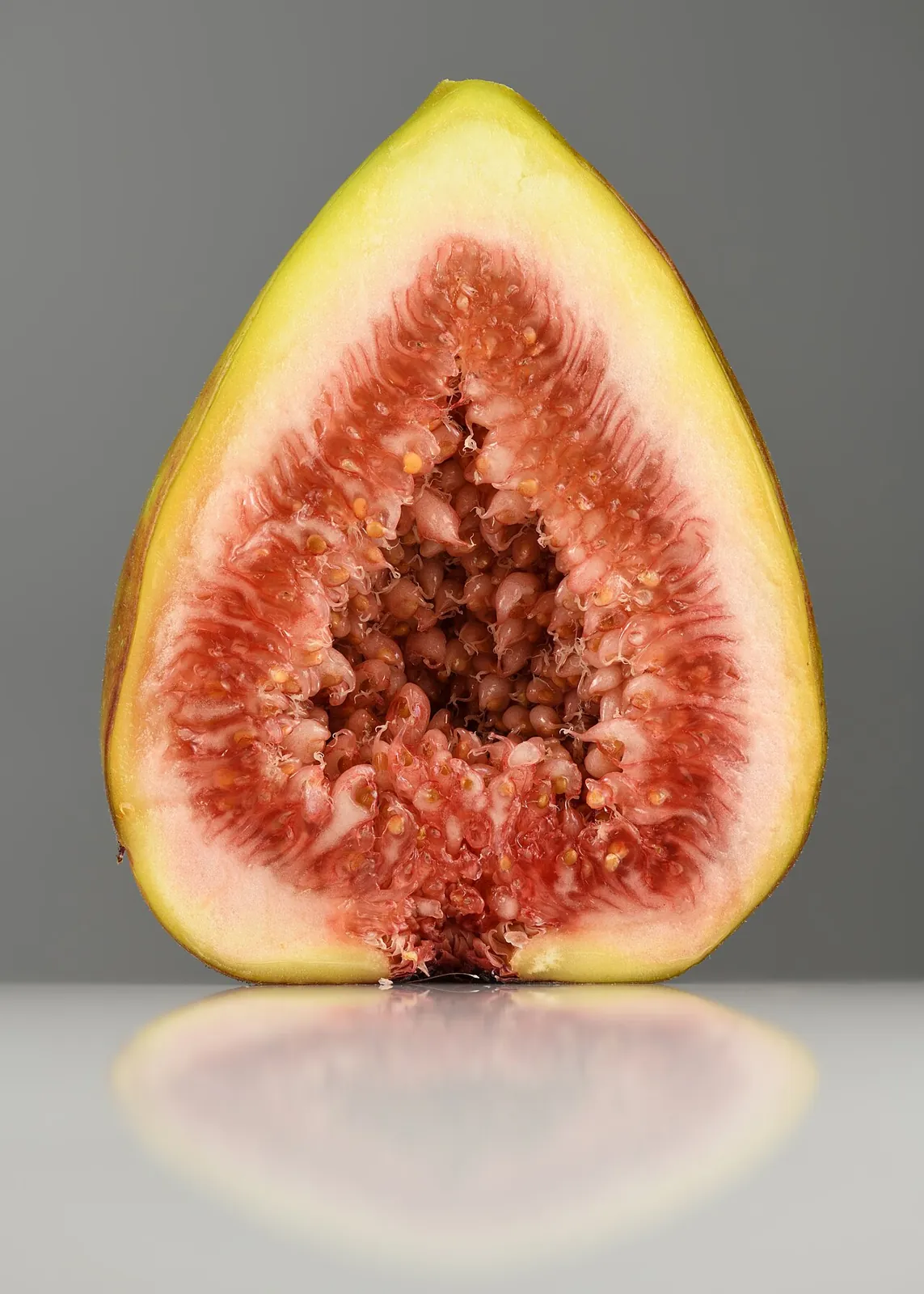
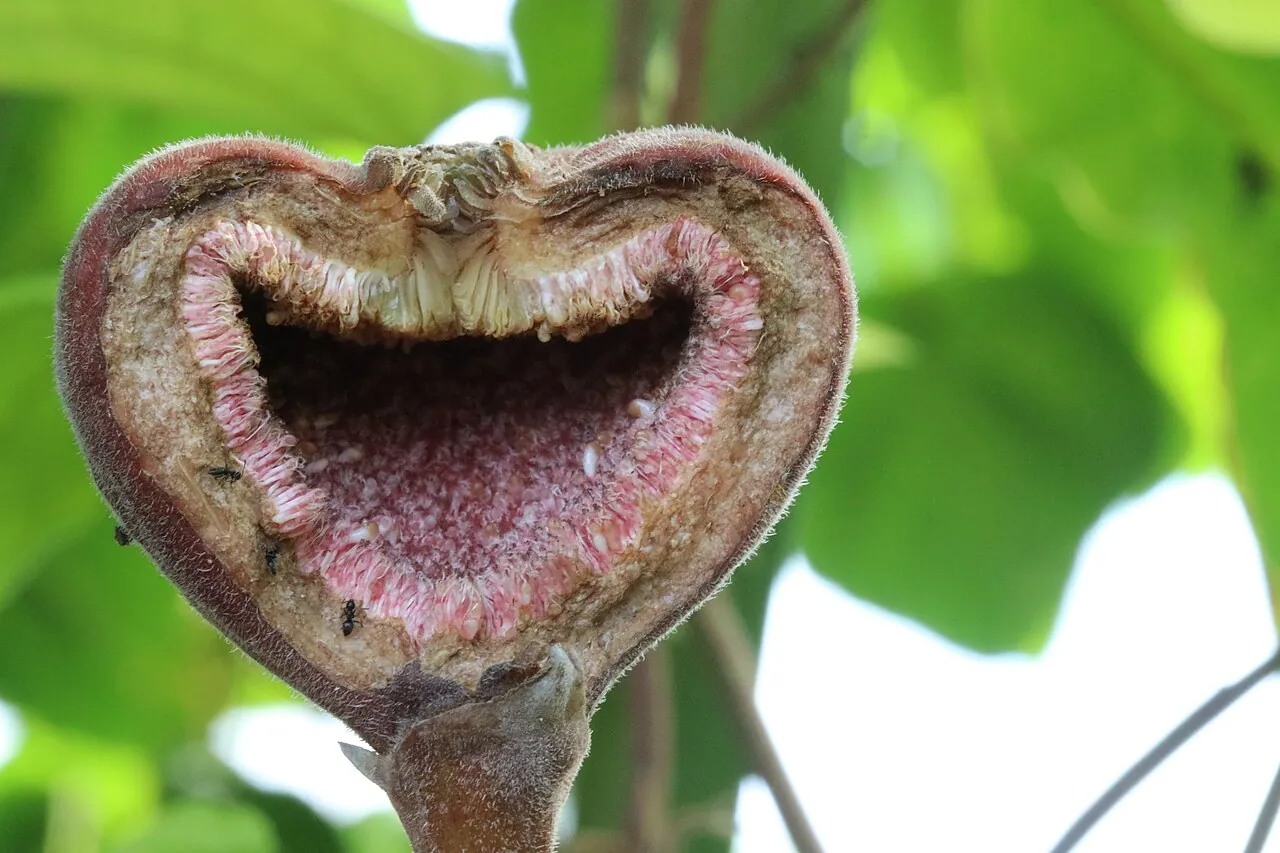
A ripe fig has tender skin and soft, sweet flesh you can eat in a few bites, skin and all. Split one open and you are looking inside a hollow structure where tiny flowers grew, hidden from view.
What it is
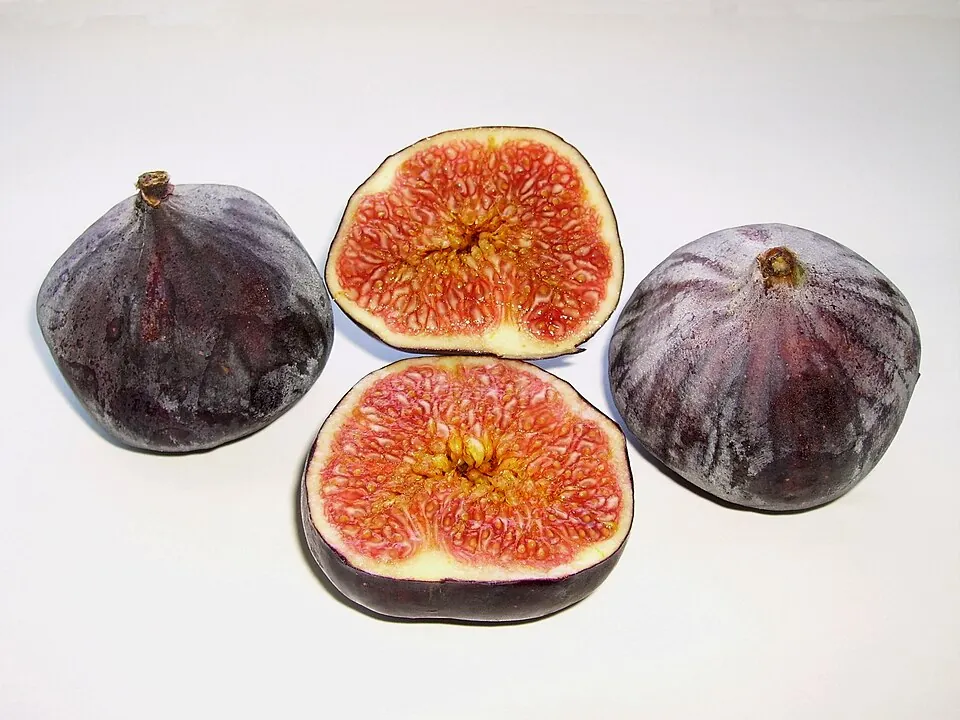
Figs can be pear-shaped and measure 2.5–10 cm (1–4 in) long. Purple is only one ripe colour: some varieties stay brown or greenish-yellow. The skin, flesh and tiny seeds are all edible; just the stem comes off.
Black Mission has dark purple-black skin and an earthy flavour. Sierra has pale skin and a fresh sweetness. Tiger is easier to spot: yellow skin striped with green, a red-purple middle and a flavour with hints of raspberry and citrus.
Where it comes from
Figs come from western Asia and spread around the Mediterranean. European varieties later travelled to India, Japan, South Africa and Australia. The first figs planted in the Americas reached Mexico in 1560.
Today, California grows 98% of the fresh figs produced commercially in the United States. Its fresh crop includes dark Mission figs, pale Sierra and striped Tiger.
How it's eaten where it grows
In Turkey, incir dolması turns dried figs into a stuffed dessert. A Central Anatolian version fills them with chopped hazelnuts and sugar, simmers them in water, then serves them cold with whipped cream.
In Sicily, dried figs go into buccellato at Christmas. This ring of pastry holds a filling of figs, almonds and orange peel.
How it's grown
The fig is a tree or spreading bush in the mulberry family. It loses its leaves in winter and can reach 3–9 m (10–30 ft). New trees grow from cut branches, and a warm, sunny spot suits them. In colder regions, a pot lets the tree move indoors for winter.
Fully ripe figs soften, droop on their stems and lift away from the branch easily. Figs for drying can partly dry on the tree, then finish on trays.
When and where you'll find it
California fresh figs usually reach supermarket produce sections from May through November. Dried figs are a year-round food, found with produce or other dried fruit.
Fresh figs are best soon after picking. Keep them refrigerated in a shallow container and wash them just before eating.
Sources · 7
- California Fig Advisory Boardcaliforniafigs.comOther pages2
- Morton, Fruits of Warm Climates (1987)hort.purdue.edu
- NC State Extension Gardener Plant Toolboxplants.ces.ncsu.edu
- Royal Horticultural Societyrhs.org.uk
- Türkiye Ministry of Culture and Tourismktb.gov.tr
- University of California Statewide IPM Programipm.ucanr.edu
- Visit Sicily, Regione Sicilianavisitsicily.info
Get it near Detroit
What it tastes like
As mild as a banana, as soft as a grapefruit≈
More about the taste
Fresh figs are sweet and succulent. Ripe fruit has soft skin and hangs limply; ripe color can be purple, brown or greenish-yellow, depending on the variety.
Celeste is a good all-rounder for fresh eating and preserving, while Kadota is better suited to preserving than fresh eating. Variety affects how two ripe figs compare.
A tasting invitation
Notice the contrast between tender skin, soft interior and tiny seeds. Compare a green-skinned and a dark-skinned variety if names are available. Describe the particular fruit rather than expecting every fig to resemble jam or honey.
Choose, ripen, store, eat
1ChooseSoft, ripe fruit
Look for
- Soft, ripe fruit
- Drooping stem
Ignore
- Purple color
For fresh eating, look for soft, ripe fruit rather than using purple color as a universal test. On the tree, drooping and easy removal are useful cues.
2RipenDoesn’t ripen after picking
Doesn’t ripen after pickingFor home-grown figs, wait for eating ripeness on the tree. Milky sap from a cut stem means the fruit isn't fully ripe yet.
3StoreCool, picked figs
- CoolPicked figs
- FreezerMore fruit than you can use
Eat soon after picking; keep cool in the meantime. Freezing or making preserves works well when there's more fruit than you can use promptly.
4EatFlesh, Skin · not leaves, milky sap
Eat
FleshSkinNot eaten
LeavesMilky sapThe selected recipes keep the fig flesh and skin together, either quartered or cross-cut. They use the fruit, not fig leaves or milky sap.
More tips
A useful detail Figs intended for drying may be allowed to ripen fully and partly dry on the tree, while fruit for fresh use follows a different harvest path. A dried fig and a fresh fig therefore represent more than a simple difference in packaging.
Worth knowing
- Choose tenderness for eating fresh, and a little more firmness when you want intact fruit for a preserve.
- For fresh eating, a sound, tender fig can be more enjoyable than one chosen mainly for firmness. Buy fragile ripe fruit close to when you'll eat it.
Detroit, Michigan
When it’s good hereUsual monthsJust arrivedAt their bestLast chanceAll yearWhere it is in its usual monthsToday, Oct 22Grown hereIn season in your stateShips fromIn season where it grows
52 growing areas, 18 countriesUsual monthsOur estimated monthsToday, Oct 22

- Algarve
- Aydın
- Balochistan
- Bursa
- California
- Coquimbo
- Fars
- Florida
- Granada
- Hawaii
- Ica
- Jizan
- La Libertad
- Maine
- Maule
- Northern Territory
- O'Higgins
- Oregon
- Penang
- South Africa
- South Australia
- South Jeolla
- Wakayama
- Western Cape
- Xinjiang
- You
7 of 13 areas · October
Growing areas by country
- United States13
- Spain9
- Chile4
- Australia3
- Brazil3
- France3
- Türkiye3
- Iran2
and 13 more countriesand 10 more countries
In areas where winter can damage above-ground wood, figs are often grown as bushes, using varieties adapted to the local climate.
21 varieties
- No variety photo yet4-19
- Taste
- sweet
- No variety photo yetChampagneAlso Golden Celeste, L55-13-22
- No variety photo yetLSU GoldAlso L59-46-63
- No variety photo yetO’RourkeAlso L57-11-103
- No variety photo yetS-49
- Taste
- sweet
- No variety photo yetS-54
- Taste
- sweet
89 names in 23 languages
Cook it
How to serve it first
Quarter a sound, ripe fig and serve it with yogurt or a small piece of cheese. For a warm version, roast halves until they suit your preferred texture. Taste before adding honey; let the fruit decide how much extra sweetness the dish needs.
3 fig festivalsUsual monthToday, Oct 22
Strange but trueHistoryA myth, and the truthScienceNatureWhere the name came fromCustoms and cultureFood and drinkPeople
If you like Fig
Tastes alike
Same plant family
Used the same way
Nutrition, sources
Nutrition
Figs, raw · per 100 g
- Carbohydrate
- 19 g
- Fiber
- 2.9 g
- Sugars
- 16 g
- Protein
- 0.8 g
- Fat
- 0.3 g
- Vitamin C
- 2 mg
- Potassium
- 232 mg
Photos · 3
Sources
Fig · Fruitopia · checked Sep 21, 2026
What we don't know yet
Breba (early) and main-crop fig timing both depend on the variety and climate.