Chocolate berry
Vitex payos · Lamiaceae family
The name invites a chocolate comparison, but the strongest reviewed description is simpler: dark, sweet, mealy pulp.
Find it near DetroitGet to know it
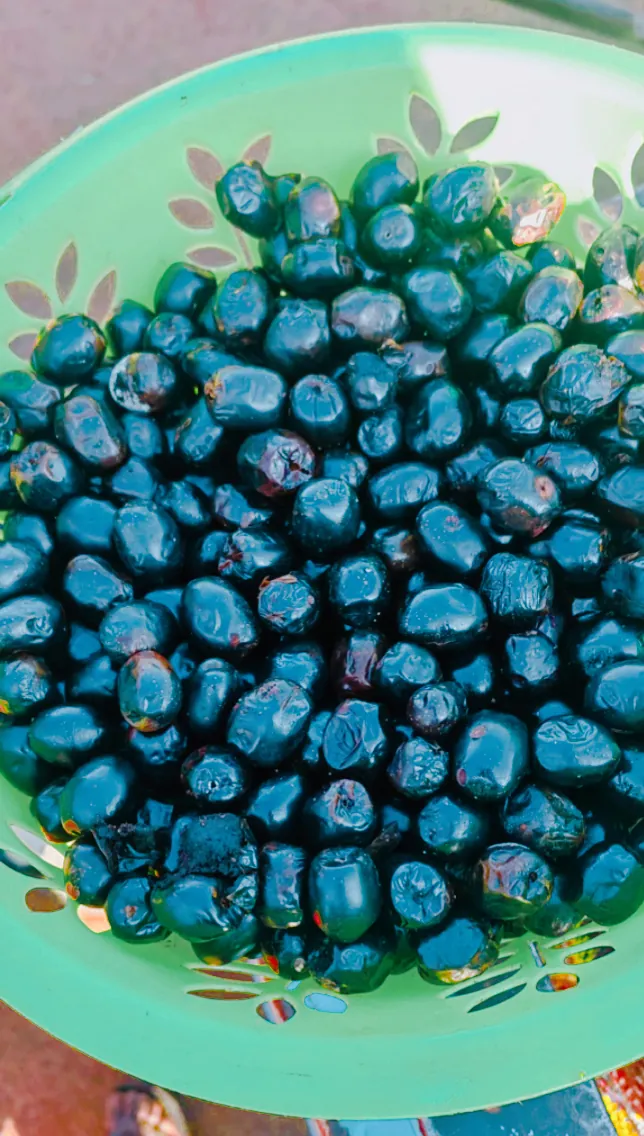
Chocolate berry is a shiny black African fruit with sweet, mealy pulp. About 2–2.5 cm (0.8–1 in) long, it makes a small snack, especially for children in eastern Kenya. The part you eat is the pulp around the seed.
What it is
The fruit of Vitex payos is oblong to nearly round, with smooth, glossy black skin. It measures about 1.4–2.4 cm (0.6–0.9 in) across. The ripe pulp is also black, sweet and mealy, a little like a prune in taste, and surrounds a seed.
It is a different species from Vitex doniana, another African fruit tree, which grows in slightly wetter parts of Kenya.
Where it comes from
Chocolate berry is native to eastern and southern Africa, including Kenya, Tanzania, Malawi, Mozambique and Zimbabwe. In Kenya it grows in the drylands of the central, coastal and eastern regions.
It has several local names: mfufu in Swahili, muu in Kamba and muburu in Mbeere. In eastern Kenya’s Mbeere, Mwingi and Kitui areas, families retain trees on their farms and gather the fruit for eating and sale.
How it's eaten where it grows
In eastern Kenyan villages, ripe chocolate berries are mainly a fresh snack. Children in some households squeeze the pulp and mix it with water to make a drink while herding animals.
Buyers choose the best fruit by taste. At home, mature but unripe fruit is traditionally put in a bucket and covered with wood ash to hurry its ripening, and gathered fruit is spread on mats in the shade for one to three days before market.
How it's grown
The tree reaches 2–10 m (7–33 ft), with a rounded crown. It suits hot, semi-arid places, often growing in sandy soil and, in drier areas, near rocky outcrops.
Farmers keep productive trees with sweet fruit and prune them to let more light reach the crops below. Cut trees can grow back from the stump. The seeds have a hard coat that can delay germination until it breaks.
When and where you'll find it
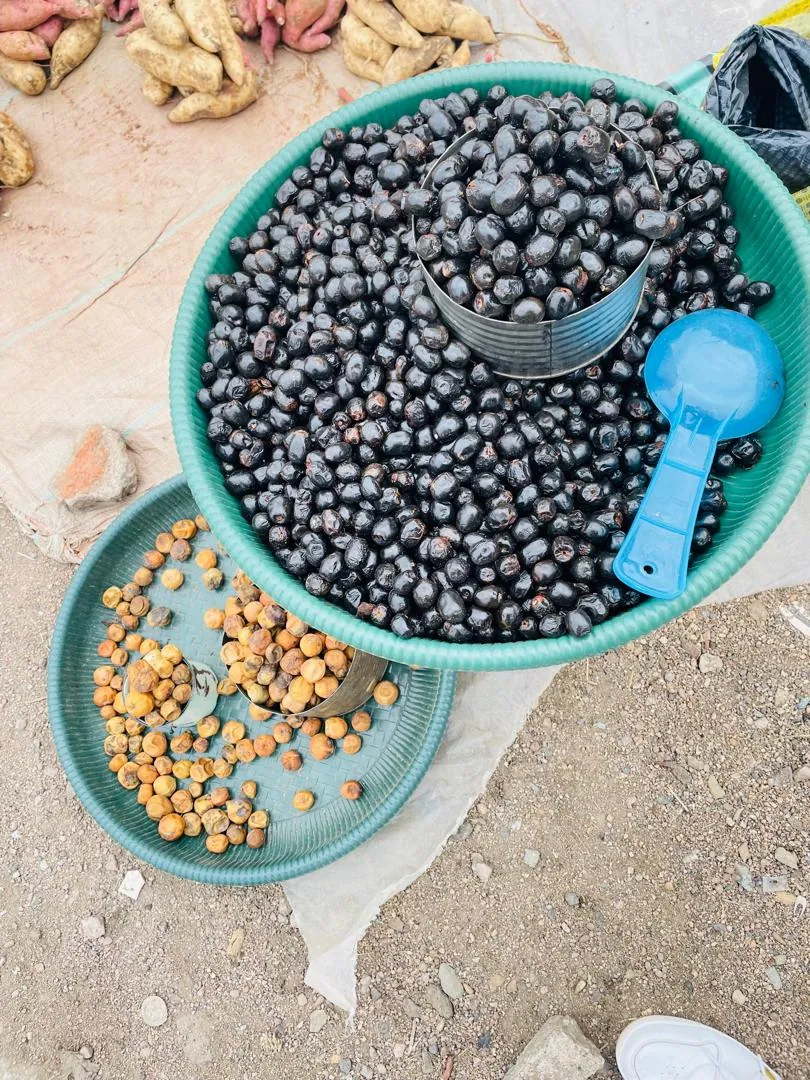
In Kenya, including Kitui and Tharaka-Nithi counties, chocolate berry usually ripens between April and July. Most ripe fruit is picked up after it falls; a few gatherers climb the tree and shake the branches. It is sold on farms, at roadside stalls and in local markets.
Vendors sell it by the cup, 375–500 ml (about 1.5–2 US cups) at a time. The fruit is perishable and easily damaged on the way to market, and is mostly gathered for eating right away and selling locally.
Get it near Detroit
What it tastes like
As soft as a blueberry, as sweet as a banana≈
More about the taste
Ripe chocolate berry has black, mealy, sweet pulp — the name doesn't mean it tastes like chocolate.
Ripe pulp is black, sweet and mealy — not chocolate-flavored despite the name.
Choose, eat
1ChooseFully black fruit
Look for
- Fully black fruit
Choose fruit that's fully black; the pulp is sweet and mealy.
2EatRipe pulp
Eat
Ripe pulpThe ripe pulp is the edible part. The leaves are used as fodder and the wood for utensils — not food uses.
Detroit, Michigan
When it’s good hereUsual monthsJust arrivedAt their bestLast chanceAll yearWhere it is in its usual monthsToday, Oct 22Grown hereIn season in your stateShips fromIn season where it grows
Cook it
Strange but trueA myth, and the truthNature
If you like Chocolate berry
Tastes alike
Close relatives
Sources
Photos · 2
Sources
Chocolate berry · Fruitopia · checked Sep 22, 2026