Cashew apple
Also called CashewAnacardium occidentale · Anacardiaceae family
A cashew tree offers two quite different foods; this profile follows the juicy apple.
Find it near DetroitGet to know it
The cashew apple is the yellow or red, juice-filled part that grows above a cashew nut. Bite into its soft, fibrous flesh and the juice comes with a tart, mouth-drying edge. In Piauí, Brazil, it becomes cajuína; in Goa, its juice is fermented and distilled into feni.
What it is
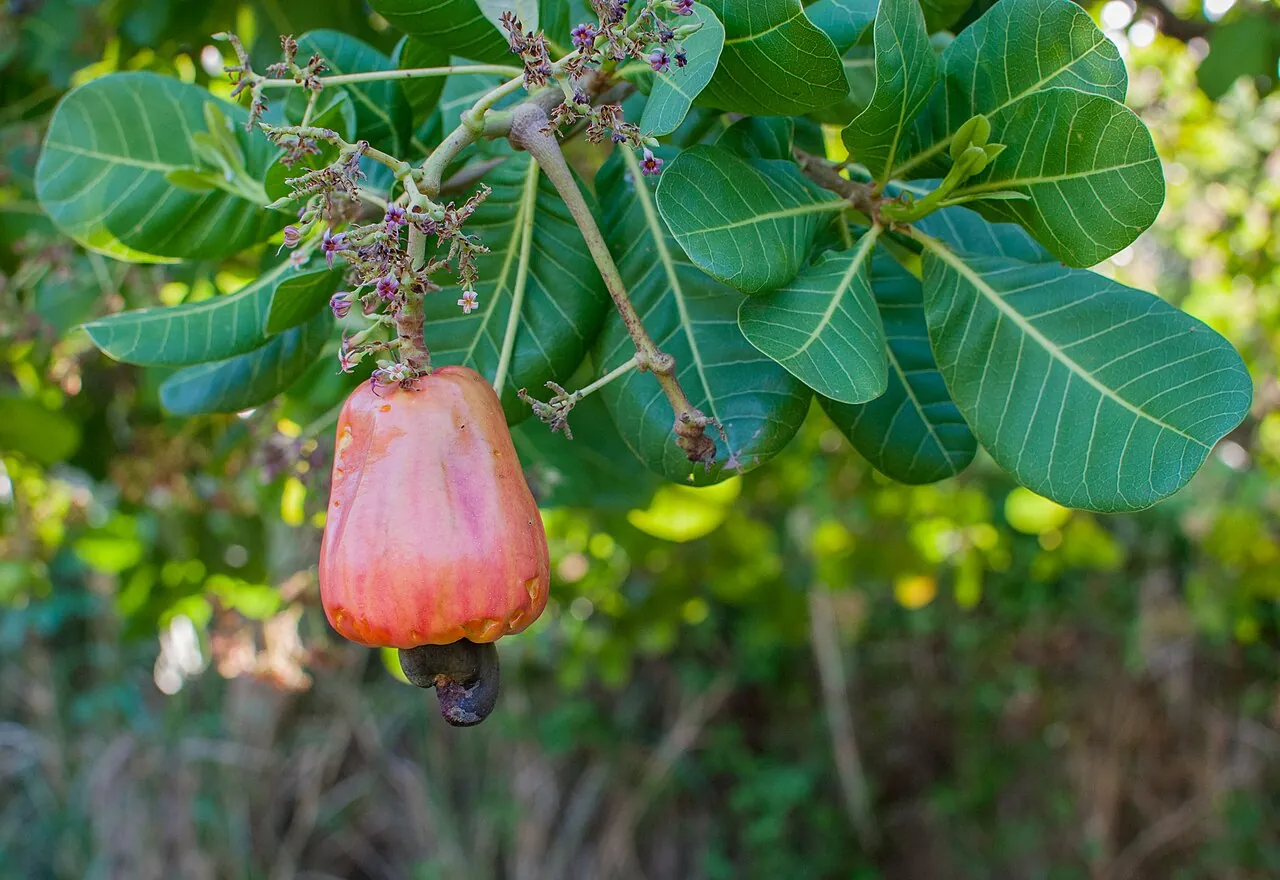
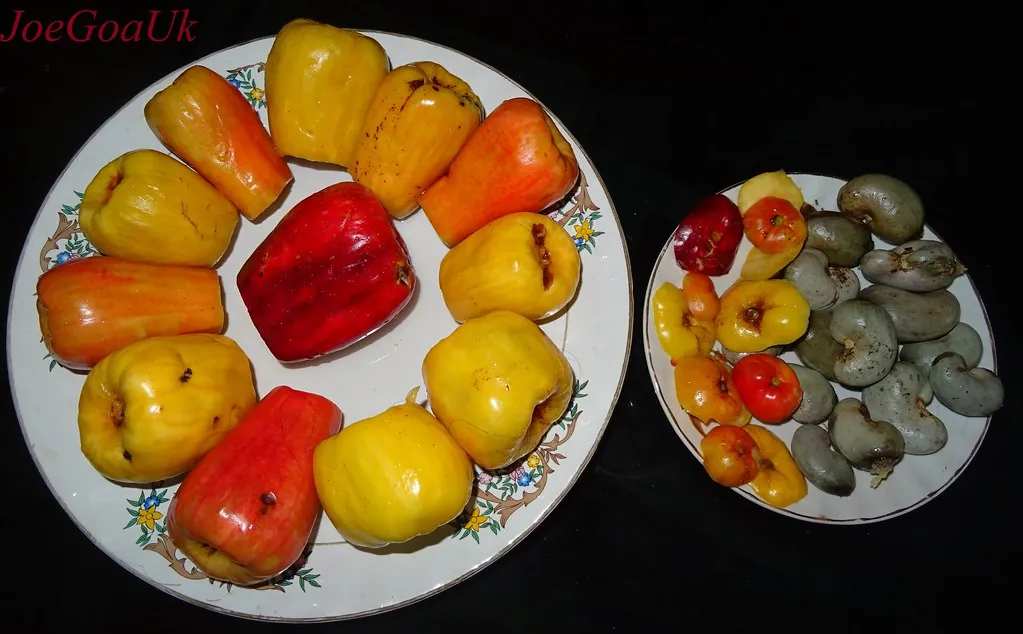
A cashew apple is about 5–11 cm (2–4½ in) long, with waxy skin that can be yellow, red or a mixture of both. The flesh is spongy, fibrous and very juicy, and tart. Tannins give it the drying sensation called astringency.
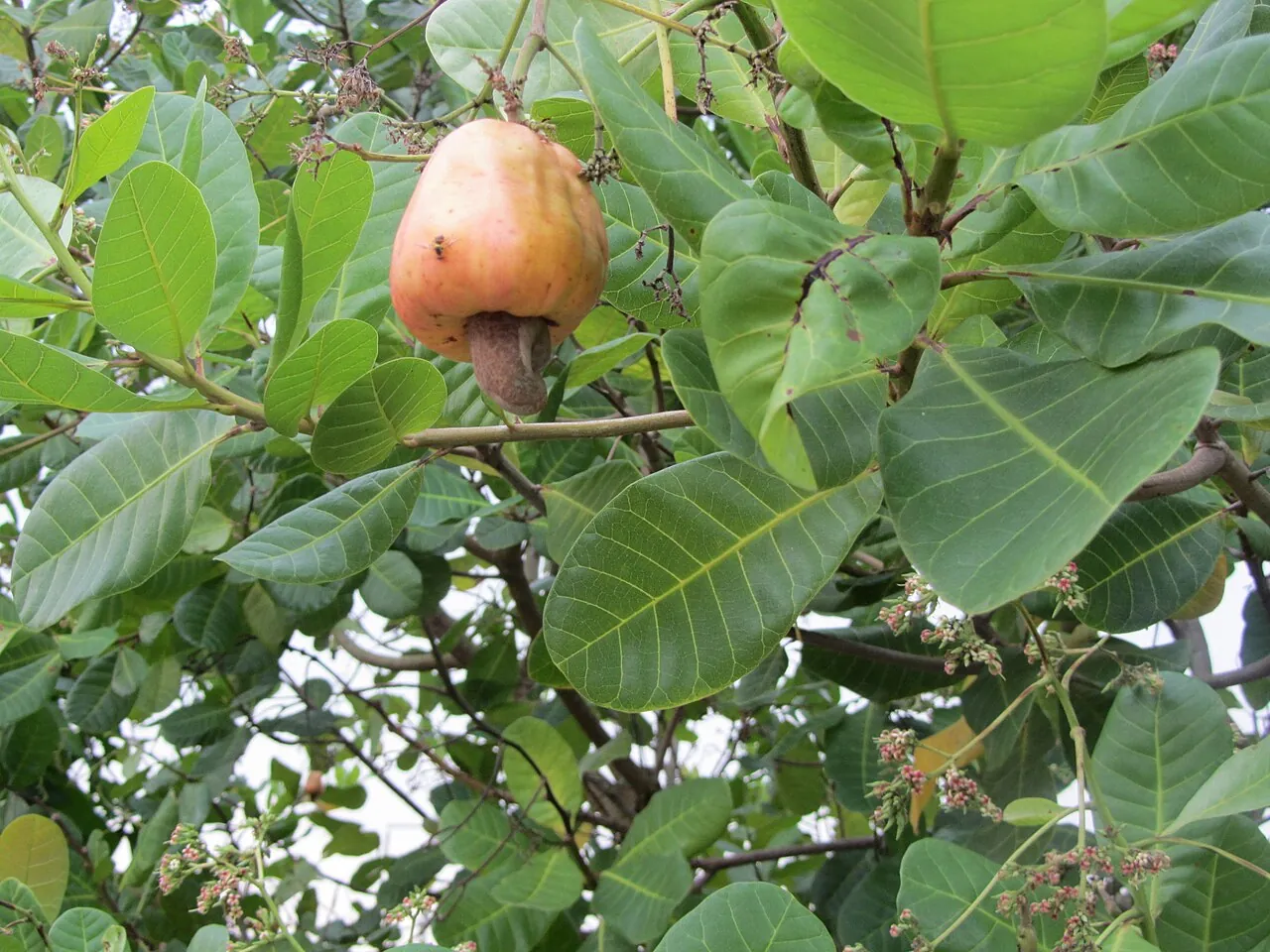
The apple is actually a swollen stalk. The true fruit hangs below it and holds the cashew kernel. That nut needs separate processing: its double-walled shell contains a caustic resin.
Where it comes from
Cashew comes from Brazil. Portuguese traders carried it to Goa, India, around 1560–1565, where it was prized for its fruit and for holding soil against erosion, and to eastern Africa, first to Mozambique. The same tree gives both the fleshy apple and the nut.
In Brazil, Ceará, Piauí, Rio Grande do Norte and Bahia are the main growing states.
How it's eaten where it grows
In Piauí, Brazil, cajuína starts as pressed cashew juice. Clarifying removes the tannins that make it astringent; the clear juice goes into glass bottles and heats in a water bath. In Goa, cashew feni takes another route: juice from freshly stomped apples ferments slowly with wild yeasts, then is distilled, sometimes twice.
In the Dominican Republic, dulce de cajuil turns the apple into a spoon dessert. Peeled fruit is boiled through several changes of water, then cooked with sugar, cinnamon and cloves until the liquid becomes a light syrup. It is chilled before serving.
How it's grown
Cashew grows on an evergreen tree with a broad, dome-shaped crown. It does well in warm coastal parts of India, in deep, well-drained sandy loam. Growers join a shoot from a chosen variety onto a seedling root system: this is grafting.
The fruit takes about two months to develop and is ready when it turns strongly red or yellow. In Brazil it is picked up from the ground or caught in nets hung under the trees, rather than pulled from the branches.
When and where you'll find it
In Goa, cashew harvest usually runs from February through May. In Brazil, it usually runs from late September to early January. Fresh apples are highly perishable, but trays wrapped in plastic and kept cool last up to 21 days instead of four, long enough to reach São Paulo and Rio de Janeiro, more than 3,000 km (1,900 mi) from the harvest.
Brazilian processors also deep-freeze apples for use through the year, so juice and pulp have a longer season than the fresh fruit. Brazilian food sellers abroad offer frozen caju pulp.
Sources · 10
- African Cashew Alliance, Cashew Apple Processing in Brazilafricancashewalliance.com
- Cazulo Premium Fenicazulofeni.com
- Clara Gonzalez, Dominican Cookingdominicancooking.com
- Embrapaembrapa.br
- Hawaiʻi Department of Agriculture, Cashew Field Trial Guidedab.hawaii.gov
- ICAR Central Coastal Agricultural Research Institute, Goaccari.res.in
- IPHAN, Brazil’s National Historical and Artistic Heritage Institutebcr.iphan.gov.br
- Morton, Fruits of Warm Climates (1987)hort.purdue.edu
- Singapore National Parks Boardnparks.gov.sg
- Soul Brazil Cuisinesoulbrazilcuisine.com.au
Get it near Detroit
What it tastes like
Crisper than a blueberry, no sweeter than a grapefruit≈
More about the taste
Cashew apple can have a drying, astringent edge from tannins. Juice, clarified cajuína and cooked sweets are different preparations of the fleshy fruit, so the food form matters as much as the fruit itself. This is the cashew apple, not the attached cashew nut.
The mouth-drying sensation comes from tannins. Processing into juice, nectar, frozen pulp or cajuína can reduce astringency and change the eating experience.
Choose, ripen, store, eat
1ChooseIntact, firm, clean fruit
Look for
- Intact, firm, clean fruit
- No damage or decay
Ignore
- Red or orange-yellow color
Choose intact, firm, clean fruit without damage or decay. Both red and orange-yellow forms occur; neither color is riper.
2RipenDoesn’t ripen after picking
Doesn’t ripen after pickingCashew apples are picked at proper maturity and handled gently; careful harvest preserves quality rather than improving it. Immature or fallen fruit won't ripen well afterward.
3StoreCashew apples are highly perishable
Cashew apples are highly perishable. Use them promptly, or choose a processed product like juice or pulp.
Detroit, Michigan
When it’s good hereUsual monthsJust arrivedAt their bestLast chanceAll yearWhere it is in its usual monthsToday, Oct 22Grown hereIn season in your stateShips fromIn season where it grows
3 growing areas, 2 countriesUsual monthsOur estimated monthsToday, Oct 22

- Espírito Santo
- Greater Accra
- Pernambuco
- You
2 of 2 areas · October
Growing areas by country
- Brazil2
- Ghana1
In Piauí, Brazil, cajuína-making was registered as cultural heritage in 2014. The clarified cashew drink is traditionally offered to visitors, with preparation knowledge passed down through families.
10 varieties
- No variety photo yetBRS 189
- Shape
- pear-shaped
- No variety photo yetBRS 226
- Use
- kernel primary
- No variety photo yetBRS 253
- Use
- kernel primary
- No variety photo yetBRS 265
- No variety photo yetBRS 274
- No variety photo yetBRS 275
- Use
- kernel primary
102 names in 24 languages
Cook it
1 Cashew apple festivalUsual monthToday, Oct 22
Strange but trueHistoryScienceFood and drinkA record
If you like Cashew apple
Tastes alike
Same plant family
Sources
Sources
Cashew apple · Fruitopia · checked Sep 22, 2026