Asian pear
Also called Apple pear · Chinese pear · Korean pearPyrus pyrifolia · Rosaceae family
Crunch is the intended destination, with variety and orchard doing much of the work.
Find it near DetroitGet to know it
An Asian pear crunches even when it is fully ripe. Its flesh is juicy, with a little tartness near the core, and a sweet variety such as Hosui gives you plenty of juice with each bite.
What it is
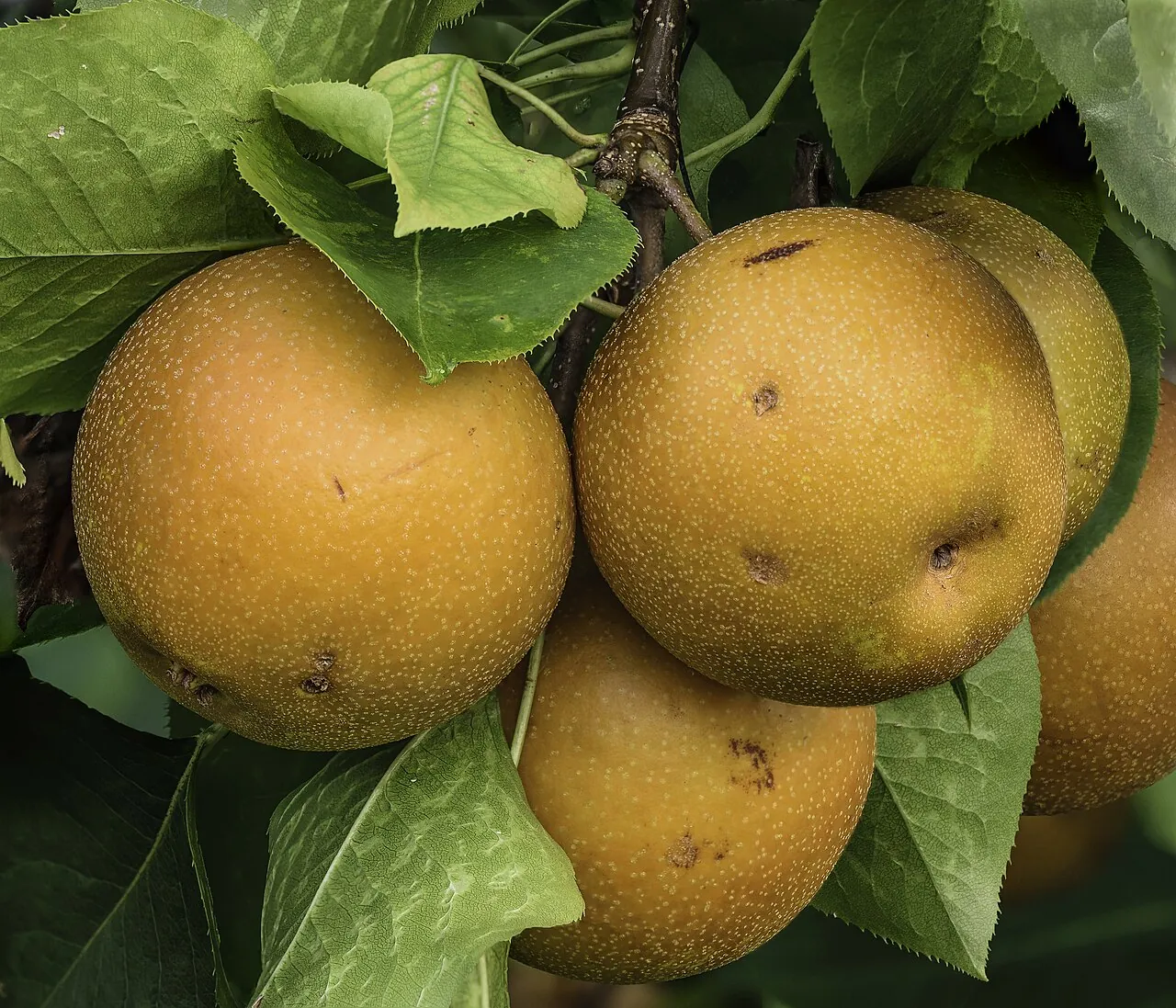
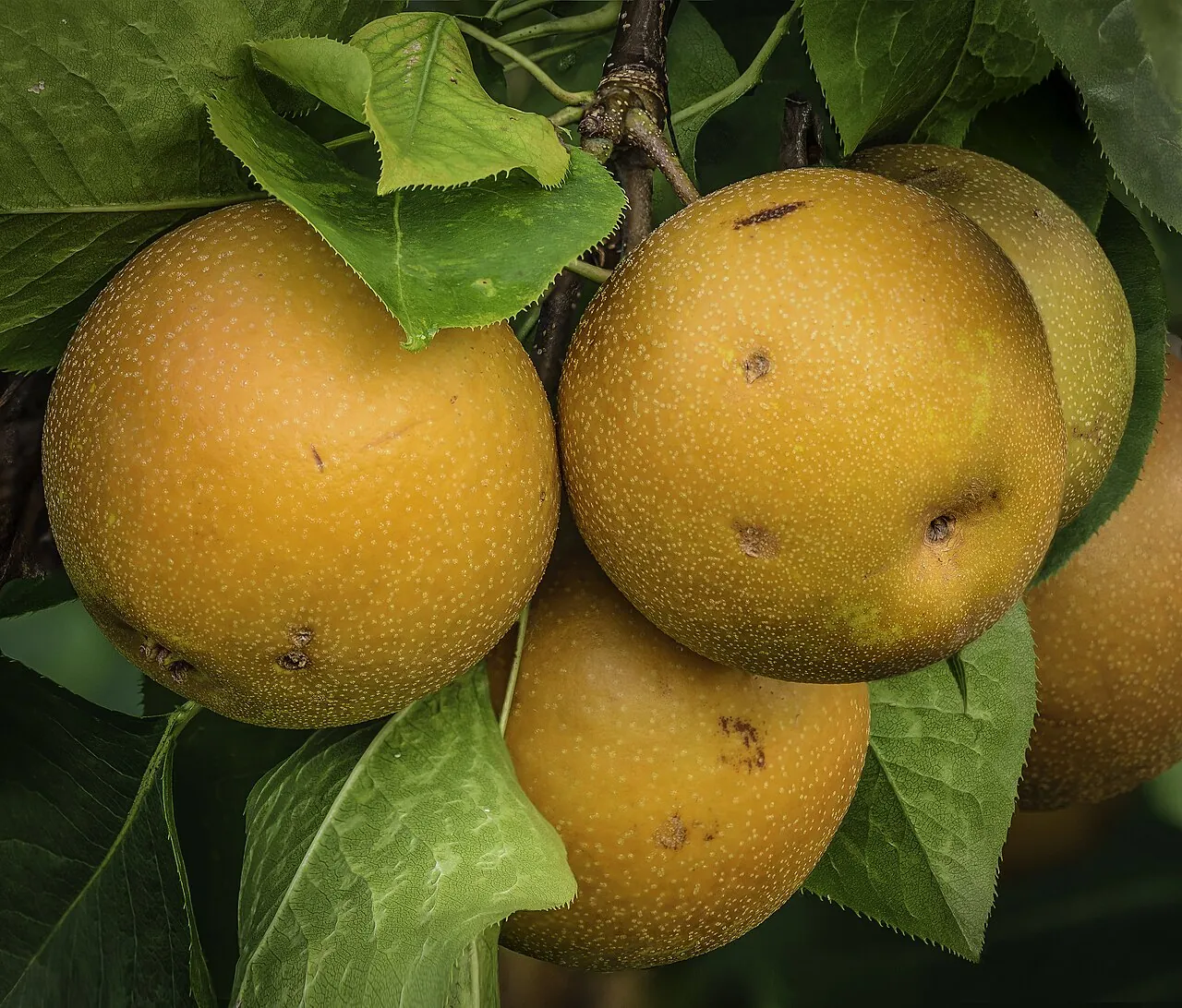
The round shape explains the nickname “apple pear”, but this is a pear, not an apple–pear cross. A typical fruit measures about 7.5–10 cm (3–4 in) across. Its skin may be tan and speckled or smooth and yellow-green.
Hosui has bronze skin and sweet, juicy flesh with little acidity. Shinseiki has yellow-green to yellow skin and creamy white, sweet flesh. Both give you the crisp bite that sets Asian pears apart.
Where it comes from
Asian pear, Pyrus pyrifolia, comes from eastern Asia, with a native range stretching from southern China into Korea and mainland Southeast Asia. China, Korea and Japan all grow it. Chinese miners brought varieties to California during the 1849 Gold Rush.
The fruit now has a US harvest as well as an Asian one, with orchards in California and Washington. Its many shop names include Chinese pear, Japanese pear and nashi.
How it's eaten where it grows
In Korea, grated pear goes into the marinade for bulgogi, thin slices of beef cooked over a flame or in a pan. The pear adds flavour and helps soften the meat.
For baejungtang, also called baesuk in some regions, a hollowed-out pear becomes its own little cooking pot. Ginger, dates, honey and pieces of pear fill the middle; the cut-off top goes back on as a lid. The fruit is steamed or poached and served warm with a spoon.
How it's grown
Trees begin bearing around their third or fourth year. Growing two varieties together helps pollen move between compatible flowers and gives a better crop. The fruit ripens on the tree, so it is usually sold ripe and ready to eat.
A heavy crop needs thinning: growers remove small pears so the remaining ones grow larger. Taking off some fruit also keeps heavily loaded branches from breaking.
When and where you'll find it
In California, harvest usually runs from mid-July through September; in Washington and Japan, it usually runs from August through October. In the US it usually shows up in grocery stores in autumn and winter. The pears bruise easily, which explains their cushioned packaging.
Ripe pears keep for about a week at room temperature or up to three months in the refrigerator. They also travel as dried slices: Arnett Farms in Fresno, California, makes them.
Sources · 9
- Alice Kim, Saveursaveur.com
- Arnett Farmsarnettfarms.com
- Clemson Cooperative Extensionhgic.clemson.edu
- Hyosun, Korean Bapsangkoreanbapsang.com
- NC State Extension Gardener Plant Toolboxplants.ces.ncsu.edu
- Oregon State University Extensionextension.oregonstate.edu
- Penn State Extensionextension.psu.edu
- Tottori Nijisseiki Pear Museum1174.sanin.jp
- University of California Small Farms Networkucanr.edu
Get it near Detroit
What it tastes like
As mild as a banana, as crisp as an apple≈
More about the taste
Ripe Asian pears are crisp and juicy, with some tartness especially toward the core — unlike the soft flesh of a ripe European pear, so softness isn't a useful ripeness test here.
Ripe Asian pears are crisp and juicy, with some tartness especially toward the core — unlike the soft flesh of a ripe European pear, so softness isn't a useful ripeness test here.
At Carandale Farm in Wisconsin, the Shinseiki variety was described as sweet, flavorful and notably juicy.
Choose, ripen, store, eat
1ChooseRipened on the tree
Look for
- Ripened on the tree
- Yellow to yellow-green skin
Ignore
- Softness
Ask for the variety and whether the fruit ripened on the tree. Ripe skin color ranges from yellow to yellow-green depending on the variety.
2RipenDoesn’t ripen after picking
Doesn’t ripen after pickingAsian pears reach their best quality ripening on the tree — unlike European pears, which are picked green and softened afterward.
3StoreFridge, ripe
- FridgeRipePlastic or paper bag
Asian pears bruise easily. Keep ripe fruit in a plastic or paper bag, cushioned against knocks; refrigeration keeps it longer than room temperature.
4EatAsian pears are mostly eaten fresh, but are also dried or used in meat marinades
Asian pears are mostly eaten fresh, but are also dried or used in meat marinades. Cooking can make them mushy and dull their flavor, since they're a water-rich fruit.
More tips
Worth knowing
- Cold-stored Asian pears can keep good eating quality, depending on the variety and how long they sat warm.
- When comparing Asian pears, weigh aroma, juice and acid balance along with crispness — a brown skin doesn't automatically mean a better pear.
Detroit, Michigan
When it’s good hereUsual monthsJust arrivedAt their bestLast chanceAll yearWhere it is in its usual monthsToday, Oct 22Grown hereIn season in your stateShips fromIn season where it grows
11 growing areas, 5 countriesUsual monthsOur estimated monthsToday, Oct 22

- Coquimbo
- Maule
- Nagano +1
- New South Wales
- O'Higgins
- South Australia
- South Jeolla
- Victoria
- Washington
- You
3 of 3 areas · October
Growing areas by country
- Australia4
- Chile3
- Japan2
- South Korea1
- United States1
At Carandale Farm, the Shinseiki variety established and fruited well, while two later varieties introduced were slower to establish.
92 varieties
- No variety photo yetHanareum
- Feel
- soft
- Juice
- juicy KR · 나주
- No variety photo yetKanta
- Taste
- high
- Tartness
- low
- Flavour
- high sweetness with some acidity
- Texture
- softer than Niitaka
- No variety photo yetPremP099
- Taste
- sweet
- Bite
- crisp
- Feel
- firm
- Juice
- juicy
- No variety photo yetShurei
- Tartness
- low
- Flavour
- little perceived acidity
- Texture
- fine
- No variety photo yetあきあかり
- Tartness
- low
- Juice
- juicy
- Skin
- yellow · red · brown
- Shape
- round
- No variety photo yetほしあかり
- Taste
- high
- Tartness
- low
- Feel
- soft
63 names in 15 languages
Cook it
1 Asian pear festivalUsual monthToday, Oct 22
Strange but trueHistoryScienceWhere the name came fromCustoms and cultureFood and drinkA record
If you like Asian pear
Tastes alike
Close relatives
Nutrition, sources
Nutrition
Pears, asian, raw · per 100 g
- Carbohydrate
- 11 g
- Fiber
- 3.6 g
- Sugars
- 7.1 g
- Protein
- 0.5 g
- Fat
- 0.2 g
- Vitamin C
- 3.8 mg
- Potassium
- 121 mg
Sources
Asian pear · Fruitopia · checked Oct 2, 2026