Wax apple
Also called Java apple · Wax jambu · Semarang rose-appleSyzygium samarangense · Myrtaceae family
A watery, crisp fruit with a short journey from picking to eating.
Find it near DetroitGet to know it
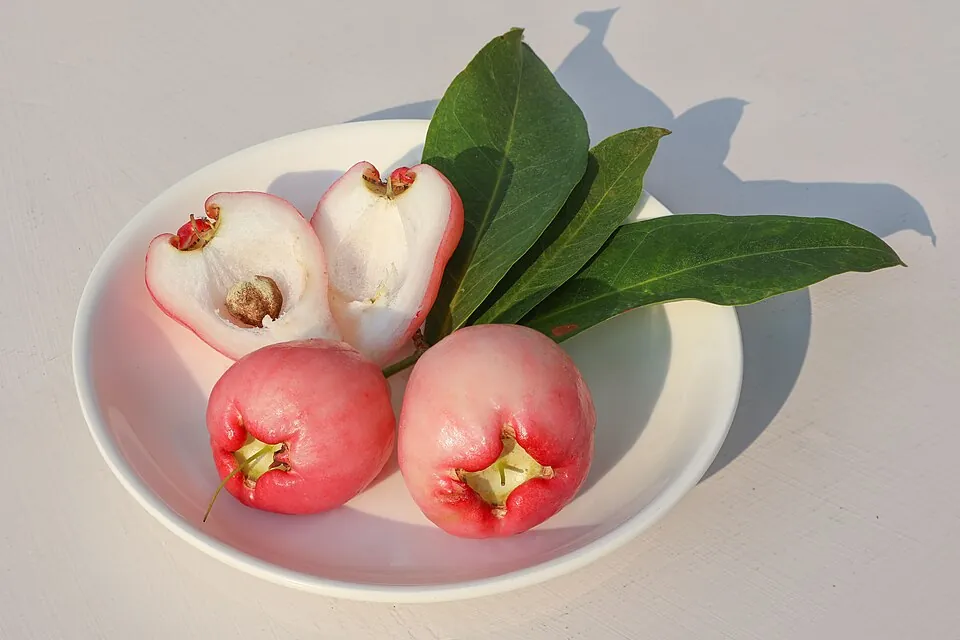
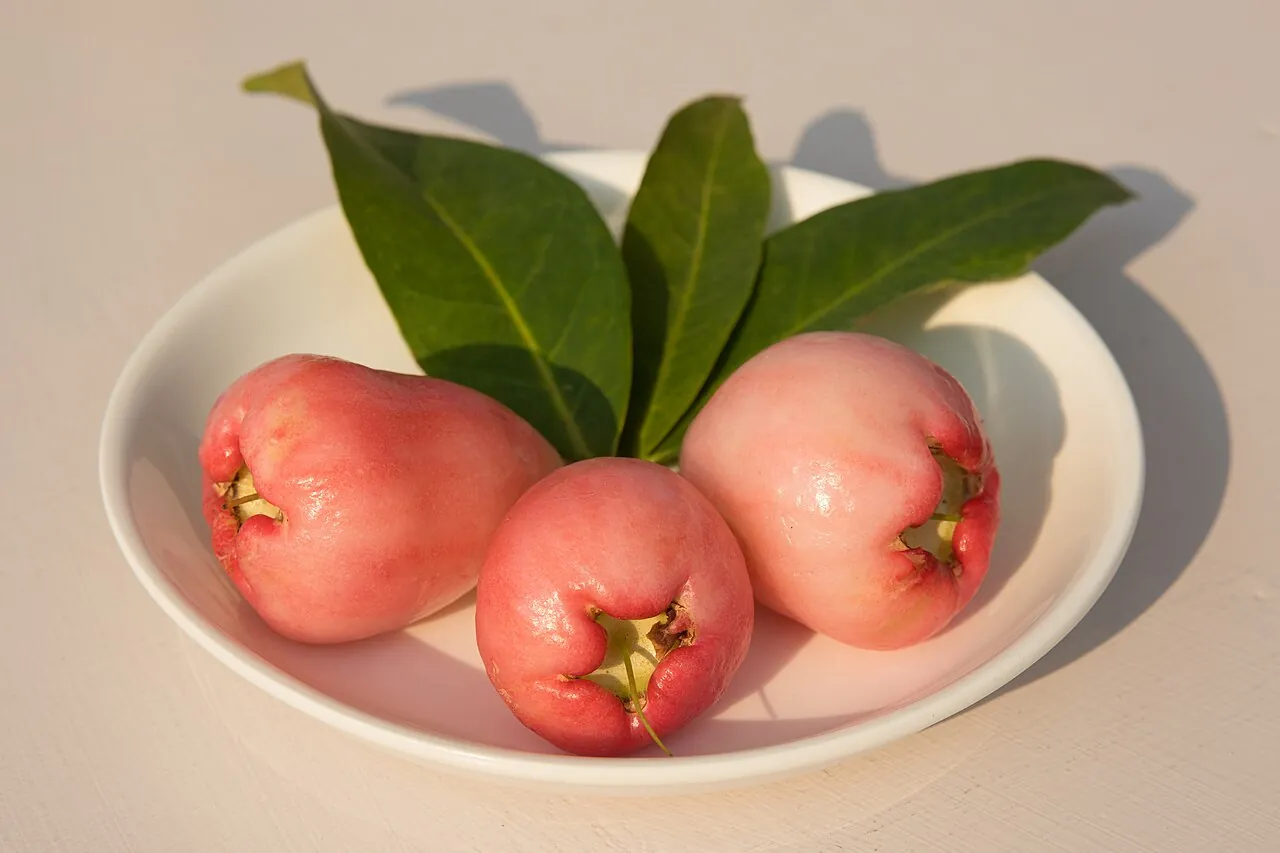
Wax apple is a waxy, bell-shaped fruit with a thin skin and juicy, spongy white flesh. Also called wax jambu or Java apple, it includes Taiwan’s crimson Black Diamond, grown for its sweetness and crunch.
What it is
Wax apple is Syzygium samarangense, a member of the myrtle family. The fruit is roughly 3.4–5 cm (1⅓–2 in) long and 4.5–5.4 cm (1¾–2⅛ in) across. Four fleshy lobes remain at its broad end. The flesh has a spongy structure, with no seeds or just one or two, often poorly developed.
Skin colour depends on the variety: light red, greenish-white and cream all occur. Taiwan’s Black Diamond is large and seedless, with crimson skin and a sweet, juicy, crisp bite.
Where it comes from
Wax apple comes from the Malay Peninsula and the Andaman and Nicobar Islands. It is grown across Southeast Asia and in India. In the seventeenth century, the Dutch carried it from Java to Taiwan, where it first grew as scattered garden trees. Taiwanese growers kept improving it until Taiwan’s wax apple became better known than the fruit of its homeland. Black Diamond, an improved variety from 1987, is one result.
How it's eaten where it grows
In Malaysia, greenish wax apples are eaten raw with salt or cooked into a sauce. In Indonesia, the fruit joins rujak fruit salads and asinan pickles.
In Kaohsiung, wax apple also appears in a salad with cucumber, tomato, kiwifruit and baby corn. A Japanese-style dressing combines soy sauce, mirin, oils, vinegar and fruit juice.
How it's grown
Wax apple grows on an evergreen tree with a spreading crown and flaking pink-grey bark. It reaches 5–15 m (16–49 ft), and trees grown from cuttings or grafts begin bearing after about 3–5 years. The tree suits tropical lowlands and needs a reliable water supply, even where part of the year is dry.
The fruit’s skin is thin and delicate. The fruit is picked by hand twice a week and handled with care, then eaten or preserved within a few days of picking.
When and where you'll find it
In India, wax apples usually ripen in May and June. Kaohsiung’s Black Diamond normally crops from May to July, while managed orchards extend production from October to the following June.
In the US, a small amount is grown in South Florida. Wherever you find it, this is a fruit for eating within a few days of picking.
Get it near Detroit
What it tastes like
As sweet as a banana, as mild as a blueberry≈
More about the taste
Wax apple is crisp and very juicy, with thick flesh and few seeds. The Black Diamond variety, grown in Kaohsiung, Taiwan, is prized for its sweetness and crunch.
The flesh is juicy and aromatic, with a sweet-sour taste.
Ripe flesh is also sweet, crisp and low in acid. Skin color varies widely by variety, including the dark-skinned Black Pearl.
Choose, store, eat
1ChooseFavor carefully handled fruit — the skin is thin and bruises easily
Favor carefully handled fruit — the skin is thin and bruises easily.
2StoreEat or preserve wax apple within a few days of harvest
Eat or preserve wax apple within a few days of harvest; it's delicate.
3EatFleshy fruit
Eat
Fleshy fruitEat the fleshy fruit. Seed count varies from zero to two, and many fruits are effectively seedless.
Detroit, Michigan
When it’s good hereUsual monthsJust arrivedAt their bestLast chanceAll yearWhere it is in its usual monthsToday, Oct 22Grown hereIn season in your stateShips fromIn season where it grows
3 growing areas, 2 countriesUsual monthsOur estimated monthsToday, Oct 22

- Hainan
- New South Wales
- Queensland
- You
1 of 2 areas · October
Growing areas by country
- Australia2
- China1
In Indonesia, wax apple goes into rujak fruit salads and asinan pickles. Southern Taiwan's Pingtung region has a commercial wax apple industry.
30 names in 16 languages
Cook it
Strange but trueHistoryScienceWhere the name came fromFood and drink
If you like Wax apple
Tastes alike
Close relatives
Sources
Sources
Wax apple · Fruitopia · checked Sep 22, 2026