Spanish tamarind
Also called Smooth Wild-medlar · Voa vanga · Smooth-leaved wild-medlarVangueria madagascariensis · Rubiaceae family
A wild-medlar fruit with yellow-brown skin and an unusually chocolate-like pulp.
Find it near DetroitGet to know it
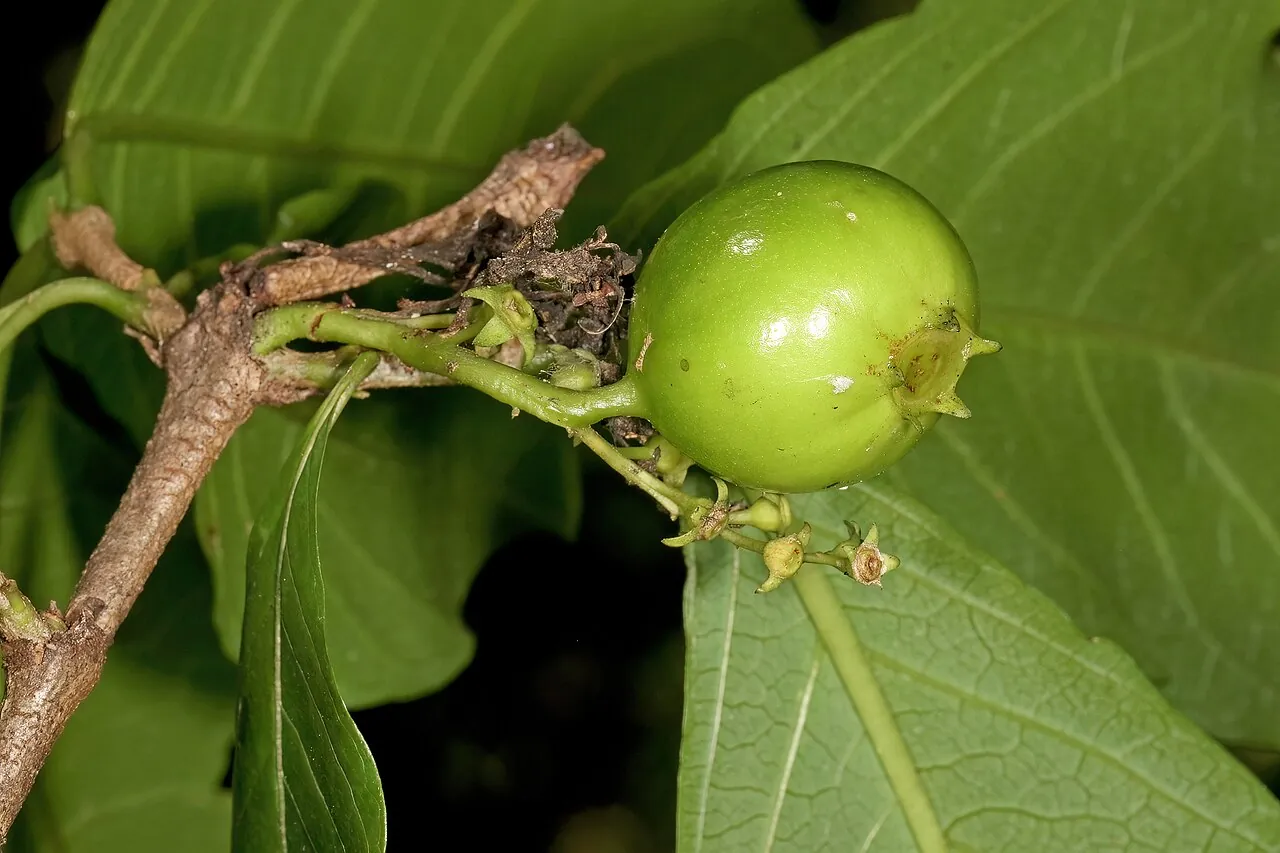
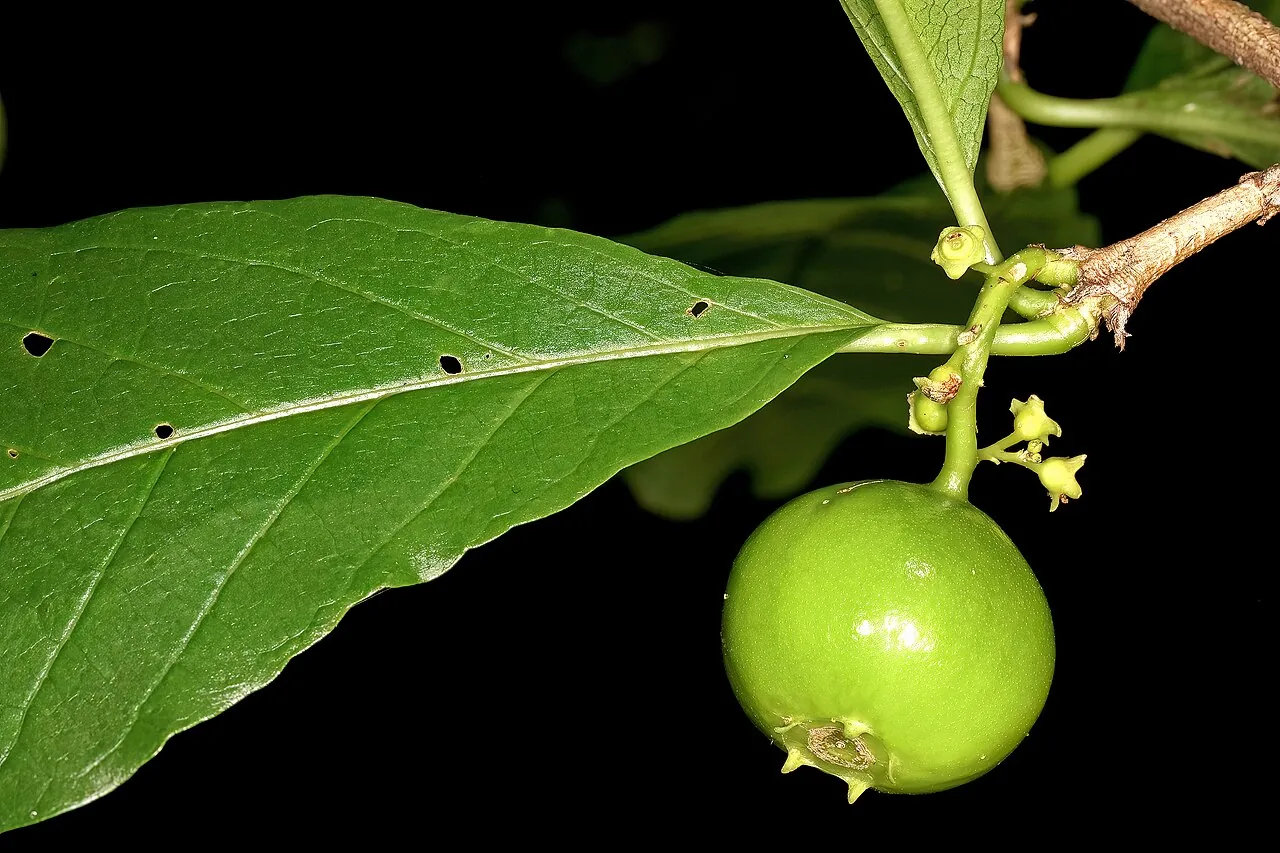
Spanish tamarind is a round African fruit whose ripe pulp has a chocolate-like flavour. Its smooth skin turns yellow-brown as it ripens, hiding four or five hard seeds. On Réunion, this fruit goes by the name vavangue.
What it is
The fruit is Vangueria madagascariensis, a member of the Rubiaceae family. Each glossy, rounded fruit measures about 3–4.5 cm (1.2–1.8 in) long. The skin starts green and becomes yellow-brown at maturity. Inside, the edible part is the pulp around the woody seeds.
Where it comes from
Its home stretches across tropical and southern Africa, including Madagascar and the Comoros. It has also travelled to India, Bangladesh and parts of the Caribbean, including Puerto Rico and Trinidad and Tobago.
On Réunion it has long grown beyond gardens. Trees stand beside dry footpaths, including the Chemin des Anglais, and in the grassy savannas of the west coast.
How it's eaten where it grows
On Réunion, people eat vavangue once it is ripe and brown. The pulp is the part to eat, and the four or five woody seeds are left behind. Beyond fresh eating, the fruit is also used to add flavour to beer.
How it's grown
The plant forms a much-branched shrub or small tree with smooth grey bark. Its fragrant flowers draw bees. On farms it is mostly tended as a partly cultivated fruit tree, with space cleared around it to let in the light it needs.
When and where you'll find it
Flowering comes in the rainy season, and the fruit ripens during the dry season, six to eight months after the flowers are fertilised, depending on the place. In Elabasia, in Sudan’s South Kordofan, kirker fruit was harvested in May 2019. On Réunion it grows along dry paths and in the grassy savannas of the west coast.
Get it near Detroit
Sell fruit online? Add your business
What it tastes like
As mild as a peach, softer than a pear≈
More about the taste
Ripe Spanish tamarind pulp tastes pleasantly chocolate-like.
The pulp has a pleasant, chocolate-like flavor when ripe.
Choose, eat
1ChooseFully ripe and brown
Look for
- Fully ripe and brown
Wait until the fruit is fully ripe and brown before eating.
2EatRipe pulp
Eat
Ripe pulpRipe fruit pulp is the edible part; it's also used to flavor beer.
Detroit, Michigan
When it’s good here
Season not documented for Michigan.
17 names in 6 languages
Cook it
If you like Spanish tamarind
Tastes alike
Close relatives
Same plant family
Sources
Photos · 2
Sources
Spanish tamarind · Fruitopia · checked Sep 22, 2026