Desert date
Also called Egyptian myrobalan · Heglig · Jericho balsamBalanites aegyptiaca · Zygophyllaceae family
The pulp, hard stone and kernel oil tell three different stories about this dryland fruit.
Find it near DetroitGet to know it
Desert date is the small oval fruit of a thorny tree, with sticky, slightly bitter pulp around a hard stone. That one fruit becomes several foods: fresh or dried pulp, syrup and sweets, and cooking oil from the kernel inside.
What it is
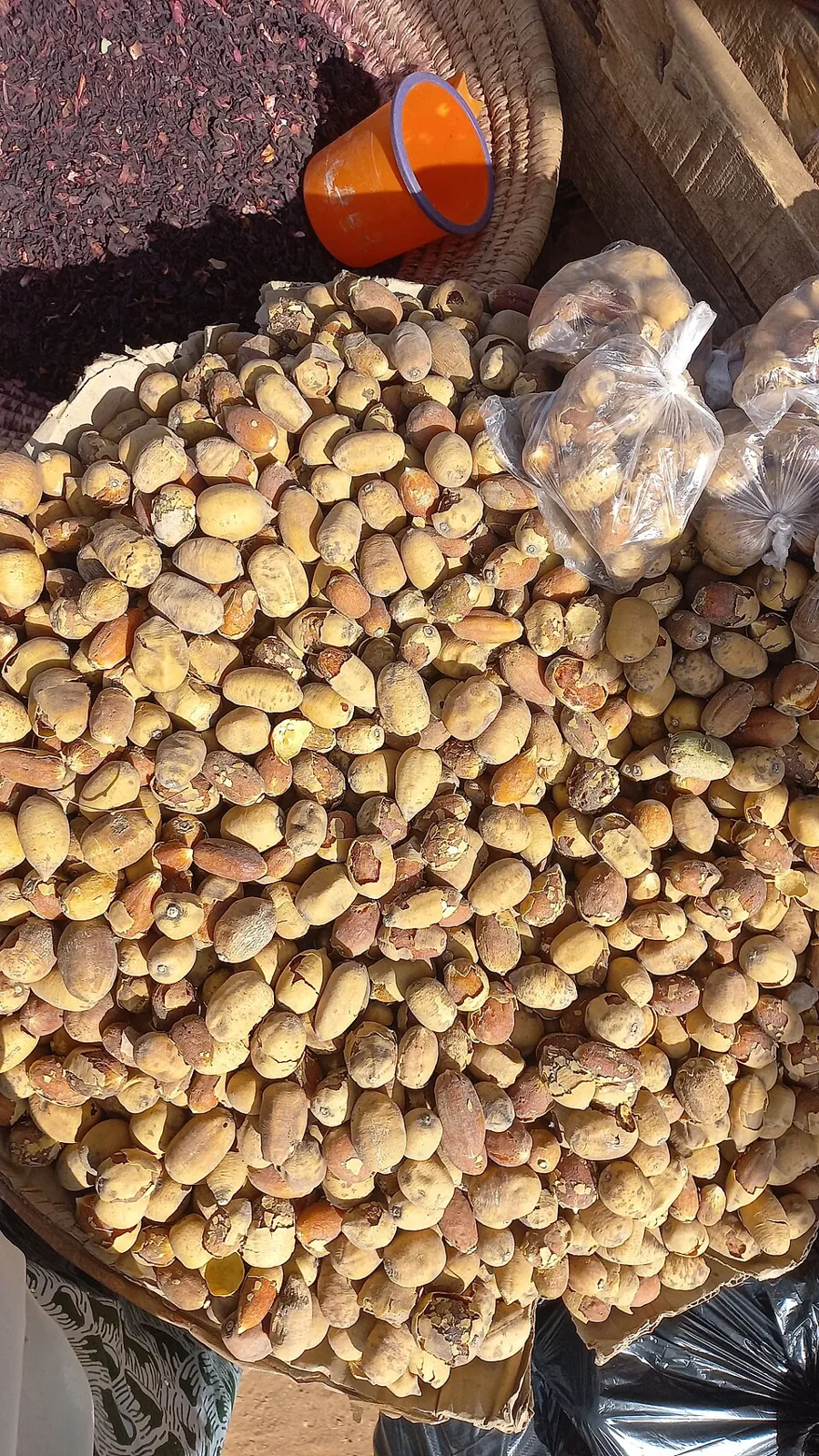
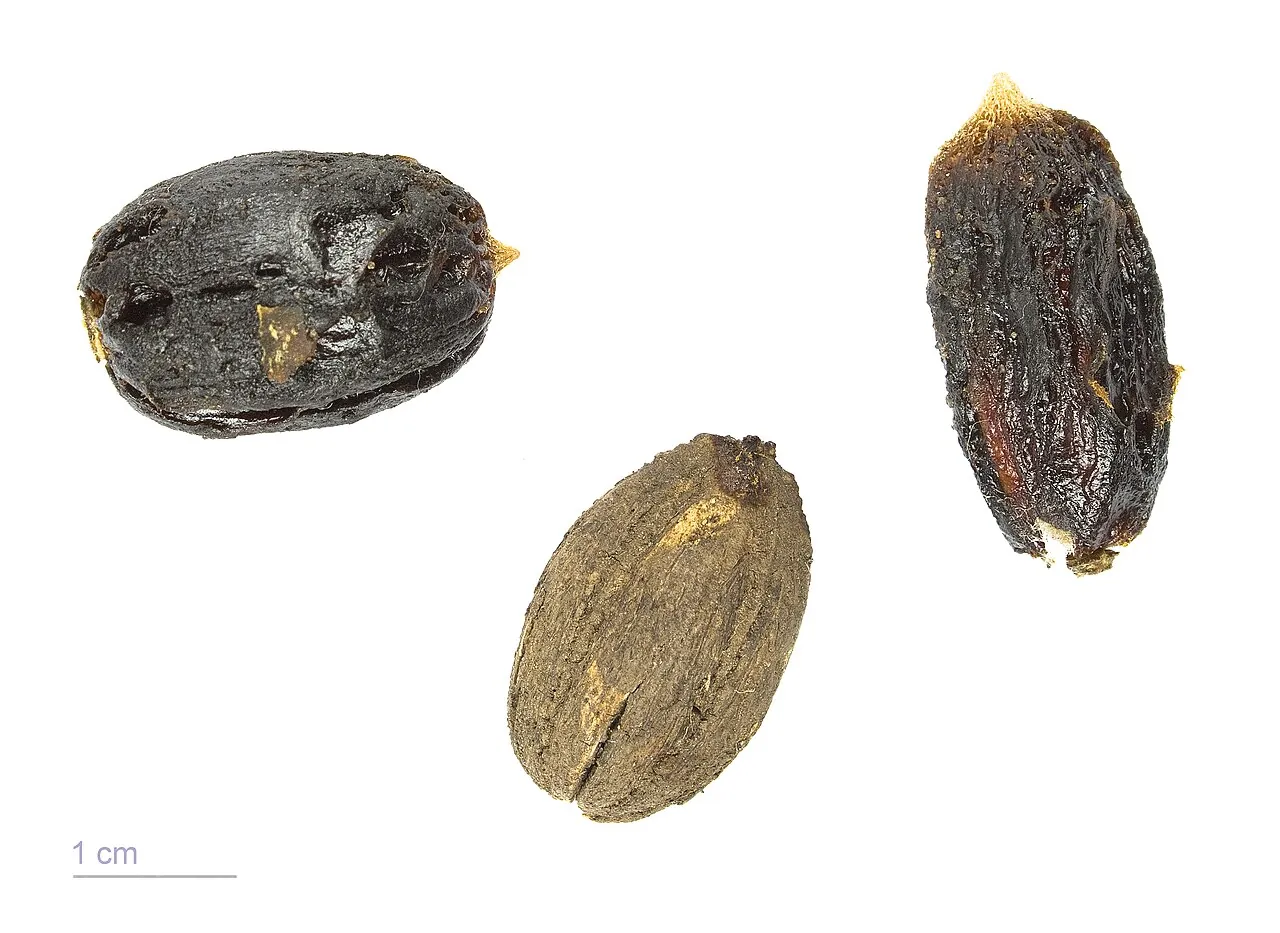
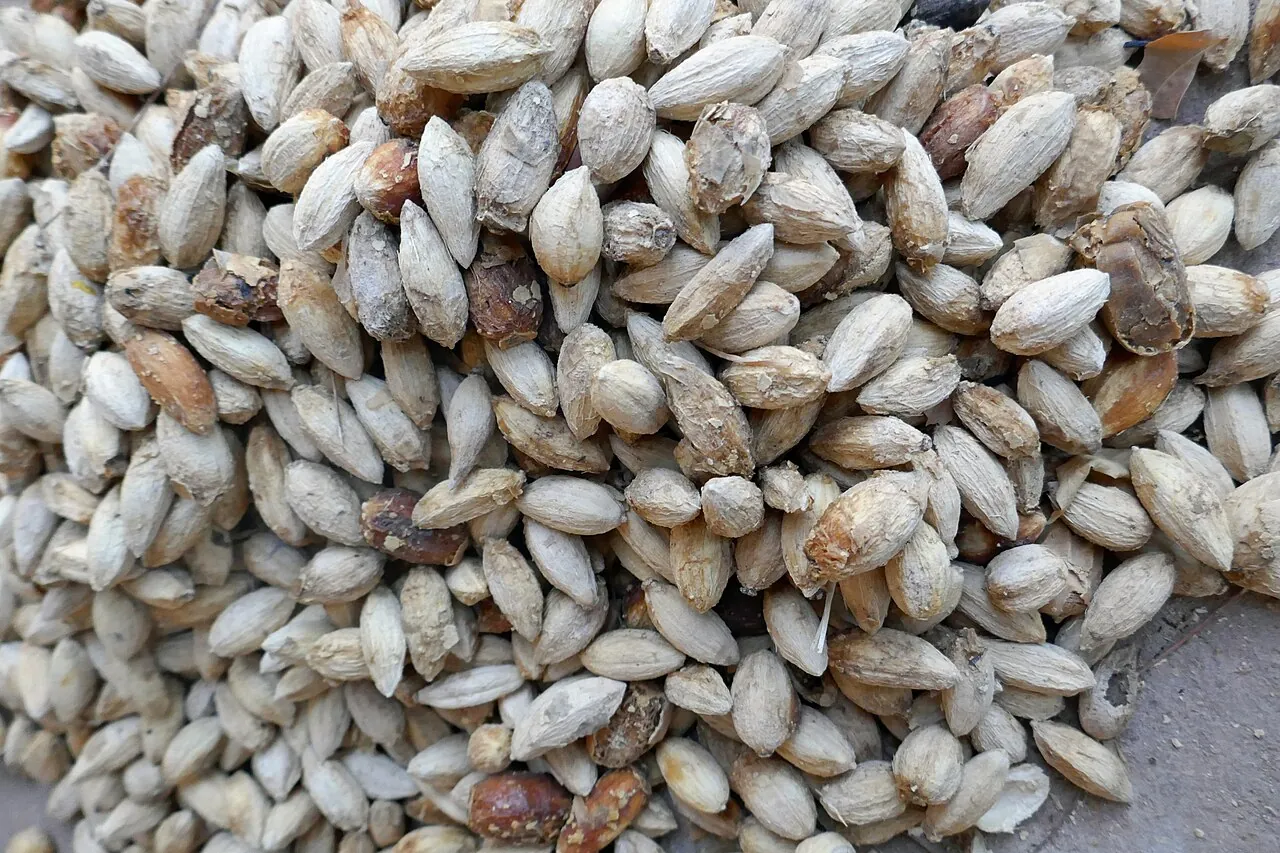
Balanites aegyptiaca bears fruit up to 4 cm (1.6 in) long. The green skin turns brown or pale brown as it ripens, becoming a brittle coat around brownish pulp. Beneath that sticky layer sits the hard stone.
The pulp and kernel are used separately. People eat the pulp fresh or dried; reaching the kernel means cracking the stone, traditionally with another stone or a wooden block. The kernel supplies cooking oil.
Where it comes from
Desert date is native to Africa and the lands from Israel to the Arabian Peninsula. In Senegal it grows in the dry Cayor and Ferlo regions and is called sump in Wolof. It is also widespread around the Chad Basin, where trees bear fruit even in dry years.
How it's eaten where it grows
In Ghana the fruit goes into drinks and sweets; in Sudan it goes into soup. In northern Cameroon, peeled fruits are soaked and mashed, then the stones are removed. The juice is drunk plain or with tamarind, or boiled down into syrup.
In Kousseri, desert-date juice and pearl millet are pounded together and cooked into a thick porridge. This has also been a food for times of shortage.
How it's grown
The tree reaches about 10 m (33 ft), with many thorny branches. It usually starts fruiting at five to eight years, and crops increase as the tree grows older, up to about 25 years. Once past the seedling stage it needs sun. Deep sandy soil with steady access to water supports its strongest growth.
When and where you'll find it
In Nigeria, the main crop usually ripens in December and January, with occasional later fruit between March and July. In northern Cameroon, local markets sell whole fruits and boiled kernels, and oil makers buy the kernels there.
In Senegal, the EcoPaix range turns sump into jam, juice, syrup and sweets.
Get it near Detroit
What it tastes like
As mild as a peach, softer than a pear≈
More about the taste
Desert date has sticky, bitter, brownish pulp around a hard stone beneath a brittle outer coat — despite the name, it doesn't taste like a date-palm fruit. Sweetened sump juice or jam is a separate, processed product.
Desert date's pulp is sticky and brown or brown-green inside a brittle ripe coat.
Choose, eat
1ChooseBrown or pale brown
Look for
- Brown or pale brown
Ripe desert date is brown or pale brown; unripe fruit is green.
2EatPulp
Eat
PulpThe pulp is eaten fresh or dried; the kernels are processed separately into cooking oil.
Detroit, Michigan
When it’s good hereUsual monthsJust arrivedAt their bestLast chanceAll yearWhere it is in its usual monthsToday, Oct 22Grown hereIn season in your stateShips fromIn season where it grows
24 names in 11 languages
- AduwaaHausa
Cook it
Strange but trueHistoryScienceWhere the name came fromCustoms and cultureA record
If you like Desert date
Tastes alike
Used the same way
Sources
Sources
Desert date · Fruitopia · checked Sep 22, 2026