Plantain
Also called French plantainMusa × paradisiaca · Musaceae family
A cooking fruit whose green, yellow and dark-ripe stages suit different dishes.
Find it near DetroitGet to know it
A plantain is a cooking banana with a thick peel and a different job at each stage of ripeness. Green, it tastes starchy and almost potato-like. Let the skin turn yellow, then nearly black, and the flesh becomes sweet enough for dessert.
What it is
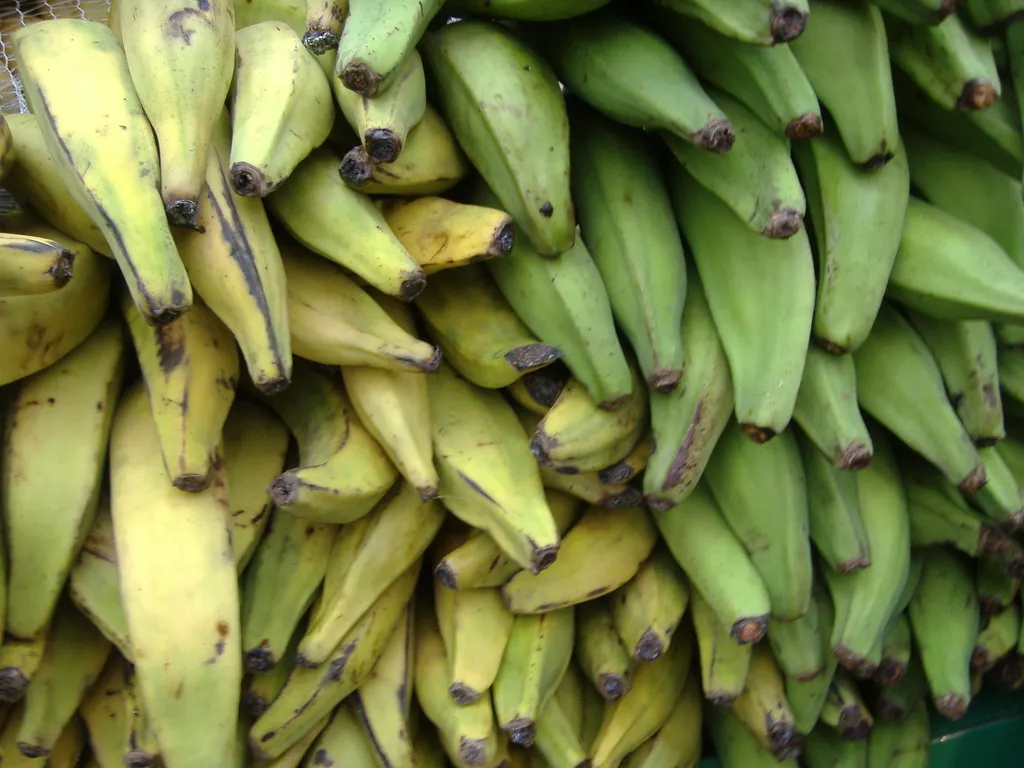
A plantain has pronounced ridges and a peel that clings tightly to the fruit. Cutting along the seams makes the skin easier to lift away. As it ripens, the peel changes from green to yellow to black, and the fruit softens.
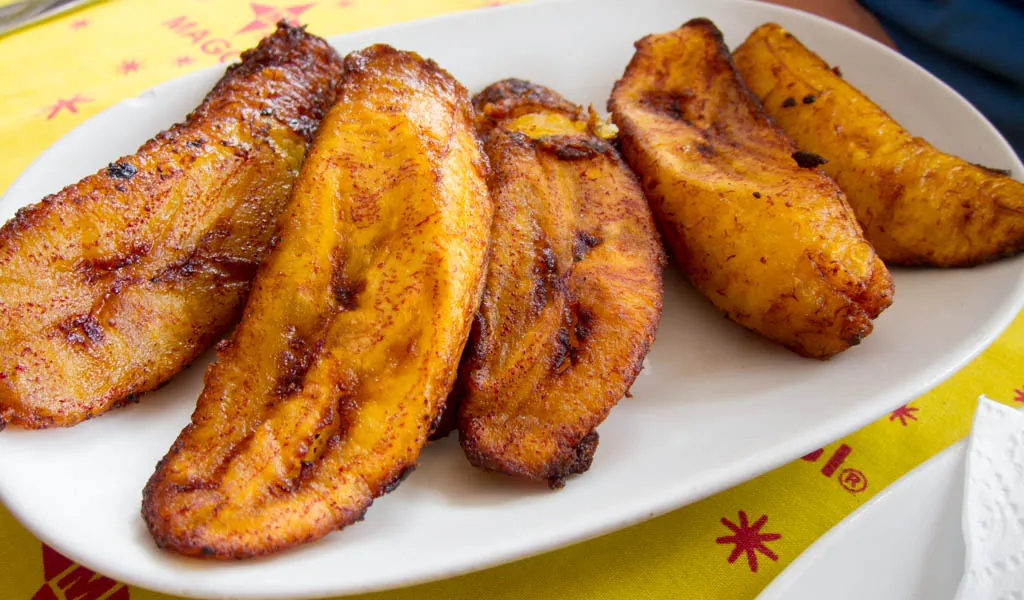
Green plantains suit frying, boiling and mashing. Yellow ones are sweeter and work grilled or baked; black or almost black ones are very sweet and best in desserts.
Where it comes from
Plantains began in the Asia-Pacific region, but their greatest variety now grows in West and Central Africa. Farmers there selected and replanted plants with useful differences. Plantains reached Latin America from Africa during the slave trade.
They are staple foods across West and Central Africa, the Caribbean, Central America and parts of South America. India has its own named varieties, including Nendran.
How it's eaten where it grows
In Puerto Rico, mofongo is green plantain mashed with pork rind, garlic and stock. In Ghana, boiled green plantain and cassava are pounded into fufu and eaten with soup. Both put the green fruit’s starch to work.
Ghanaian kelewele goes the other way: ripe plantains become sweet, spiced fried pieces. In Ope Amosu’s version, onion, ginger, garlic and cayenne season the fruit before it is fried golden brown.
How it's grown
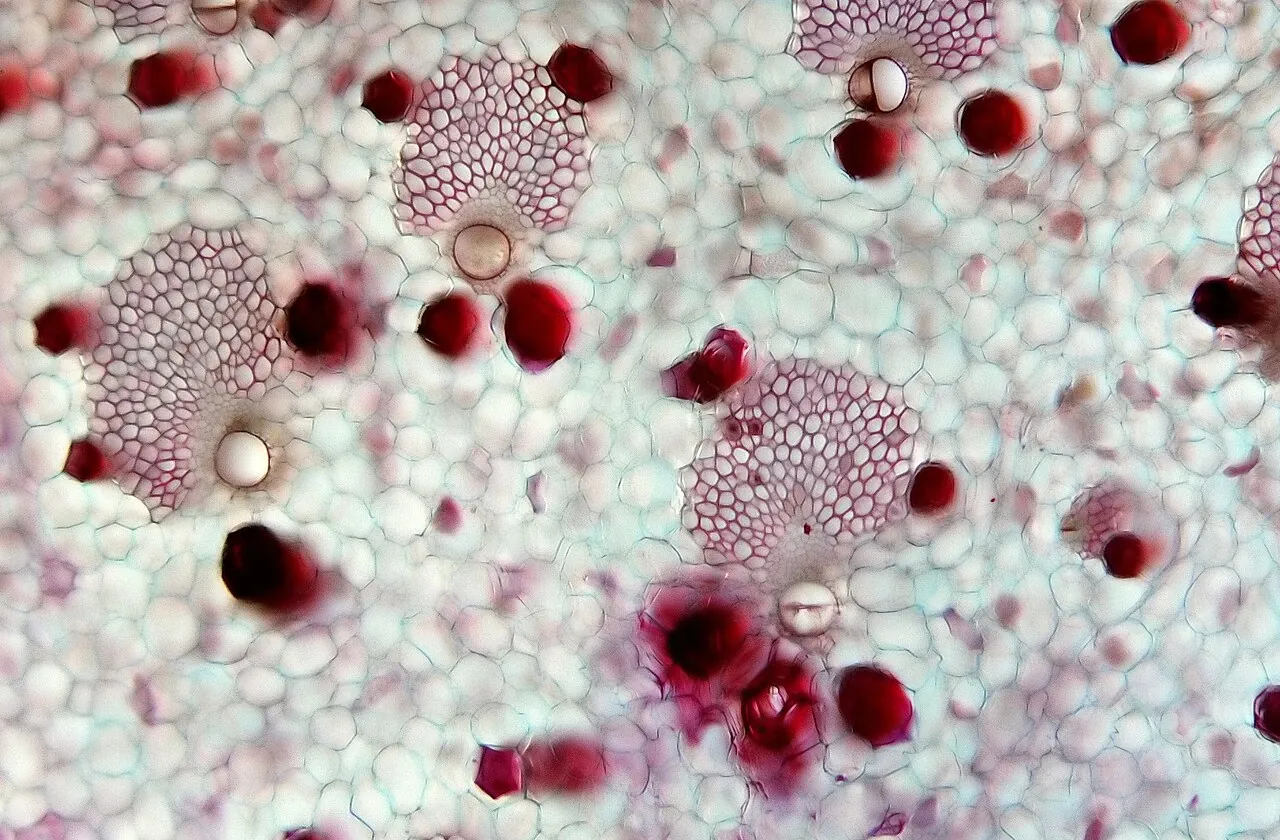
Plantains grow in warm, humid climates, in moist soil that drains well. Their broad leaves need shelter from damaging winds. What looks like a tree trunk is overlapping leaf bases wrapped into a firm column. After that stem flowers and bears fruit, it dies; new shoots take its place.
When and where you'll find it
Plantains are usually a year-round fruit. Whole green fruit ripens slowly at room temperature; once ripe, it is used within a few days. In grocery snack aisles, fried green plantain chips sit alongside potato chips. The fresh fruit and the crunchy packaged snack start with the same starchy ingredient.
Get it near Detroit
What it tastes like
As mild as a peach, as sweet as a blueberry≈
More about the taste
Green fruit is starchy and potato-like, yellow fruit is sweeter, and very ripe dark fruit is particularly sweet.
Green fruit is starchy and potato-like, yellow fruit is sweeter, and very ripe dark fruit is particularly sweet.
As yellow plantains ripen further, they grow sweeter and less starchy.
A tasting invitation
Compare a cooked green portion with a cooked ripe portion, noting sweetness, firmness and how each takes up seasoning. The experiment can show why one plantain recipe emphasizes crisp edges while another celebrates a soft interior, without treating either as the only correct result.
Choose, ripen, store, eat
1ChooseNo mold or cracks
Look for
- No mold or cracks
Ignore
- Skin color alone
Choose the stage for the dish and avoid mold or cracks: green fruit for frying, boiling or mashing, yellow for grilling or baking, and very ripe fruit for desserts.
2RipenOn the counter
Ripens after pickingCounterRipen green plantains at room temperature in a well-ventilated spot.
3StoreCounter, until ripe
- CounterUntil ripeWell-ventilated place
- FridgeYellow
Refrigerate yellow plantains to slow further ripening. The peel may turn black while the inside stays usable, so don't judge spoilage by skin color alone.
4EatFruit · not peel
Eat
FruitNot eaten
PeelCut the ends from green plantains and slit the peel lengthwise to remove it; ripe plantains peel more like bananas. Green fruit suits a boiled-and-mashed dish like mofongo, while ripe fruit suits a dish like kelewele.
More tips
A useful detail Green plantains are starchy and used in fried or boiled-and-mashed dishes. Yellow plantains are sweeter and suit grilling or baking; very dark ripe plantains can be used in desserts. That makes maturity part of a recipe's specification rather than simply a quality score.
Detroit, Michigan
When it’s good hereUsual monthsJust arrivedAt their bestLast chanceAll yearWhere it is in its usual monthsToday, Oct 22Grown hereIn season in your stateShips fromIn season where it growsOrderableListed by a seller we checkedThe day a seller was checked
6 growing areas, 4 countriesUsual monthsOur estimated monthsToday, Oct 22

- El Oro
- Espírito Santo
- Greater Accra
- Guayas
- Pernambuco
- Queensland
- You
3 of 3 areas · October
Growing areas by country
- Brazil2
- Ecuador2
- Australia1
- Ghana1
Plantains are a staple food in West and Central Africa, the Caribbean, Central America and parts of South America, serving as a starchy side or a sweeter dish depending on maturity and preparation.
14 varieties
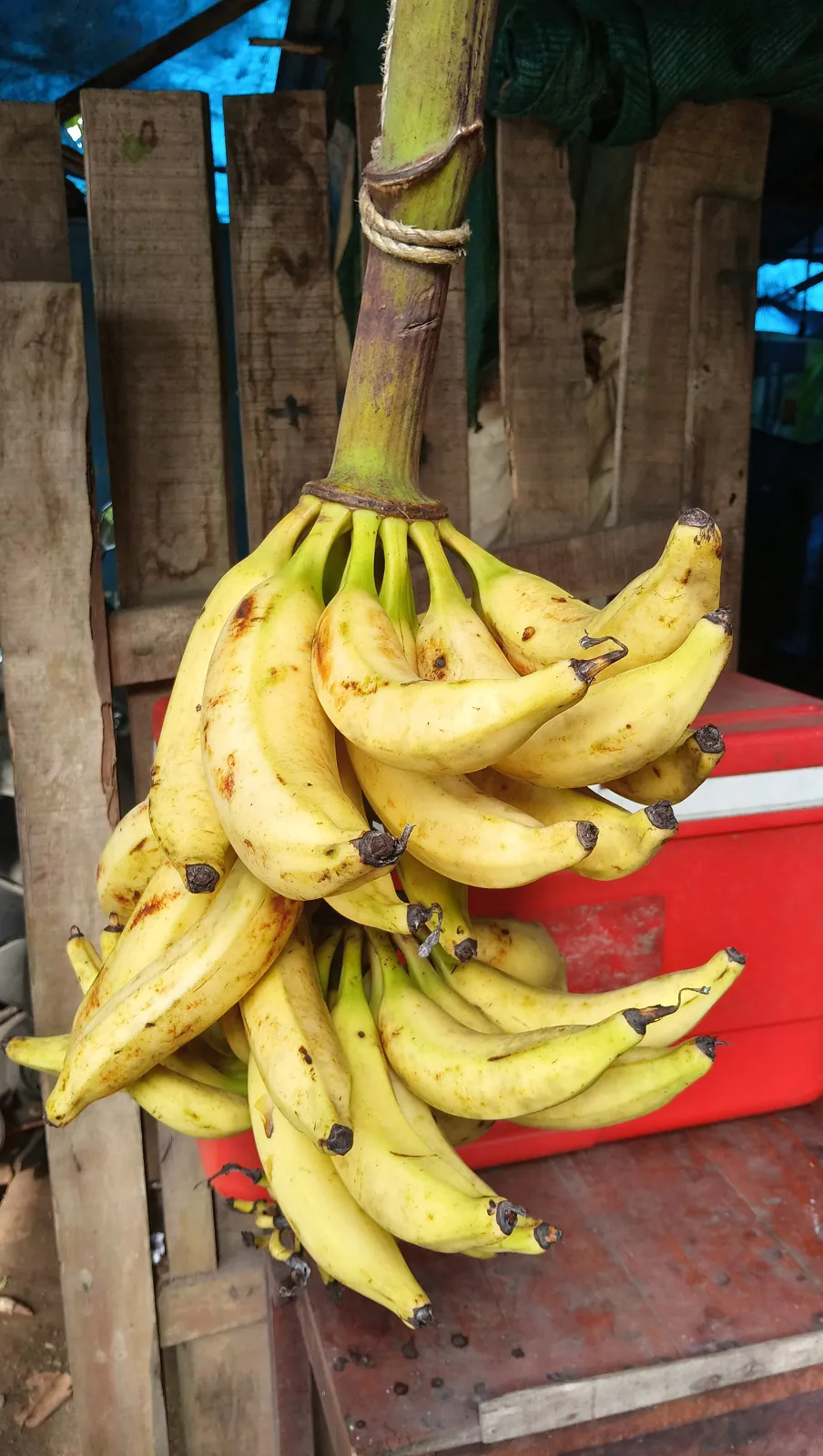 Chengalikodan
- Flavour
- പഴത്തിനു തേനൊഴുകും രുചി IN-KL
- Use
- cooking IN-KL
- No variety photo yetAttunendran
- No variety photo yetBig Ebanga
- No variety photo yetManjeri Nendran
- No variety photo yetMyndoli
- No variety photo yetNedunendran
19 names in 11 languages
Cook it
How to serve it first
Use a recipe explicitly written for your plantain's stage and cook it as directed. Start with a simple savory preparation for green fruit or a ripe-plantain dish for yellow fruit. Avoid swapping the two without expecting a different texture and flavor.
3 plantain festivalsUsual monthToday, Oct 22
Strange but trueScienceNatureCustoms and cultureFood and drink
If you like Plantain
Tastes alike
Close relatives
Nutrition, sources
Nutrition
Plantains, green, raw · per 100 g
- Carbohydrate
- 37 g
- Fiber
- 2.2 g
- Sugars
- 2.3 g
- Protein
- 1.3 g
- Fat
- 0.1 g
- Vitamin C
- 20 mg
- Potassium
- 431 mg
Photos · 4
Sources
Plantain · Fruitopia · checked Sep 22, 2026