Pedalai
Artocarpus sericicarpus · Moraceae family
A large spiky Artocarpus with white pulp surrounding many seeds.
Find it near DetroitGet to know it
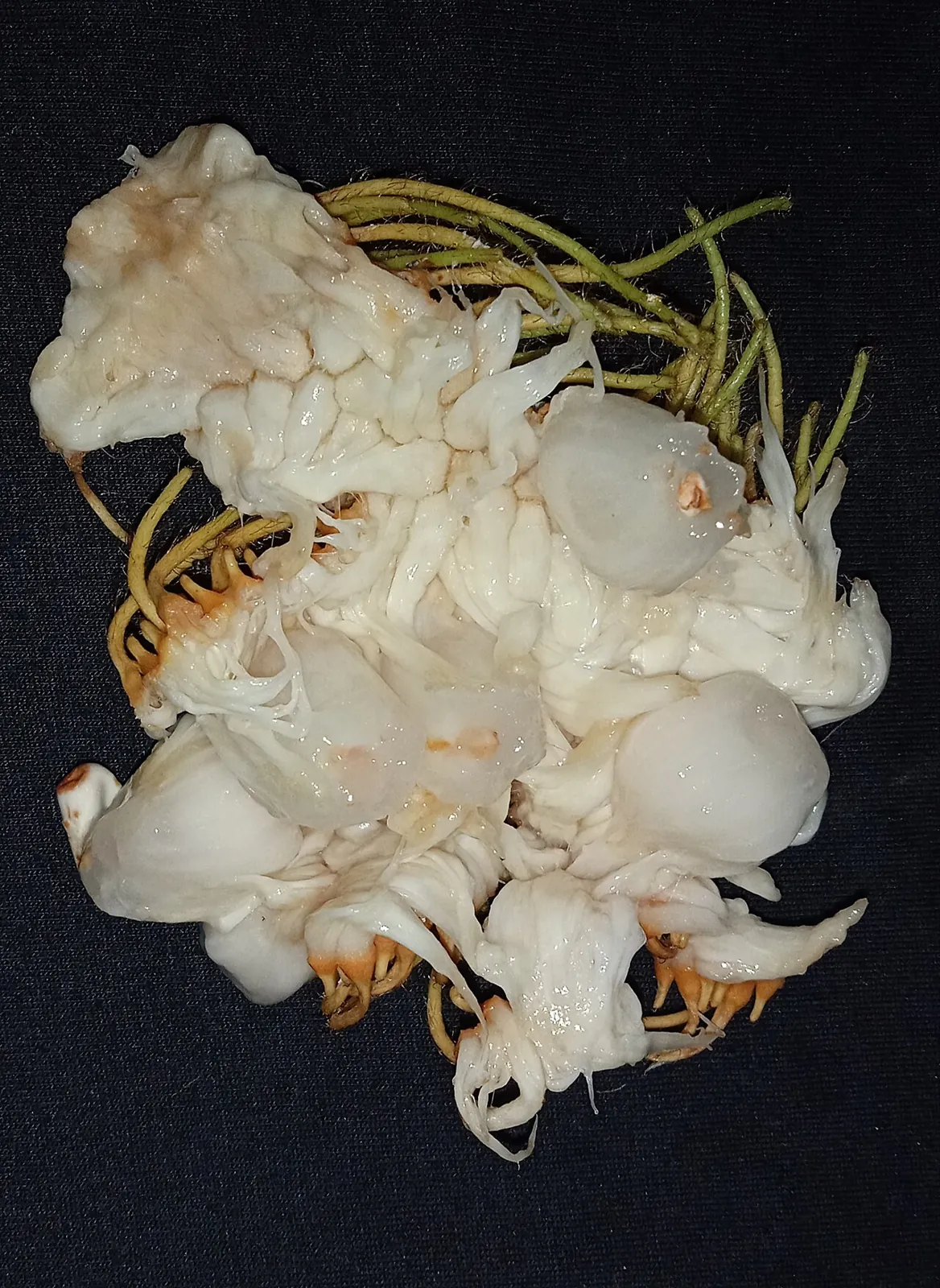
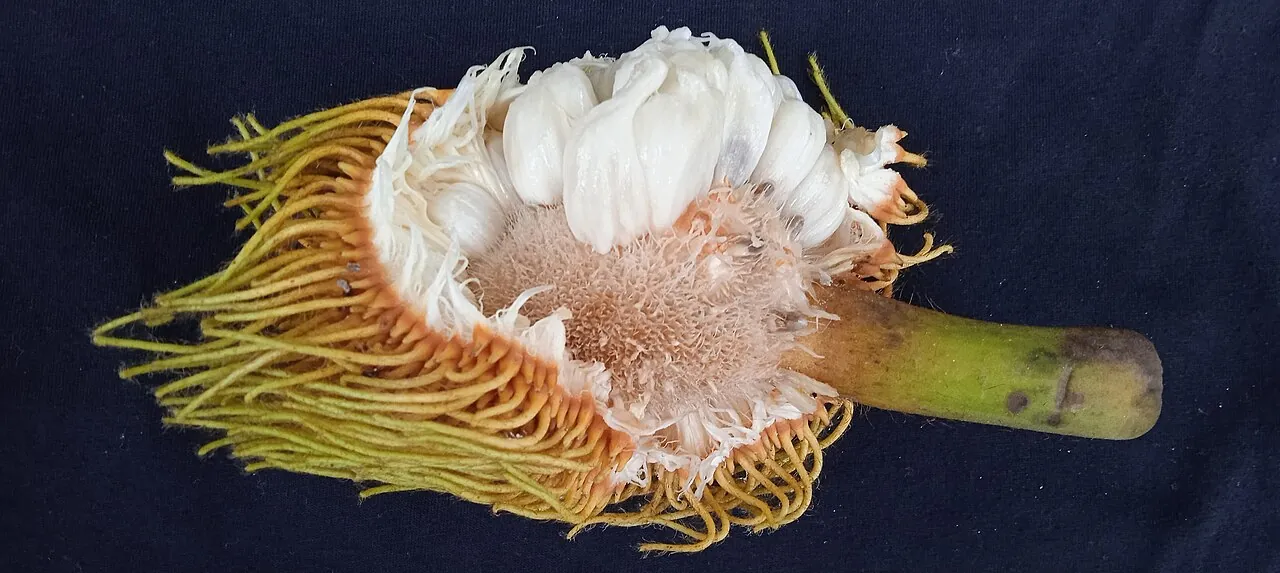
Pedalai hides white, sweet, juicy flesh under a shaggy red-orange skin. This jackfruit relative opens into individual fruitlets, each wrapped around a seed. The ripe skin peels back by hand, making the fruit a snack to pull apart piece by piece.
What it is
Miami Fruit’s pedalai is roughly softball-sized, with long, flexible projections giving it its hairy look. Inside, many seeds sit in white pulp. In Bulusan in the Philippines, the fruit is called gumihan and has densely packed seeds with less flesh around them than marang. It also lacks marang’s heavy scent.
The whole fruit develops from a cluster of flowers growing together. Their fleshy parts surround the seeds, so the inside comes apart in many small pods.
Where it comes from
Pedalai comes from the island forests of Southeast Asia: Borneo, the Philippines, Sulawesi and the Moluccas. It belongs to Artocarpus, the same group of trees as breadfruit and jackfruit. Pedalai is its Iban name in Malaysia; terap bulu is another name there, while gumihan is used in the Philippines.
How it's eaten where it grows
In Bulusan, gumihan is a fruit to eat fresh, sucking the pulp from each seed. There are plenty of seeds to work through, with a little flesh around each one.
In Sarawak, the seeds become a second snack after the flesh is gone: they are boiled with a little salt. Roasting is another preparation for the seeds. The sweet pulp and the cooked seeds are two separate parts of the meal.
How it's grown
Pedalai is a rainforest tree that can reach 40 m (130 ft). It has large, leathery leaves; young leaves have lobes that make them look different from the mature foliage. In Sarawak, picking fruit from these tall trees is work for skilled climbers, who go up to bring the fruit down.
When and where you'll find it
In Bulusan, in the Philippine province of Sorsogon, gumihan usually fruits from May to July. In Sarawak, pedalai is brought from time to time to the native market at Lingga and other rural bazaars. Farther afield, Miami Fruit has listed whole pedalai for pre-order, one fruit per order.
Sources · 6
- Alma P. Gamil, Bulusan Rural Vagabondbulusanruralvagabond.wordpress.com
- Miami Fruitmiamifruit.org
- PROSEA, Artocarpus sericicarpusplantuse.plantnet.org
- PROSEA, Plant Resources of South-East Asiaplantuse.plantnet.org
- Sarawakiana, Sarawakian Local Delights: Pedalaisarawakianaii.blogspot.com
- Singapore National Parks Boardnparks.gov.sg
Get it near Detroit
What it tastes like
As sweet as a banana, as mild as a peach≈
More about the taste
The pulp is white, juicy and sweet-tasting, around numerous seeds.
The pulp is white, juicy and sweet-tasting, around numerous seeds.
How to buy it
1EatWhite fruitlets · not soft outer skin
Eat
White fruitletsNot eaten
Soft outer skinMiami Fruit opens ripe pedalai by peeling back the soft outer skin and separating the white fruitlets. Expect pulp around individual seeds, not a seedless bowl.
Detroit, Michigan
When it’s good hereUsual monthsJust arrivedAt their bestLast chanceAll yearWhere it is in its usual monthsToday, Oct 22Grown hereIn season in your stateShips fromIn season where it grows
Strange but trueNatureCustoms and culture
If you like Pedalai
Tastes alike
Close relatives
Same plant family
Sources
Photos · 2
Sources
Pedalai · Fruitopia · checked Sep 22, 2026
- bulusanruralvagabond.wordpress.com
- malaysiavegetarianfood.com
- miamifruit.org
- nparks.gov.sg
- sarawakianaii.blogspot.com
What we don't know yet
Not all parts of the pedalai plant are known to be edible.