Muntries
Kunzea pomifera · Myrtaceae family
Muntries can be crisp without being uniformly sweet. An Australian breeding program found enough variation in taste, seediness and color that the individual selection matters as much as the species name.
Find it near DetroitGet to know it
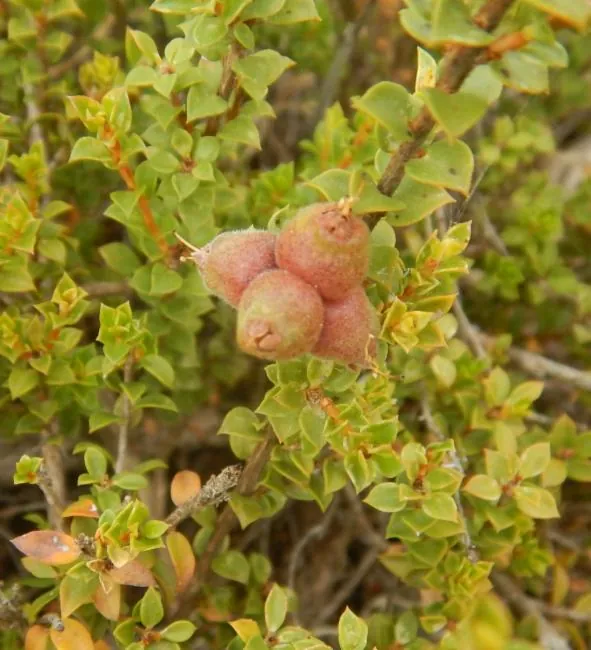
Muntries are little Australian berries with a crisp bite and a flavour likened to apple and cinnamon. They grow on a shrub that spreads along the ground. Each berry is up to 1 cm (⅜ in) across.
What it is
Muntries are the berries of Kunzea pomifera. Each skin is typically a patchwork of green, red, purple and white. Most have firm, crisp flesh. Sweetness is a separate quality: some selections are sweet and fruity, while others are bitter or leave a drying feeling in the mouth. Small, dry seeds can also give some fruit a gritty texture.
Where it comes from
Muntries grow naturally in southeastern South Australia and western Victoria. Aboriginal peoples prized the berries, which are now also grown in commercial plantations on a modest scale. Bunganditj names include munter and ngurp. Today’s plantings come mostly from plants selected in the wild.
How it's eaten where it grows
In southeastern Australia, Aboriginal people ate the berries fresh, or pounded them into a paste that was dried and eaten later. Today, muntries also go into jams, chutneys and relishes.
Muntrie grower Ni Ni Well mixes dried muntries into crunchy chocolate bars: the berries join roasted sesame, sunflower and pumpkin seeds in melted dark chocolate and tahini.
How it's grown
The shrub’s spreading branches can take root as they run along the ground. Growers can train that low growth onto a trellis, lifting the berries within easier reach for picking. Fluffy white flowers appear in spring and insects carry their pollen. New plantings can take about three years to produce berries.
The shrub grows in full sun or dappled shade. Its roots dislike disturbance, so growers mulch around the plants instead of digging out weeds.
When and where you'll find it
In southern Australia, muntries usually ripen in February and March, after their spring flowers. Creative Native lists frozen muntries from Victoria and South Australia in 100 g packs, and dried muntries go into recipes such as Ni Ni Well’s chocolate bars.
Get it near Detroit
What it tastes like
As sweet as a banana, as mild as a peach≈
More about the taste
Muntries flavor varies considerably, from sweet and fruity to bitter and astringent. Choosing a good variety or selection matters more than the name muntries alone.
Most muntries are firm and crisp, with flavor varying from sweet and fruity to bitter and astringent.
Some muntries have a gritty texture from a high proportion of small, dry seeds — crispness and seediness are separate qualities.
Fruit color can mix green, red, purple and white, with pale patches where berries touch in clusters — a uniformly dark color isn't a reliable sign of ripeness.
Choose, eat
1ChooseRipe even while green
Look for
- Ripe even while green
Ignore
- Green berries
Muntries can be ripe even while still green, and fruit left too long turns unpalatable. Ask about ripeness and intended use rather than rejecting a batch just because some berries are green.
2EatBerries · not other shrub parts
Eat
BerriesNot eaten
Other shrub partsThe berries are the part eaten, sold fresh or processed. Other parts of the shrub aren't food.
Detroit, Michigan
When it’s good hereUsual monthsJust arrivedAt their bestLast chanceAll yearWhere it is in its usual monthsToday, Oct 22Grown hereIn season in your stateShips fromIn season where it grows
1 growing area, 1 countryUsual monthsToday, Oct 22

- South Australia
- You
In 1999, 345 accessions were collected from 30 wild populations across the muntries' natural range and grown at Burnley, Victoria, linking wild diversity to crop development.
9 names in 6 languages
- كونزية مثمرةArabic
- ムントリーJapanese
- 鴯鶓蘋果Chinese
Cook it
Strange but trueHistoryScience
If you like Muntries
Tastes alike
Used the same way
Sources
Sources
Muntries · Fruitopia · checked Sep 22, 2026
What we don't know yet
The February–March window comes from regional gardening advice, not a specific orchard's forecast or a measured flavor peak.
Muntries also go into cakes and chocolate bars, in processed form.