Apple berry
Also called Common Apple-berry · Apple Dumplings · AppleberryBillardiera scandens · Pittosporaceae family
An Australian climbing plant whose older food descriptions predate a taxonomic revision, so they need care in use.
Find it near DetroitGet to know it
Apple berry is a small, hairy Australian bush fruit, eaten once it turns soft and brown. At Wreck Bay it is a summer fruit, picked up ripe from under the plant or picked and roasted briefly.
What it is
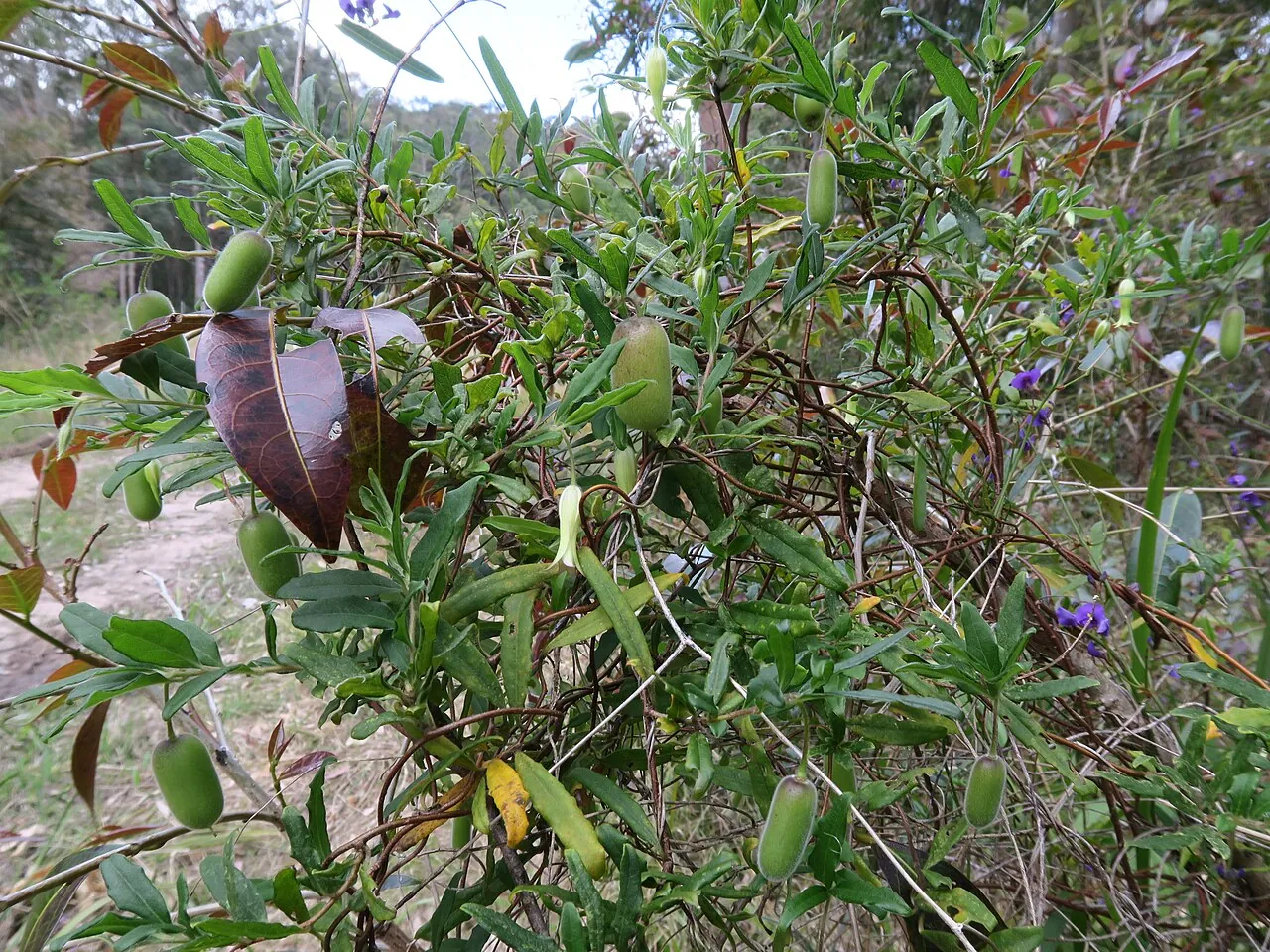
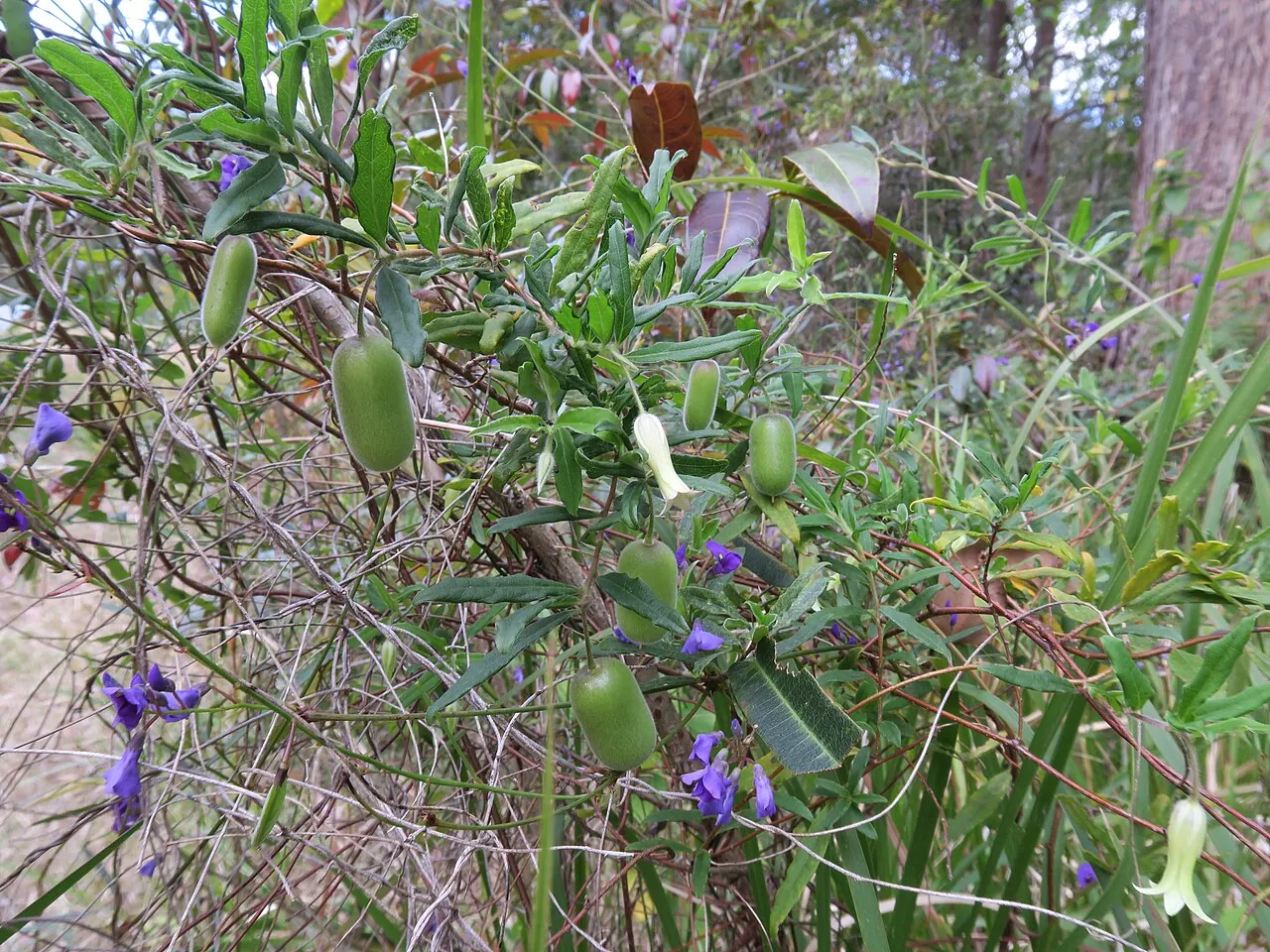
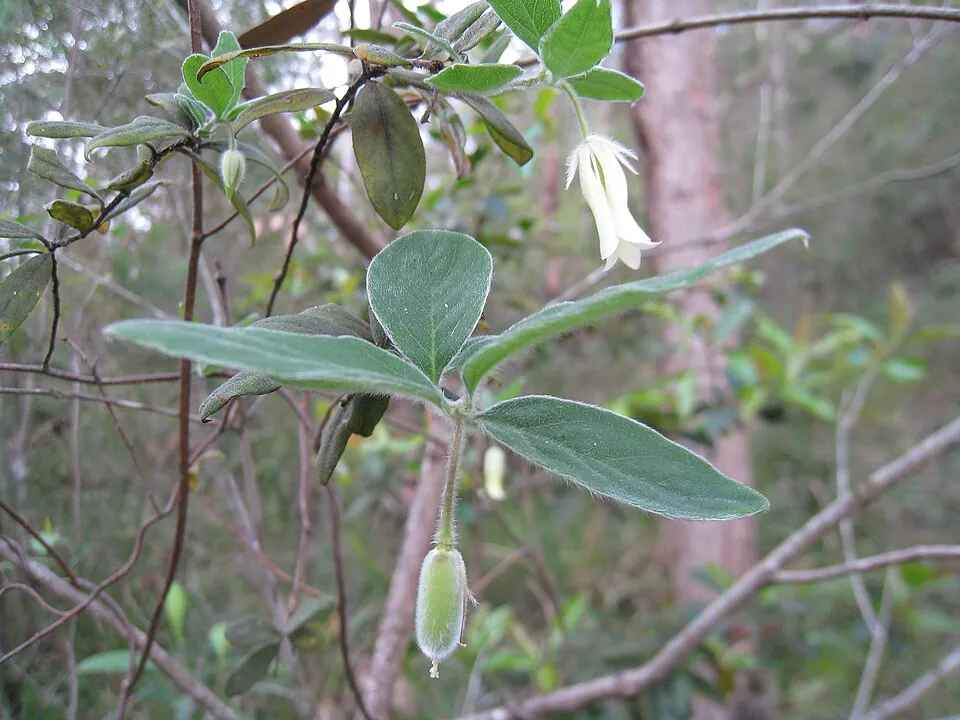
The fruit is oval to oblong, about 2–2.8 cm (¾–1⅛ in) long, with a hairy covering and many small seeds inside. It turns brown when ripe and drops from the plant as it softens. Its botanical name is Billardiera scandens, and it belongs to the Pittosporaceae family.
Where it comes from
Apple berry is an Australian native. In New South Wales it grows from the Queensland border to near the Victorian border, and it is also found in Queensland, Victoria and Tasmania. It belongs to open eucalypt forest and woodland, especially in higher country, and also grows in heath and shrubland. Karrawang is the name for it recorded at Coranderrk.
How it's eaten where it grows
At Wreck Bay, apple berry is a bush snack. People wait for fruit to turn pale brown, often gathering it beneath the plant once it has fallen. Another way of eating it is to pick the fruit and roast it briefly.
How it's grown
The plant grows as a small shrub or a climber. In gardens it can climb over other plants or grow in a pot, hanging basket or rock garden. Regular watering and pruning in a sunny position encourage fuller growth. Its flowers also bring honeyeaters, birds that feed on nectar.
Seed sown in summer can take up to 12 weeks to sprout in autumn. Gardeners also start new plants from firm shoot tips cut in summer.
When and where you'll find it
At Wreck Bay, ripe apple berries are usually a summer find. The plant is also grown at home: a selection from West Pennant Hills in Sydney, with larger and sweeter fruit than the common form, is listed by an Australian nursery as a potted plant. It can be grown as a groundcover or a climber, or in a pot.
Sources · 5
- Australian National Botanic Gardens, Aboriginal Plant Useanbg.gov.au
- Australian National Botanic Gardens, Growing Native Plantsanbg.gov.au
- Betty Wood, Plants of South Eastern New South Walesapps.lucidcentral.org
- Mother Earth Nurserymotherearthnursery.com.au
- Royal Botanic Gardens Sydney, PlantNETplantnet.rbgsyd.nsw.gov.au
Get it near Detroit
What it tastes like
As mild as a pear, as sweet as a banana≈
More about the taste
Older accounts describe a hairy fruit surface and a sweet, astringent flavor compared with kiwifruit, though that description predates a later taxonomic revision of the species.
Older accounts describe a hairy fruit surface and a sweet, astringent flavor compared with kiwifruit, though that description predates a later taxonomic revision of the species.
Choose, eat
1ChooseBrown and hairy
Look for
- Brown and hairy
Ripe fruit is brown and hairy. Spring–summer dates recorded for this plant are for flowers, not ripe fruit.
2EatFallen ripe fruit
Eat
Fallen ripe fruitFallen ripe fruit has traditionally been eaten, and green fruit has been roasted.
Detroit, Michigan
When it’s good hereUsual monthsJust arrivedAt their bestLast chanceAll yearWhere it is in its usual monthsToday, Oct 22Grown hereIn season in your stateShips fromIn season where it grows
Cook it
Strange but trueWhere the name came fromFood and drink
If you like Apple berry
Tastes alike
Used the same way
Sources
Photos · 3
Sources
Apple berry · Fruitopia · checked Sep 23, 2026
- anbg.gov.au
- apps.lucidcentral.org
- commons.wikimedia.org
- cpbr.gov.au
- highvalleydawn.com.au
- vicflora.rbg.vic.gov.au
What we don't know yet
The food-forest listing is a place to start looking; picking there needs the owner's permission.