Salal berry
Also called Shallon · Oregon wintergreen · SalalGaultheria shallon · Ericaceae family
A coastal forest berry whose food history is richer than the understated flavor descriptions in garden guides.
Find it near DetroitGet to know it
Salal is a small blue-black berry from the evergreen thickets of North America’s Pacific coast. Its mild, rather mealy flesh goes into jam and fruit leather. For Coast Salish peoples, dried salal cakes have long carried the summer berry harvest into winter.
What it is
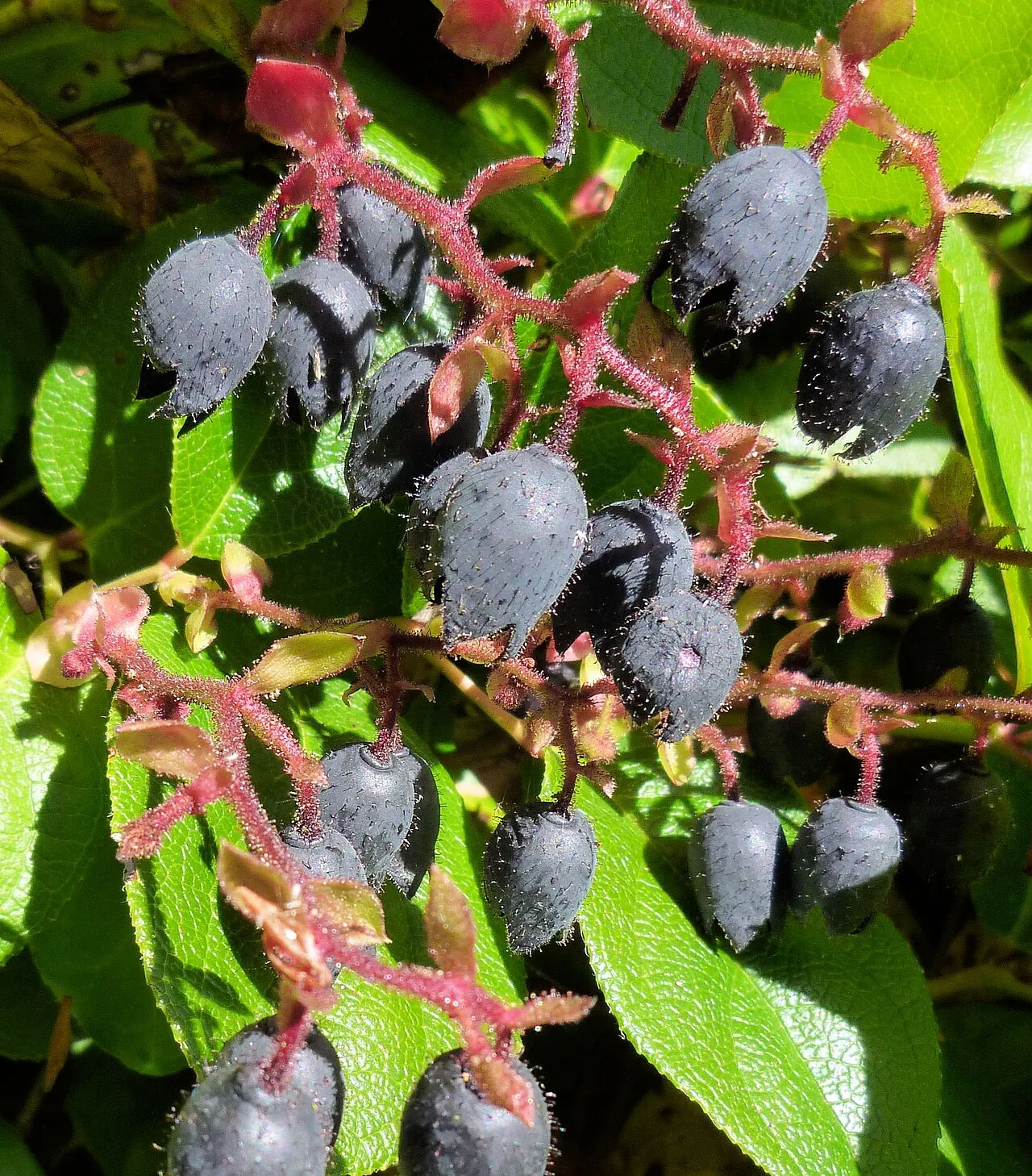
Salal berries are rounded and about 1 cm (0.4 in) across. A fine coat of hairs covers the dull blue-black skin, and the underside bears a five-pointed star. They grow beneath glossy evergreen leaves, following small white or pink flowers shaped like little urns.
The flavour runs from rich to bland, depending on the soil and sunlight a patch gets. The flesh is mealier than many other wild berries.
Where it comes from
Salal grows naturally from Alaska to California, often beneath forest trees. It is especially common on the west coast of Vancouver Island, where it is one of the most common late-summer berries. A separate journey took it into British gardens: David Douglas brought seed to Britain in 1828 as an ornamental shrub.
How it's eaten where it grows
Coast Salish families traditionally mash the berries into cakes, drying them near a fire on cedar boards, skunk cabbage leaves or in wooden frames. The cakes keep in boxes for winter. They can be softened again in water; older preparations also pair them with seal, whale or eulachon oil.
Salal still goes into jam, fruit leather and desserts in Native families. One fruit-leather preparation blends it with strawberry, huckleberry or other berries, adding honey and a little lemon juice before drying the mixture into a flexible sheet.
How it's grown
Salal spreads into dense thickets in acidic soil, in sun or partial shade. On poor sunny ground it may stay below 0.6 m (2 ft); in shade with good soil it can reach 1.2–3 m (4–10 ft). Plants also take root on decaying logs. More sunlight generally brings more berries.
When and where you'll find it
In the Coast Salish region, berries usually ripen from late July through September. The soft fruit needs gentle picking. Frozen berries, jam and fruit leather extend its use beyond the fresh season. For a prepared version, Vancouver Island wild-food producer Forest for Dinner makes salal jelly from locally gathered berries.
Get it near Detroit
What it tastes like
As mild as a pear, as sweet as a strawberry≈
More about the taste
Salal berries are relatively bland but can be eaten fresh or made into jam and jelly.
The fruit has a relatively mild or bland flavor, though this varies by population and preparation.
Choose, ripen, eat
1ChooseDeep-blue, plump berries
Look for
- Deep-blue, plump berries
Ignore
- Darkening alone
Sample an identified, permitted-to-pick patch before gathering a basket: salal can be flavorful or bland depending on growing conditions. Look for deep-blue, plump berries and gently pinch them from their stems.
2RipenDarkening alone shouldn't be treated as proof of improved flavor
Darkening alone shouldn't be treated as proof of improved flavor.
3EatBerries · not leaves
Eat
BerriesNot eaten
LeavesThe fruits are eaten raw or used in jams and jellies. The leaves are used in floral arrangements, not as food.
More tips
Worth knowing
- For correctly identified salal from a permitted harvest site, look for plump, deep-blue berries and taste before committing to a whole batch of jam or fruit leather.
Detroit, Michigan
When it’s good hereUsual monthsJust arrivedAt their bestLast chanceAll yearWhere it is in its usual monthsToday, Oct 22Grown hereIn season in your stateShips fromIn season where it grows
10 names in 5 languages
- Salalroot
Cook it
Strange but trueHistoryWhere the name came from
If you like Salal berry
Tastes alike
Same plant family
Used the same way
Sources
Photos · 2
Peter SteinbergPublic domain 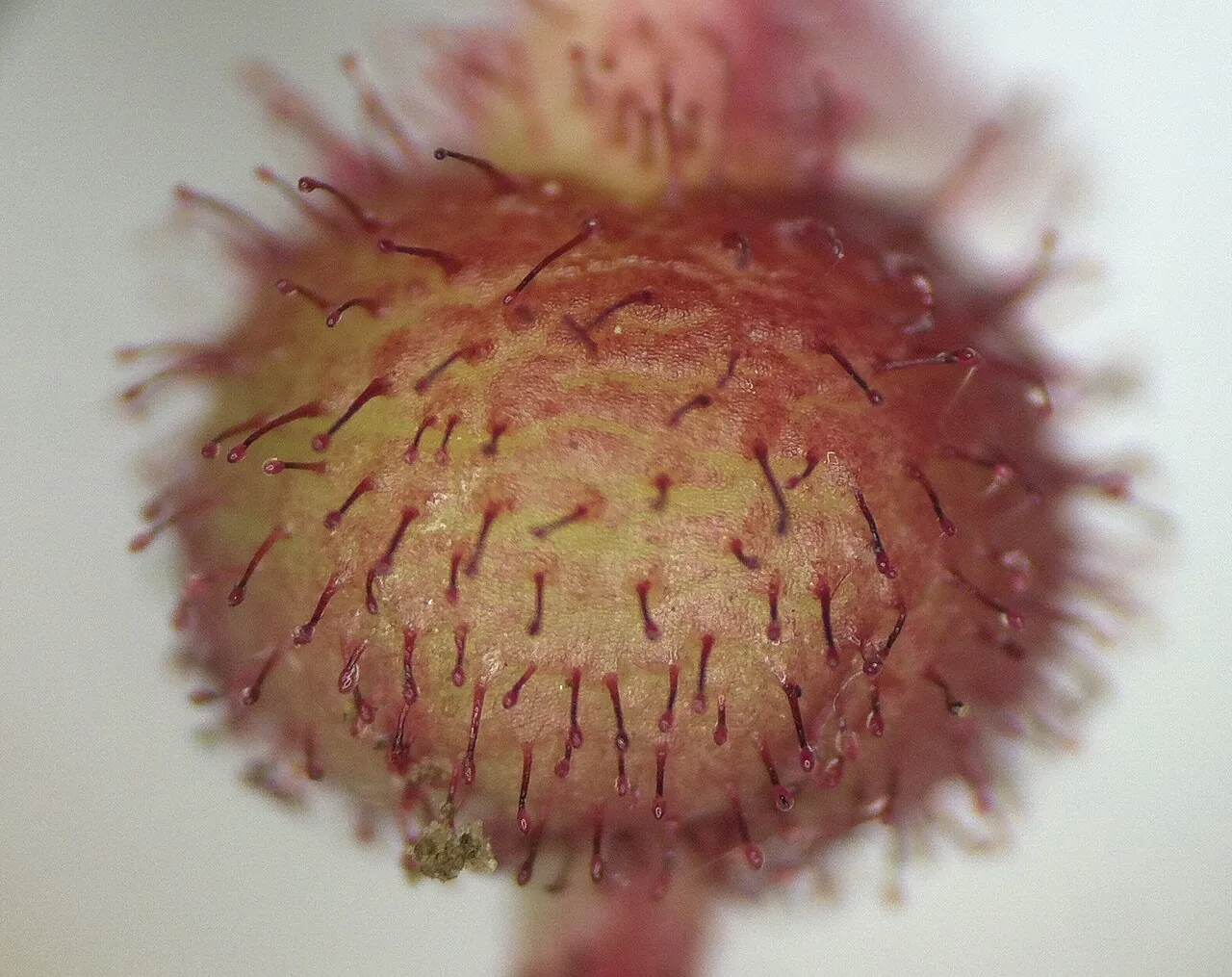
Adam PetersonCC BY-SA 3.0
Sources
Salal berry · Fruitopia · checked Sep 22, 2026