African palmyra fruit
Also called African fan palm · Deleb palm · Black-rum palmBorassus aethiopum · Arecaceae family
One African palm produces several foods that should not be confused with one another.
Find it near DetroitGet to know it
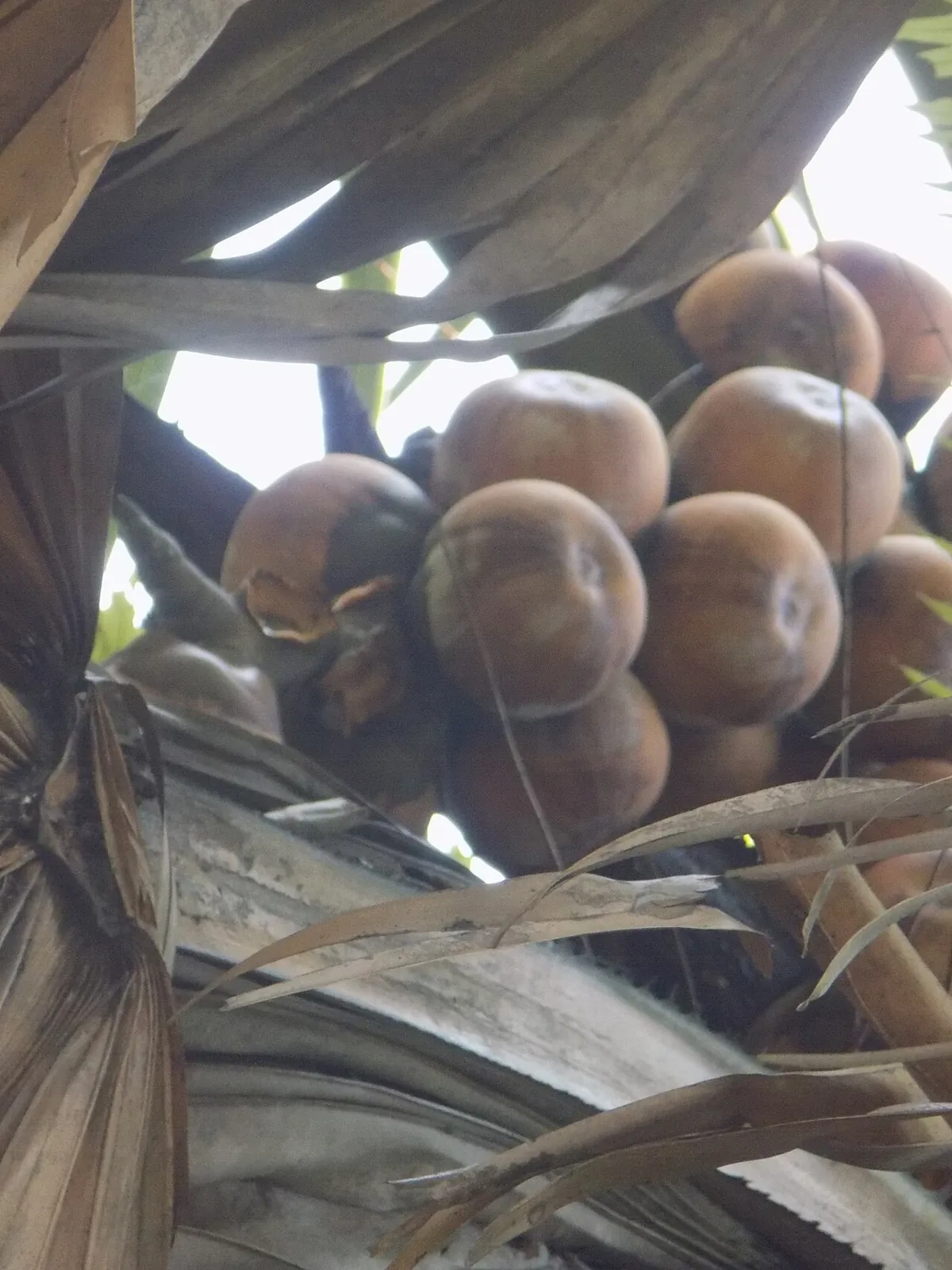
African palmyra is a large orange-to-brown fruit from a palm with fan-shaped leaves. Its ripe flesh is fibrous and strongly scented, while the young seeds hold sweet jelly. In Benin, the ripe fruit is toasted or boiled, sometimes with grains.
What it is
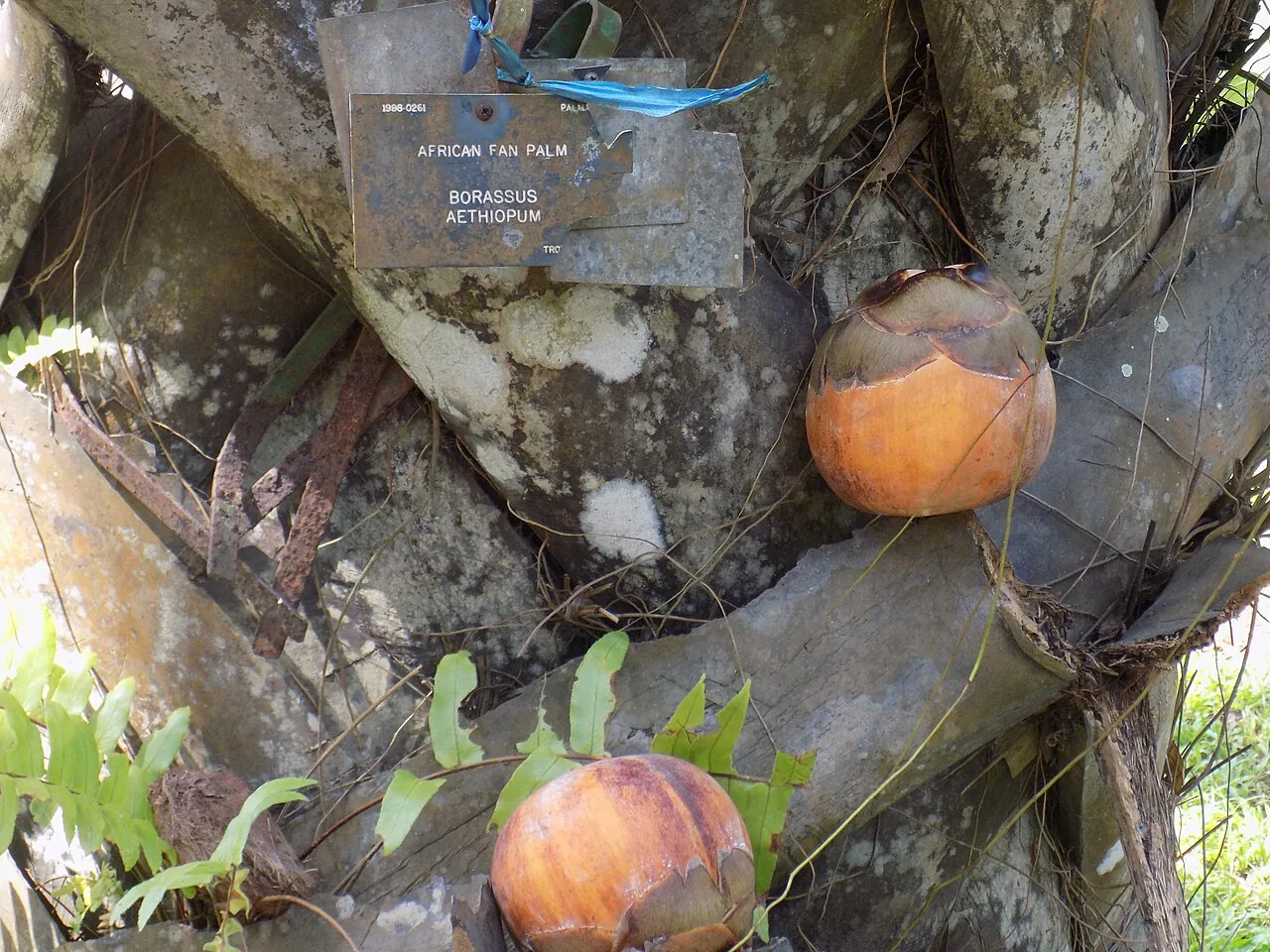
A ripe fruit measures about 15 cm (6 in) across. Inside, fibrous flesh surrounds three woody seed cases. It smells strongly of turpentine.
The soft young seed food and the ripe pulp are different ingredients. As the seeds mature, their soft contents harden. The palm is Borassus aethiopum, also called the African fan palm.
Where it comes from
African palmyra grows across tropical Africa, from Senegal through Ghana and Nigeria to Ethiopia and Kenya, and south to South Africa. It belongs to savannah, river edges and coastal woodland. Sandy, well-drained ground suits it, especially the soil deposited beside rivers.
How it's eaten where it grows
In the drier part of Benin, Gourmantché cooks toast ripe fruit before eating it. In the humid region it is boiled; in the semi-arid region it is also boiled with maize, millet or sorghum. These preparations use the mature fruit rather than the jelly inside young seeds.
In Kano, northern Nigeria, ripe fruit from Rimi market has been made into a juice drink spiced with ginger and cloves.
How it's grown
This palm grows a single trunk up to 20 m (66 ft) tall. Its first six to eight years go mostly into leaves, with little upward growth. Trunks older than about 25 years develop a swelling high up.
Male and female flowers grow on separate palms, and insects carry most of the pollen. Flowering and fruiting can continue through the year.
When and where you'll find it
In Benin, whole fruits and edible seedlings are sold in both rural and town markets, mostly by women and children. Ripe fruit is also sold at Rimi market in Kano, Nigeria. The palm flowers and fruits year-round, so fruit isn't tied to one short harvest.
Get it near Detroit
What it tastes like
As mild as a peach, sweeter than a grapefruit≈
More about the taste
Ripe pulp is fibrous, with a strong odor compared to turpentine. Immature seed contents are sweet and jelly-like.
Ripe pulp is fibrous, with a strong odor compared to turpentine. Immature seed contents are sweet and jelly-like.
Choose, eat
1ChooseOrange at maturity
Look for
- Orange at maturity
Large ovoid fruits turn orange at maturity. Prepared products can be mature fruit, young seed or cooked hypocotyl, and these are different ingredients.
2EatPulp
Eat
PulpA Kano drink uses pulp from ripe fruit, peeled and strained into a liquid. This differs from palm sap, the jelly-like immature seed contents, and the edible shoot from a germinating seed.
Detroit, Michigan
When it’s good hereUsual monthsJust arrivedAt their bestLast chanceAll yearWhere it is in its usual monthsToday, Oct 22Grown hereIn season in your stateShips fromIn season where it grows
20 names in 9 languages
- بوراس أثيوبيArabic
- ボラッスス・アエチオプムJapanese
- বোরাসাস এথিয়োপামBangla
- 非洲扇棕Chinese
Cook it
Strange but trueScienceCustoms and culture
If you like African palmyra fruit
Tastes alike
Same plant family
Sources
Photos · 2
Sources
African palmyra fruit · Fruitopia · checked Sep 22, 2026