Pitomba
Talisia esculenta · Sapindaceae family
A market fruit whose name also belongs to unrelated Brazilian fruits.
Find it near DetroitGet to know it
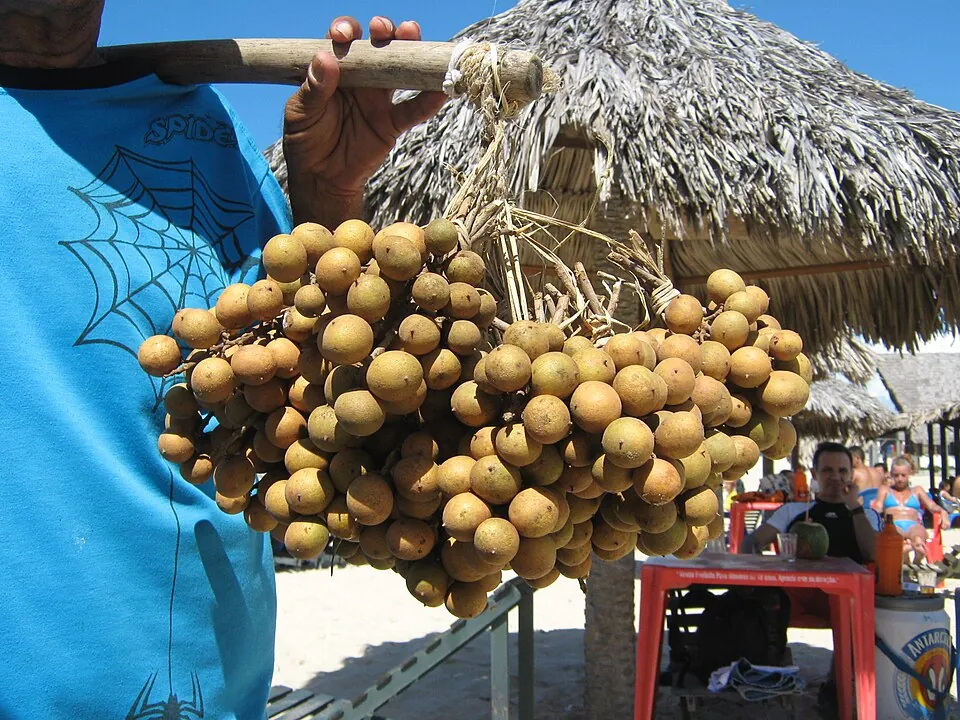
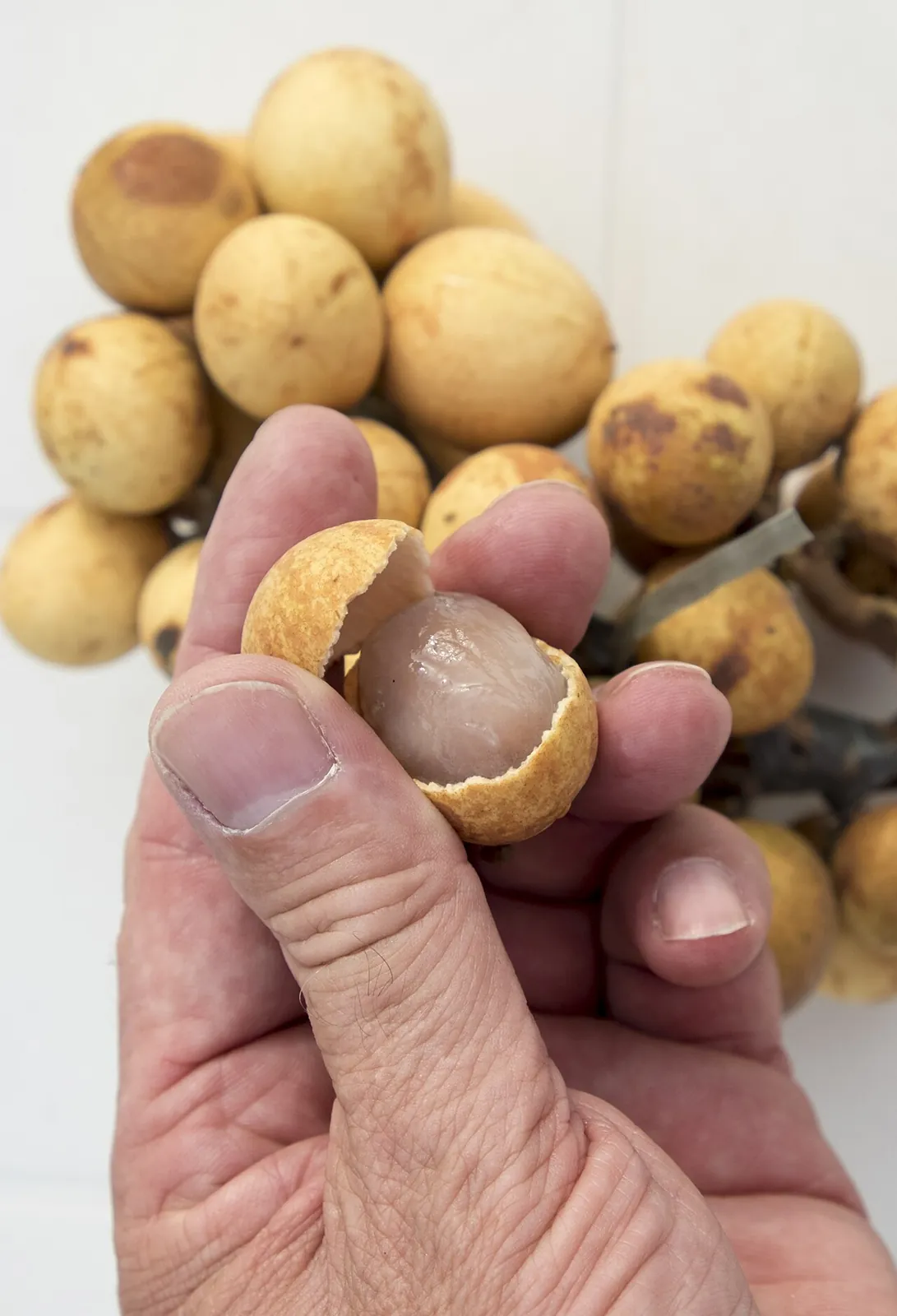
Pitomba is a small Brazilian fruit with a hard shell and sweet, juicy white flesh. Crack the shell and there is a thin layer of pulp around a large seed. At markets in Manaus, the fruits come tied together in bunches.
What it is
This pitomba is Talisia esculenta, a member of the soapberry family. Each fruit is about 2 cm (0.8 in) across, with a hard shell that opens easily; inside, the white flesh wraps closely around an elongated seed.
Most of the fruit is seed. The juicy covering is the part to eat, so a bunch offers small mouthfuls of sweetness rather than thick wedges of flesh.
Where it comes from
Pitomba grows across Brazil, from the Amazon and Atlantic forests to the Cerrado and Caatinga. Its range also reaches Bolivia and Paraguay. In Brazil it grows both wild and in cultivation. Around Manaus, home orchards grow the trees for their fruit and their shade.
How it's eaten where it grows
In Brazil, pitomba is eaten fresh and turned into pulp or liqueur. A caipiroska de pitomba puts the fruit into a vodka drink: peeled pitombas are blended with sugar into a smooth cream, then vodka and ice are added. The sweet pulp carries the fruit into the glass.
In Manaus, makers grow a fruit cluster inside a glass bottle on the tree, then cut it free and add cane spirit. The fruit steeps inside the bottle to make a liqueur.
How it's grown
The pitombeira is a leafy tree that reaches 5–15 m (16–49 ft). It is widely grown in Brazilian home orchards; around Manaus, people plant it for shade as well as fruit. Flowering usually runs from August to October; the little white to yellowish flowers are strongly scented.
When and where you'll find it
Fresh pitomba is a market fruit in northern and northeastern Brazil. In Manaus, sellers tie several fruit clusters into one bunch for roadside stalls, street corners and public markets. The same way of selling shows up in Fortaleza, Teresina and Cuiabá, so the fruit reaches the stall still in its clusters.
Get it near Detroit
What it tastes like
As sweet as a banana, crisper than a blueberry≈
More about the taste
Preparations made from the pulp are often compared to apricot in flavor.
Preparations made from the pulp are often compared to apricot in flavor.
Choose, store, eat
1ChooseLight to dark yellow skin
Look for
- Light to dark yellow skin
- No visible defects
Look for skin ranging from light to dark yellow, without visible defects or injuries.
2StoreFridge, fruit
- FridgeFruitSealed plastic bag or container
Refrigerated in a sealed plastic bag or container, pitomba loses less moisture than left unpackaged.
3EatWhite pulp · not stone
Eat
White pulpNot eaten
StoneThe white pulp is what's eaten; for jelly, cooked fruit is pressed through a sieve before the final sugar cook, leaving the stone out.
More tips
Worth knowing
- Ask how pitomba was handled between harvest and sale. Packaging makes a real difference to how much weight and quality it loses in transit.
Detroit, Michigan
When it’s good hereUsual monthsJust arrivedAt their bestLast chanceAll yearWhere it is in its usual monthsToday, Oct 22Grown hereIn season in your stateShips fromIn season where it grows
1 growing area, 1 countryUsual monthsToday, Oct 22

- Pernambuco
- You
0 of 1 areas · October
In the Rio Cajari Extractive Reserve, pitomba is a forest food eaten fresh.
Cook it
Recipes 1
1 Pitomba festivalUsual monthToday, Oct 22
Strange but trueNatureCustoms and cultureFood and drink
If you like Pitomba
Tastes alike
Same plant family
Sources
Sources
Pitomba · Fruitopia · checked Sep 23, 2026