Passion fruit
Also called Passionfruit · Guarani · Purple granadillaPassiflora edulis · Passifloraceae family
Cut one open for its perfume and crunch; use frozen pulp when you want that brightness in a recipe.
Find it near DetroitGet to know it
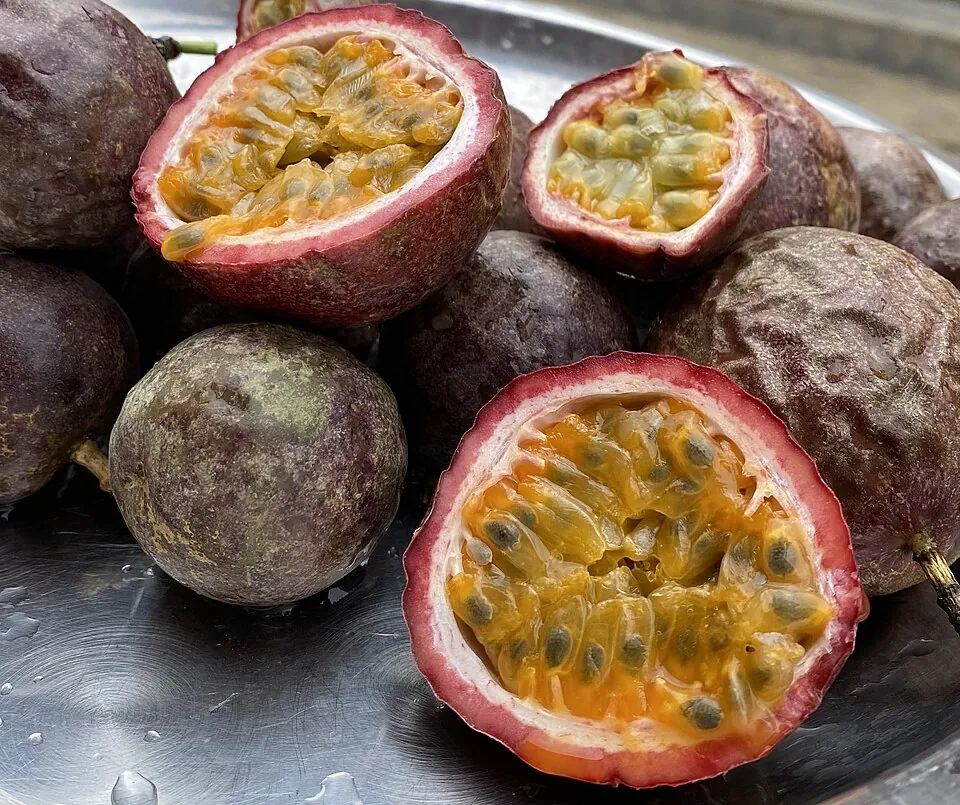
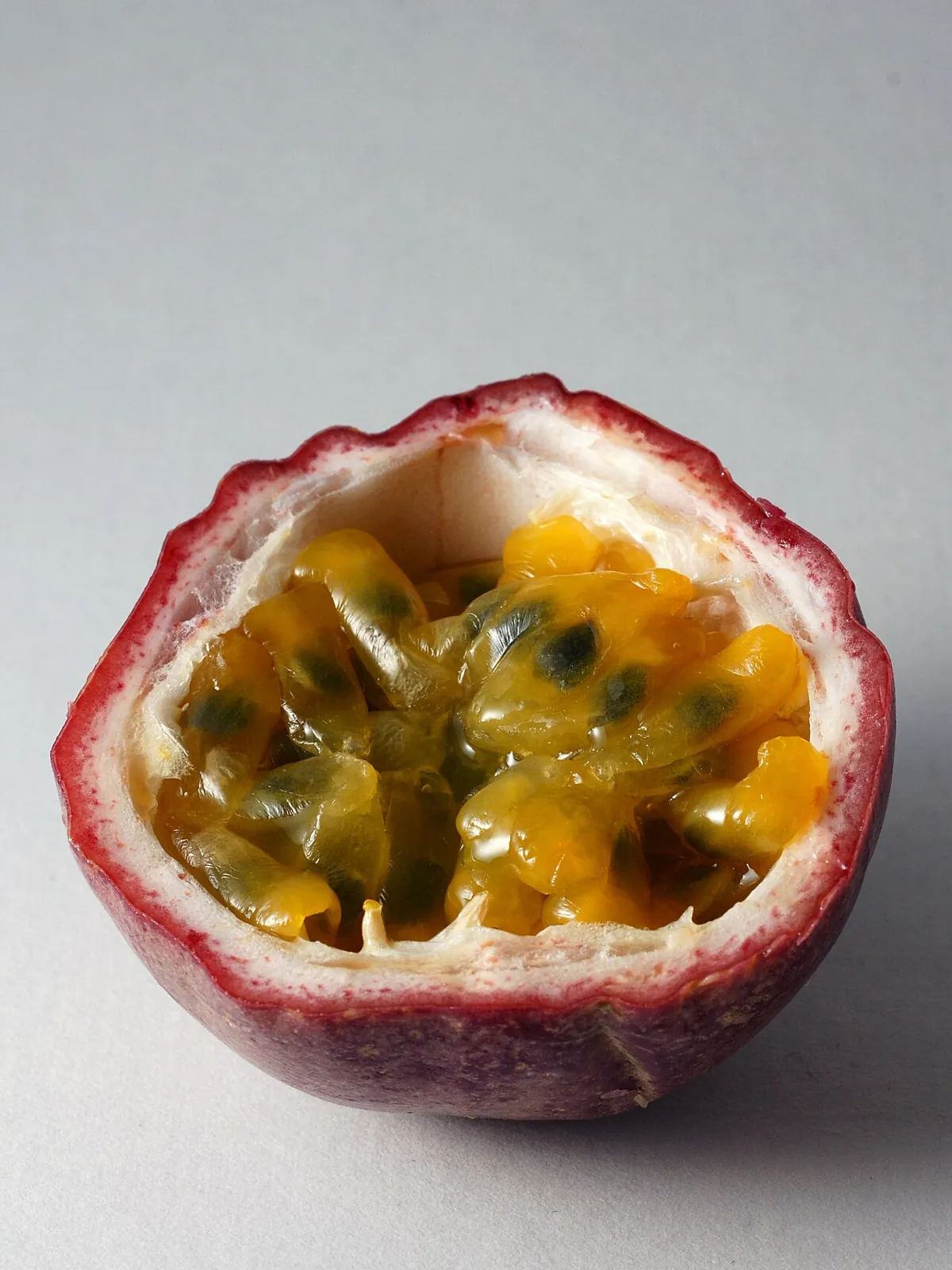
Passion fruit is a vine fruit with a strong perfume, tart orange-yellow pulp and crunchy black seeds. Cut through the tough shell and the inside is ready for a spoon: little sacs of juice that you can eat seeds and all.
What it is
A passion fruit is round or egg-shaped, about 4–7.5 cm (1½–3 in) across. Its skin can be deep purple, burgundy or yellow, with a white layer underneath. The juicy pulp fills the space around the seeds.
In Brazil, purple fruit is preferred for eating fresh, while yellow fruit goes into juice and preserves. Possum Purple has purple skin dotted with pale spots and sweet juice with a moderately strong flavour.
Where it comes from
Passion fruit, Passiflora edulis, comes from Brazil, Paraguay and northern Argentina. Brazil is the largest producer; Colombia, Peru, Ecuador, Australia and New Zealand also grow it commercially.
In the United States it grows in Florida, Hawaii, Puerto Rico and California. India has a long history of growing purple passion fruit in the Nilgiris, the hills in the south.
How it's eaten where it grows
In Brazil, mousse de maracujá turns the sharp juice into a chilled dessert with condensed milk and cream. The mixture is blended with gelatin, poured into glasses or a dish, and chilled until set; a spoonful of pulp can go on top.
In Australia, people eat the pulp with cream and sugar, seeds included, or stir it into yogurt. For drinks, its strong juice is sweetened and diluted with water, orange juice or pineapple juice.
How it's grown
The vine climbs by curling tendrils around whatever they touch. In good conditions it can flower and fruit within a year, and a productive vine usually lasts three or four years. Purple types suit cooler tropical highlands; yellow types and their crosses suit warmer lowlands. Ripe fruit falls to the ground, protected by its thick shell.
When and where you'll find it
In Florida, the crop is usually strongest from midsummer through autumn. There, growers also sell fresh fruit direct at farmers’ markets and online. Frozen pulp is another form for the kitchen: Goya packages it in 14-ounce packs for the freezer aisle.
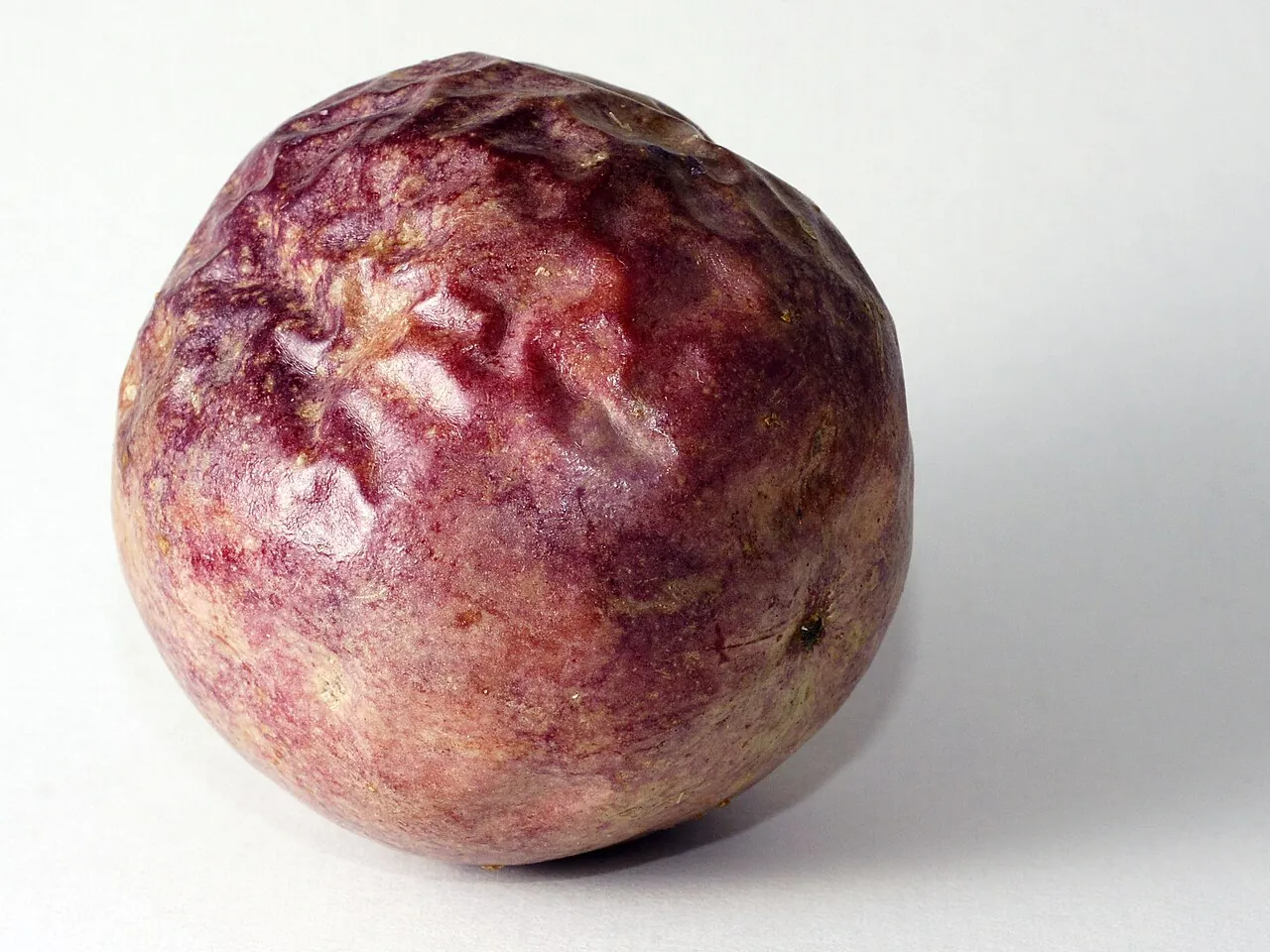
A ripe fresh fruit still feels firm. Its skin wrinkles as it loses water, mostly through the peel.
Get it near Detroit
What it tastes like
Softer than a pear, as tart as a kiwifruit≈
More about the taste
Passion fruit combines a strong aroma with tangy, juicy pulp and crunchy seeds. Purple types are generally sweeter for eating fresh; yellow types are more acidic — though named selections vary.
Purple types are usually sweeter; yellow types are more acidic and more often processed, and hybrids fall in between.
Its strong aroma and acidity mean a little juice goes a long way in a diluted drink or a blend with other fruit.
A tasting invitation
A strongly scented fruit isn't always the sweetest, and the seeds add crunch. Try purple and yellow types side by side.
Choose, ripen, store, eat
1ChooseFirm
Look for
- Firm
- Expected yellow or purple color
- No damage or decay
Ignore
- Wrinkled rind
Choose firm fruit with its expected yellow or purple color. Completely green fruit was picked too early; a wrinkled rind can reflect water loss rather than being the only sign of ripeness.
2RipenRipens after picking
Ripens after pickingMature passion fruit can continue ripening after picking. Fruit harvested before color change may retain weaker flavor and aroma, so start with a mature fruit rather than relying on the counter to fix it.
3StoreCool, fresh
- CoolFreshBagged
Store fresh passion fruit cool and bagged, around 41–54°F.
4EatAromatic pulp, Small seeds · not leathery peel, white layer
Eat
Aromatic pulpSmall seedsNot eaten
Leathery peelWhite layerScoop out the aromatic pulp and its small seeds. The leathery peel and white layer underneath are not normally eaten in this fresh-fruit preparation.
More tips
A useful detail The edible pulp surrounds numerous seeds inside the rind. The flesh is widely used for juice and other preparations, and the seeds can be retained for texture or separated. The choice changes the eating experience without requiring a different fruit.
Worth knowing
- For this yellow passion fruit, skin color at harvest says something about flavor; wrinkling after purchase doesn't improve it.
Detroit, Michigan
When it’s good hereUsual monthsJust arrivedAt their bestLast chanceAll yearWhere it is in its usual monthsToday, Oct 22Grown hereIn season in your stateShips fromIn season where it growsOrderableListed by a seller we checkedThe day a seller was checked
19 growing areas, 9 countriesUsual monthsOur estimated monthsToday, Oct 22

- Bay of Plenty
- Espírito Santo
- Hainan
- Ica
- Johor
- La Libertad
- Lambayeque
- Madeira
- Northern Territory +1
- Okinawa
- Pahang
- Pernambuco
- South Africa
- You
3 of 9 areas · October
Growing areas by country
- Australia6
- Peru4
- Brazil2
- Malaysia2
- China1
- Japan1
- New Zealand1
- Portugal1
and 4 more countriesand 1 more country
Passion fruit is grown as a home-garden crop in parts of Southeast Asia, used for juice, nectar, squash, frozen desserts and preserves.
22 varieties
- No variety photo yetGrand PassionAlso Gran Pasion
- No variety photo yetBRS Rubi do CerradoAlso BRS RC
- No variety photo yetBRS Minimaracujá AmareloAlso BRS MJA1
- No variety photo yetBRS Minimaracujá RoxoAlso BRS MJ
- No variety photo yetBRS Gigante AmareloAlso BRS GA1
- No variety photo yetBRS Sol do CerradoAlso BRS SC1
61 names in 22 languages
- lilikoiHawaiian
- آلامية مأكولةArabic
Cook it
How to serve it first
Spoon a little pulp over yogurt and taste before adding sweetener. For a dressing or drink, experiment with straining one portion while leaving another intact. Keep the quantities small until you know how strongly this batch affects the dish.
1 Passion fruit festivalUsual monthToday, Oct 22
Strange but trueHistoryA myth, and the truthScienceNatureWhere the name came fromFood and drinkPeople
If you like Passion fruit
Tastes alike
Close relatives
Used the same way
Nutrition, sources
Nutrition
Passion-fruit, (granadilla), purple, raw · per 100 g
- Carbohydrate
- 23 g
- Fiber
- 10 g
- Sugars
- 11 g
- Protein
- 2.2 g
- Fat
- 0.7 g
- Vitamin C
- 30 mg
- Potassium
- 348 mg