Monkey jack
Also called Monkey fruit · Barhar · BadaharArtocarpus lacucha · Moraceae family
Monkey jack is a smaller, irregular relative in the breadfruit-and-jackfruit genus, with a history as both food and a useful farm tree. A single fruit represents the joining of many flowers.
Find it near DetroitGet to know it
Monkey jack is a small relative of jackfruit with velvety skin and sweet-sour ripe pulp. In the western Himalaya, where it is called dheu, the unripe fruit has another life: boiled, spiced and tucked into a hot stuffed flatbread.
What it is
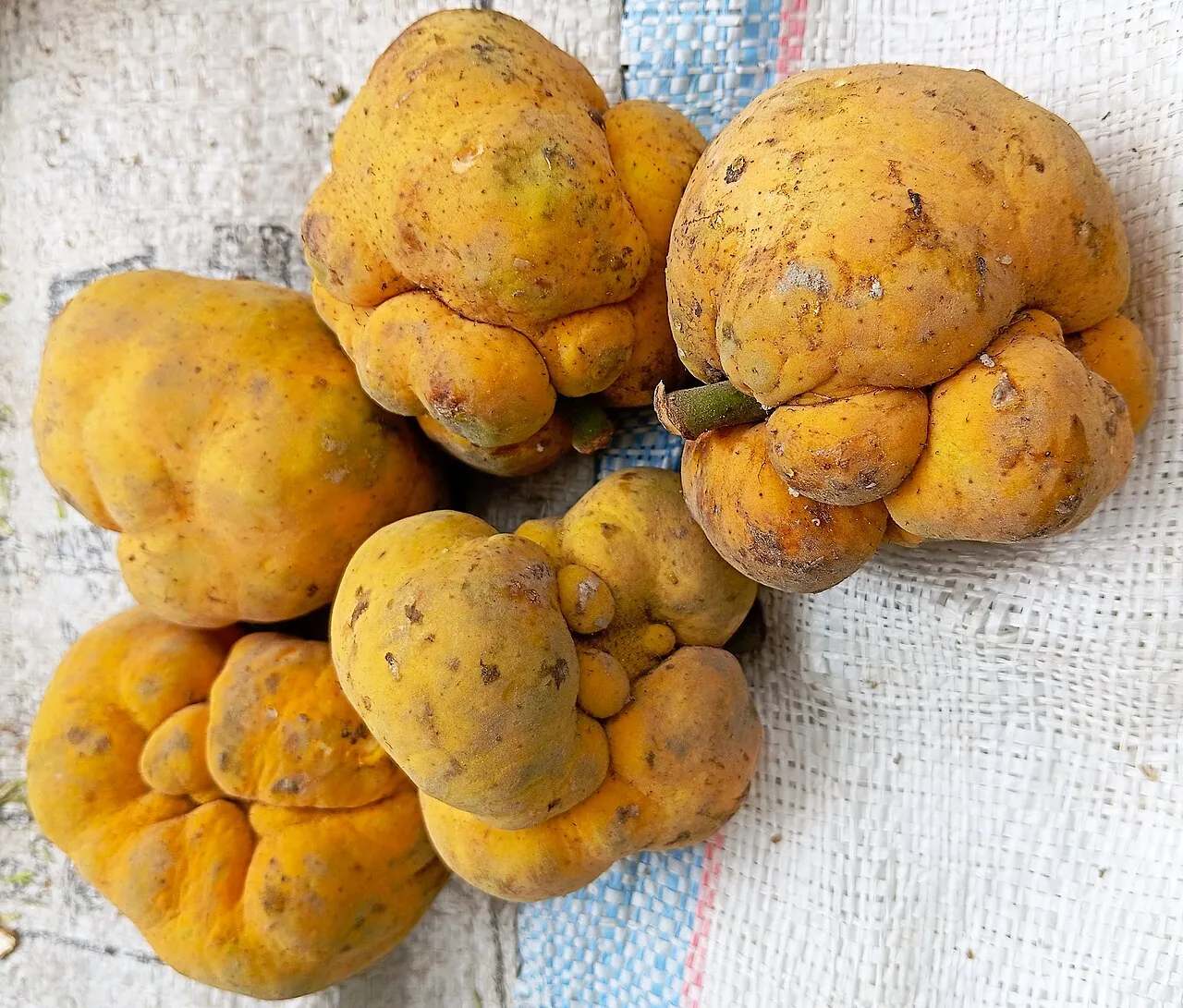
Monkey jack is Artocarpus lacucha, also written Artocarpus lakoocha. The irregularly rounded fruit is usually 5–10 cm (2–4 in) across, weighing 200–350 g (7–12 oz). Green skin turns yellow as it matures, then brown.
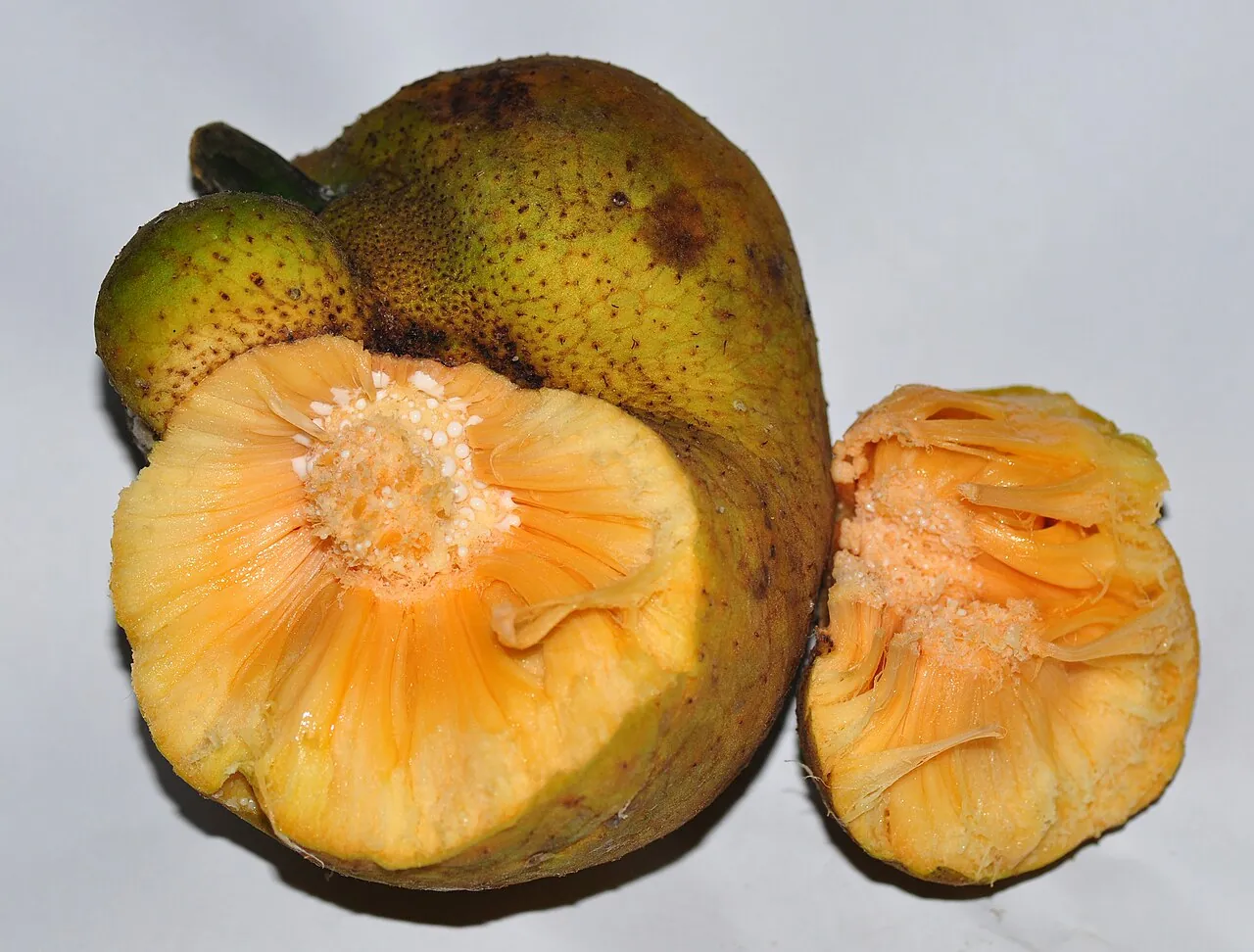
A single fruit grows from a whole head of female flowers joined together. Inside are typically 10–30 seeds. The ripe pulp tastes sweet and sour; the unripe fruit goes into savoury cooking and pickles.
Where it comes from
Its native range runs from India, Sri Lanka, Nepal, Bhutan and Bangladesh through Myanmar, Thailand, Laos, Cambodia and Vietnam to Malaysia. It grows in the humid foothills below the Himalayas and is known as badahar in Nepal.
In Nepal’s lower Himalayan foothills the tree is prized as fodder: one tree yields 60–200 kg of fresh leaves a year. Farmers also keep the trees among other crops, where their canopies give shade.
How it's eaten where it grows
In the western Himalaya, dheu curry starts with unripe fruit boiled until soft, then mashed and fried in mustard oil with spices, onion and garlic. For dheu parantha, mashed boiled fruit mixes with mint and curry leaves inside a wheat flatbread. It cooks on a hot tawa, a flat griddle, and comes with curd or pickle.
Ripe fruit can be eaten fresh. It also becomes a sauce: the softened pulp is separated from its seeds, then blended with tomato and cooked with spices.
How it's grown
Monkey jack grows into a tree 10–18 m (33–59 ft) tall with a dense, spreading crown. It briefly drops its leaves at the start of the dry season. Young plants tolerate some shade, but older trees do best in full light, with deep soil that lets water drain through while staying moist. A tree raised from seed takes about five years to bear fruit.
When and where you'll find it
In most of Nepal, ripe monkey jack is usually collected from late June to early August. Fresh dheu also reaches local markets in the western Himalaya. Pickle is another way to meet it: Indian maker Baba Manthal uses sun-dried pieces, mustard oil and spices in its dheu pickle.
Get it near Detroit
What it tastes like
Softer than a pear, as tart as a kiwifruit≈
More about the taste
Ripe pulp is sweet-sour and pleasantly subacid. Unripe fruit has a different, savory role in curry and stuffed flatbread.
It's an irregularly rounded multiple fruit, green when young and yellow at maturity before later browning.
Milky latex occurs in the plant and seeds.
Choose, eat
1ChooseYellowing
Look for
- Yellowing
Yellowing signals maturity, though it's not a full guide to eating quality.
2EatRipe pulp, Boiled unripe fruit · not seeds
Eat
Ripe pulpBoiled unripe fruitNot eaten
SeedsBoiled unripe fruit goes into curry and parantha filling; a ripe-fruit sauce separates the seeds from the pulp.
Detroit, Michigan
When it’s good hereUsual monthsJust arrivedAt their bestLast chanceAll yearWhere it is in its usual monthsToday, Oct 22Grown hereIn season in your stateShips fromIn season where it grows
1 growing area, 1 countryUsual monthsToday, Oct 22

- Nepal
- You
0 of 1 areas · October
In Nepal, the tree is valued in lower Himalayan farm systems for fodder as well as fruit.
24 names in 10 languages
- badaharroot
- ডেউয়াBangla
- Pokok Keledang BerukMalay
- AnobingFilipino
Cook it
Strange but trueHistoryCustoms and culture
If you like Monkey jack
Tastes alike
Close relatives
Sources
Sources
Monkey jack · Fruitopia · checked Sep 22, 2026