Lemon aspen
Also called Pigeon berryAcronychia acidula · Rutaceae family
A small Australian rainforest fruit with a sharp, citrus-like flavor. The name "lemon aspen" has been used for more than one species.
Find it near DetroitGet to know it
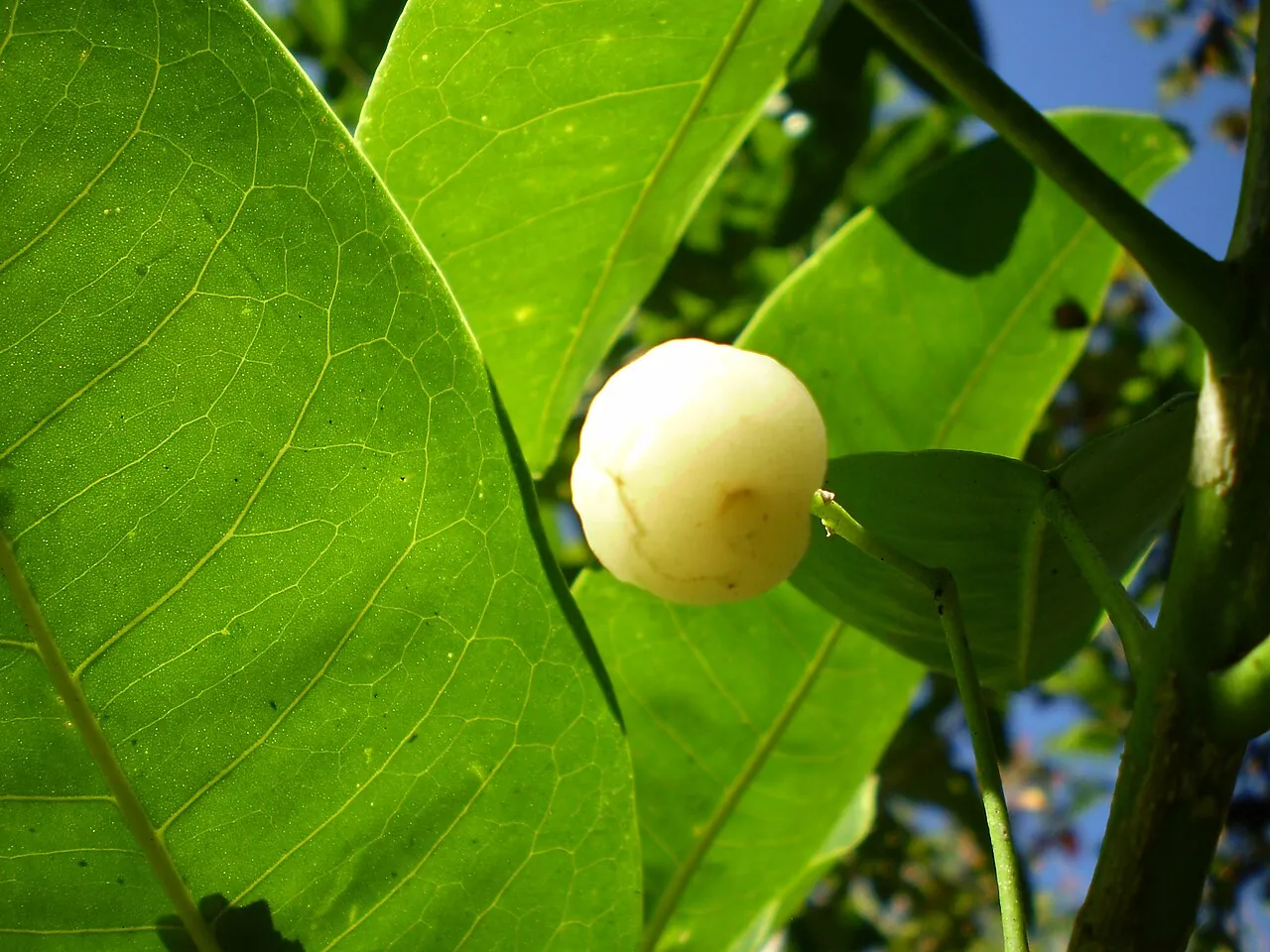
Lemon aspen is a small, pale yellow rainforest fruit with a sharp citrus flavour and a hint of grapefruit. Its juice can become a smooth curd for tartlets, or a sweetened syrup. Inside the round fruit, small dark seeds sit in a star-shaped core.
What it is
The fruit measures about 2 cm (¾ in) across. Cut through it and the core holds small dark seeds, each enclosed in a husk. The juice has a strong lemon-like acidity, a grapefruit note and a citrus scent. Acronychia acidula is the plant usually called true lemon aspen, a member of the Rutaceae, the citrus family.
Where it comes from
Lemon aspen comes from tropical north Queensland, including the Atherton Tablelands. Its wild home includes upland and mountain rainforest. It is also grown farther south, in the hinterland of northern New South Wales, where it fruits in edible gardens such as Forage Byron Bay's. It also grows in Hawaiʻi, including plantings around Kona on Hawaiʻi Island.
How it's eaten where it grows
In Australia, chef Mark Olive turns lemon aspen juice into curd tartlets. He whisks the juice with egg, sugar and grated lemon zest over simmering water, then adds butter until the curd thickens. Once chilled, it fills small sweet pastry cases and gets a dusting of lemon myrtle.
The fruit also works on the savoury side, in sauces and dressings. Whole frozen fruit gives cooks the flesh to work with; juice, sweetened syrup and powder are other preparations used in the kitchen.
How it's grown
Lemon aspen favours tropical or subtropical rainforest conditions, with plenty of rain and soil that drains well. At Forage Byron Bay in The Pocket, northern New South Wales, a tree produced fruit after five years. The fruit is picked by hand and must be cold-processed within 12 to 24 hours of harvest.
When and where you'll find it
At Forage Byron Bay, lemon aspen usually fruits between January and mid-April, and the season there can last only four to eight weeks. Frozen fruit carries the flavour beyond that local season: Naturally Native lists snap-frozen fruit grown in northern New South Wales. Australian native-food specialists also offer juice, sweetened syrup and powder. The syrup already contains added sweetness, while the frozen product is whole fruit.
Get it near Detroit
What it tastes like
As tart as a grapefruit, softer than a pear≈
More about the taste
Lemon aspen has a sharp, citrus-like flavor compared to lime and grapefruit, and is used in dressings, curd, syrup and glazes.
The fruit is crisp, pale-green to yellow, and grows in clusters, with a sharp flavor compared to lime and grapefruit.
Its strong flavor gives it an outsized role as an ingredient in dressings, curds, syrups, cordials and glazes.
Choose, eat
1Choose
On the label
- Acronychia acidula
Ask for the botanical species when buying a lemon-aspen product — the same trade name can cover more than one species, with different flavor.
2EatFruit · not leaves
Eat
FruitNot eaten
LeavesThe fruit is eaten raw or cooked. The leaves are aromatic when crushed but are not treated as an edible part.
Detroit, Michigan
When it’s good hereUsual monthsJust arrivedAt their bestLast chanceAll yearWhere it is in its usual monthsToday, Oct 22Grown hereIn season in your stateShips fromIn season where it grows
1 growing area, 1 countryUsual monthsToday, Oct 22

- Queensland
- You
Acronychia acidula grows wild in tropical north Queensland and the Atherton Tablelands.
Cook it
Strange but trueNatureWhere the name came from
If you like Lemon aspen
Tastes alike
Used the same way
Sources
Photos · 2
John MossPublic domain 
Charles HaynesCC BY-SA 2.0
Sources
Lemon aspen · Fruitopia · checked Sep 22, 2026