Kundang
Also called Burmese plumBouea oppositifolia · Anacardiaceae family
A small plum-like fruit from a mango relative, with names that overlap neighboring crops.
Find it near DetroitGet to know it
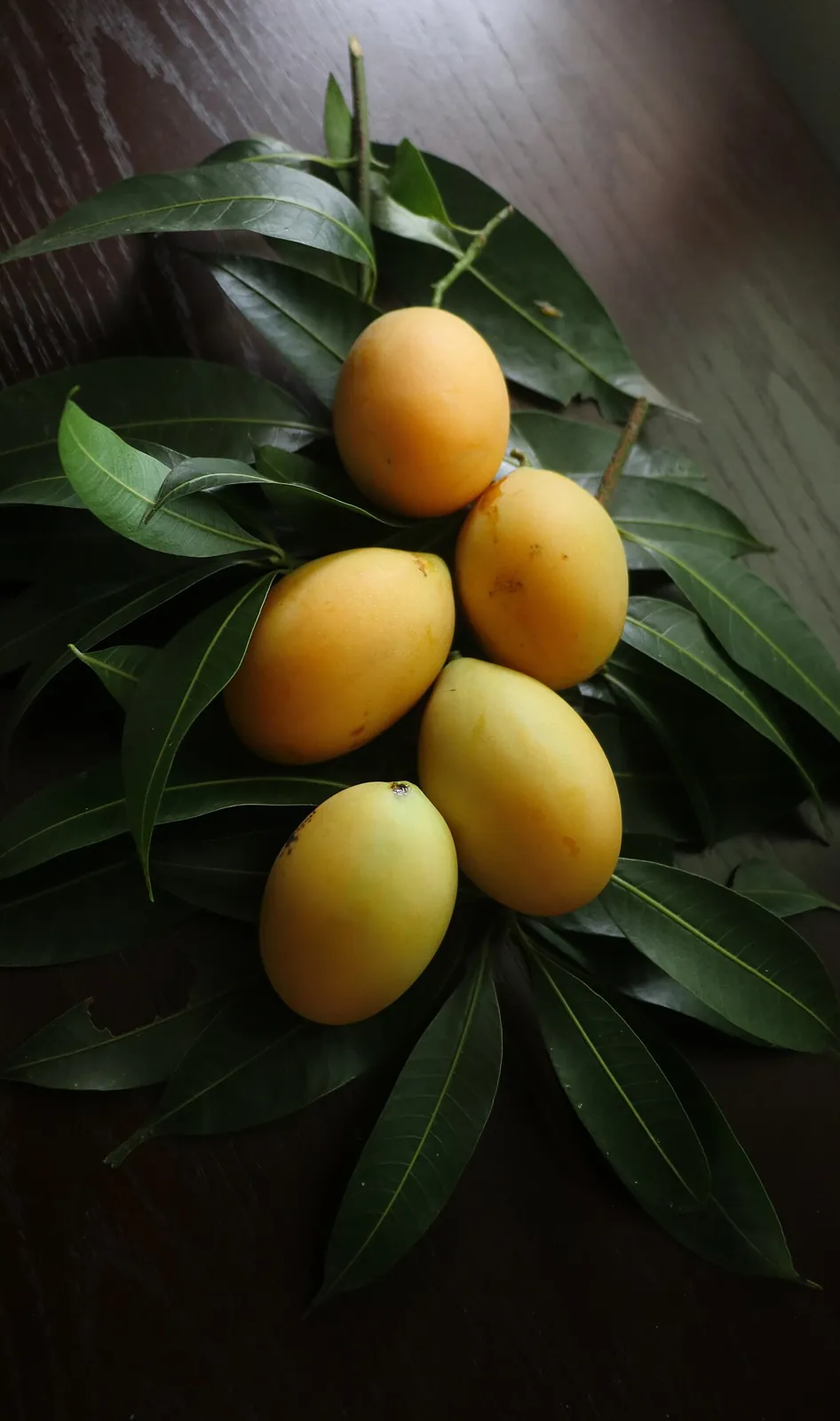
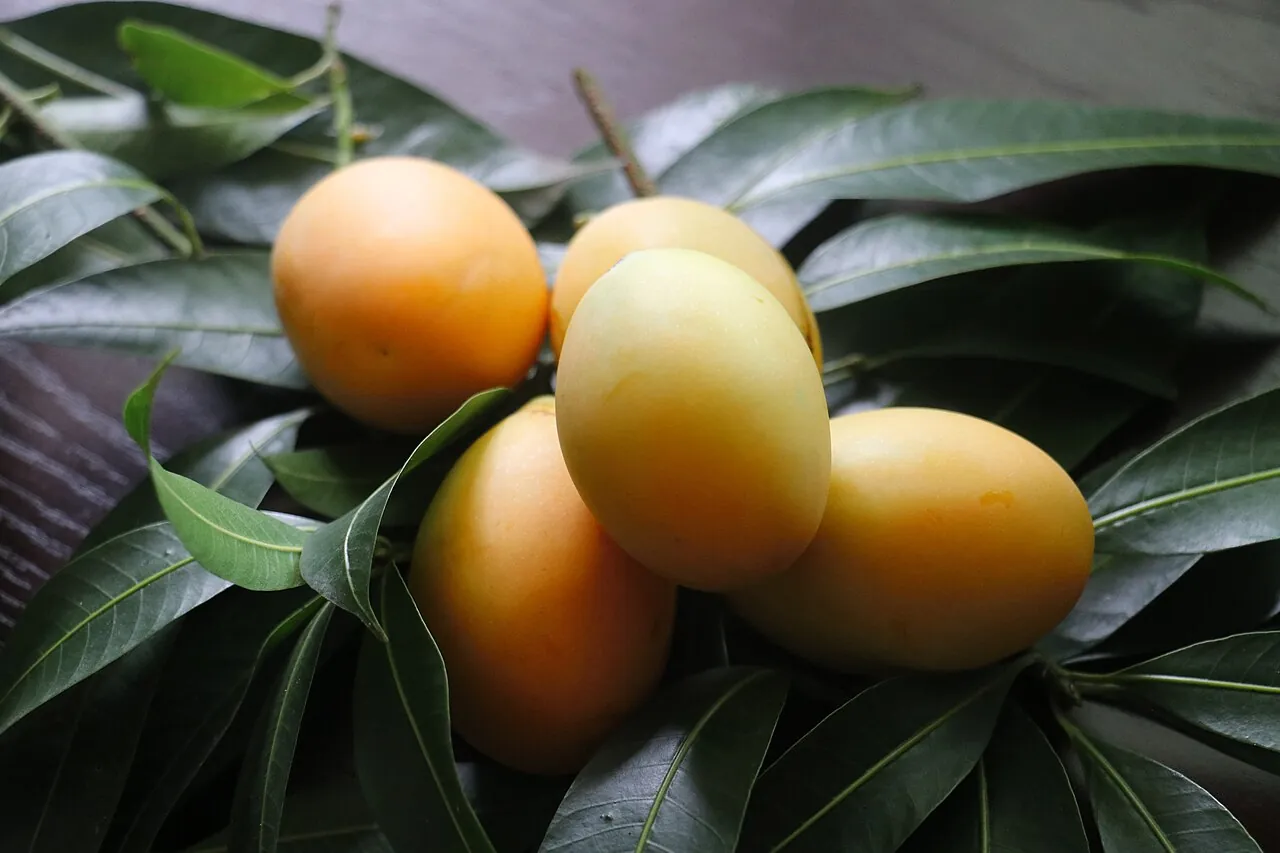
Kundang is a small, oval fruit in the cashew family, with thin skin and yellow-orange flesh. In Laos, it comes in two sharply different forms: sour mak phang and sweet mak phou, whose flavour brings together mango and dark berries.
What it is
Kundang is Bouea oppositifolia. Its oval fruit measures about 2.5 cm (1 in) long, with yellow or orange skin and flesh when ripe. The pulp is a little fibrous and wraps around a stone.
The Lao names describe a difference that ripening does not erase. Mak phang stays sour even when mature; mak phou is the sweet form. The sour fruit also looks larger and more appetising, so the bigger, better-looking fruit is not the sweeter bite.
Where it comes from
Kundang grows naturally from Myanmar and the Andaman Islands across mainland Southeast Asia and southern China, south through the Malay Peninsula to Singapore, Sumatra and Borneo. It belongs to tropical lowland forest. In Singapore, it is a native tree classed as critically endangered.
Names travel with the fruit: Burmese plum in English, kundang daun kechil in Peninsular Malaysia and ramania pipit in Kalimantan are names for this species.
How it's eaten where it grows
In Laos, kundang is eaten fresh or cooked in sugar syrup. Salt and chilli go with the sour form and with green fruit. The sweet mak phou supplies the mango-and-berry flavour for a fresh bite; mak phang keeps its acidity even when mature.
The tree supplies a leafy vegetable too. Its young leaves go into soups or are sautéed, giving the same plant a place in both fruit eating and savoury cooking.
How it's grown
The evergreen tree can reach 27 m (89 ft), with smooth, leathery leaves and clusters of small white-to-yellow flowers. It grows from seed and accepts full sun or partial shade. Moist soil that drains well suits its roots. In planted landscapes, its leafy crown also serves as a shade tree.
Get it near Detroit
What it tastes like
No sweeter than a grapefruit, tarter than a kiwifruit≈
More about the taste
Kundang comes in a sour form (mak phang), which stays acidic even mature, and a sweet form (mak phou), likened to mango and dark berries such as blackberry or blackcurrant.
Compared to its relative Bouea macrophylla, kundang fruit is smaller and more acidic.
Choose, eat
1ChooseOrange skin alone
Ignore
- Orange skin alone
- Maturity alone
Ask whether the fruit is the sour form (mak phang) or the sweet form (mak phou); orange skin and maturity alone don't tell you which.
2EatFruit
Eat
FruitThe fruit is eaten raw or cooked.
Detroit, Michigan
When it’s good hereUsual monthsJust arrivedAt their bestLast chanceAll yearWhere it is in its usual monthsToday, Oct 22Grown hereIn season in your stateShips fromIn season where it grows
16 names in 7 languages
- rumeniaroot
- بوا أوبوزيتيفولياArabic
If you like Kundang
Tastes alike
Close relatives
Same plant family
Sources
Photos · 2