Sour plum
Ximenia caffra · Olacaceae family
An African Ximenia with juicy, sour flesh and nonfood seed-oil uses that must remain separate.
Find it near DetroitGet to know it
Sour plum is a red African fruit with juicy orange-red flesh and an almond-like scent. It grows on a spiny shrub or small tree, with one large stone inside each fruit. Its pulp becomes a sugar-sweetened drink in Tanzania and a sour grain porridge in Zulu cooking.
What it is
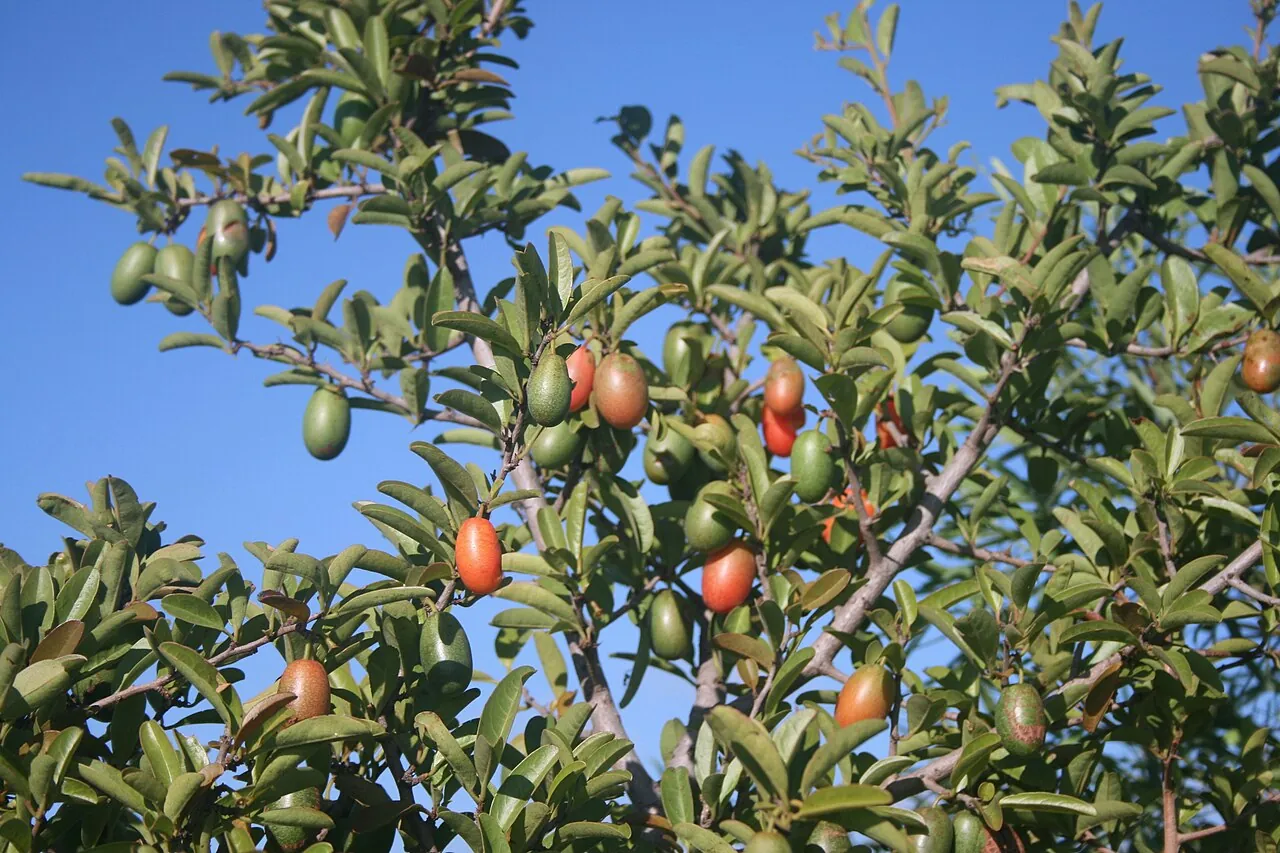
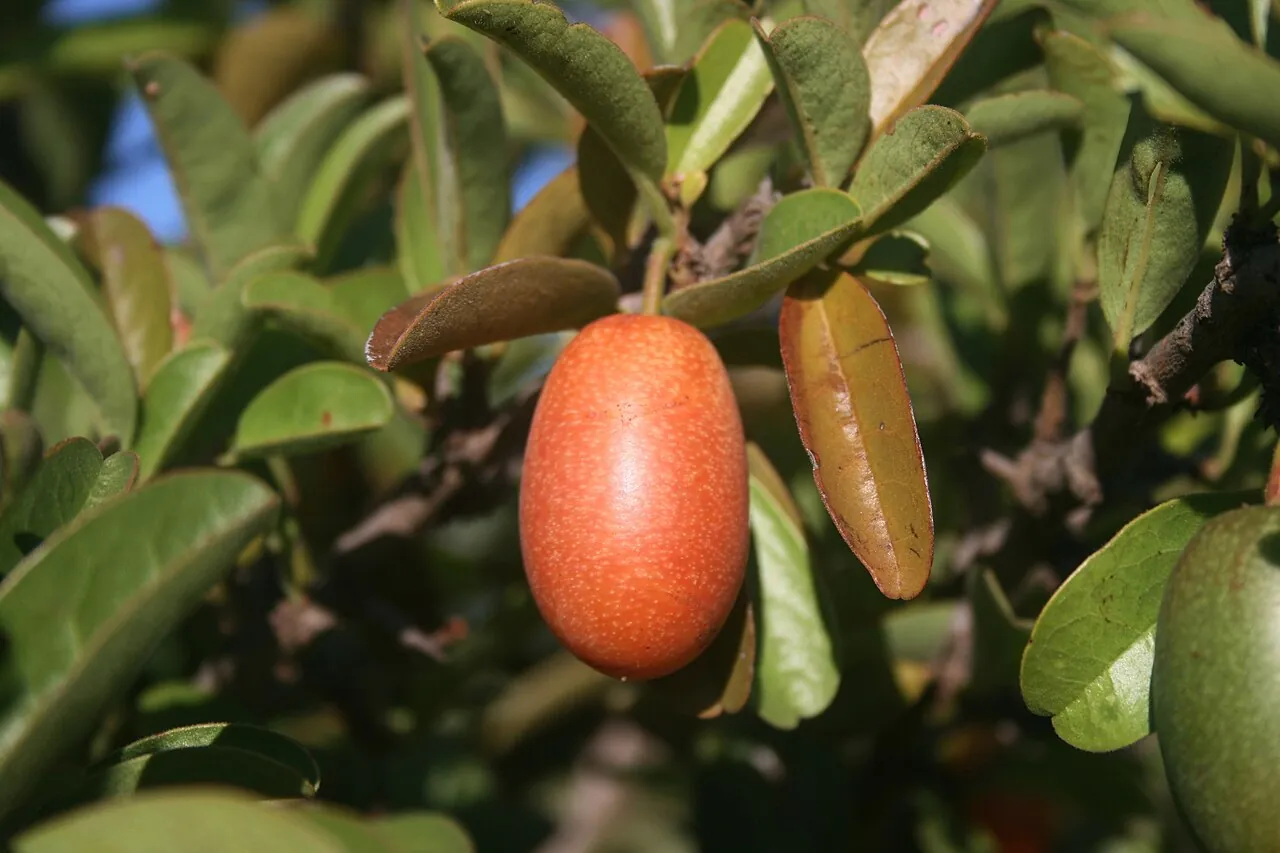
This is Ximenia caffra, the large sour plum. The smooth, oval fruit is about 2.5–3.5 cm (1–1.4 in) long. Green fruit turns bright red as it ripens, with juicy orange to red flesh. Inside sits one hard-coated seed, up to 2.5 cm (1 in) long.
Where it comes from
Sour plum is native to eastern and southern Africa, including Kenya, Uganda, Tanzania, Malawi, Mozambique, Zambia and South Africa. It is widespread in Tanzania, in regions such as Kagera, Mwanza, Dodoma, Morogoro and Tabora. Its wild home includes dry woodland and wooded grassland, with trees growing on rocky hillsides and termite mounds.
How it's eaten where it grows
In Tanzania, children and herders eat ripe fruit picked from the tree. Squeezing the fruit into water and adding sugar makes a drink. In Zulu cooking, juice squeezed into water is boiled and mixed with grain meal to make sour porridge.
Another preparation starts with fruit in cold water. The skin and kernel are pressed out, and the remaining pulp is mixed with pounded tubers. The fruit also makes jam.
How it's grown
The tree grows up to 6 m (20 ft), with thorny branches and small greenish or creamy-white flowers. It grows readily from seed, and wild plants regenerate well. Young trees can still die in prolonged drought or fires. Planted trees also serve as living fences and ornamentals.
When and where you'll find it
In southern Africa, flowers usually appear in September and October, with fruit following during the rains in December and January. In Namibia, fruit is usually around in December and January too. Fresh fruit is eaten as a gathered snack, while drying the fruit in the sun provides a form that can be kept for later.
Get it near Detroit
What it tastes like
As tart as a grapefruit, sweeter than a lemon≈
More about the taste
The ripe pulp is juicy, with a bitter or sour taste and an almond-like scent; that scent doesn't make the kernel edible.
The ripe pulp is juicy, bitter or sour, with an almond-like scent that doesn't make the kernel edible.
Choose, eat
1ChooseOrange or red
Look for
- Orange or red
- Slightly overripe
Fruit changes from green to orange or red as it ripens; slightly overripe fruit is favored for eating.
2EatPulp · not kernel
Eat
PulpNot eaten
KernelThe fruit is eaten raw and in jam; one traditional preparation removes the skin and kernel before combining the pulp with other food. The kernel itself is not eaten.
Detroit, Michigan
When it’s good hereUsual monthsJust arrivedAt their bestLast chanceAll yearWhere it is in its usual monthsToday, Oct 22Grown hereIn season in your stateShips fromIn season where it grows
Cook it
Recipes 1
Strange but trueCustoms and culture
If you like Sour plum
Tastes alike
Close relatives
Sources
Photos · 2
Sources
Sour plum · Fruitopia · checked Sep 22, 2026