Japanese plum
Also called Chinese plumPrunus salicina · Rosaceae family
Juicy fresh-market plums with wide color variation and complex hybrid backgrounds.
Find it near DetroitGet to know it
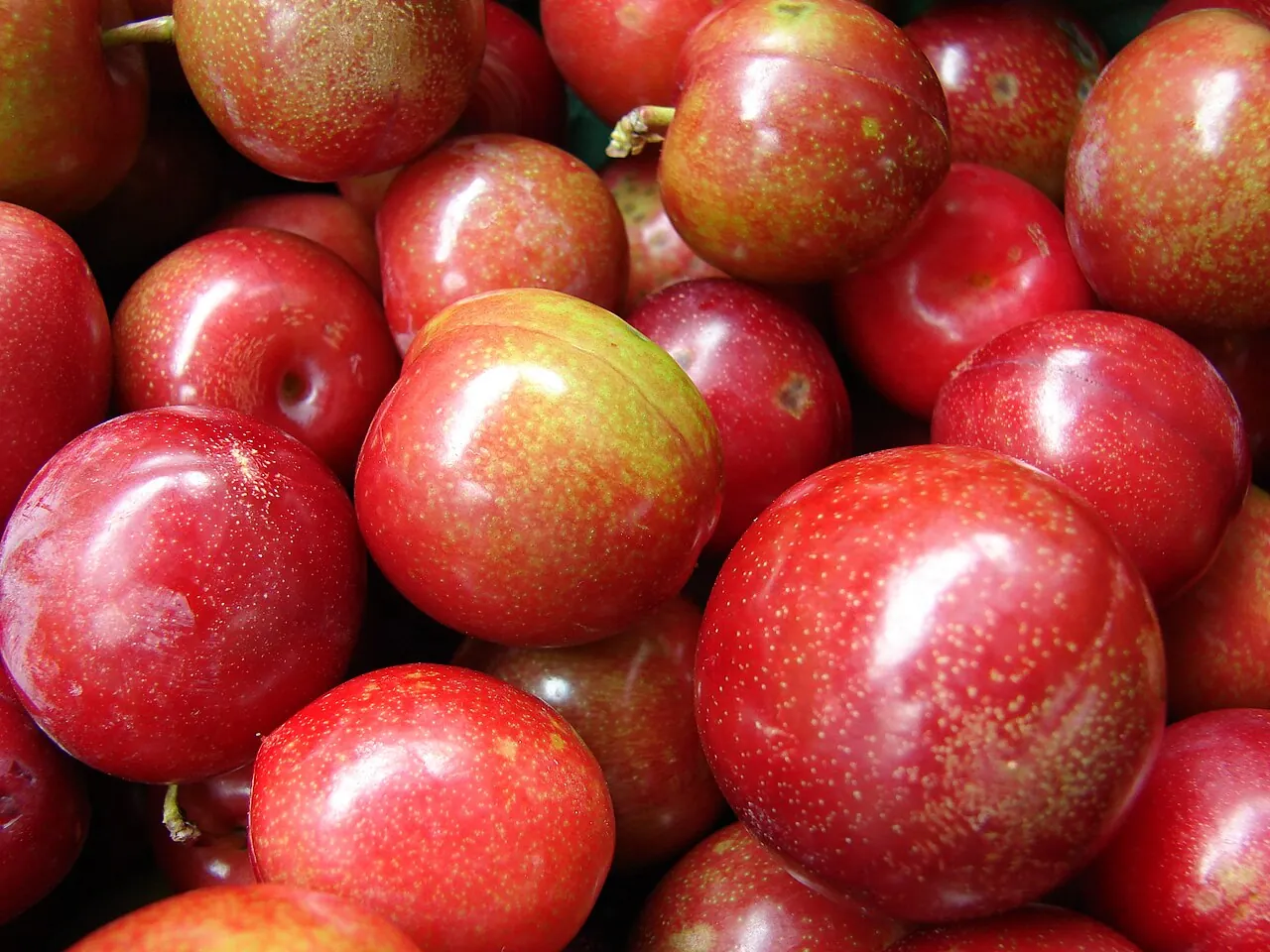
Japanese plums are juicy stone fruits with skins that range from yellow to almost black. Cut into a Satsuma and the flesh is deep red, firm and juicy, with an almond-like flavour beneath its tough, bitter skin.
What it is
A Japanese plum measures roughly 4–8 cm (1½–3 in) across, with a hard stone in the middle. Its flesh can be yellow or red, so the colour outside only tells part of the story.
Satsuma has mottled red-and-green skin that is somewhat tough and bitter. Inside, its firm flesh has a rich almond-like flavour.
Where it comes from
Japanese plums come from China. Japan became a stepping stone in their travels: in 1870, the plum now called Kelsey went from Yamanashi to America. It grew at a farm in Berkeley, California, and later returned to Japan under its new name.
Luther Burbank bred Japanese plums including Santa Rosa. Many modern varieties combine Japanese and American plum ancestry. In Japan today, Yamanashi is the leading plum-growing prefecture.
How it's eaten where it grows
In Yamanashi, ripe Soldam plums go into fruit liqueur that turns red. This variety starts with green skin and red flesh, so its colour is a surprise even before it reaches the glass.
In Sydney, chef O Tama Carey’s Satsuma dessert pairs poached plums with chocolate sponge and pink cream. The fruit simmers in prosecco with rosemary, bay leaves, black pepper and lemon peel; reduced poaching syrup colours the cream.
How it's grown
The trees lose their leaves in winter and open white flowers in spring. Many varieties need pollen from another Japanese plum flowering at the same time. A standard-size plum tree usually begins bearing three to five years after planting.
Growers train Japanese plums into an open-centred shape, keeping three or four main branches and removing the central stem. The result is a spreading tree with an open middle.
When and where you'll find it
Japanese plums and their hybrids are familiar fresh fruit on US grocery shelves. Satsuma also belongs to local markets and home gardens. In San Francisco Bay Area gardens, Santa Rosa usually ripens in late June, followed by Satsuma and Mariposa in July.
In Yamanashi, the usual season runs from early June to early September, with different varieties taking their turns.
Sources · 7
- homegarden.cahnr.uconn.edu
- NC State Extension Gardener Plant Toolboxplants.ces.ncsu.edu
- SBS Food — O Tama Careysbs.com.au
- University of California, Davis — Foundation Plant Servicesfps.ucdavis.edu
- Utah State University Extensionextension.usu.edu
- Village Harvestvillageharvest.org
- Yamanashi Prefecturepref.yamanashi.jp
Get it near Detroit
What it tastes like
Crisper than a blueberry, as tart as a kiwifruit≈
More about the taste
The Satsuma variety has firm, juicy flesh with an almond-like flavor and somewhat tough, bitter skin; other varieties taste different.
Fruit is relatively large and juicy, often round, with yellow or red flesh. Skin ranges from yellow through red to nearly black — darker isn't automatically sweeter or riper.
Choose, ripen, store, eat
1ChooseVariety-appropriate color
Look for
- Variety-appropriate color
- Gentle give
- Fruity aroma
Ignore
- Skin color alone
Look for variety-appropriate color, gentle give, and fruity aroma. Avoid oozing, damaged or overripe fruit.
2RipenOn the counter
Ripens after pickingCounterLet near-ripe fruit finish at room temperature, then refrigerate once ripe.
3StoreFridge, ripe
- FridgeRipe
4EatJapanese plums are mainly eaten fresh, and also made into jam, jelly and fruit leather
Japanese plums are mainly eaten fresh, and also made into jam, jelly and fruit leather.
More tips
Worth knowing
- Waiting for edible softness may change the balance of this plum, but it won't add sugar or fix a fruit that wasn't well developed to begin with.
- A dark peel or an intact look doesn't reveal a plum's storage history. Good flavor and the ability to survive shipping are separate things.
- For this high-acid variety, the softer, less acidic eating stage matters as much as sweetness.
Detroit, Michigan
When it’s good hereUsual monthsJust arrivedAt their bestLast chanceAll yearWhere it is in its usual monthsToday, Oct 22Grown hereIn season in your stateShips fromIn season where it grows
8 growing areas, 4 countriesUsual monthsOur estimated monthsToday, Oct 22

- Aomori
- Maule
- Mendoza
- Nagano
- O'Higgins
- Santa Cruz de Tenerife
- Yamanashi
- You
1 of 3 areas · October
Growing areas by country
- Chile3
- Japan3
- Argentina1
- Spain1
8 varieties
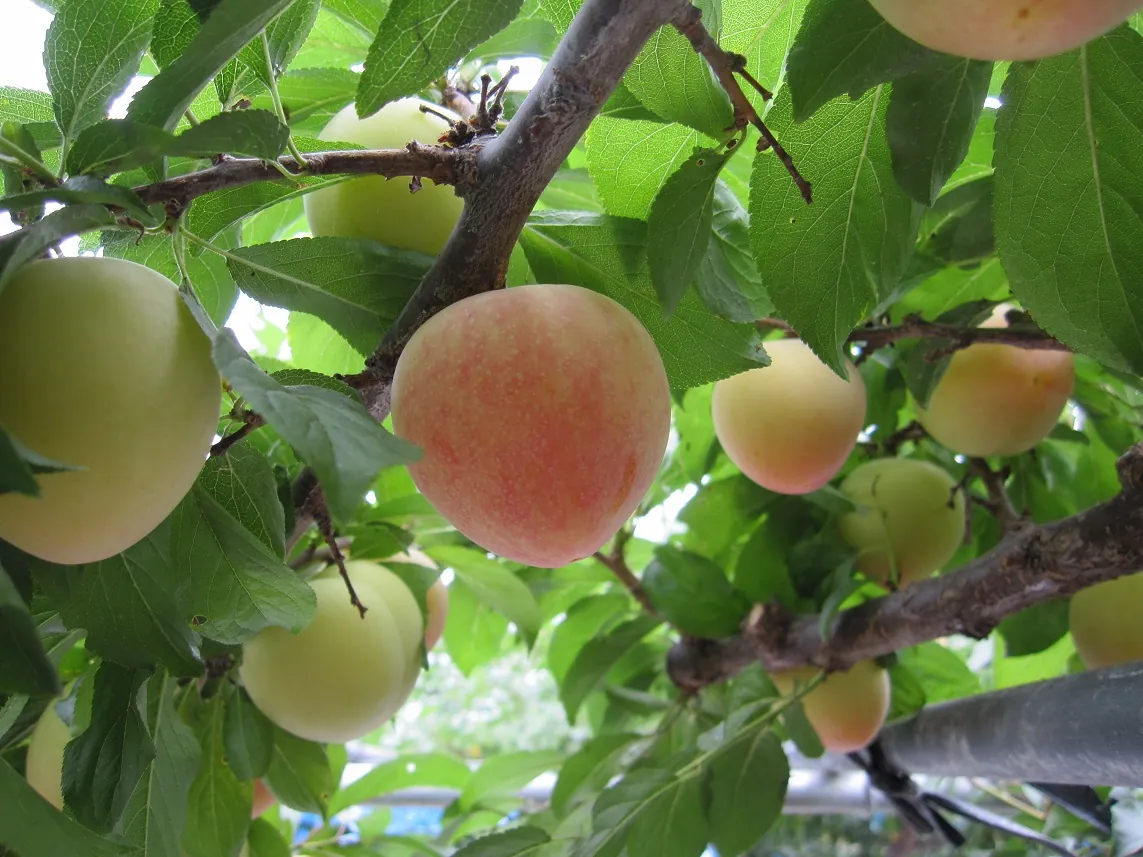 Honey Rosa
- Flavour
- sweet with relatively little acidity
- Feel
- soft
- Juice
- juicy
- Texture
- smooth
- Honey Beat
- Flavour
- high sweetness and low acidity
- Skin
- red-purple
- Flesh
- yellow
- No variety photo yetBeauty
- Use
- Dessert plum
- No variety photo yetVanier
- Use
- Dessert plum
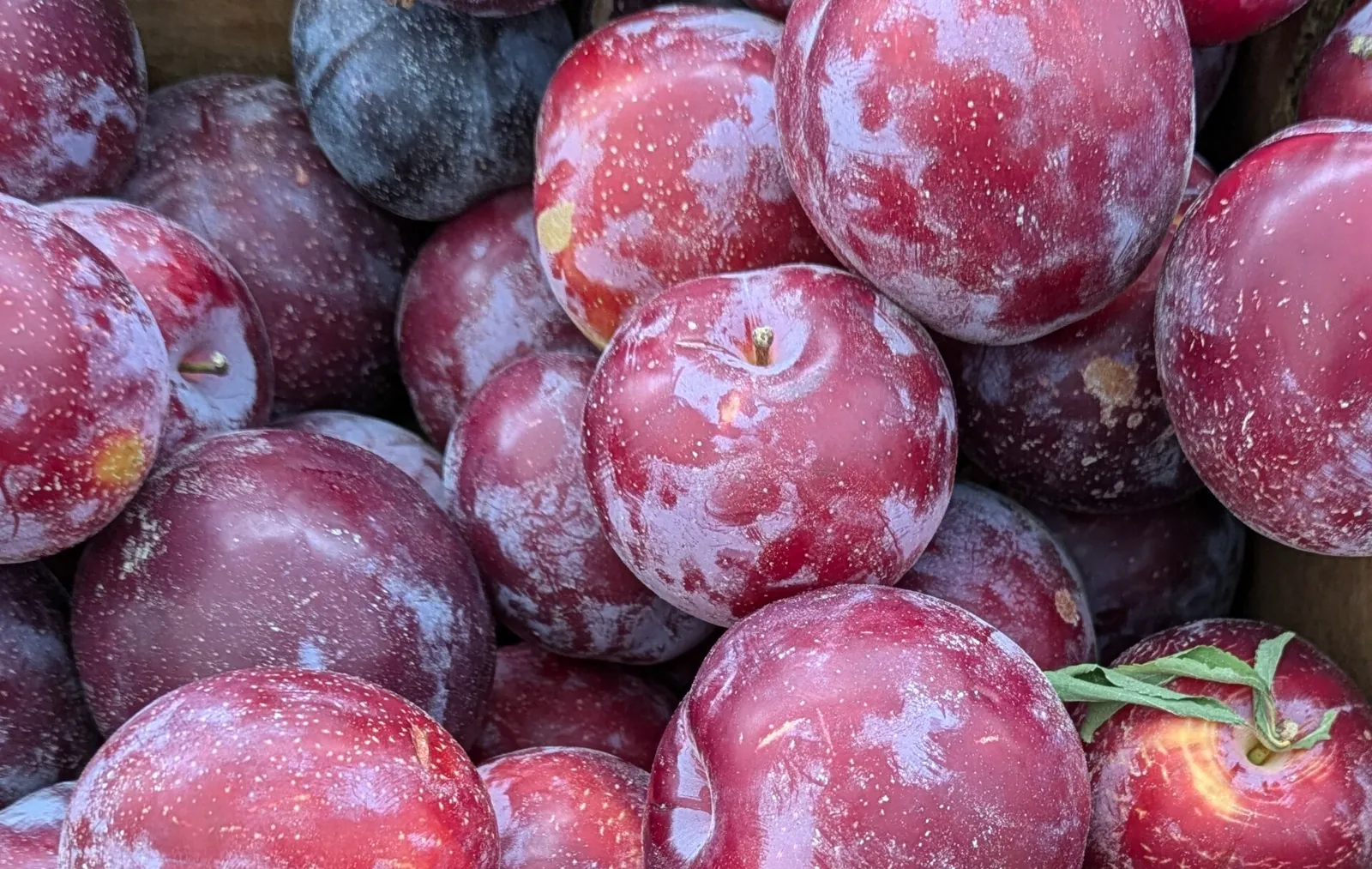 Santa RosaPhoto: Mx. Granger · CC0 1.0 Universal Public Domain Dedication
- No variety photo yetKelsey
27 names in 7 languages
- Mận hậuVietnamese
Cook it
1 Japanese plum festivalUsual monthToday, Oct 22
Strange but trueHistoryA myth, and the truthWhere the name came fromCustoms and culturePeople
If you like Japanese plum
Close relatives
Sources
Photos · 3
Sources
Japanese plum · Fruitopia · checked Sep 22, 2026