Honeyberry
Also called Blue honeysuckle · Deepblue honeysuckle · Sweetberry honeysuckleLonicera caerulea · Caprifoliaceae family
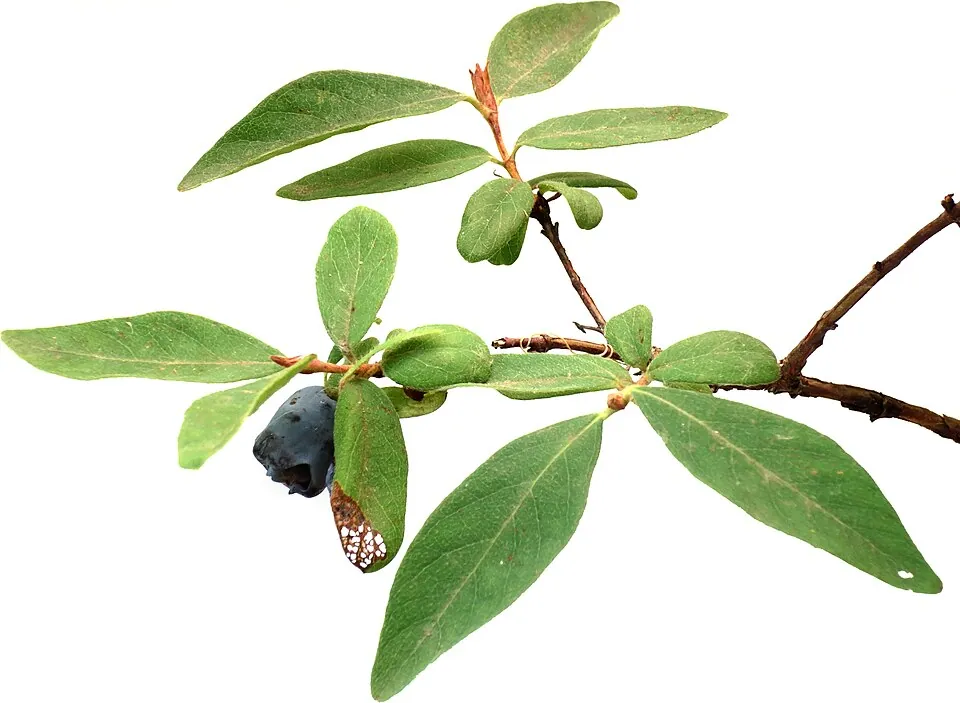
A blue honeyberry can still need time on the bush before it turns sweet.
Find it near DetroitGet to know it
Honeyberry, also called haskap, is a little blue fruit usually described as a cross between blueberry and raspberry, with a tart zing. Its thin skin dissolves quickly as you eat, and its seeds are tiny, much like a kiwi's.
What it is
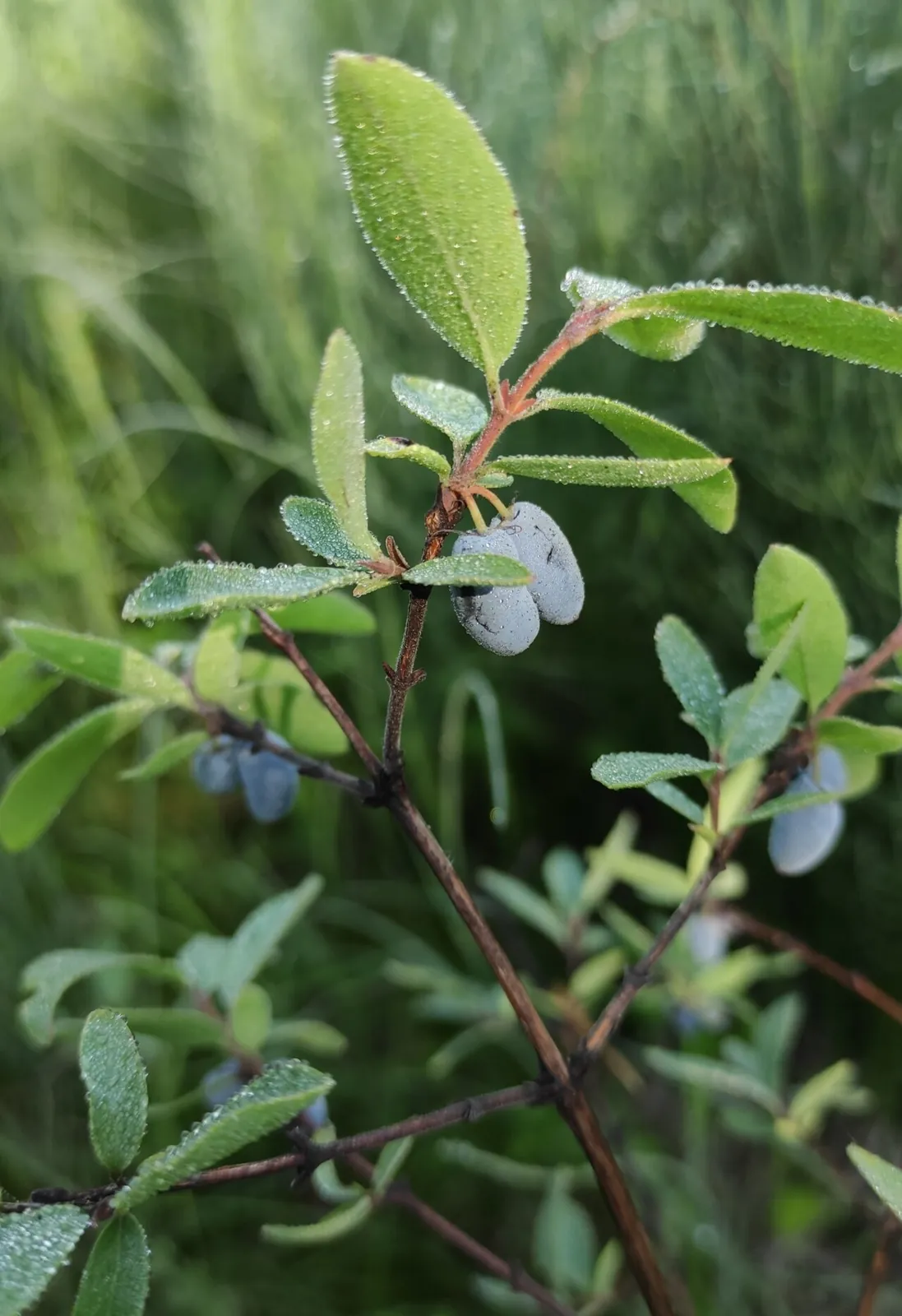
Honeyberry is the fruit of a honeysuckle, Lonicera caerulea. The berries are dark blue and elongated, roughly 1.3–2.5 cm (½–1 in) long. Their skin is thin and dissolves quickly, and the seeds are tiny.
Varieties matter. Borealis and Tundra were bred for much larger, better-tasting fruit than the Russian varieties sold in North America at the time. The later-ripening Boreal Beauty, Boreal Beast and Boreal Blizzard extend the picking season.
Where it comes from
The plant comes from cold regions across Europe, Asia and North America. Haskap has long grown wild in Hokkaido, Japan’s northern island. About 40 years ago, farmers there began growing plants moved from wild stands near Chitose and Tomakomai, and today berries from Kurisawa, Atsuma, Furano and Chitose go into local sweets.
In Canada, Borealis and Tundra were released in 2007 from crosses between Russian and Kuril Island plants.
How it's eaten where it grows
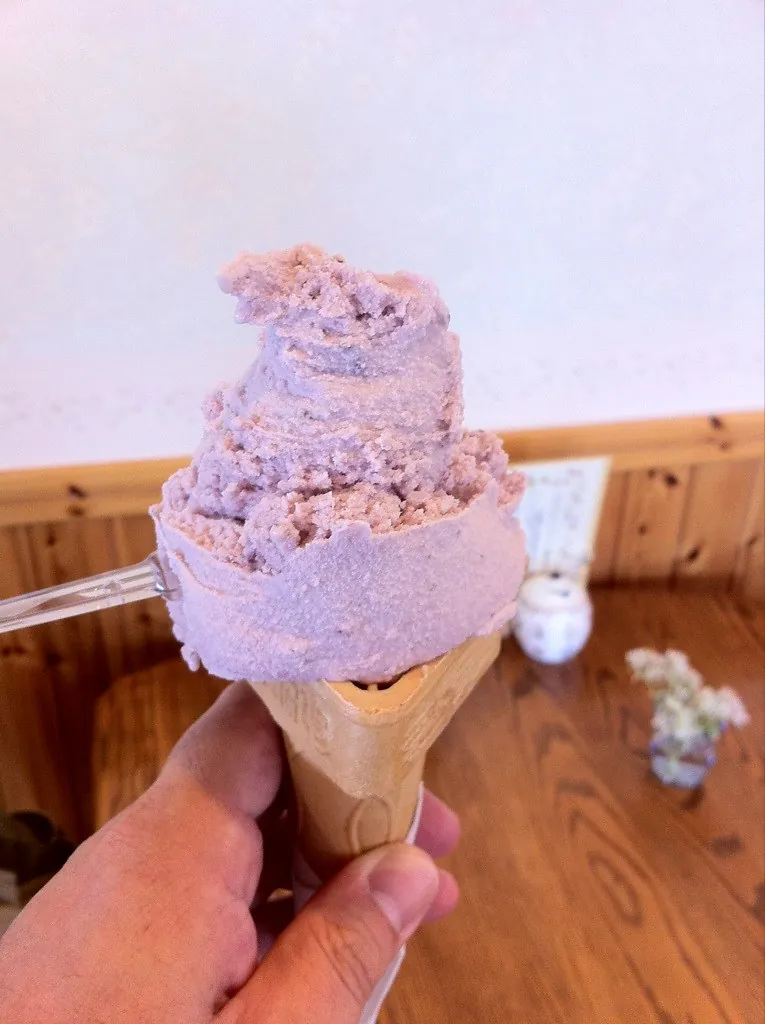
In Chitose, Hokkaido, haskap fills Haskapp Jewelry, a sweet first made in 1978. Sweet-tart haskap jam and buttercream sit between thin cookies, with a border of chocolate. The point is the berry’s sourness.
At Deb’s Berry Farm near Newhall, Iowa, honeyberries are sold fresh and also made into juice and jam.
How it's grown
Honeyberries grow on small shrubs about 1.2–1.8 m (4–6 ft) tall that work well in town yards. A good crop needs two different varieties to provide pollen for each other. Bushes often bear a few berries the year after planting, but it usually takes three or four years before each gives a few kilos.
Early and late varieties spread the harvest, so the choice of plants decides when picking starts and how long it lasts.
When and where you'll find it
On the Canadian Prairies, the usual harvest is late June to early July. In the US, pick-your-own farms, farm sales and farmers’ markets are the main routes to fresh berries. Once picked, they keep for three to five days in the refrigerator.
Beyond the fresh season, there are frozen berries and fruit products from growers, including in New Brunswick. Honeyberry also travels as powder: Arctic Farms makes a freeze-dried version with organic honeyberry as its only ingredient.
Sources · 8
- Arctic Farmsarcticfarms.com
- Bob Bors, University of Saskatchewanresearch-groups.usask.ca
- Camerise NB / Haskap NBcamerisenbhaskap.ca
- Iowa State University Extension and Outreachyardandgarden.extension.iastate.edu
- Morimotohaskapp.co.jp
- Practical Farmers of Iowapracticalfarmers.org
- University of Saskatchewan Gardeninggardening.usask.ca
- University of Wisconsin–Madison Extensioncropsandsoils.extension.wisc.edu
Get it near Detroit
What it tastes like
Softer than a pear, as tart as a kiwifruit≈
More about the taste
Honeyberry has been compared to blueberry and strawberry, with an added sharp note.
Honeyberry has been compared to blueberry and strawberry, with an added sharp note.
Choose, ripen, store, eat
1ChooseBlue skin alone
Ignore
- Blue skin alone
- Color change alone
Ask whether ripeness was checked beyond blue skin. Taste a few: a green, grassy interior means it isn't ripe yet. Some varieties ripen all at once; others need repeated picking.
2RipenHoneyberries color up before they're ready and keep sweetening on the shrub
Honeyberries color up before they're ready and keep sweetening on the shrub.
3StoreFridge, picked5 days
- FridgePickedBag or containerUp to 5 days
Refrigerate honeyberries promptly after picking; they keep about 3–5 days in a bag or container.
4EatBerries
Eat
BerriesHoneyberries have thin skin and tiny seeds; they're eaten fresh and used in pastries, jam, juice and sauces. Don't identify an unknown honeysuckle berry by its resemblance to a blueberry.
More tips
Worth knowing
- On known edible haskap plants, berries turn blue before they're ripe inside; open and taste a few before harvesting a whole batch.
- Well-managed chilling can keep a honeyberry lot appealing for two weeks, though that varies with variety and container.
- For delicate honeyberries, ask how a lot was harvested and handled. A variety described as firm or large isn't automatically resistant to bruising.
Detroit, Michigan
When it’s good hereUsual monthsJust arrivedAt their bestLast chanceAll yearWhere it is in its usual monthsToday, Oct 22Grown hereIn season in your stateShips fromIn season where it grows
3 growing areas, 1 countryUsual monthsToday, Oct 22

- British Columbia
- Ontario
- You
0 of 3 areas · October
At Minnesota's July 2025 Honeyberry Academy, host George Terwey (Haskap Minnesota) and grower Bernis Ingvaldson (Honeyberries USA) led participants comparing varieties with breeder Bob Bors.
22 varieties
- No variety photo yetKapu
- Taste
- sweet
- Tartness
- tart
- Feel
- firm
- No variety photo yetKuchi
- Taste
- sweet
- Tartness
- tart
- Feel
- firm
- No variety photo yetPirika
- Taste
- sweet
- Feel
- firm
- No variety photo yetWilla
- Taste
- sweet
- Feel
- firm
- No variety photo yetChito
- Taste
- sweet
- Tartness
- tart
- No variety photo yetHoka
- Taste
- sweet
- Tartness
- tart
23 names in 10 languages
- haskaproot
Cook it
Strange but trueHistoryA myth, and the truthScienceNatureWhere the name came fromCustoms and cultureFood and drink
If you like Honeyberry
Tastes alike
Used the same way
Sources
Sources
Honeyberry · Fruitopia · checked Sep 22, 2026