Governor's plum
Flacourtia indica · Salicaceae family
A small fleshy Flacourtia fruit used fresh, stewed and dried.
Find it near DetroitGet to know it
Governor’s plum is a small red-to-purple fruit with soft pulp that ranges from tart to sweet. Each fruit holds several seeds, and it can leave a dry, puckering feeling on the tongue. In Trinidad it goes by cerise, and one cook there turns it into a homemade wine.
What it is
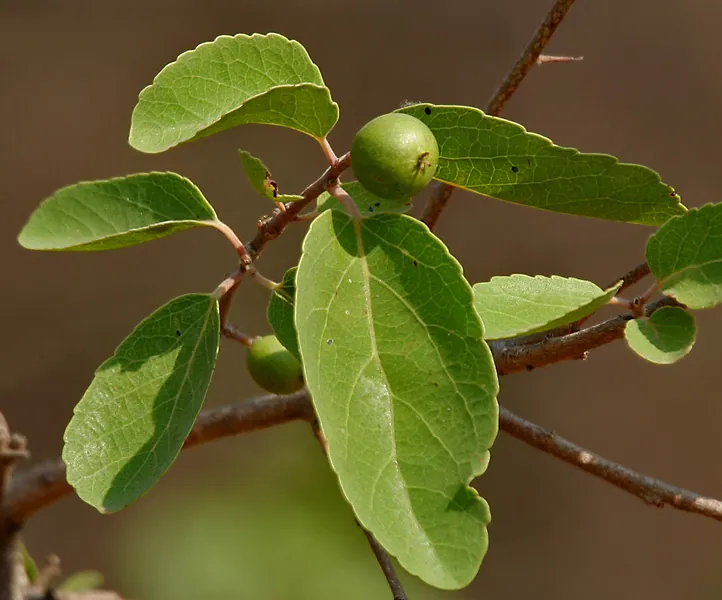
Flacourtia indica bears rounded fruits up to 2.5 cm (1 in) across, turning reddish, reddish-black or purple when ripe. A single fruit can hold as many as ten seeds.
The flesh is soft and juicy, and its taste runs from sour to sweet; the fruit can also be astringent. Trinidadian cook Felix remembers the cerise of his 1980s boyhood as mostly seeds with little flesh, leaving a “tie tongue” feeling in the mouth.
Where it comes from
The tree grows naturally in India and across much of Africa, including Kenya, Ethiopia and South Africa. Its habitats include dry forests, woodland, thickets and vegetation beside rivers. It has also been planted on Caribbean islands, including Barbados, Jamaica and Trinidad and Tobago.
Its many local names include baichi in Bengali and katai in Hindi. In Trinidad, cerise is the familiar name.
How it's eaten where it grows
In Trinidad, Felix makes cerise wine: the fruit sits with water, sugar and yeast for 21 days, then the wine is strained, sweetened and bottled with raisins. His family usually made passion fruit, rice, cashew and guava wines for Christmas; cerise wine was a new idea, prompted by his memory of the seedy fruit.
The fruit is also eaten fresh or stewed, and ripe fruit is often dried and stored as food. The pulp is well suited to jam and jelly.
How it's grown
Governor’s plum usually grows as a shrub or small tree about 3–5 m (10–16 ft) tall. Its new leaves flush red or pink, with toothed edges. It grows slowly and tolerates drought, while frost can damage it.
The usually thorny branches make a dense hedge when plants grow close together. Male and female flowers generally grow on separate plants, so a group is needed for fruit. Birds eat the ripe crop and carry the seeds away.
When and where you'll find it
In India, fruit usually ripens from March to July, following flowers that appear from December to April. Ripe fruit is reddish, reddish-black or purple, and it is eaten fresh, stewed or dried. In Trinidad, cerise also turns up in homemade wine.
Get it near Detroit
Sell fruit online? Add your business
What it tastes like
Softer than a pear, as sweet as a kiwifruit≈
More about the taste
It's a sweet-sour, plum-like fruit. Trinidadian cook Felix remembers cerise (Flacourtia indica) as very seedy, with little flesh and a mouth-puckering astringency.
Choose, store, eat
1ChooseRed to reddish-black or purple
Look for
- Red to reddish-black or purple
Ripe fruit ranges from red through reddish-black or purple.
2StoreRipe fruit is sometimes dried for storage
Ripe fruit is sometimes dried for storage.
3EatFruit
Eat
FruitThe fruit is eaten raw or stewed, and can be made into jams and jellies.
Detroit, Michigan
When it’s good here
Season not documented for Michigan.
11 names in 8 languages
- فلاكورة هنديةArabic
Cook it
If you like Governor's plum
Tastes alike
Close relatives
Same plant family
Used the same way
Sources
Sources
Governor's plum · Fruitopia · checked Sep 23, 2026