Davidson's plum
Also called OorayDavidsonia pruriens · Cunoniaceae family
Deep-colored, intensely sour pulp gives this rainforest fruit a role in sauces, preserves and drinks. The species name matters.
Find it near DetroitGet to know it
Davidson's plum, or ooray, is a purple rainforest fruit from northern Queensland with sour red flesh. In an Australian chutney, brown sugar and vinegar turn that sourness into something to spoon beside roast pork or cheese.
What it is
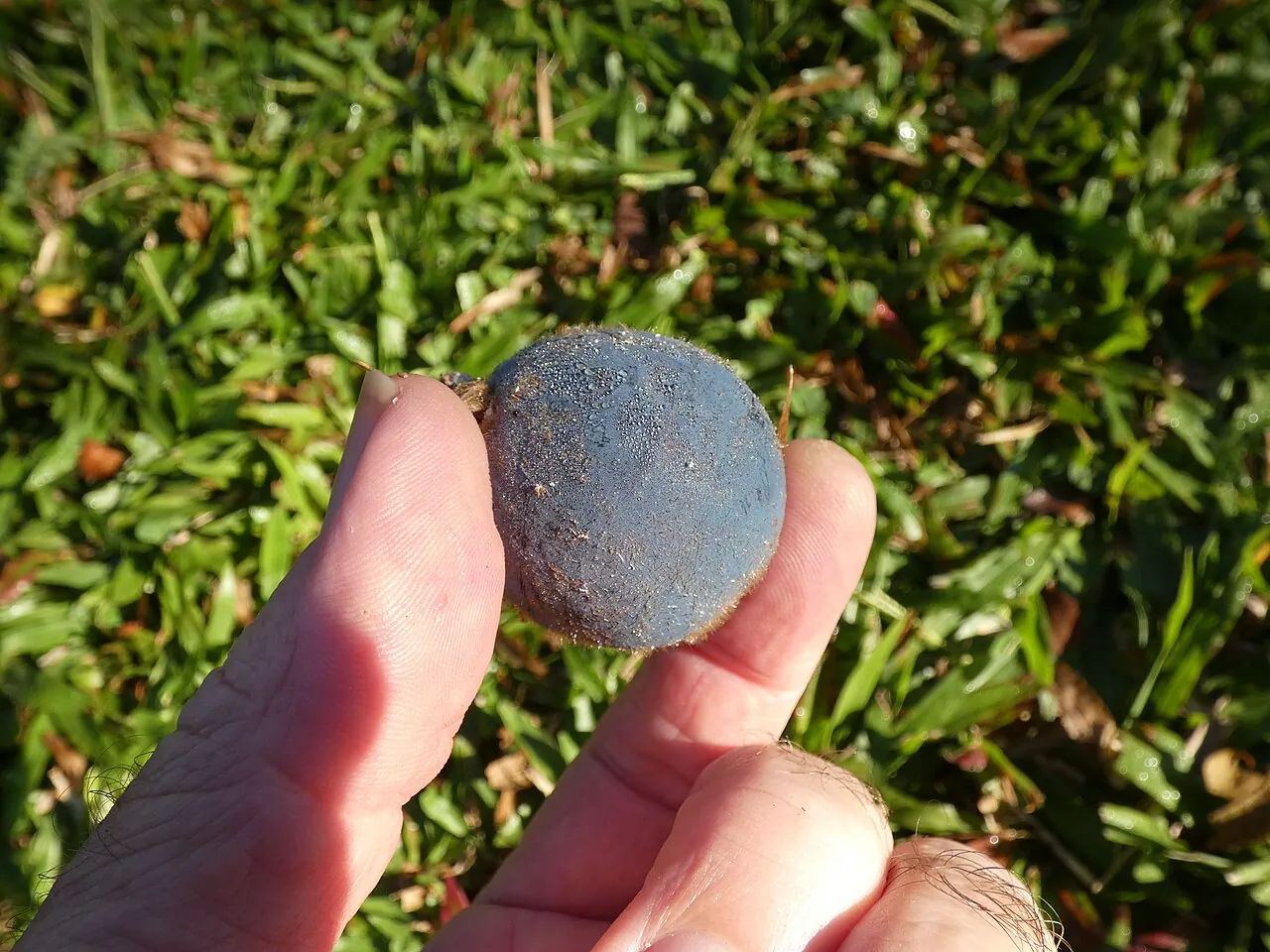
This is Queensland's Davidsonia pruriens. Its plum-like fruit reaches about 5 cm (2 in) across, with purple skin and red flesh. The skin carries fine golden hairs. The flesh is quite sour, and it goes into both sweet and savoury things, such as jams and meat sauces.
Where it comes from
Ooray comes from the rainforests of northern Queensland, Australia. The Indigenous name is increasingly used by growers and processors. At Ooray Orchards, trees grow among rainforest, regrowth, timber plantings and other fruit trees, rather than in the usual orchard pattern.
How it's eaten where it grows
One Australian Davidson plum chutney starts with onion softened in oil, then garlic, ginger and mustard seeds. The fruit cooks down with brown sugar and apple cider vinegar until it thickens and turns tangy. It goes beside cheddar or brie, roast pork or lamb, or into a sandwich.
Fresh or frozen fruit works in the pot. The seeds come out first; frozen plums thaw slightly so they are easier to handle. A light blend leaves some chunks, giving the chutney texture.
How it's grown
In a garden, the tree reaches about 4–8 m (13–26 ft), with a slender outline and large, drooping leaves. Ripe fruit falls when the trunk is firmly shaken. At Ooray Orchards, the trees grow on rainfall alone, without irrigation, among the surrounding vegetation.
When and where you'll find it
In Queensland the fruit ripens from February to May, and in some years into August. Out of season, frozen fruit works in chutney, and the fruit also comes as freeze-dried powder. Either way the seeds come out before cooking.
Get it near Detroit
What it tastes like
As tart as a grapefruit, softer than a pear≈
More about the taste
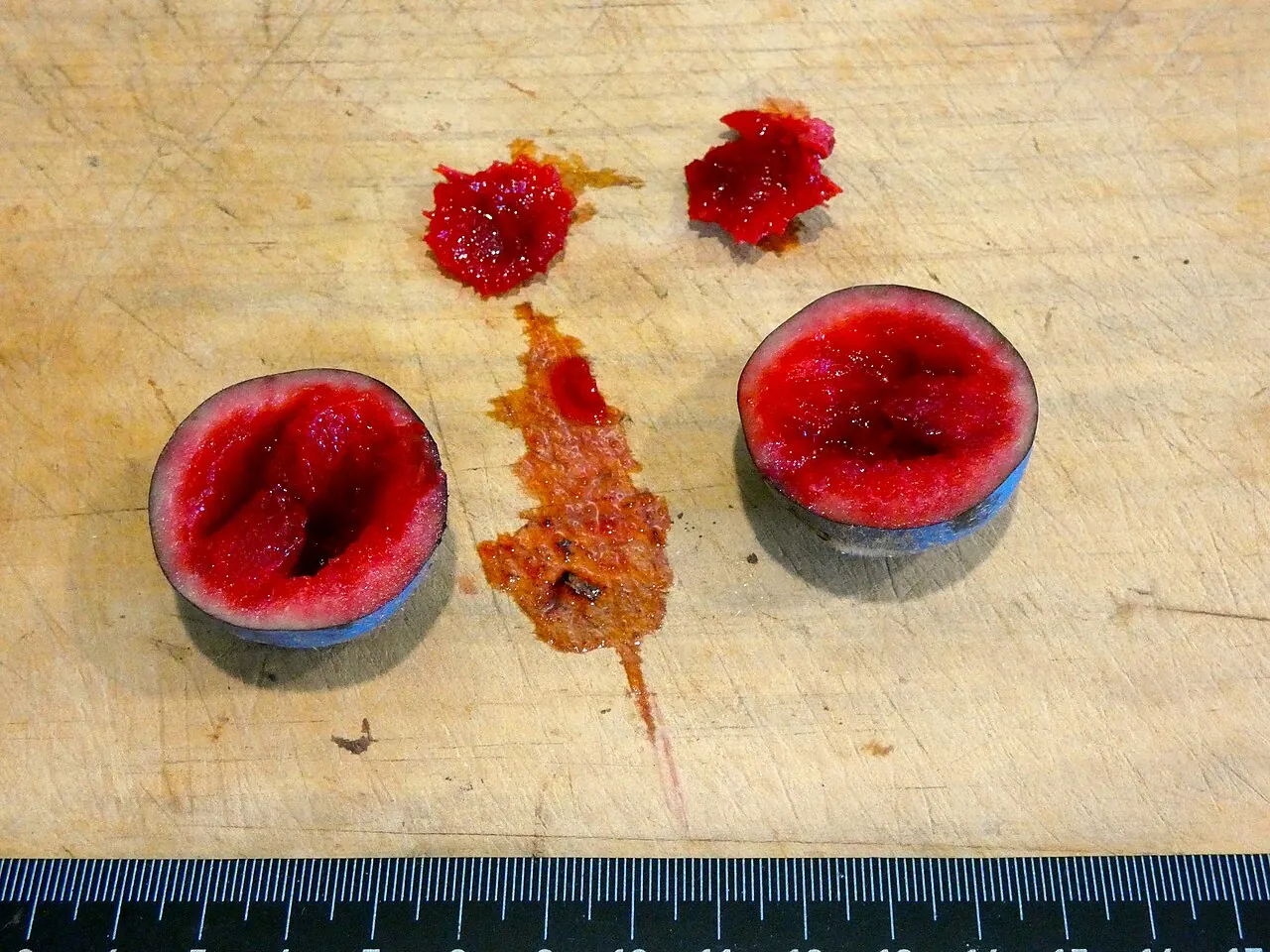
Davidson's plum has dark red flesh inside blue-purple skin. Despite its plum-like look, it isn't a true plum (Prunus).
Davidson's plum flesh is very sour and intensely colored — dark red inside blue-purple skin, with two flattened seeds.
Choose, ripen, store, eat
1ChoosePurple blush
Look for
- Purple blush
Pick Davidson's plum once a purple blush develops, and take care around the fruit's irritating surface hairs.
2RipenRipens after picking
Ripens after pickingMature Davidson's plum continues to ripen after harvest, developing fuller color.
3StoreCool, cooled promptly
- CoolCooled promptlyHumid, short period
- FreezerLonger keeping
Protect Davidson's plum from sun and bruising, cool it promptly after picking, and store it cool and humid for a short period — or freeze it for longer keeping.
4EatDark flesh · not seed, surface hairs
Eat
Dark fleshNot eaten
SeedSurface hairsThe dark flesh is the edible part; avoid the irritating surface hairs and the seed.
Detroit, Michigan
When it’s good hereUsual monthsJust arrivedAt their bestLast chanceAll yearWhere it is in its usual monthsToday, Oct 22Grown hereIn season in your stateShips fromIn season where it grows
2 growing areas, 1 countryUsual monthsOur estimated monthsToday, Oct 22

- New South Wales
- Queensland
- You
0 of 1 areas · October
In Australia, Davidson's plum goes into jams, sauces, dressings, drinks and confectionery; in Hawaiʻi, where it's an introduced crop, it's sold as jelly and jam at farmers markets.
Cook it
Strange but trueScienceNatureWhere the name came from
If you like Davidson's plum
Tastes alike
Used the same way
Sources
Sources
Davidson's plum · Fruitopia · checked Sep 22, 2026