Buriti
Also called Ita palm · Morete palm · Moreche palmMauritia flexuosa · Arecaceae family
An oily orange palm pulp inseparable from the wetlands and community economies that sustain it.
Find it near DetroitGet to know it
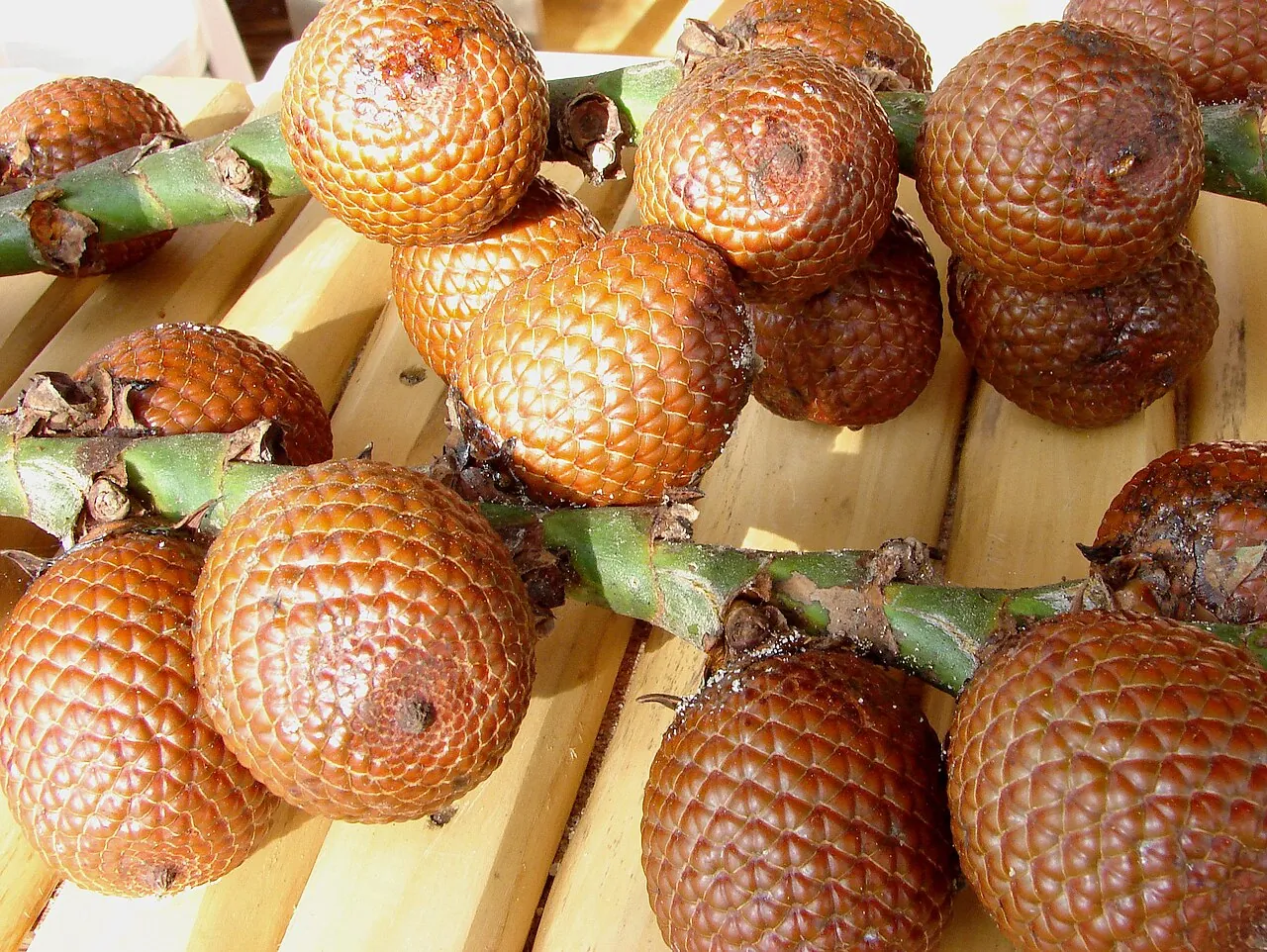
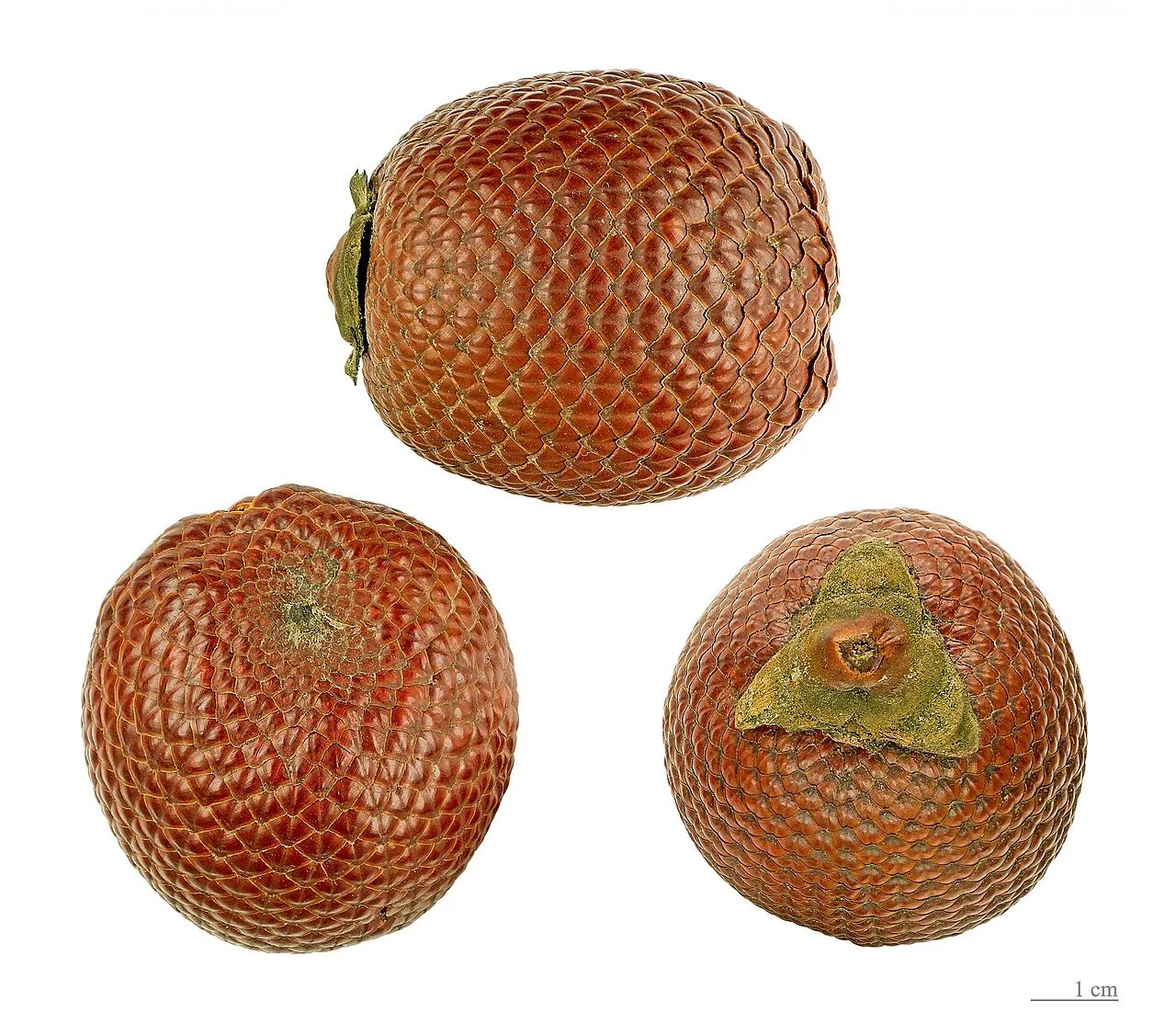
Buriti is a reddish-brown palm fruit covered in scales, with rich, oily orange flesh. In Brazil, that pulp becomes milk-based ice cream and a sweet cooked with sugar until it can be cut into pieces.
What it is
A buriti is about 5 by 4 cm (2 by 1.6 in), with overlapping scales covering its skin. Underneath is a thin layer of yellow-orange pulp around a seed. The pulp is fleshy and oily.
Processing starts by soaking the fruit in clean water to soften it. Once the skin comes off, the edible pulp can be scraped away with a spoon.
Where it comes from
Buriti grows across northern South America, from Colombia and Venezuela through the Guianas, Ecuador, Peru, Brazil and Bolivia. The same palm is called aguaje in Peru and morete in Ecuador. In Brazil’s Cerrado, it grows in veredas: wetland strips where the ground stays soaked even through the dry season.
How it's eaten where it grows
In Brazil, sorvete de buriti blends the pulp with milk and sugar. After its first spell in the freezer, it is beaten again for a creamier texture, then frozen once more.
Doce de buriti takes a different route. A recipe from the Sertão Veredas cooperative uses equal platefuls of fresh buriti pulp and sugar. The mixture is stirred over heat until it pulls away from the pan, then spread in a tray and cut into pieces. The same orange pulp becomes either a frozen spoonful or a sweet you can pick up.
How it's grown
The palm can reach 30 m (98 ft) tall. Male and female flowers grow on separate palms: males produce flower clusters but no fruit, while females need their pollen to set a crop. Ripe buriti can be collected from the ground after it drops naturally, bringing a fruit grown high overhead within reach of the collector.
When and where you'll find it
In the Brazilian Cerrado, buriti usually ripens from September to February. Around Mâncio Lima in Acre, collection usually runs from September through March. Pulp, oil and sweets made from the fruit turn up at fairs, especially in northern and central-western Brazil.
Sources · 9
- Central do Cerradocentraldocerrado.org.br
- Cerratingacerratinga.org.br
- Cerratinga / Cooperativa Sertão Veredascerratinga.org.br
- Embrapa, Plantas para o Futuro — Região Nordesteinfoteca.cnptia.embrapa.br
- ISPN, Boas Práticas de Manejo do Buriti (2011)ispn.org.br
- ISPN, Manual Tecnológico do Buriti (2012)alimentacaosaudavel.org.br
- Museu do Cerradomuseucerrado.com.br
- Secretaria de Estado de Meio Ambiente do Acresema.ac.gov.br
- Wikipediaen.wikipedia.org
Get it near Detroit
What it tastes like
Softer than a pear, as sweet as a kiwifruit≈
More about the taste
The pulp is fleshy and oily, quite different from a watery dessert berry.
The pulp is fleshy and oily, quite different from a watery dessert berry.
Choose, ripen, eat
1ChooseSort out unsuitable fruit before extracting the pulp
Sort out unsuitable fruit before extracting the pulp.
2RipenTraditional processing softens the fruit in water before removing the scaly skin
Traditional processing softens the fruit in water before removing the scaly skin; soaking too long can cause fermentation and rot.
3EatOrange pulp · not peel, seed
Eat
Orange pulpNot eaten
PeelSeedThe edible part is the orange pulp, separated from the peel and seed.
Detroit, Michigan
When it’s good hereUsual monthsJust arrivedAt their bestLast chanceAll yearWhere it is in its usual monthsToday, Oct 22Grown hereIn season in your stateShips fromIn season where it grows
37 names in 7 languages
- 曲叶矛榈Chinese
- オオミテングヤシJapanese
Cook it
1 Buriti festivalUsual monthToday, Oct 22
Strange but trueHistoryA myth, and the truthCustoms and culture
If you like Buriti
Tastes alike
Same plant family
Used the same way
Sources
Sources
Buriti · Fruitopia · checked Sep 22, 2026