Araza
Also called Araca-boiEugenia stipitata · Myrtaceae family
A delicate, sharply acidic Amazonian fruit often most approachable as a prepared pulp or drink.
Find it near DetroitGet to know it
Arazá is a round, yellow Amazonian fruit with soft, fragrant pulp and a sharp sour taste. It shines in a drink or a cold dessert. In Puerto Leguízamo, Colombia, its pulp goes into a creamy sweet set in little dishes in the fridge.
What it is
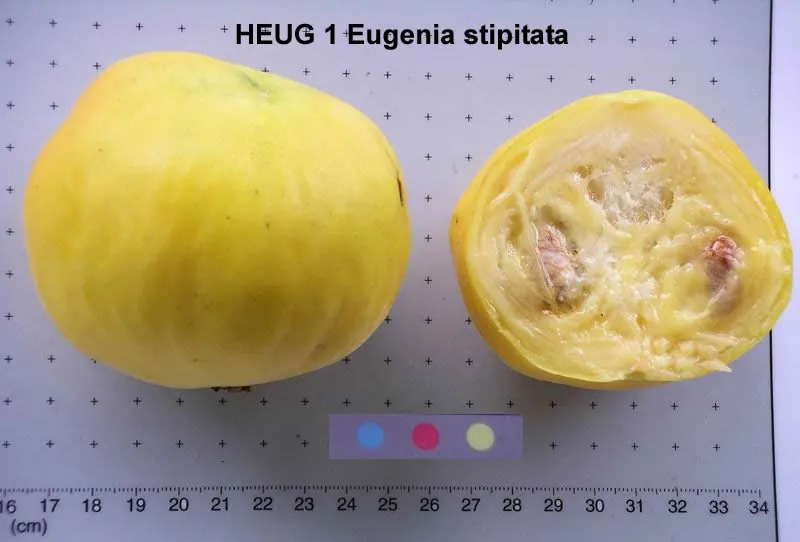
Arazá’s botanical name is Eugenia stipitata, and it belongs to the myrtle family. The fruit can reach 12 cm (4.7 in) across. Its thin, velvety skin turns golden yellow and peels away easily when fully ripe. Inside is thick, juicy pulp around roughly a dozen seeds.
The acidity is a big part of its flavour. Juice, ice cream and marmalade are familiar uses for that sour pulp.
Where it comes from
Arazá comes from humid tropical forests in South America. Its native range includes Bolivia, Brazil, Colombia and Peru, and it has been taken to Costa Rica, Ecuador and the United States. In the Colombian Amazon, Puerto Leguízamo in Putumayo is one place where it goes into local sweets.
How it's eaten where it grows
In Puerto Leguízamo, postre de arazá pairs the sour fruit with milk, cream and condensed milk. Plain gelatin sets the mixture. It goes into individual dishes and spends about three hours in the fridge, becoming a soft, creamy dessert.
For a drink, Colombian arazá pulp can be stirred into water or soda. In the dessert recipe, the pulp is frozen for a few hours, then thawed before it meets the dairy.
How it's grown
The plant is a densely branched shrub or small tree, with oval, hairy leaves arranged in pairs. White flowers lead to the yellow fruit. Acidic soil low in nutrients suits it, with good drainage. Seedlings planted out with manure grow quickly, and well-fed seedlings can start bearing about 18 months after they go into the field.
The fruit ripens fast, so growers pick it once a week.
When and where you'll find it
In Puerto Leguízamo, arazá usually gives three crops during the year. Beyond the fresh-fruit harvest, frozen pulp puts it within reach of home cooks. Colombia’s Pulpas Nuestra Tierra makes unsweetened pulp from Amazonian fruit in 500 g blocks and smaller 70 g and 100 g portions.
Sources · 5
Get it near Detroit
What it tastes like
As tart as a grapefruit, softer than a pear≈
More about the taste
Arazá has aromatic pulp with both acidity and sweetness. Its many seeds are removed before making a drink.
The fleshy pulp is distinctly acidic, more often used for juice, ice cream and marmalade than eaten as a sweet dessert fruit on its own.
Its attractive aroma can be lost through excessive cooking.
Choose, ripen, store, eat
1ChooseGolden-yellow
Look for
- Golden-yellow
- Skin comes away readily
Mature fruit turns golden-yellow, and the skin comes away readily when fully ripe.
2RipenRipens after picking
Ripens after pickingFruit can be picked as yellowing begins and will continue to ripen off the plant.
3StoreThe thin skin and delicate pulp need careful handling
The thin skin and delicate pulp need careful handling.
4EatFleshy pulp · not seeds
Eat
Fleshy pulpNot eaten
SeedsThe fleshy pulp is used for beverages and desserts. The fruit has multiple seeds, which are removed before eating.
Detroit, Michigan
When it’s good hereUsual monthsJust arrivedAt their bestLast chanceAll yearWhere it is in its usual monthsToday, Oct 22Grown hereIn season in your stateShips fromIn season where it grows
2 growing areas, 2 countriesUsual monthsToday, Oct 22

- Pará
- Penang
- You
2 of 2 areas · October
Growing areas by country
- Brazil1
- Malaysia1
Arazá's acidity is part of why it's usually processed into drinks and other preparations rather than eaten fresh alone.
12 names in 8 languages
- അറസാപ്പഴംMalayalam
- يوجينة سويقيةArabic
Cook it
Strange but trueNatureWhere the name came fromFood and drink
If you like Araza
Tastes alike
Close relatives
Used the same way
Sources
Photos · 2
USDAPublic domain 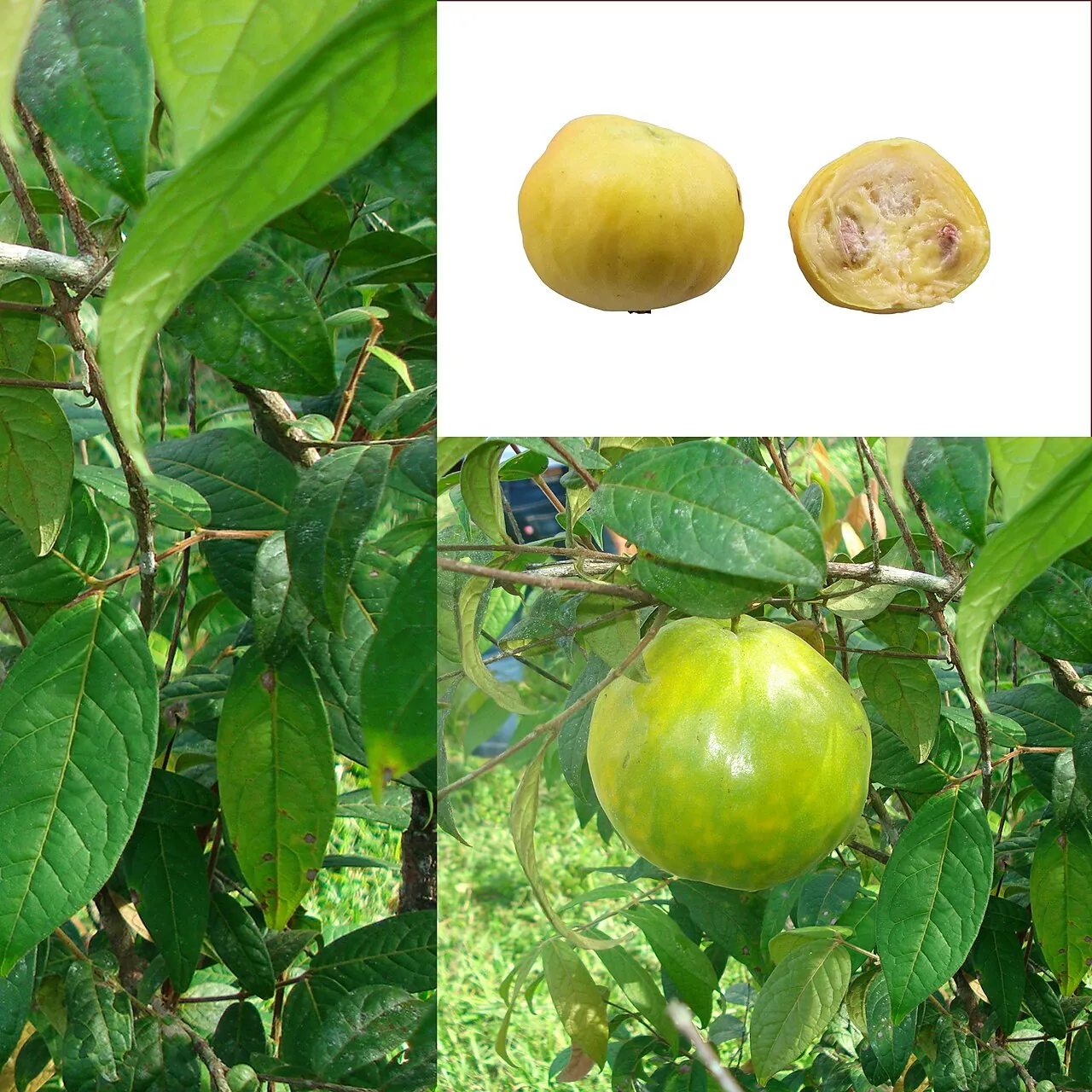
Agnieszka Kwiecień ( Nova )CC BY-SA 3.0
Sources
Araza · Fruitopia · checked Oct 2, 2026