Amla
Also called Emblic · Indian gooseberryPhyllanthus emblica · Phyllanthaceae family
Amla's tartness and firm flesh make preparation part of the fruit's identity.
Find it near DetroitGet to know it
Amla is a crisp Indian gooseberry with a sharp, sour bite and a mouth-drying finish. Its pale, ridged fruit stays firm even when ripe. In India, that tartness goes into chilli-spiked pickles and sweet murabba preserves.
What it is
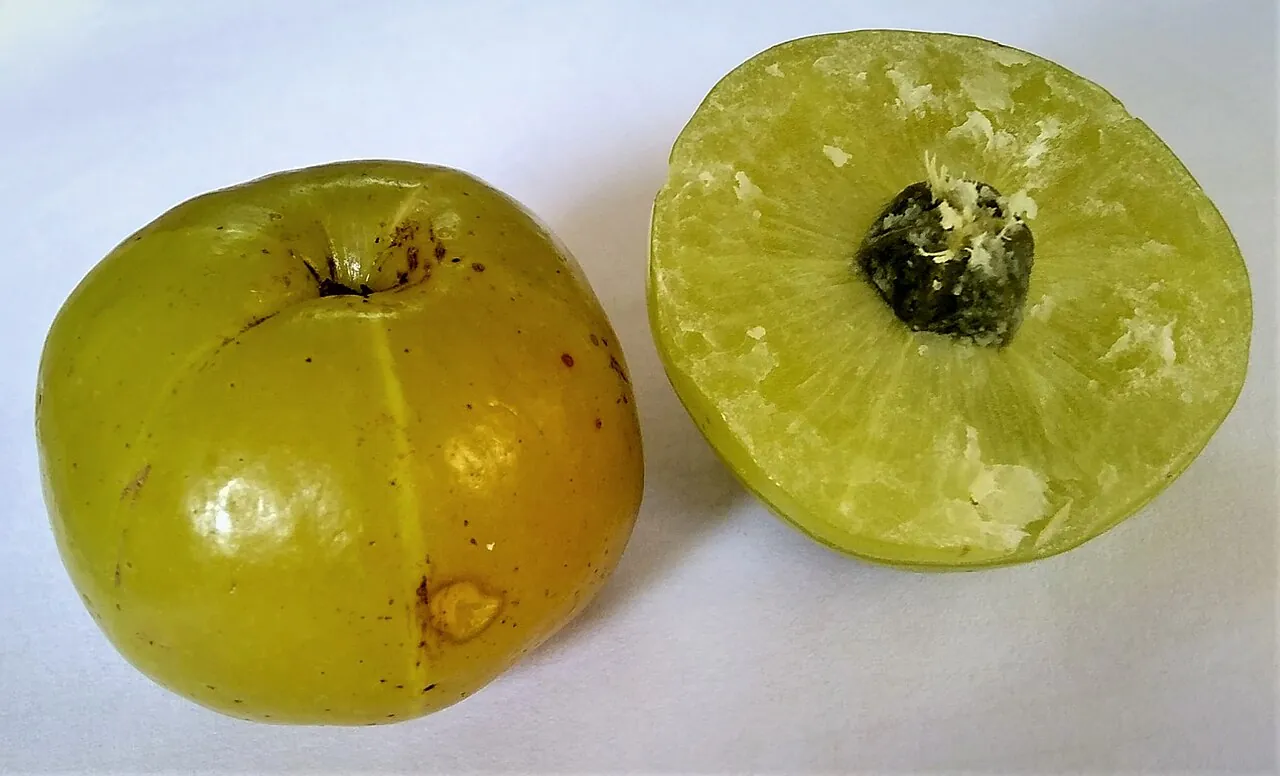
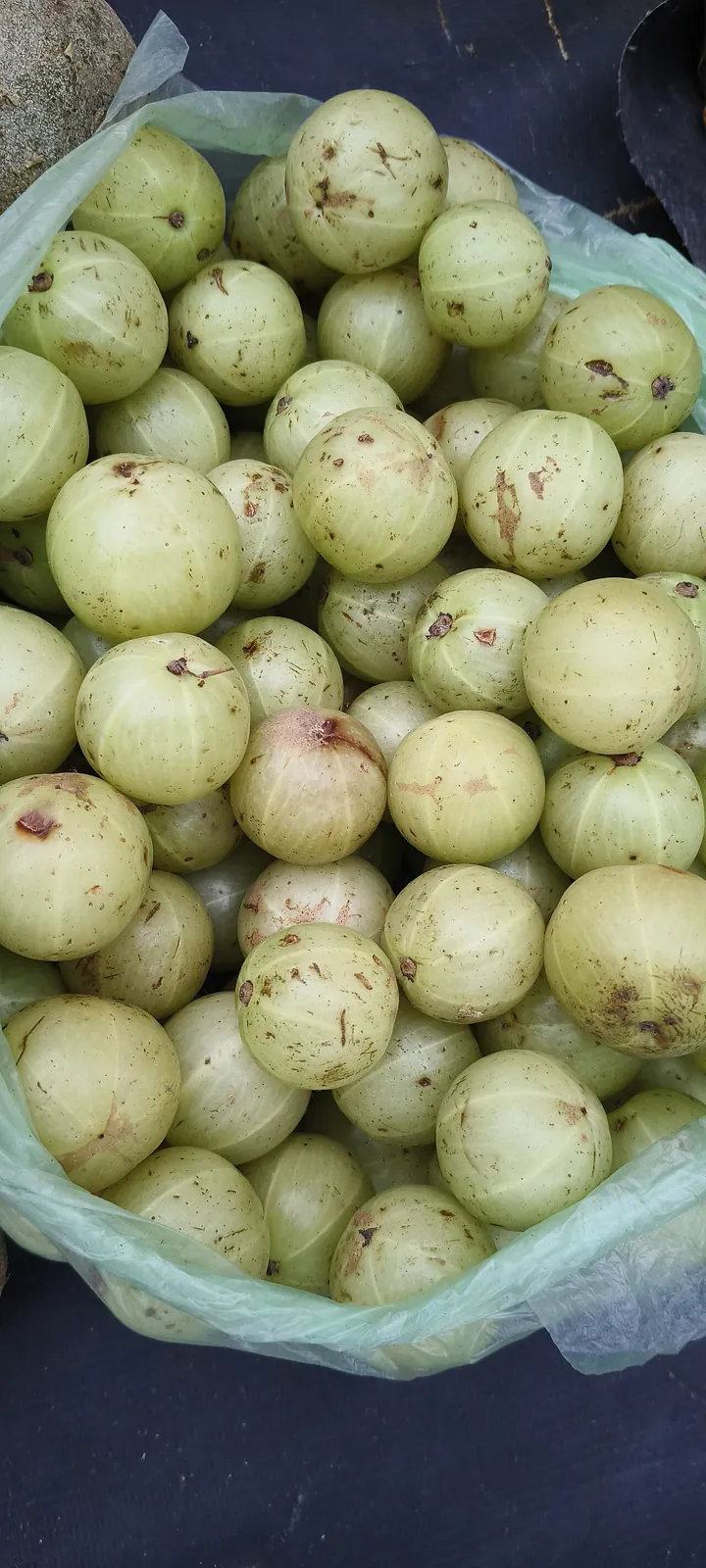
Amla is almost round, with pale lines running from top to bottom. As it matures, green skin turns whitish or dull greenish-yellow. The skin is thin enough to let light through, and the flesh beneath it is juicy and crunchy. Larger Indian varieties can reach about 5 cm (2 in) across.
A hard central stone holds six small seeds. The ripe flesh is still intensely acidic and astringent—the dry, puckering feeling in your mouth—and some fruits have a bitter edge.
Where it comes from
Amla’s native range includes India, Pakistan, Bangladesh and Sri Lanka, as well as China and Malaysia. India is its biggest producer. In Uttar Pradesh, the belts around Pratapgarh and Ayodhya are important growing areas. Banarasi, NA-7 and Chakaiya are among the named varieties grown in Indian orchards.
How it's eaten where it grows
In Andhra Pradesh, amla avakaya turns the sour fruit into a spicy pickle. Amla pieces soften in sesame oil, then take on mustard, fenugreek, chilli and garlic. It goes alongside dal and rice, curd rice or stuffed paratha.
Amla murabba takes the sweet route: the fruit becomes a spiced preserve. Both preparations keep amla’s sharp character, with oil and spices in one and sweetness in the other.
How it's grown
Amla is a hardy subtropical tree that prefers a dry climate and tolerates a wide range of soils, including salty and alkaline ground. Growers use seedlings as well as grafted or budded trees, joining a chosen variety to another plant’s roots. Its established orchard varieties include Banarasi and Chakaiya.
When and where you'll find it
In Uttar Pradesh, the harvest usually runs from October through December: Banarasi and NA-10 first, NA-7 in November and Chakaiya in December. Farther south, Chennai’s Koyambedu market and Ottanchathiram are major amla markets in Tamil Nadu.
Amla also comes frozen. Deep’s frozen amla is quick-frozen soon after harvest and lists just the fruit as its ingredient, so it brings none of a pickle’s oil or a preserve’s added sugar.
Get it near Detroit
What it tastes like
No sweeter than a lemon, tarter than a grapefruit≈
More about the taste
Amla has crisp, juicy flesh beneath thin, translucent skin, with an acidic taste used in preserves, chutneys and savory dishes.
Ripe flesh is crisp, juicy and still hard, with substantial acidity, astringency and sometimes bitterness — firmness doesn't mean the fruit was picked too early.
A Jammu processing trial favored the Chakaiya and Banarasi varieties for sugar-infused, hot-air-dried slices. That's about a sweetened processed food, not which variety tastes best fresh.
Choose, eat
1ChooseWhitish or dull greenish-yellow
Look for
- Whitish or dull greenish-yellow
- Thin, translucent skin
Green fruit turns whitish or dull greenish-yellow at maturity, sometimes with reddish coloring, under thin translucent skin with visible ridges.
2EatFlesh · not stone
Eat
FleshNot eaten
StoneThe flesh surrounds a hard, seed-bearing stone. It's made into pickles, chutneys, preserves and candy, and in Indonesia is used as a souring ingredient — all different from the flavor of unsweetened fresh fruit.
Detroit, Michigan
When it’s good hereUsual monthsJust arrivedAt their bestLast chanceAll yearWhere it is in its usual monthsToday, Oct 22Grown hereIn season in your stateShips fromIn season where it grows
9 growing areas, 2 countriesUsual monthsOur estimated monthsToday, Oct 22

- Andhra Pradesh
- Bihar
- Gujarat
- Himachal Pradesh
- Karnataka
- Penang
- You
0 of 1 areas · October
Growing areas by country
- India8
- Malaysia1
Variety choice matters to processors as well as growers: a 2015 trial using four varieties from the Jammu region compared syrup preparation and hot-air drying.
64 names in 19 languages
Cook it
Strange but trueHistoryWhere the name came fromCustoms and cultureFood and drink
If you like Amla
Tastes alike
Close relatives
Same plant family
Used the same way
Sources
Sources
Amla · Fruitopia · checked Oct 2, 2026