American persimmon
Also called Common persimmon · Possum apples · Eastern persimmonDiospyros virginiana · Ebenaceae family
This small native persimmon rewards attention to softness and astringency; turning orange doesn't make it ready.
Find it near DetroitGet to know it
American persimmon is a small autumn fruit with sweet, custard-soft pulp. Selected varieties can taste of honey, caramel and pumpkin spice. In Mitchell, Indiana, that soft flesh goes into persimmon pudding, a baked dessert with its own contest at the town’s Persimmon Festival.
What it is
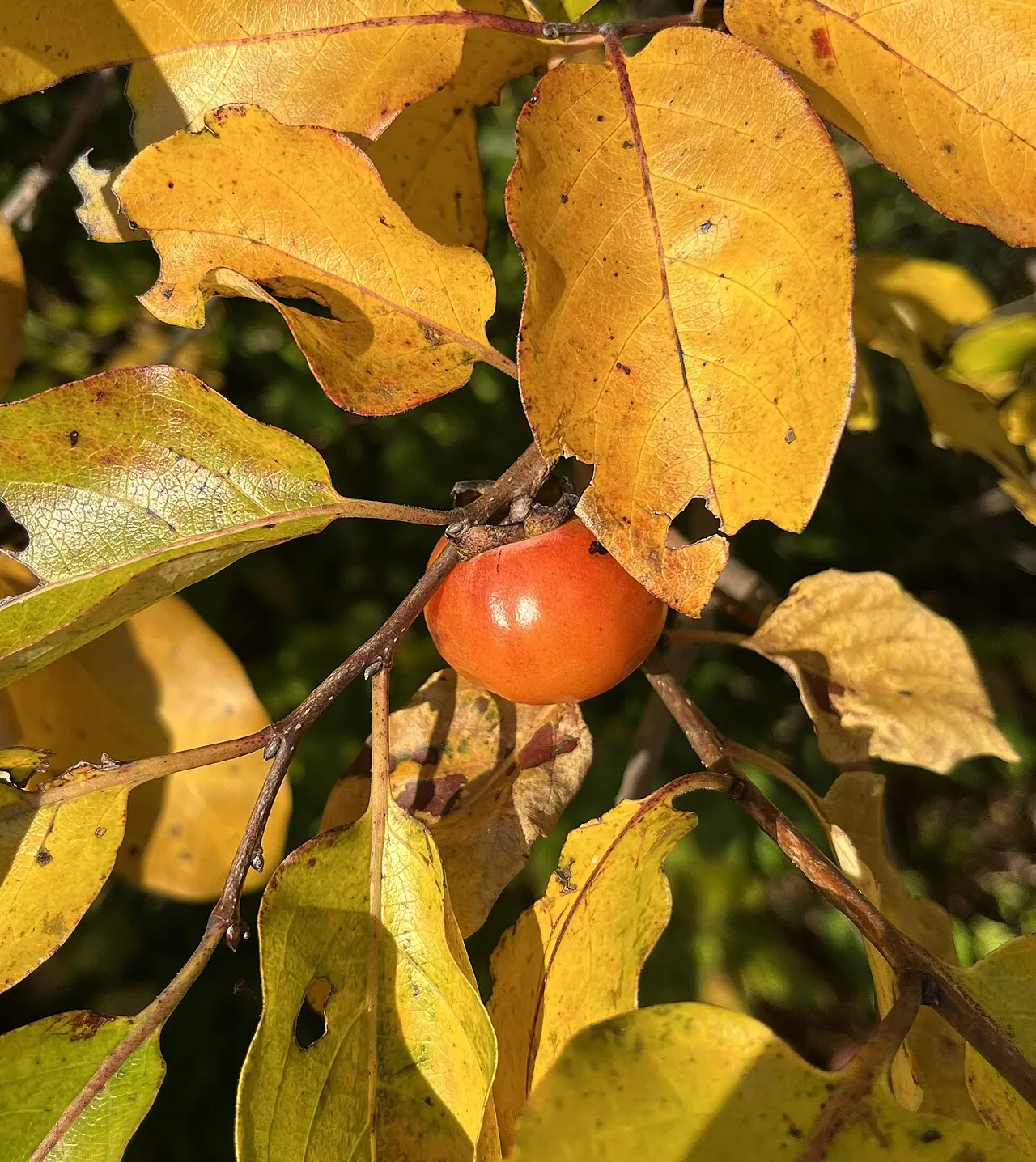
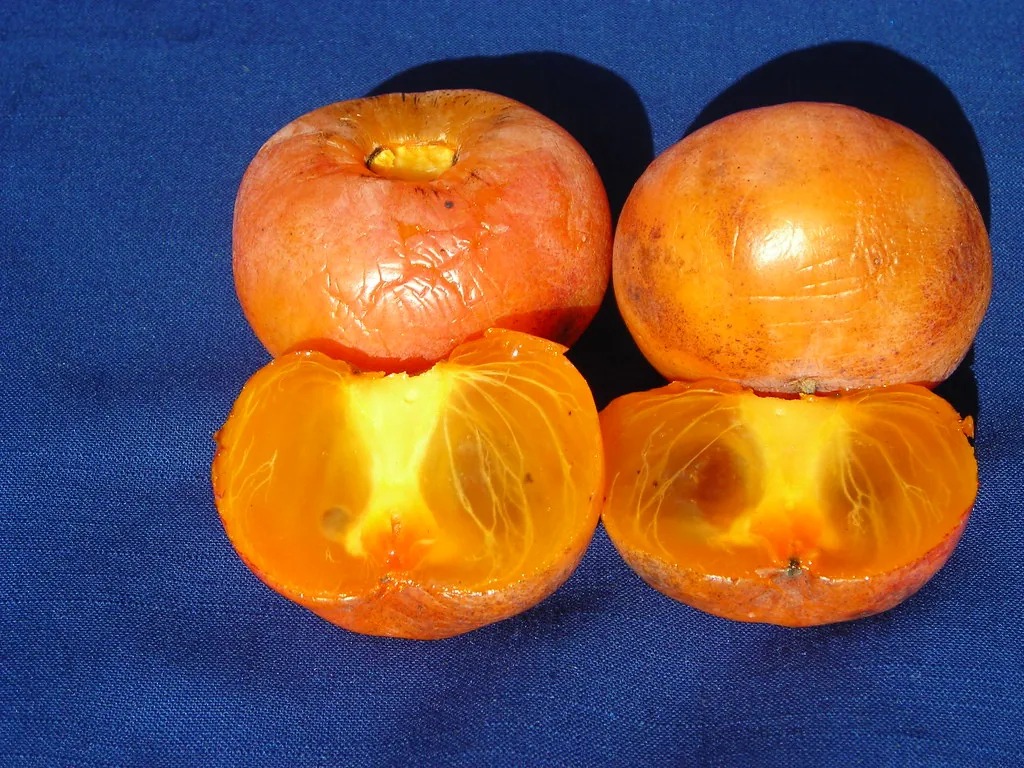
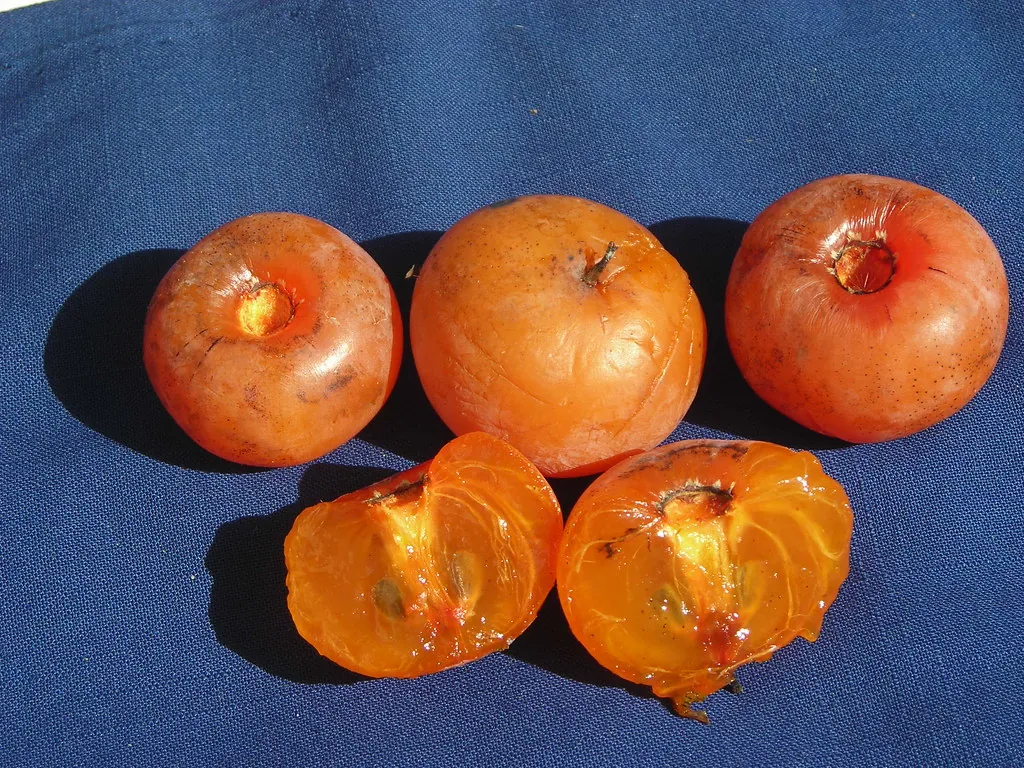
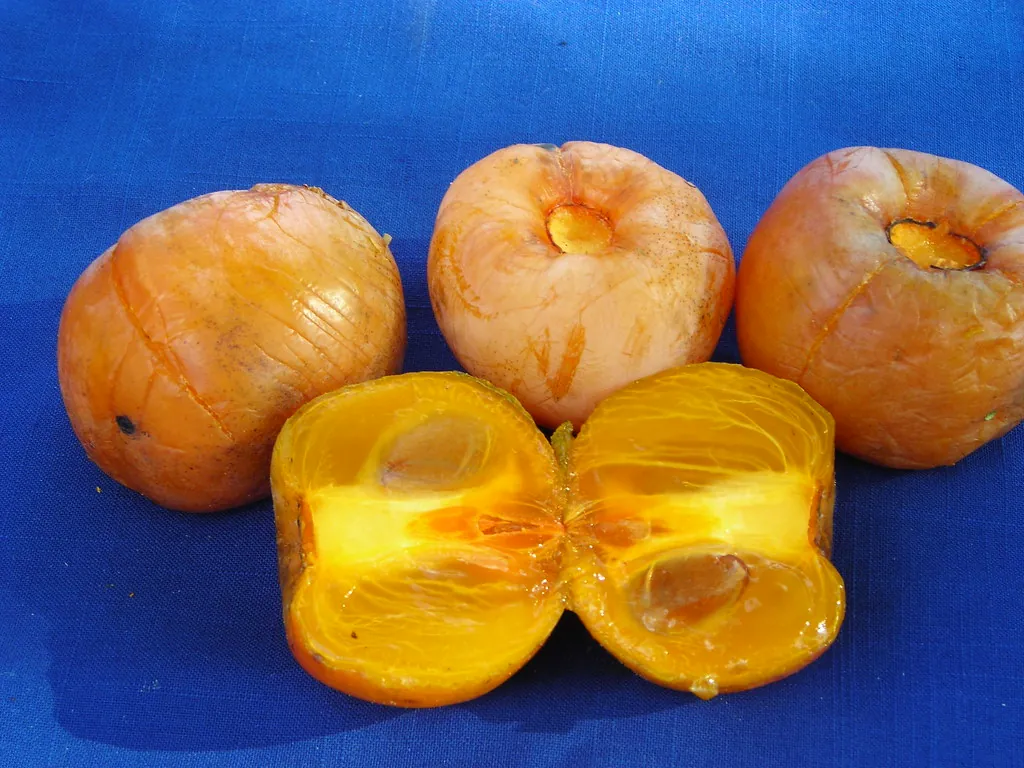
The fruit is round, about 2–5 cm (¾–2 in) across, and turns yellow, orange or dark red. Inside are usually one to eight flat brown seeds, though some fruits are seedless. This is a different species from the Asian persimmon usually found in grocery stores.
An unripe American persimmon makes your mouth pucker. Sweetness comes with soft, ripe flesh; a hard frost is not required. Some selected varieties add honey and caramel notes to the smooth pulp.
Where it comes from
American persimmon is native to the eastern and central United States, from southern Connecticut to Florida and west into the Midwest and Texas. Native Americans ate the fruit.
The tree grows especially well in the rich bottomlands of the Mississippi River. In the South Atlantic and Gulf states it also grows beside fences and roads and spreads into abandoned fields, often as shrubby patches.
How it's eaten where it grows
In Mitchell, Indiana, persimmon pudding earns prizes at the town’s Persimmon Festival. Prize-winner Judy Shaw’s recipe combines the pulp with eggs, sugar, buttermilk, flour, butter and cinnamon, then bakes it in a shallow dish.
A food mill separates the soft flesh from the skins and seeds. The resulting pulp also goes into cookies, cakes, custard and sherbet. Frozen pulp lets a cook start with the fruit already prepared for mixing into a batter.
How it's grown
This is a leaf-shedding tree in the ebony family, commonly 9–18 m (30–60 ft) tall, with thick bark divided into blocks. It grows best in moist, well-drained ground and full sun, though it tolerates shade and poorer sites.
Male and female flowers usually grow on separate trees. Some named varieties set fruit without pollination. Grafted trees can begin bearing three years after planting.
When and where you'll find it
Fruit usually hangs on the trees from September to December. Fresh American persimmons occasionally turn up at farmers’ markets in Kentucky; frozen pulp is another way to buy this soft fruit. Fischer Farms in Indiana sells pulp from southern Indiana persimmons frozen in pint tubs, for puddings, breads or cookies.
Sources · 8
- Appalachian Foothills Fruits & Nuts, Judy Shaw’s persimmon puddingaffnorchard.org
- Arthur’s Point Farmarthurspointfarm.com
- Fischer Farmsffnatural.com
- NC State Extension Gardener Plant Toolboxplants.ces.ncsu.edu
- Nick Frillman, University of Illinois Extensionextension.illinois.edu
- University of Kentucky, Center for Crop Diversificationccd.uky.edu
- USDA Forest Service, Silvics of North Americaresearch.fs.usda.gov
- USDA NRCS, Common Persimmon Plant Guideplants.usda.gov
Get it near Detroit
Sell fruit online? Add your business
What it tastes like
As soft as a banana, sweeter than a peach≈
More about the taste
Green fruit is strongly astringent; fully ripened fruit is soft and very sweet. Astringency is a drying mouthfeel rather than simply a lack of sugar.
Green fruit is strongly astringent; fully ripened fruit is soft and very sweet. Astringency is a drying mouthfeel rather than simply a lack of sugar.
Varieties differ in the black flecks that can appear in the pulp, a processing-quality trait — so the best fruit for a smooth-looking product isn't always the largest.
Choose, ripen, store, eat
1ChooseSoft eating stage
Look for
- Soft eating stage
Ignore
- Color chart
- Cold weather alone
Look for the soft eating stage and ask about the variety; ripe colors range from yellow and orange to reddish or even blue.
2RipenA hard frost isn't required to sweeten the fruit — the familiar timing comes from its long ripening period
A hard frost isn't required to sweeten the fruit — the familiar timing comes from its long ripening period. Varieties lose astringency at different times.
3StoreFreezer, pulp
- FreezerPulp
Handle fruit gently to avoid bruising. Fresh fruit can be held just above freezing; frozen pulp is a separate, longer-lasting form.
4EatRipe pulp
Eat
Ripe pulpThe ripe pulp is what's eaten, raw or processed. Some selected types set few-seeded or seedless fruit, while seedier lots need more work to prepare.
More tips
Worth knowing
- Ripe American persimmons are fragile, and bruises from rough transport can look like a flaw in the fruit.
- American persimmons don't need frost to ripen; go by softness and variety.
Detroit, Michigan
When it’s good here
Season not documented for Michigan.
1 variety
14 names in 6 languages
- ديوسبيروس فرجينياArabic
Cook it
1 American persimmon festivalUsual monthToday, Oct 23
Strange but trueHistoryA myth, and the truthNatureWhere the name came fromCustoms and cultureFood and drink
If you like American persimmon
Tastes alike
Close relatives
Nutrition, sources
Nutrition
Persimmons, native, raw · per 100 g
- Carbohydrate
- 34 g
- Protein
- 0.8 g
- Fat
- 0.4 g
- Vitamin C
- 66 mg
- Potassium
- 310 mg
Photos · 4
Sources
American persimmon · Fruitopia · checked Oct 2, 2026
- ccd.uky.edu /sites/default/files/2026-01/ccd-cp-001_persimmon_accessible.pdf
- ffnatural.com /blog/farm-tidbits-persimmon-pulp-season
- ffnatural.com /store/product/persimmon-pulp
- flickr.com /photos/79882121@N02/7174115138
- homestead-honey.com /2013/10/16/persimmons/
- homestead-honey.com /persimmon-cake-recipe
- journal.americanpomological.org /index.php/jofaps/article/download/2961/2965/6281
- plants.ces.ncsu.edu /plants/diospyros-virginiana/
- southernfoodjunkie.com /old-fashioned-persimmon-pudding-recipe
What we don't know yet
Pollination and seedlessness vary by genetic type, so simple male-plus-female rules have exceptions.