Yangmei
Also called Chinese bayberry · Red bayberryMorella rubra · Myricaceae family
Ripeness changes far more than the color of this Chinese bayberry.
Find it near DetroitGet to know it
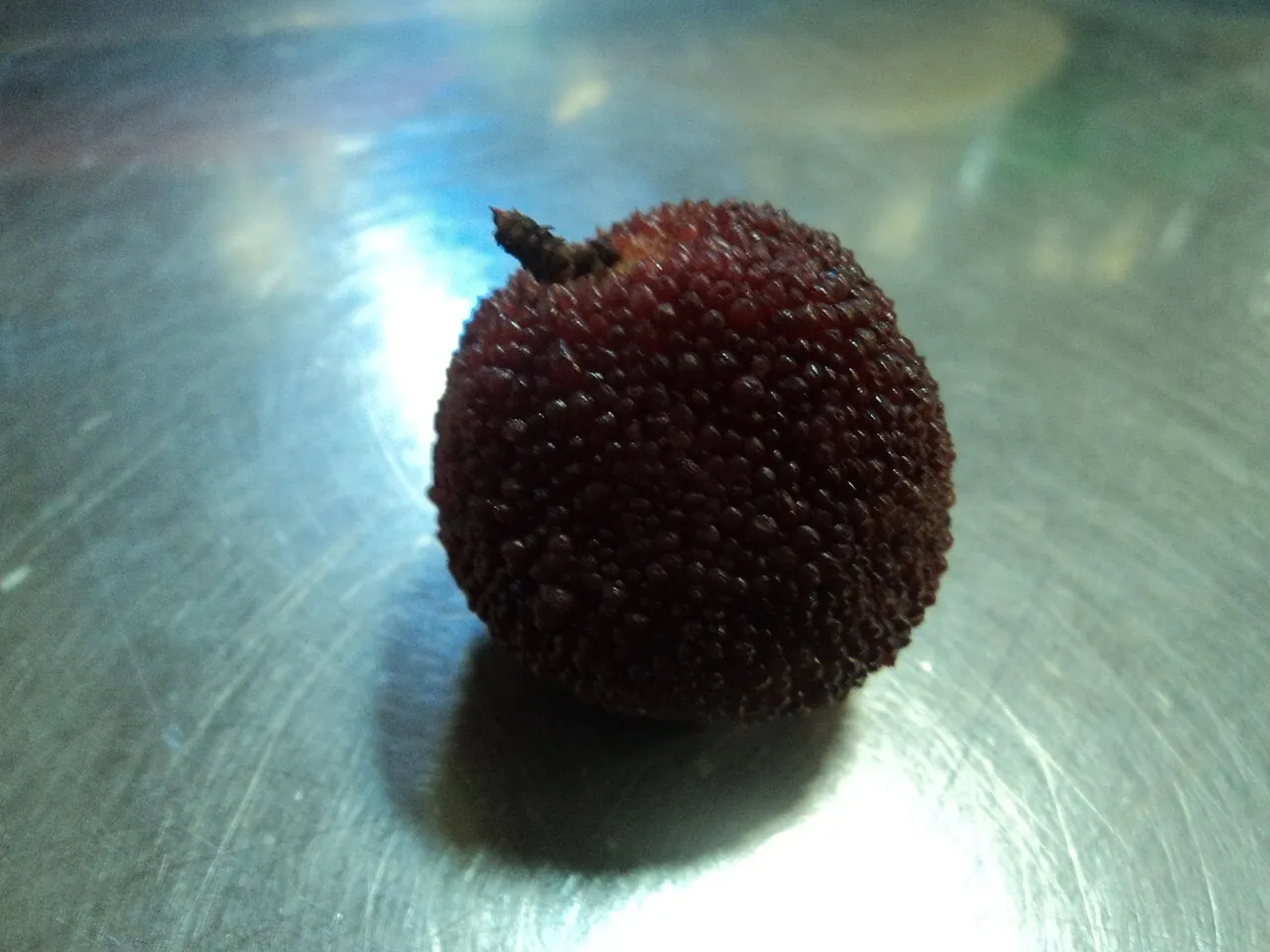
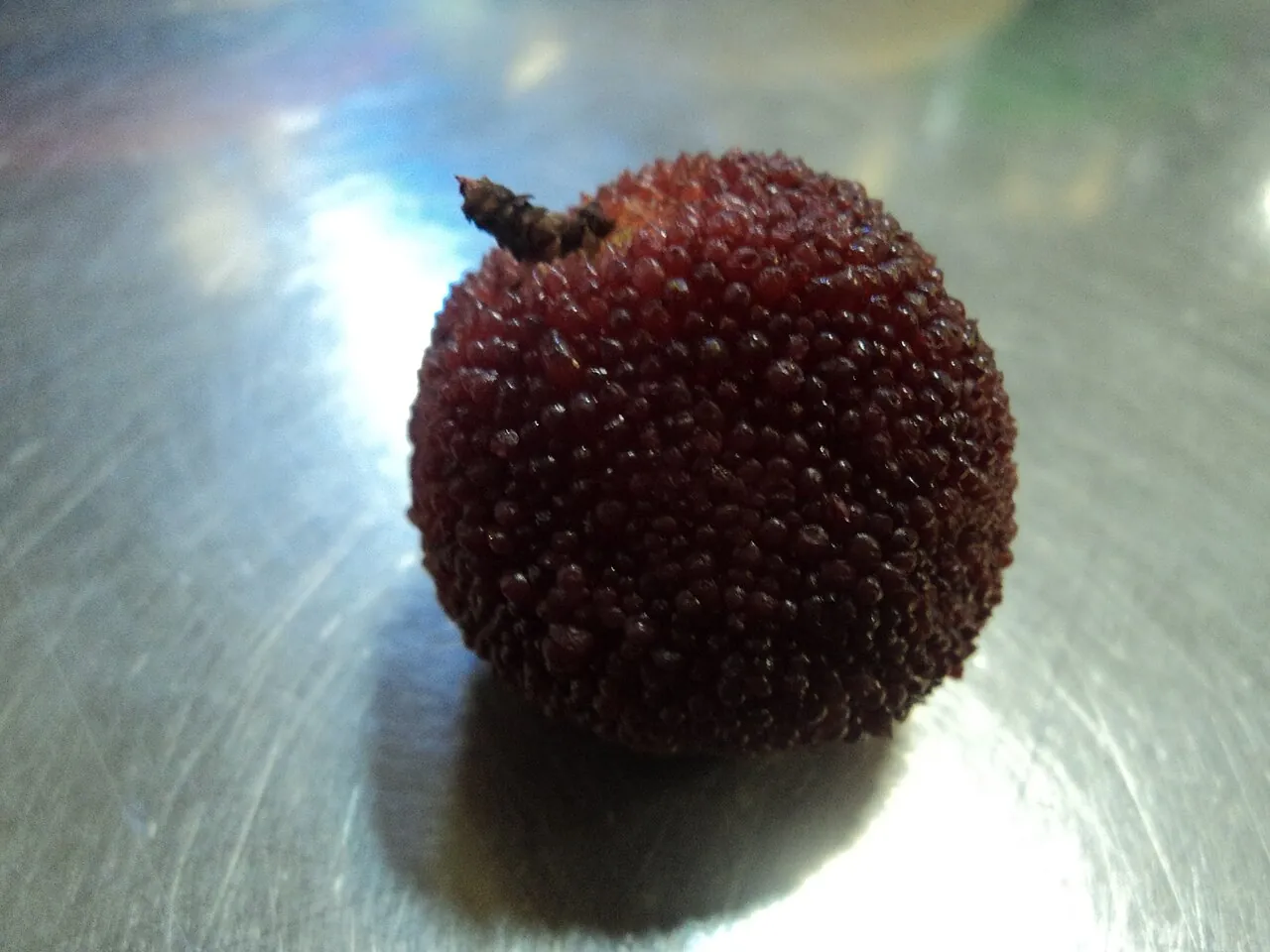
Yangmei is a sweet, tart Chinese fruit with a knobbly red or purple surface. Bite into it and the flesh comes apart in tiny juicy strands around a hard central stone, like an edible pom-pom.
What it is
Also called Chinese bayberry, yangmei is round with a knobbly surface, usually about 1.5–2.5 cm (0.6–1 in) across. It is usually crimson but ranges from white to purple. The flesh is sweet and very tart, made of tiny separate strands around a single central stone.
Biqi, a variety grown in Zhejiang, becomes sweeter and fruitier as it reaches full ripeness. The sourness and the dry, puckering feeling in the mouth ease as it ripens.
Where it comes from
Yangmei comes from eastern Asia, including China, Japan, Korea and the Philippines. In Yuyao, in China’s Zhejiang province, people have grown it for at least 2,000 years. The local varieties include dark, red, pink and crystal-white fruit; Biqi is a favourite there.
In the US, California growers now raise yangmei around the San Francisco Bay Area. Calmei brings Chinese varieties including Biqi and the large-fruited Dongkui into these orchards.
How it's eaten where it grows
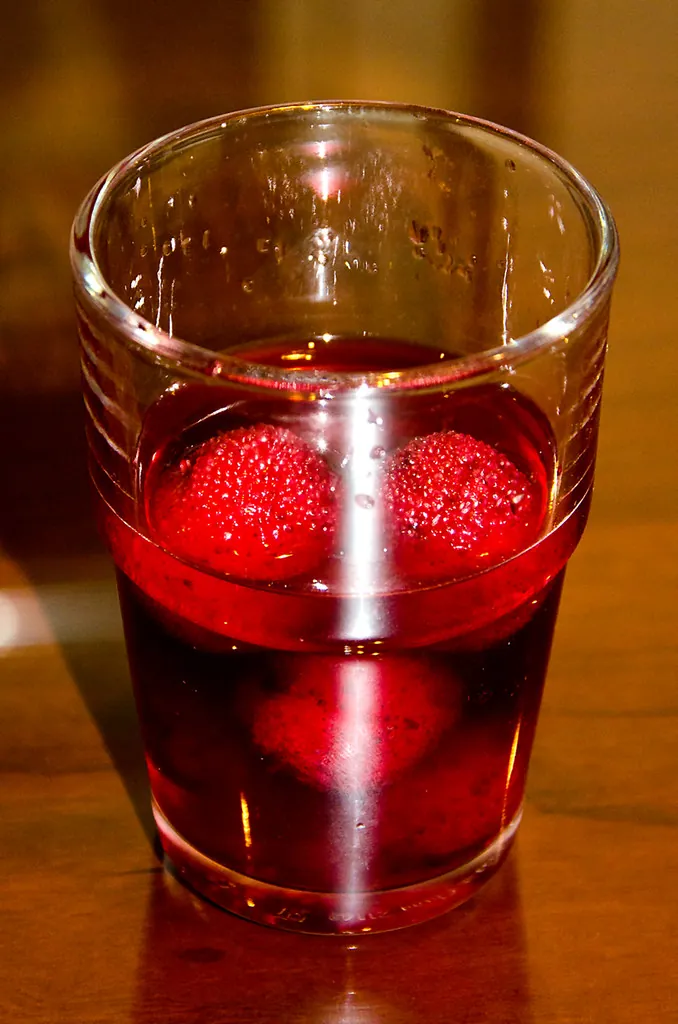
In Yuyao, fresh yangmei goes into jars in alternating layers with rock sugar, then baijiu, a Chinese spirit, is poured over it. The fruit flavours the liquor to make yangmei jiu.
For a drink without alcohol, Chinese home cooks make bingzhen yangmei tang, chilled yangmei soup. Fruit, rock sugar and water simmer together; the softened fruit is pressed to release its flesh, then the drink is cooled and refrigerated.
How it's grown
Yangmei grows on an evergreen tree, with male and female flowers on separate plants. It can grow in poor, acidic soil. To reproduce a chosen variety, California grower Yunfei Chen grafts shoots from Chinese trees onto trees grown from seed: the joined shoot becomes the fruit-bearing part.
When and where you'll find it
In Yuyao, yangmei is usually at its ripest in June, when locals celebrate the harvest with a yangmei festival. In California, the crop comes in summer, and growers sell it online. Frozen yangmei is also shipped by Chinese suppliers for drinks, desserts and preserves.
Sources · 10
- Airmartgoairmart.com
- California Farm Bureau, California Bountifulcaliforniabountiful.com
- Calmeicalmei-yangmei.com
- Greenimexgreenimex.com
- Oregon State University Landscape Plantslandscapeplants.oregonstate.edu
- The World of Chinesetheworldofchinese.com
- Wikipediaen.wikipedia.org
- Wu et al., Journal of Food Science and Technology (2019)pmc.ncbi.nlm.nih.gov
- Yuyao municipal government, via Xinhuazj.news.cn
- 汴富贵, Xiachufangm.xiachufang.com
Get it near Detroit
What it tastes like
In Zhejiang, the Biqi variety gets sweeter, fruitier and less sour or astringent as it fully ripens, with more soluble solids and a higher sugar-to-acid ratio.
Ripe fruit is sweet. As the Biqi variety develops, its sugars, acids and aroma compounds change substantially.
Choose, eat
1ChooseDark red or purple-red
Look for
- Dark red or purple-red
Ripe fruit is dark red or purple-red.
2EatFlesh, Juice · not stone
Eat
FleshJuiceNot eaten
StoneEat the flesh, or its juice; the stone (pit) isn't eaten.
More tips
Worth knowing
- Harvest stage substantially changes the sweet-acid balance of this variety.
Detroit, Michigan
When it’s good hereUsual monthsJust arrivedAt their bestLast chanceAll yearWhere it is in its usual monthsToday, Oct 22Grown hereIn season in your stateShips fromIn season where it grows
2 growing areas, 1 countryUsual monthsOur estimated monthsToday, Oct 22

- Fujian
- Yunnan
- You
0 of 1 areas · October
7 varieties
- No variety photo yetBiqi
- Taste
- sweet
- No variety photo yetDongkui
- Taste
- sweet
- No variety photo yetN1MR06
- Feel
- firm
- No variety photo yetFenhong
- Taste
- sweet
- Tartness
- tart
- No variety photo yetN1MR07
- Feel
- soft
- No variety photo yetN1MR09
Cook it
2 yangmei festivalsUsual monthToday, Oct 22
Strange but trueHistoryScienceNatureWhere the name came fromCustoms and cultureFood and drinkPeopleA record
Sources
Sources
Yangmei · Fruitopia · checked Sep 22, 2026