Rowal
Also called Football fruitPangium edule · Achariaceae family
A fruit whose sweet ripe pulp and toxic raw seeds are entirely different ingredients - the seeds only become food after careful traditional processing.
Find it near DetroitGet to know it
Rowal, or football fruit, has yellow pulp with a musky smell and a faint taste of durian. Its large seeds become buah keluak, an ingredient in Singaporean and Malaysian cooking. Raw seeds and unripe fruit are poisonous; the seeds become food only after processing removes their cyanide.
What it is
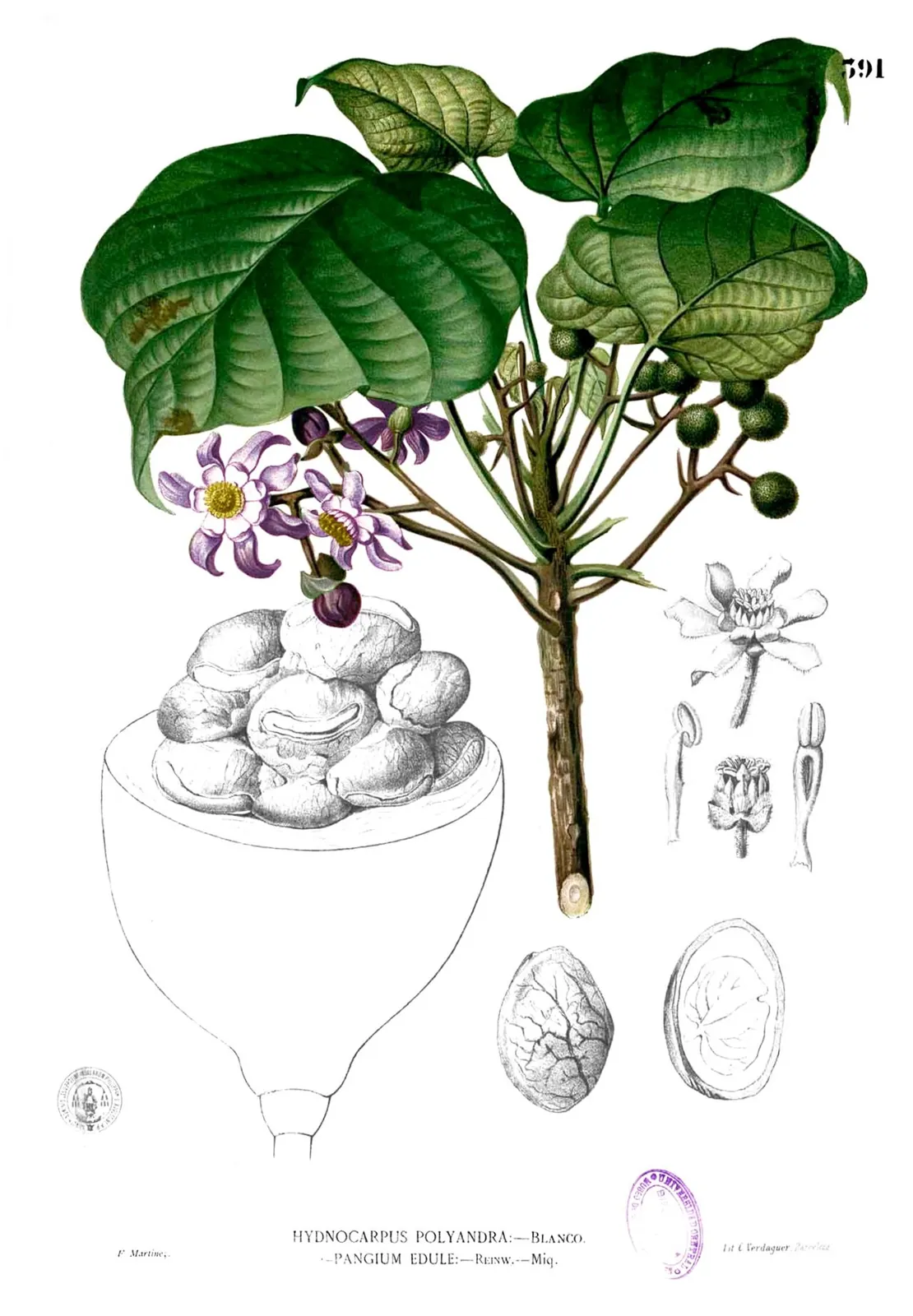
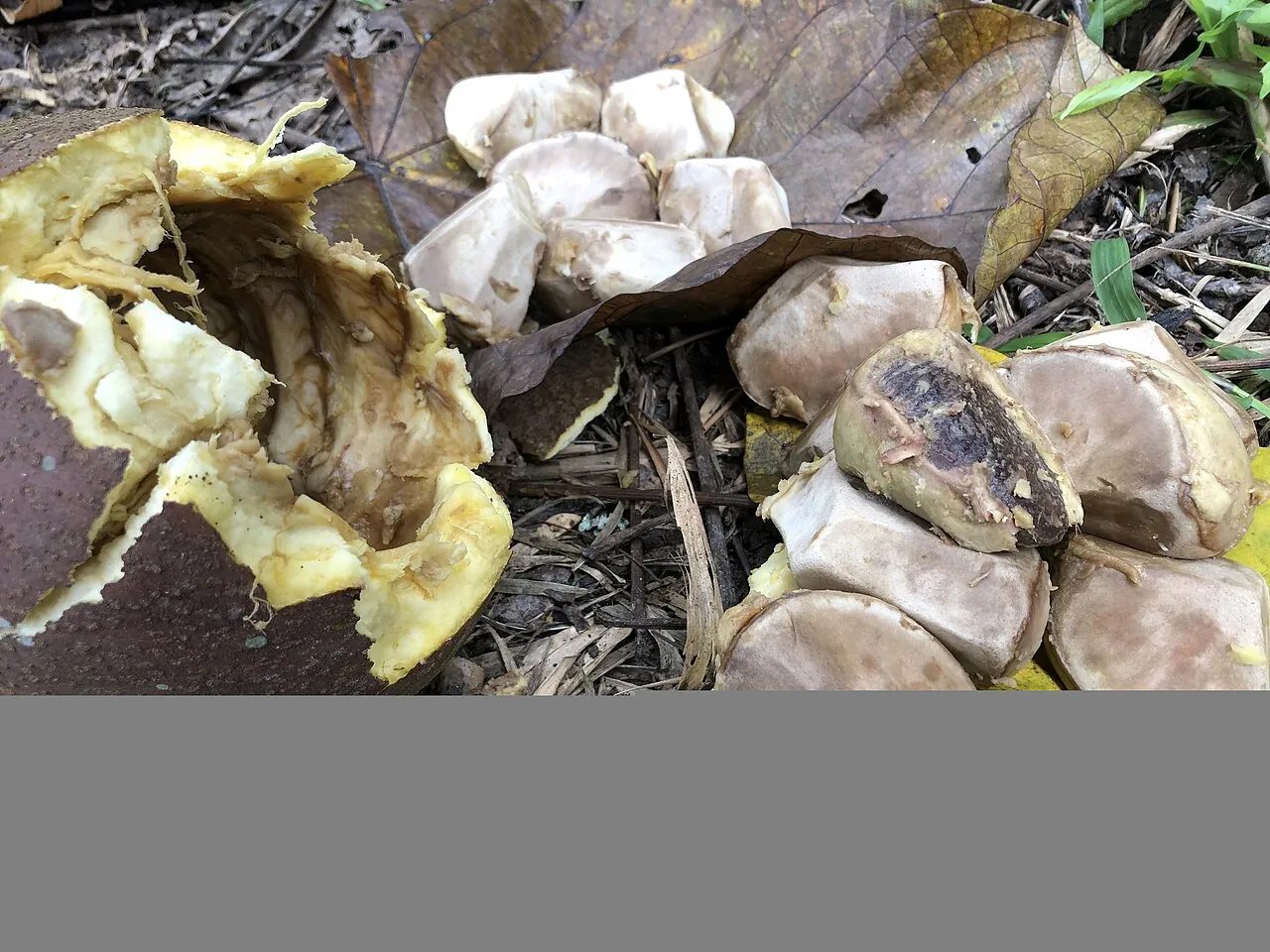
The rough brown fruit is 15–30 cm (6–12 in) long. Inside, yellow pulp surrounds large, flattened seeds about 5 cm (2 in) long. The ripe flesh has a much gentler smell than durian.
The pulp and the prepared seed are different ingredients. Buah keluak cooking uses the kernel inside the seed, after processing removes its poisonous cyanide. In the recipe from Singapore’s Candlenut, a well-prepared seed should smell like dark chocolate or coffee when opened.
Where it comes from
Pangium edule comes from Indonesia, Malaysia and New Guinea. It also grows on Yap, Palau, Pohnpei and the Mariana Islands. Rowal is its Yapese name; on Palau it is riamel, and on Pohnpei, durien. In Southeast Asia, kepayang and buah keluak are among its names.
How it's eaten where it grows
In Singapore and Malaysia, Peranakan cooks use the processed seeds in ayam buah keluak and babi buah keluak. Ayam buah keluak pairs chicken with stuffed seeds in a spicy tamarind gravy. At Candlenut, chef Malcolm Lee cooks chicken with the kernels and the whole nuts, lemongrass, lime leaves and tamarind.
In eastern Java, nasi rawon brings the same ingredient to beef stewed with buah keluak and served with rice. On Yap, people long ago learned to leach the poison from the seeds in running water and cook them into a tasty food.
How it's grown
The evergreen tree can reach 40 m (130 ft), growing in rainforest and along riverbanks. Villages grow it for its seeds; on Yap, it stands among village crops and in regrowing forest. In Raden Anom, Sumatra, customary rules allow people to gather fallen fruit, but forbid knocking it from the tree with poles.
When and where you'll find it
In Raden Anom, Jambi, the fruit usually comes from November to February, with the main harvest in January. East Java supplies much of the buah keluak trade: the seeds undergo processing to remove their poison before sale. In Singapore, Tekka and Geylang Serai are the markets where Candlenut’s chef sources ingredients for his ayam buah keluak.
Get it near Detroit
What it tastes like
As mild as a peach, softer than a pear≈
More about the taste
Ripe rowal pulp is yellow, with a musky smell and a mild resemblance to durian.
Ripe pulp is musky, with a mild resemblance to durian, though much less pungent than durian itself.
Choose, eat
1ChooseYellow ripe pulp
Look for
- Yellow ripe pulp
Ripe pulp is yellow. The seeds contain toxic cyanogenic compounds and need traditional processing before eating.
2EatProcessed kernel · not raw kernels, seeds
Eat
Processed kernelNot eaten
Raw kernelsSeedsThese savory recipes use the kernel of traditionally processed buah keluak. Raw kernels are toxic - the kernel must go through proper traditional processing first, not just soaking at home.
Detroit, Michigan
When it’s good hereUsual monthsJust arrivedAt their bestLast chanceAll yearWhere it is in its usual monthsToday, Oct 22Grown hereIn season in your stateShips fromIn season where it grows
11 names in 7 languages
Cook it
Strange but trueHistoryWhere the name came fromFood and drink
If you like Rowal
Tastes alike
Nutrition, sources
Nutrition
Rowal, raw · per 100 g
- Carbohydrate
- 24 g
- Fiber
- 6.2 g
- Sugars
- 14 g
- Protein
- 2.3 g
- Fat
- 2 g
- Vitamin C
- 26 mg
- Potassium
- 131 mg
Photos · 2
Sources
Rowal · Fruitopia · checked Sep 22, 2026