Pomegranate
Also called AnarPunica granatum · Lythraceae family
Explore a fruit whose variety can change juice color, acidity and seed texture as much as its outward appearance.
Find it near DetroitGet to know it
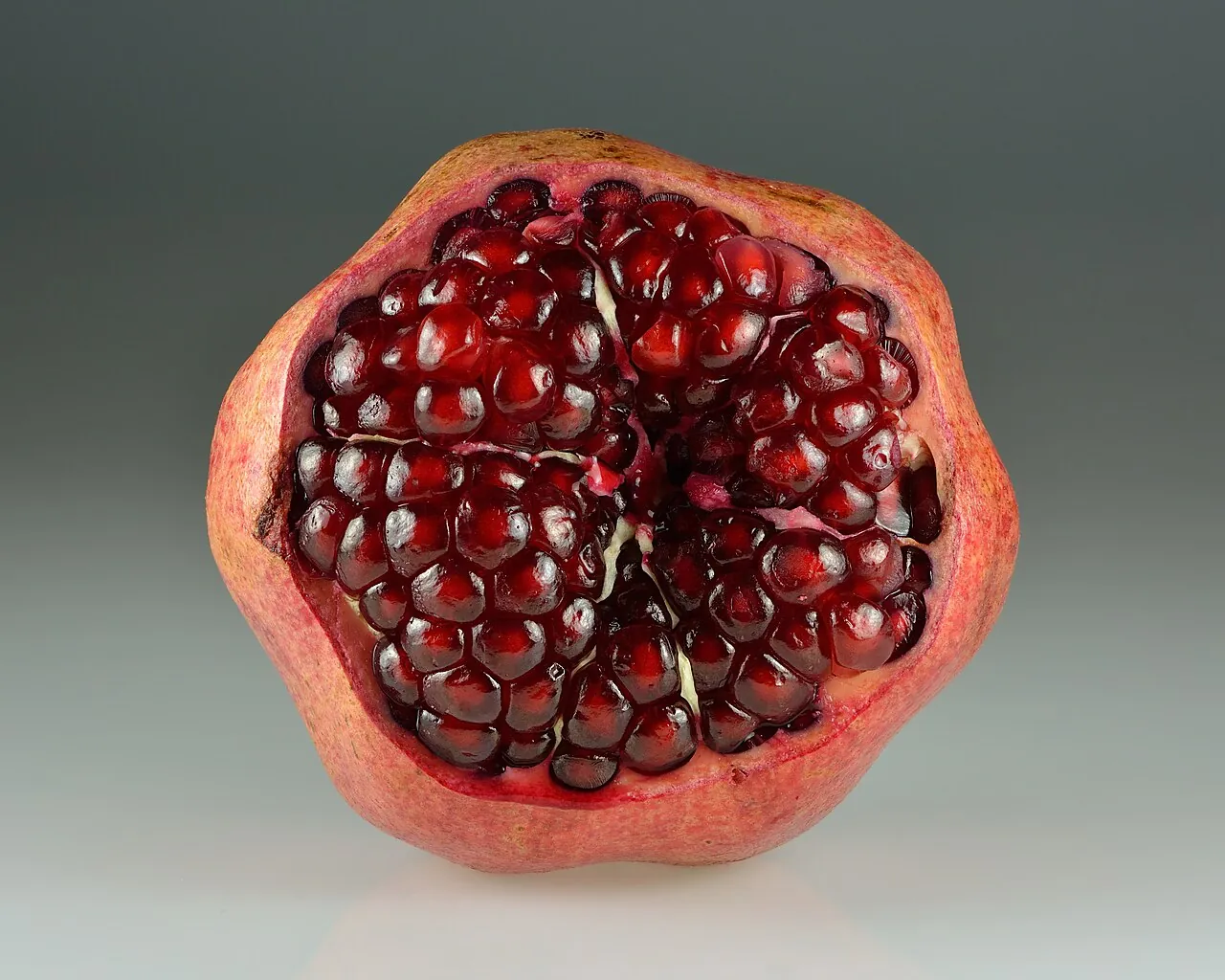
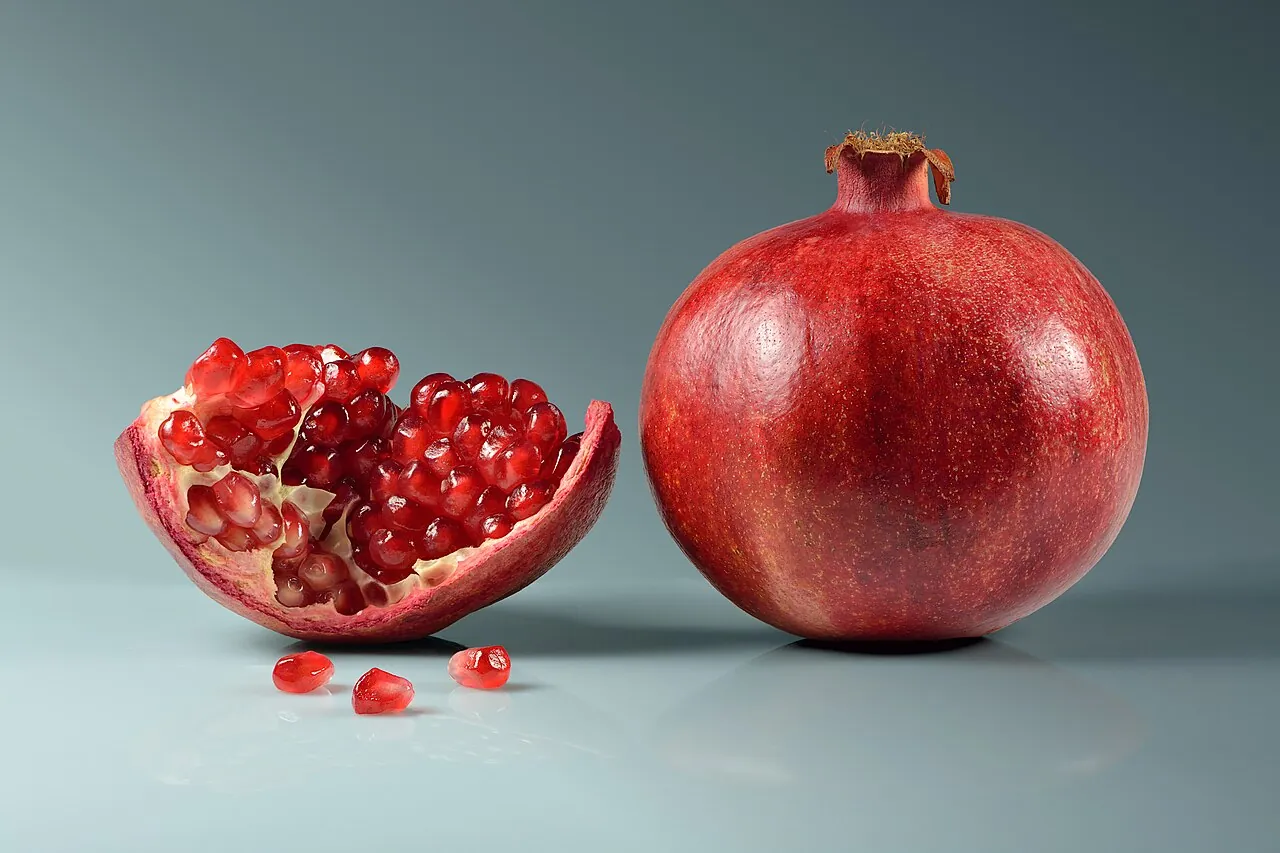
A pomegranate opens into pockets of juicy seeds, each giving a burst of tart, flavourful juice and a little crunch. The leathery fruit wears a crown left by its flower. Depending on the variety, the juicy pulp inside can be red, pink or almost white.
What it is
The fruit measures about 6.25–12.5 cm (2½–5 in) across. White membranes divide its interior into compartments, with juice-filled seed coverings packed inside. Those juicy pieces are called arils. Both their sweetness and the hardness of the seed inside change with the variety.
Wonderful, the most widely planted commercial variety in California, has glossy deep purple-red skin and crimson juice. Not every pomegranate looks like that: the skin is basically yellow, blushed with light or deep pink or rich red, and the pulp can be red, pink or whitish.
Where it comes from
Pomegranate is native from northeastern Turkey to Afghanistan. In India, major growing states include Maharashtra, Gujarat, Karnataka, Rajasthan and Andhra Pradesh.
Spanish settlers brought the tree to California in 1769. Today, California grows most of the US crop, in inland valleys where hot, dry summers ripen fruit with good colour and flavour.
How it's eaten where it grows
Fesenjan, a stew from northern Iran, simmers chicken in a thick, sweet-tart sauce of ground walnuts and pomegranate molasses. It is eaten with saffron rice and tahdig, the crisp crust from the bottom of the rice pot. Pomegranate brings acidity to the rich walnut sauce.
In northern India, the juicy seed coverings of wild pomegranates are dried for anardana, a spice. Juice also goes straight into a glass or becomes grenadine for drinks. The same fruit moves between a crunchy mouthful, a drink and a cooking ingredient.
How it's grown
Pomegranates grow as bushy shrubs or small trees trained from them. Growers usually raise new plants from hardwood cuttings. A new plant usually starts fruiting after two and a half to three years; each crop ripens six to seven months after flowering.
Hot, dry summers suit the fruit. In California’s inland valleys, heat helps develop its colour and flavour. Picking is by hand, with fruit harvested at full ripeness.
When and where you'll find it
In California, the Wonderful crop usually ripens in late September and October. Besides whole fruit, pomegranates come as ready-separated arils and as bottled juice: California-grown Wonderful arils usually run from mid-October through February, and South American ones from March through July. A whole fruit brings the seed crunch; juice gives the flavour without the chewing.
Middle Eastern and specialty groceries, as well as online shops, are places to find pomegranate molasses. This concentrated juice is the sweet-tart base used in fesenjan.
Sources · 9
- Government of India, Ministry of Commerce and Industryapeda.gov.in
- Morton, Fruits of Warm Climates (1987)hort.purdue.edu
- NC State Extension Gardener Plant Toolboxplants.ces.ncsu.edu
- POM Wonderfulpomwonderful.com
- Roxana Begum, The Delicious Crescentthedeliciouscrescent.com
- UNESCO Intangible Cultural Heritageich.unesco.org
- University of California Cooperative Extension, Central Sierraucanr.edu
- University of Georgia Cooperative Extensionextension.uga.edu
- USDA Agricultural Research Servicears.usda.gov
Get it near Detroit
What it tastes like
As sweet as a kiwifruit, as mild as an apple≈
More about the taste
Juice sweetness, acidity, color and seed hardness vary substantially by variety.
Juice sweetness, acidity, color and seed hardness vary substantially by variety; a pale or yellow-skinned variety isn't an inferior version of a red one.
A tasting invitation
Compare the burst of juice with the texture of the seed inside. Fruit can taste tart, sweet or balanced, and pale arils occur too.
Choose, ripen, store, eat
1ChooseHeavy for its size
Look for
- Heavy for its size
- Firm skin
- No bruises or soft areas
Ignore
- Redness
Choose fruit that feels heavy for its size, with firm skin and no bruises or soft areas. Weight and firmness matter more than redness - ripe varieties range from yellowish to deep red.
2RipenDoesn’t ripen after picking
Doesn’t ripen after pickingPomegranates don't continue ripening after harvest. Choose fruit that's already ready to eat rather than counting on counter time to develop it.
3StoreCounter, whole
- CounterWholeOut of direct sun
- FridgeWhole
- FridgeArilsUp to 7 days
- FreezerArils, drained, driedSingle layer, then container
Whole pomegranates keep for about 1–2 weeks at room temperature out of direct sun, or up to two months in the fridge. Once out of the fruit, refrigerate the arils and use them within 5–7 days.
4EatArils · not rind, membranes
Eat
ArilsNot eaten
RindMembranesSeparate the juicy seed coverings (arils) from the leathery rind and internal membranes. The pulp is eaten fresh, juiced, or made into jelly and syrup.
More tips
A useful detail The juicy pieces are arils surrounding the seeds. To separate them with less splashing, work the opened sections in a bowl of water: the white membranes float while the arils sink. Drain well before serving or freezing.
Worth knowing
- Where a pomegranate was grown changes how a variety tastes; ask about origin as well as variety.
Detroit, Michigan
When it’s good hereUsual monthsJust arrivedAt their bestLast chanceAll yearWhere it is in its usual monthsToday, Oct 22Grown hereIn season in your stateShips fromIn season where it growsOrderableListed by a seller we checkedThe day a seller was checked
42 growing areas, 14 countriesUsual monthsOur estimated monthsToday, Oct 22

- Andhra Pradesh
- Antalya
- Aydın
- Cáceres
- California
- Castellón
- Coquimbo
- Fars
- Florida
- Granada
- Hawaii
- Lambayeque
- Maule
- Mendoza
- Piura
- South Africa
- South Australia
- South Jeolla
- Valparaíso
- Western Australia
- Yunnan
- You
4 of 11 areas · October
Growing areas by country
- Spain9
- India8
- United States7
- Chile4
- Australia2
- Peru2
- Pakistan2
- Türkiye2
and 9 more countriesand 6 more countries
Pomegranate juice goes into the Persian dish fesenjan as well as grenadine, spanning savory cooking and sweet drinks.
73 varieties
- No variety photo yetHuaiyuanmanaozi
- Taste
- sweet
- Juice
- juicy
- No variety photo yetYichengqingpimayatian
- Taste
- sweet
- Juice
- juicy
- No variety photo yetPurple Heart
- Taste
- high AF · Imported cultivar group in ANNGo/PHDP 2013 catalogue; no particular trial year assigned.
- Tartness
- tart
- Bite
- crunchy
- No variety photo yetAl-Sirin-Nar
- Taste
- sweet
- Bite
- crunchy
- Feel
- soft
- No variety photo yetBlaze
- Taste
- sweet
- Tartness
- tart
- Juice
- juicy
- No variety photo yetGreen Globe
- Taste
- sweet
- Bite
- crunchy
- Juice
- juicy
62 names in 24 languages
- 石榴root
Cook it
How to serve it first
Use a small bowl of arils as a finishing ingredient for roasted vegetables, rice, yogurt or a citrus salad. Try a spoonful plain before adding them to a dish; its sweetness and acidity can guide the amount of dressing or other fruit.
4 pomegranate festivalsUsual monthToday, Oct 22
Strange but trueHistoryA myth, and the truthScienceNatureWhere the name came fromCustoms and cultureFood and drinkA record
If you like Pomegranate
Tastes alike
Nutrition, sources
Nutrition
Pomegranates, raw · per 100 g
- Carbohydrate
- 19 g
- Fiber
- 4 g
- Sugars
- 14 g
- Protein
- 1.7 g
- Fat
- 1.2 g
- Vitamin C
- 10 mg
- Potassium
- 236 mg
Sources
Pomegranate · Fruitopia · checked Oct 2, 2026