Plum
Also called European plum · PlumsPrunus domestica · Rosaceae family
Explore European plums through fresh eating and the Zwetschgen used in Central European baking.
Find it near DetroitGet to know it
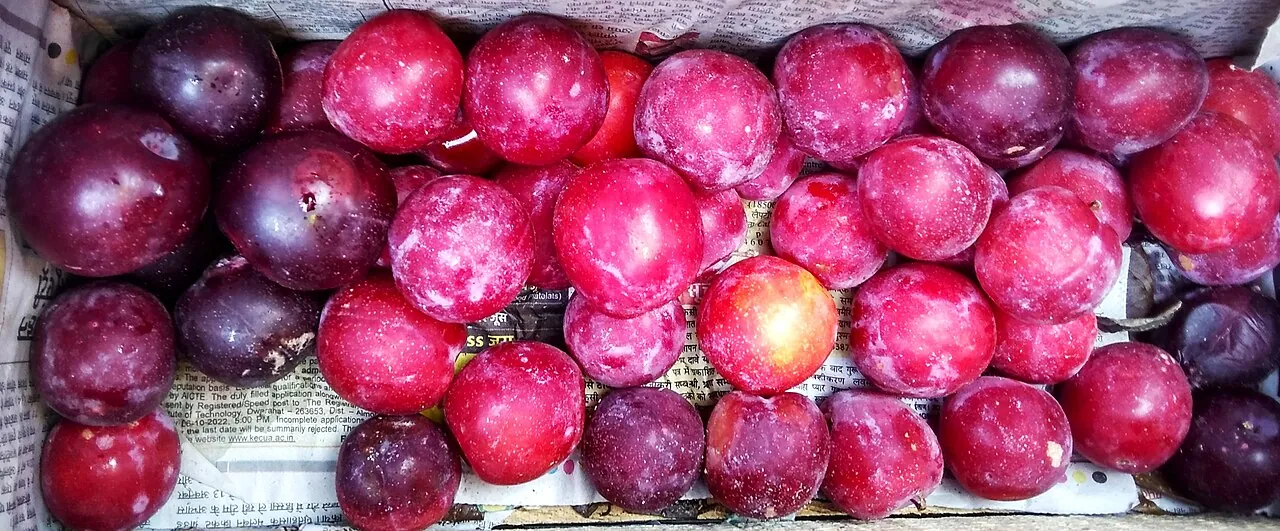
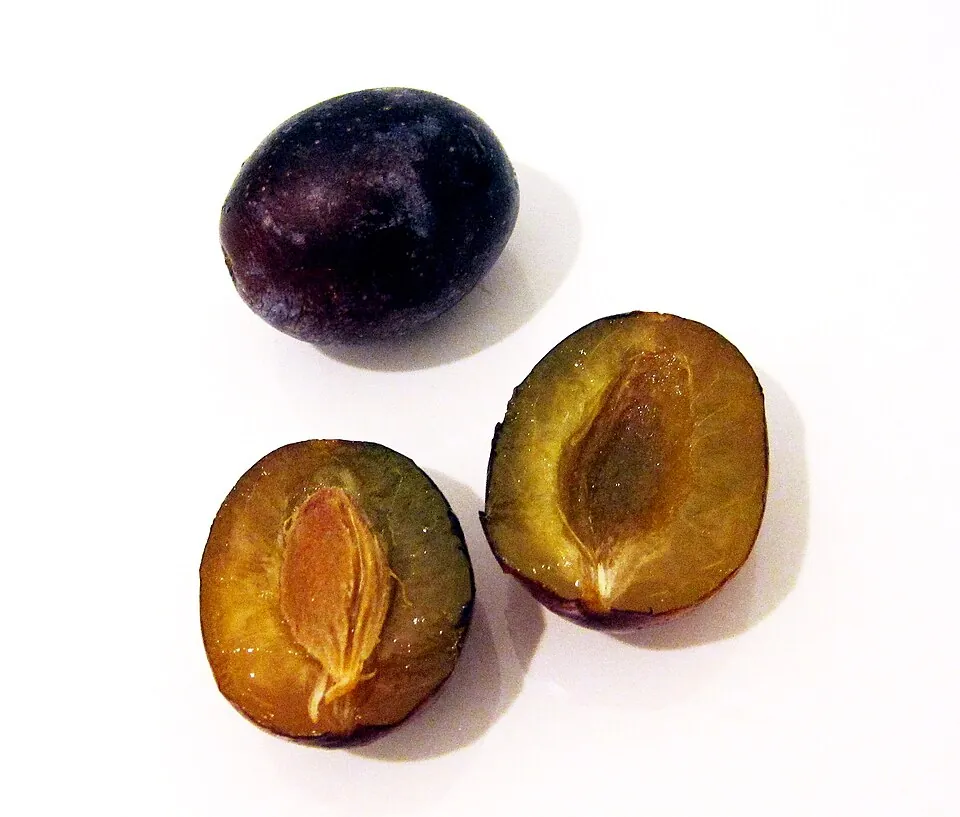
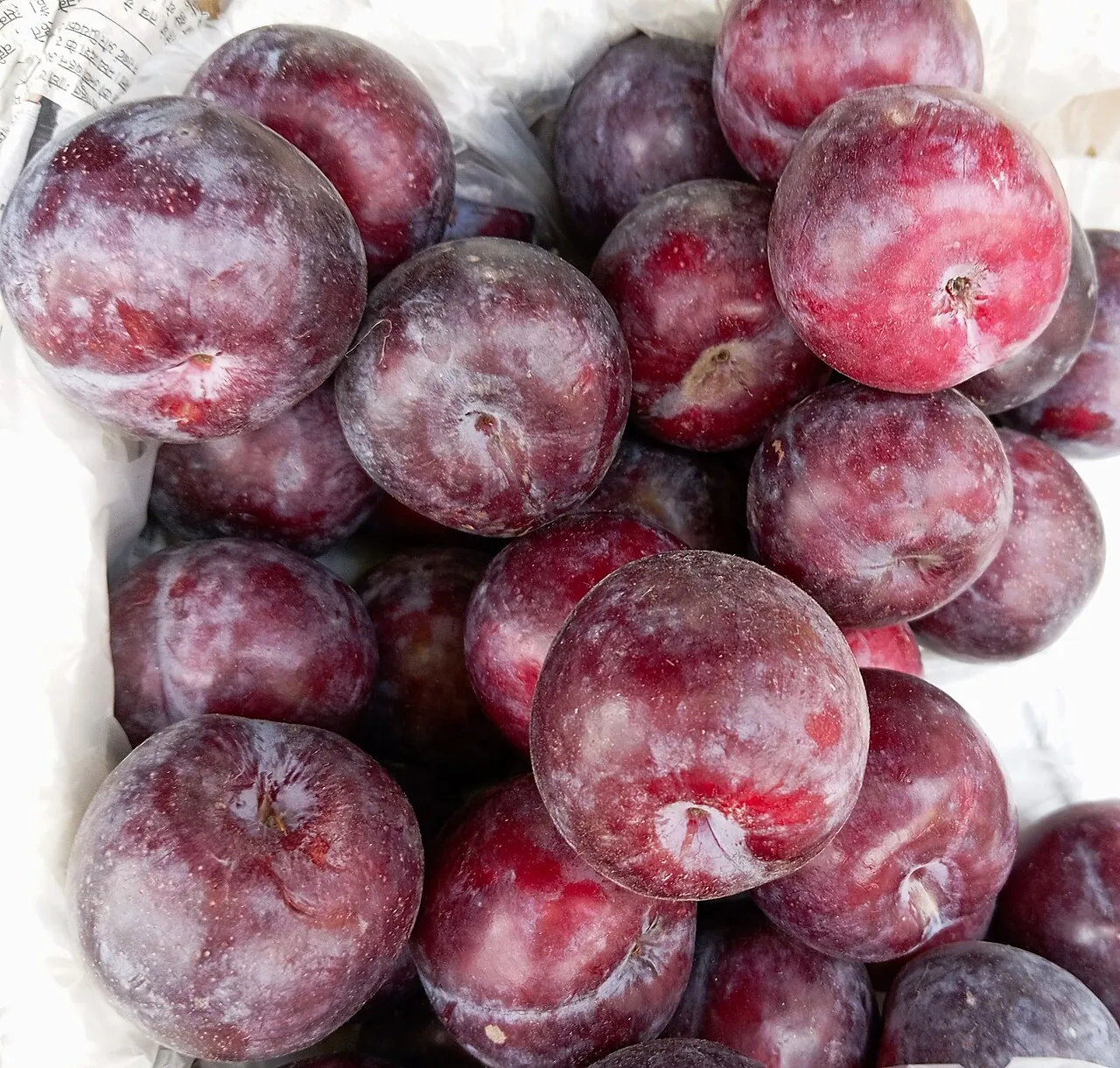
The European plum is a small, oval stone fruit, mostly purple but sometimes green or yellow, with firm, meaty flesh that comes cleanly away from its stone. It's the plum that becomes prunes, Central European plum cakes and fruit brandy: in Romania, 80% of the plum crop goes to the still rather than the jam jar.
What it is
A European plum can grow up to 8 cm (3 in) across. Its smooth, waxy skin clings to firm, meaty flesh that's usually sweet, though some varieties are sour. Greengages and damsons belong to the same species: damsons are tart and mostly cooked or made into preserves, while sweeter European plums are dried for prunes. In the US, a prune is any plum variety that dries without fermenting. Mirabelles, 22 to 30 mm (about 1 in) across, are golden yellow with small red spots.
The round plums in most supermarkets are a different species: Japanese plums, almost heart-shaped, firmer, and red, yellow or purple.
Where it comes from
The European plum probably began around the Caucasus at least 2,000 years ago. Alexander the Great is credited with bringing plums to Greece, and the Roman writer Pliny the Elder described them in the first century.
Counting every kind of plum and the wild sloe, the world grew 12.5 million tonnes in 2023, 55% of it in China, with Romania and Chile next. In the United States, European plums are the most important group of plums, grown mostly in the Pacific states, New York and Michigan; Washington grows the second-most plums of any state. The French region of Lorraine has the world’s densest mirabelle orchards and grows 80% of the mirabelle crop.
How it's eaten where it grows
Across Germany, Austria, Switzerland and Central Europe, plum season at the end of summer means Zwetschgenkuchen, a thin sheet cake covered edge to edge with pitted zwetschgen, also called Italian plums. In southern Bavaria it's Zwetschgendatschi, and Augsburg claims it so firmly that the city is nicknamed Datschiburg. In Austria and the Czech Republic, prune plums are the only ingredient in powidl, a thick plum jam.
In Romania, 80% of the plum crop is distilled into a brandy called țuică. Lorraine bakes its mirabelles into tarts. In Worcestershire, England, where plum growing once centred on Pershore and the Vale of Evesham, fermented plums make plum jerkum.
How it's grown
The European plum grows as a large shrub or small tree, 3 to 6 m (10 to 20 ft) tall. It's the last of the plums to bloom, which suits colder places: in Britain, plums flower in March or April, and frost can damage the blossom. A standard tree starts bearing 3 to 5 years after planting, and many European varieties are self-fertile, so a single tree sets fruit.
The fruit takes 130 to 160 days from bloom to harvest. Plums taste best ripened on the tree and are picked one by one once fully coloured and soft, so a tree is picked over several times.
When and where you'll find it
In US supermarkets, most fresh plums are Japanese varieties, which keep longer than European plums. In the Northern Hemisphere, European prune plums ripen in August and September. At Peters Orchards in Pennsylvania, Japanese plums are picked in July, then the European prune plums, with the harvest running through September. In Lorraine, the mirabelle harvest usually runs from mid-August to the end of September.
Most prunes are dried European plums. In California, ripe prune plums go straight from the tree into drying tunnels.
Sources · 10
- California Prune Boardcaliforniaprunes.org
- French Momentsfrenchmoments.eu
- homegarden.cahnr.uconn.edu
- NC State Extension Gardener Plant Toolboxplants.ces.ncsu.edu
- Observatorobservator.tv
- Peters Orchardspeters-orchards.com
- Purdue NewCROPhort.purdue.edu
- Royal Horticultural Societyrhs.org.uk
- Washington State Magazinemagazine.wsu.edu
- Wikipediaen.wikipedia.orgOther pages2345
Get it near Detroit
Sell fruit online? Add your business
What it tastes like
As soft as a blueberry, as sweet as an apple≈
More about the taste
European plums include sweet fresh-eating and drying types, plus sharper cooking types like the tart damson.
European plums are often small and oval, commonly purple but also green or yellow.
Some types suit fresh eating, others are valued more for drying, cooking or preserves.
A tasting invitation
Compare a firm-ripe slice with one allowed to soften further. Record how the skin's resistance contrasts with the flesh and whether the finish stays tart. Treat those observations as variety-specific rather than rules for every red or purple plum.
Choose, ripen, store, eat
1ChooseYields gently
Look for
- Yields gently
- Variety's mature color
Ignore
- Color alone
A ripe plum yields gently and has its variety's mature color. Taste a sample when the grower permits: color alone varies too much between varieties.
2RipenRipens after picking
Ripens after pickingPlums develop their best flavor when ripened on the tree. Buy ready-to-eat fruit rather than relying on a very hard plum to reach the same flavor indoors.
3StoreFridge, picked fruit
- FridgePicked fruit
- FreezerStones removed
Refrigerate picked fruit to extend its useful life. Handle gently, because ripe plums bruise easily; for freezing, remove the stones first.
4EatSkin, Flesh · not stone
Eat
SkinFleshNot eaten
StoneUse the skin and flesh after removing the stone. Both selected Zwetschgen recipes retain the skins and remove the pits.
More tips
A useful detail The difference between skin color and maturity is especially striking in plums. Certain varieties become dark purple long before harvest readiness.
Worth knowing
- Decide whether the fruit is for fresh eating or drying before treating a very late harvest as ideal. Japanese plums follow a different rule.
Detroit, Michigan
When it’s good hereUsual monthsToday, Oct 23Just arrivedAt their bestLast chanceAll yearWhere it is in its usual months
62 growing areas, 20 countriesUsual monthsOur estimated monthsToday, Oct 23

- Aomori
- Araucanía
- Baden-Württemberg +2
- Balochistan
- Bay of Plenty
- British Columbia
- Cáceres
- California
- Castellón
- Coquimbo
- Espírito Santo
- Florida
- Fujian
- Gelderland
- Georgia
- Hawaii
- Kent
- Mersin
- New South Wales
- Río Negro
- Santa Cruz de Tenerife
- South Africa
- Western Cape
- Xinjiang
- Yunnan
- You
7 of 26 areas · October
Growing areas by country
- United States13
- Spain9
- Australia6
- Chile5
- Argentina3
- China3
- France3
- New Zealand3
and 15 more countriesand 12 more countries
In Connecticut, European plums suit colder garden sites and bloom somewhat later than Japanese types.
448 varieties
- Suplum61
- Sweetness
- sweet
- Bite
- crisp
- Juiciness
- juicy
- Suplum62
- Sweetness
- sweet
- Bite
- crisp
- Juiciness
- juicy
- Suplum63
- Sweetness
- sweet
- Bite
- crisp
- Juiciness
- juicy
- Flavor Belle
- Firmness
- firm
- Plumcandy XIV
- Sweetness
- sweet
- Bite
- crisp
- Firmness
- firm
- Juiciness
- juicy
- Plumsweet XXI
- Sweetness
- sweet
- Bite
- crisp
- Firmness
- firm
- Juiciness
- juicy
47 names in 20 languages
- pruneOther name
Cook it
How to serve it first
Taste the flesh and skin separately before choosing a recipe. A plum with tart skin may make an appealing roasted topping, while a juicy balanced one may be best sliced fresh. Keep the pieces large enough to retain their identity.
4 plum festivalsUsual monthToday, Oct 23
Strange but trueHistoryA myth, and the truthScienceWhere the name came fromCustoms and cultureFood and drink
If you like Plum
Tastes alike
Close relatives
Nutrition, sources
Nutrition
Plums, raw · per 100 g
- Carbohydrate
- 11 g
- Fiber
- 1.4 g
- Sugars
- 9.9 g
- Protein
- 0.7 g
- Fat
- 0.3 g
- Vitamin C
- 9.5 mg
- Potassium
- 157 mg
Sources
Plum · Fruitopia · checked Sep 21, 2026