Papaya
Also called Papaw · Pawpaw · Paw pawCarica papaya · Caricaceae family
Meet both sides of papaya: firm green fruit in a savory dish and soft ripe flesh in a frozen dessert.
Find it near DetroitGet to know it
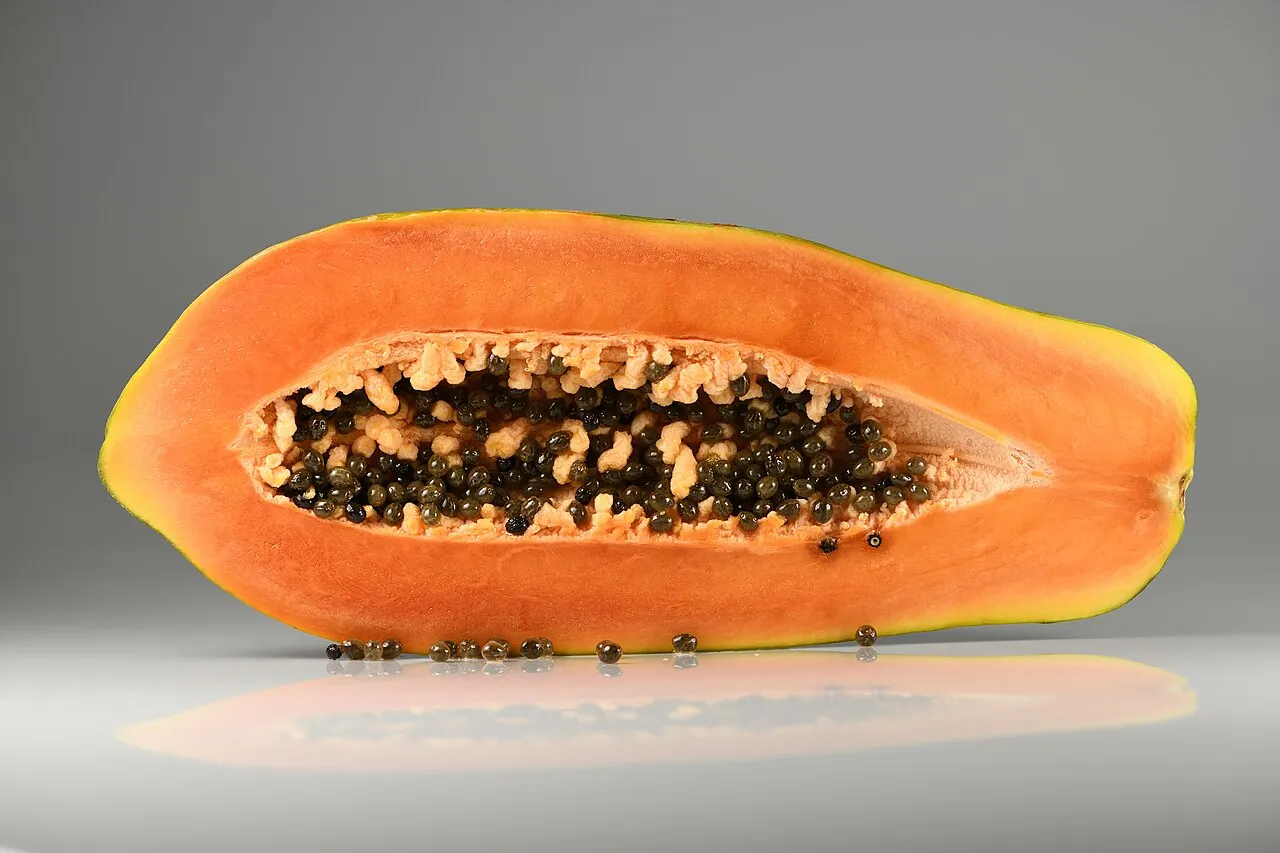
Papaya has soft, juicy flesh with a sweetish, cantaloupe-like flavour that turns musky in some types. Cut it open and a hollow lined with black seeds appears. The same fruit picked green goes into Thailand’s som tum, a salad with lime, chilli and fish sauce.
What it is
Papaya is Carica papaya, a tropical fruit with smooth flesh that ranges from yellow to orange-red. Its shape runs from almost round to long and oval. Most fruits measure 15–50 cm (6–20 in) long and can weigh up to 9 kg (20 lb).
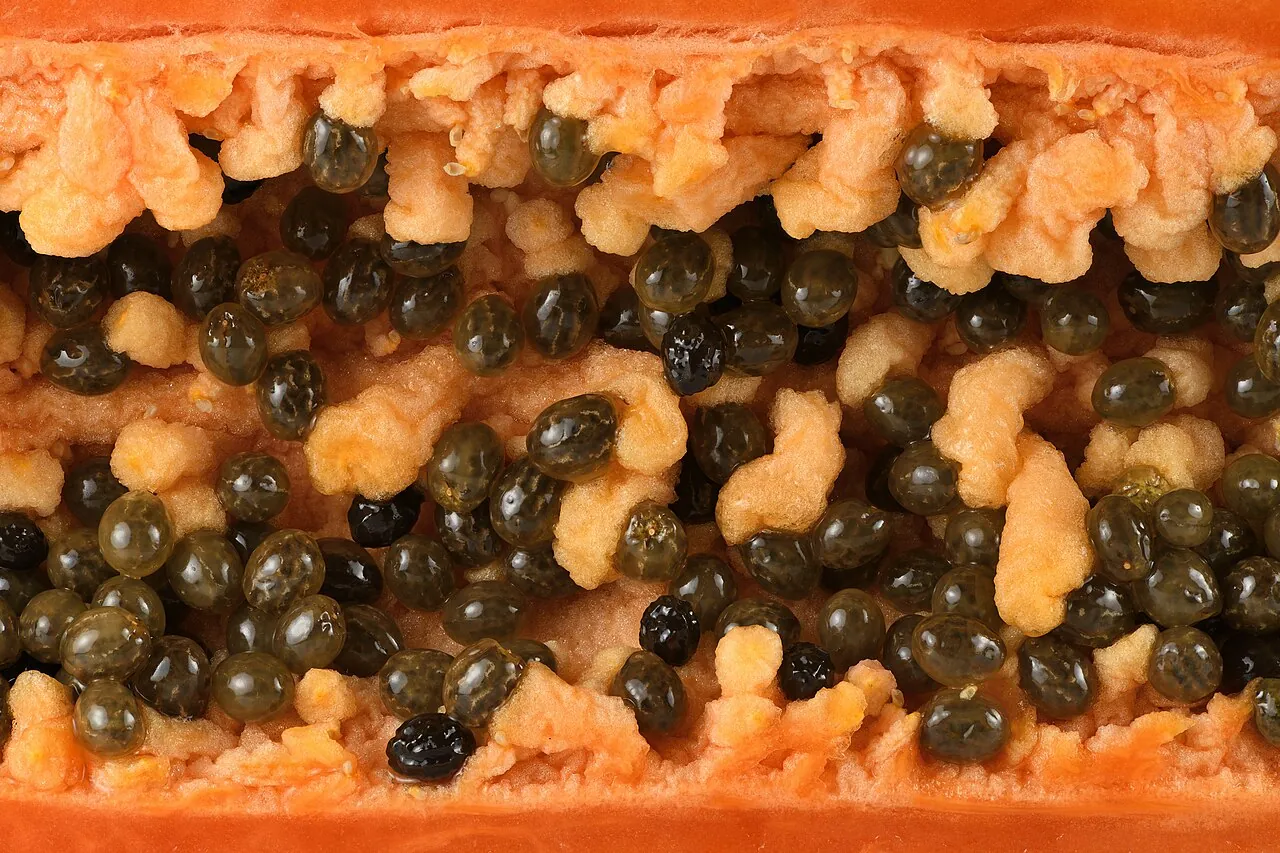
At the smaller end are Hawaiian Solo types, including Kapoho and Rainbow. Maradol is a large Mexican type. Inside, the seeds cluster around an open central hollow, leaving a thick wall of flesh around them.
Where it comes from
Papaya comes from Central America. Spaniards carried its seeds to the Philippines around 1550, and from there it spread to Malacca and India. In 2024 India grew more papaya than any other country, 36% of the world’s crop. Hawaiian Solo types and Mexican Maradol are two familiar branches of its journey into commercial fruit growing.
How it's eaten where it grows
In northeastern Thailand, shredded green papaya becomes som tum, eaten with sticky rice. The som tum thai version mixes it with dried shrimp, peanuts, fish sauce, lime juice and palm sugar. A mortar and pestle bruise and mix the ingredients.
In Kerala, raw-papaya thoran cooks the green fruit before tossing it with mustard seeds, curry leaves and green chilli. Grated coconut goes in at the end. It makes a side dish for steamed rice and rasam.
How it's grown
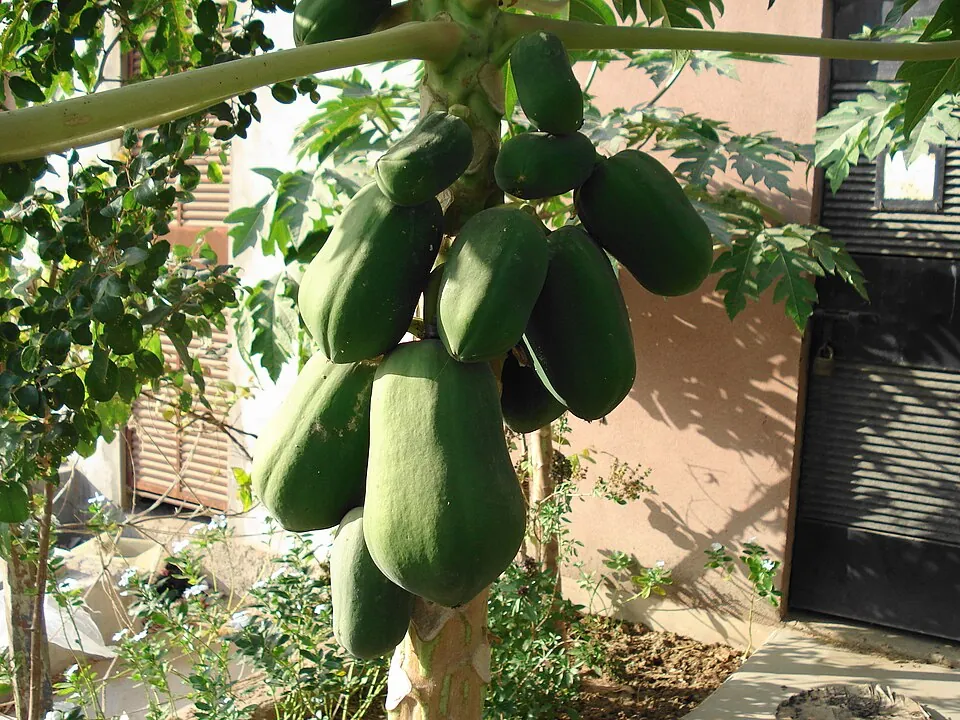
Papaya looks like a tree, but its trunk never forms wood. Plants are mainly raised from seed and grow well in many kinds of soil, as long as it drains well. In Florida, a well-cared-for plant can bear fruit 7–11 months after planting. Pickers usually harvest by hand, using ladders or platforms as the fruit rises out of reach.
When and where you'll find it
In Hawaii, papaya usually bears fruit throughout the year. Mexico supplies about 75% of the papayas the United States imports between March and mid-June. Small Hawaiian types and large Mexican ones give shoppers quite different sizes to choose from.
Green papaya for cooking comes whole, and many Asian supermarkets also sell it already shredded, ready for som tum.
Get it near Detroit
What it tastes like
As soft as a banana, as sweet as a peach≈
More about the taste
Ripe papaya is juicy and sweet with a melon-like character; some types have a more noticeable musky aroma. Flesh can range from yellow-orange to salmon-red.
Papaya is eaten ripe as fresh fruit or green as a vegetable. More color development on the tree increases sugar content — sweetness is largely set before harvest, while softening continues after.
A tasting invitation
Compare plain and citrus-dressed pieces to see how acidity changes your perception of the fruit. Record aroma and softness separately from sweetness. A disappointing sample may reflect harvest and handling as well as variety, so leave room for another tasting.
Choose, ripen, store, eat
1ChooseYellow-orange peel
Look for
- Yellow-orange peel
- Softened fruit
For sweet fresh eating, look for developing yellow-orange peel and fruit that has softened. Green papaya for cooking is a different intended stage, rather than a disappointing ripe-fruit purchase.
2RipenOn the counter
Ripens after pickingCounterProperly mature papayas can finish ripening at room temperature. Fully green fruit intended for a vegetable recipe should not be judged by dessert-fruit expectations.
3StoreFridge, fully ripe7 days
- FridgeFully ripeUp to 7 days
Once fully ripe, refrigerate and use within about four to seven days.
4EatFlesh · not peel, seeds
Eat
FleshNot eaten
PeelSeedsUse the flesh. The green-papaya thoran peels the fruit before cooking; the ripe frozen-yogurt recipe removes both peel and seeds.
More tips
A useful detail Papaya's fruit shape and size vary widely among varieties and flower types. A small pear-shaped fruit and a large elongated one can both be ordinary papayas.
Worth knowing
- Red-fleshed papaya isn't necessarily better than yellow; the variety matters more.
- Papaya liking comes from texture and any lingering bitterness as well as sweetness.
Detroit, Michigan
When it’s good hereUsual monthsJust arrivedAt their bestLast chanceAll yearWhere it is in its usual monthsToday, Oct 22Grown hereIn season in your stateShips fromIn season where it growsOrderableListed by a seller we checkedThe day a seller was checked
44 growing areas, 16 countriesUsual monthsOur estimated monthsToday, Oct 22

- Andhra Pradesh +1
- Bahia
- Balochistan
- California
- Chiapas
- East Java
- Espírito Santo
- Florida
- Granada
- Greater Accra
- Gujarat
- Hawaii
- Himachal Pradesh
- Ica
- Johor
- La Libertad
- Madeira
- Makueni
- Málaga
- New South Wales
- Okinawa
- Pahang
- Pernambuco
- Rio Grande do Sul
- South Africa
- Yogyakarta
- You
8 of 12 areas · October
Growing areas by country
- India8
- Brazil6
- Spain5
- Australia4
- Peru4
- Malaysia3
- United States3
- Indonesia2
and 11 more countriesand 8 more countries
Papaya is grown throughout the tropics under various regional names, sold both fresh and for processing. Cooked green fruit and ripe, spoonable flesh are different market forms of the same crop.
10 varieties
- Maradol
- Feel
- medium
- Juice
- juicy
- No variety photo yetRainbow
- Taste
- high US-HI
- Juice
- juicy US-HI
- Skin
- yellow US-HI
- No variety photo yetSunrise
- Feel
- firm
- Kapoho
- Flavour
- peach–melon flavor
- Skin
- yellow
- Shape
- pear shaped
- No variety photo yetTainung No. 1
- Taste
- medium
- Skin
- yellow
- Shape
- elongated Cuba
- No variety photo yetArka Prabhath
108 names in 25 languages
- du duVietnamese
Cook it
How to serve it first
For a ripe-fruit introduction, halve a washed fruit, remove the central seeds and prepare the flesh in pieces. Taste it plain, then try a little citrus on a separate portion. For green papaya, choose a recipe explicitly written for that stage.
Strange but trueHistoryScienceNatureWhere the name came fromCustoms and cultureFood and drink
If you like Papaya
Tastes alike
Same plant family
Nutrition, sources
Nutrition
Papayas, raw · per 100 g
- Carbohydrate
- 11 g
- Fiber
- 1.7 g
- Sugars
- 7.8 g
- Protein
- 0.5 g
- Fat
- 0.3 g
- Vitamin C
- 61 mg
- Potassium
- 182 mg
Photos · 3
Sources
Papaya · Fruitopia · checked Sep 21, 2026
What we don't know yet
Freeze-dried papaya doesn't have the same texture as fresh fruit.